beyond riba reconstruction

Beyond Riba: Reconstruction of Just Financial Orde…

The preceding part of this series examined a question ordinarily left outside discussions on riba: who should create money? It argued that commercial-bank money creation is not, by itself, riba, but that the power to create purchasing power through credit is a matter of public importance requiring transparency, restraint and accountability. One possible reform is to separate transaction money, fully backed by sovereign money, from funds deliberately committed for investment. That proposition leads to an even more fundamental question. What exactly is a bank deposit?

The answer appears obvious only because modern banking has merged several economically different relationships into the same institution. A person places salary in a current account because it must be available tomorrow morning. Another person places accumulated savings with a bank hoping to earn a return over five years.

A business maintains money for payroll and suppliers. An investor deliberately commits capital to a project knowing that commercial gain is accompanied by the possibility of loss. Calling all these balances “deposits” conceals distinctions that become crucial in a financial order seeking to eliminate riba.

There is a basic difference between money and investment. Money held for payment performs the functions of medium of exchange and store of nominal value. Its owner expects Rs.100 deposited today to remain Rs.100 tomorrow and to be transferable on demand. Investment capital performs another function. It is consciously placed in productive activity in expectation of gain and consequently bears the possibility of commercial loss.

One cannot logically demand both absolute safety and entrepreneurial return from the same contractual relationship unless somebody else is made to carry the risk.

Islamic jurisprudence recognised these distinctions long before modern banking. Funds entrusted purely for safekeeping can constitute amanah. A trustee does not own them and is not ordinarily liable for loss occurring without negligence or misconduct. Where fungible money is transferred to another person with authority to use it and an obligation to return its equivalent, the relationship acquires the character of qard, or loan.

State Bank of Pakistan’s own glossary reflects precisely this reasoning. It describes an amanah as property held in trust and states that current accounts may initially be regarded as trust deposits.

Once a bank obtains authority to use current-account funds in its business, however, the relationship becomes a loan because the bank must repay the full amount. This point deserves much greater attention.

If a bank accepts Rs.100,000 from a customer, is free to use that money for its own financing operations and remains legally bound to repay Rs.100,000 whenever demanded, the customer is not bearing an investment risk. Whatever terminology appears on the account-opening form, economically the bank has received financing from the customer.

No difficulty necessarily arises if the customer receives nothing beyond repayment of the amount advanced. The difficulty arises when banking system treats this repayable-at-par money simultaneously as the raw material from which additional financing and monetary claims can be generated.

Part II suggested one possible solution: transaction accounts should be treated entirely differently. A current account used for wages, household expenditure, business payments and ordinary transfers should represent protected transaction money. If such balances are fully backed by sovereign money or central-bank reserves, they need not be exposed to the bank’s commercial financing decisions. The account holder would possess money, not an investment claim upon the success of a bank.

The bank would provide custody, payments, transfers, cards, digital access and settlement services. It could legitimately charge transparent fees for those services. What it would not receive is free investment capital merely because citizens require access to a payment system.

The consequences are significant. Fully backed transaction accounts would remain available on demand and at par. They would not earn an investment return because their owners have assumed no investment risk. Nor would their repayment depend upon the quality of the bank’s commercial portfolio.

This is not merely a theological distinction. Modern central banking itself recognises the peculiar character of bank deposits. The Bank of England recently described commercial-bank deposits as liabilities used as money, expected to be redeemable at par on demand and relied upon as a safe store of value. It contrasted them with investment products whose values fluctuate and whose losses are borne by investors.

A riba-free financial system should take that distinction seriously. The second category would consist of genuine investment accounts. Here the relationship is entirely different. A customer does not merely park money awaiting payment instructions. He consciously makes capital available for investment and accepts that lawful profit cannot be separated completely from commercial risk.

Mudarabah provides one classical framework. One party supplies capital and the other enterprise and expertise. Profit is divided according to an agreed ratio; financial loss, in the absence of negligence or breach by the manager, falls upon the provider of capital.

SBP itself explains Islamic investment deposits on this basis: the depositor acts as rabb-ul-maal and the bank as mudarib. Restricted mudarabah allows the investor to specify where the funds may be deployed; unrestricted mudarabah gives the bank wider investment authority.

The principle is straightforward. If the depositor wants profit because capital is being employed commercially, the depositor must understand what capital is doing and what risk attaches to it. This is where present banking practice requires closer examination.

Islamic banks commonly pool deposits, calculate weighted-average yields and distribute profits under elaborate regulatory rules. SBP presently prescribes profit-distribution arrangements for savings depositors, including minimum distribution requirements linked to the weighted-average gross yield of the institution. It also permits additional hiba in specified circumstances.

These measures protect customers against inequitable allocation of profits by banks. Their consumer-protection purpose is understandable. At the same time, an increasingly managed and smoothed return can create in the depositor’s mind an expectation remarkably similar to a conventional savings rate.

The crucial question is not whether the return happens to fluctuate by a few basis points. It is whether the depositor actually bears the economic character of an investor.

An investment account should identify the pool in which funds participate, the assets financed, the mudarib’s share, expected—not guaranteed—returns, expenses attributable to the pool, actual realised profit and the circumstances in which capital can suffer loss.

Losses resulting from negligence, misconduct or breach by the bank should remain the bank’s responsibility. Genuine commercial losses should not automatically be shifted away from investors after profits have been privately distributed to them. Otherwise profit sharing becomes a one-way arrangement: return is private when business succeeds while risk is transferred to the State, deposit-protection scheme or taxpayer when it fails.

Pakistan’s deposit-protection framework illustrates the complexity. Deposit Protection Corporation presently protects eligible deposits up to Rs. one million per depositor per bank. The protection encompasses eligible conventional and Islamic deposits held by the same depositor in a member bank.

Protection of small depositors is an entirely legitimate public-policy objective. It prevents a bank failure from destroying household savings and reduces the danger of destabilising bank runs. It should not, however, cause us to abandon the distinction between money and investment.

A third-party protection mechanism can insure citizens against institutional failure without converting every commercial investment into guaranteed capital. The law must distinguish losses caused by failure of a regulated intermediary from losses arising normally from an investment whose risks the investor knowingly accepted. That distinction presently remains blurred.

Pakistan has little time to leave such issues unresolved. Islamic banking is no longer a specialised corner of the financial sector. At end-March 2026, Islamic Banking Institutions held assets of Rs.14.659 trillion and deposits of Rs.11.299 trillion.

Islamic deposits represented 28.5 percent of all banking deposits. Seven full-fledged Islamic banks and 16 conventional banks were already providing Islamic banking services through a rapidly expanding network.

The State Bank is simultaneously accelerating conversion. Its June 2026 instructions reduced the period for informing customers about branch conversion and shortened the interval between notices through which current accounts may be converted on a deemed-acceptance basis. This makes contractual clarity more important, not less.

A citizen whose conventional current account is converted into an Islamic current account should know what has legally changed. Is his money an amanah, a qard, or something else? Can the bank use it? Is every rupee available on demand? Who bears loss if the bank fails? What consideration does the bank receive for operating the payment account?

The same transparency is necessary for savings customers. They should know whether they are depositors, lenders or investors rather than discovering the answer only after a loss occurs.

An alternative framework could therefore establish two clearly separated banking windows—or preferably two legally ring-fenced balance sheets.

The first would contain payment accounts. Their purpose would be safekeeping, transfer and settlement. Principal would remain fully available, their balances would be backed by sovereign money, and no investment return would accrue merely from maintaining them.

The second would contain investment accounts. Their funds could finance productive enterprises through mudarabah, musharakah, genuine leasing, trade finance and other permissible structures. Different pools could offer different combinations of maturity, sectoral exposure and risk. Returns would arise from the underlying economic activity and not from a guaranteed price placed upon time.

Banks would continue to earn. They would charge for payment services, receive mudarib remuneration or an agreed share of realised investment profits, earn genuine trading margins and lease income where they assume the corresponding ownership responsibilities, and provide professional financial services. Banking would therefore not disappear. Its economic purpose would become clearer.

The separation would also improve market discipline. Institutions would have to persuade investors that they possess the competence to identify productive opportunities rather than relying disproportionately upon guaranteed deposits and sovereign securities. Savers would acquire genuine choices between liquidity, safety and investment return instead of being offered products in which these characteristics are artificially blended.

Such reform cannot be introduced overnight. Pakistan’s existing banking balance sheets contain trillions of rupees of deposits, financing and government securities. Existing contractual rights must be respected. Liquidity arrangements, payment infrastructure, deposit protection and central-bank facilities would have to be redesigned gradually. The conceptual starting point, however, should be unambiguous.

Money kept safe is not capital placed at risk. Safekeeping is not investment. A depositor seeking immediate access to nominally secure money is not the same economic actor as an investor seeking profit from productive enterprise.

Modern banking has merged these relationships for convenience and profitability. A reconstructed financial order should separate them again.

Once money and investment are distinguished, another question immediately arises. Where should investment capital actually go, and how can an economy finance homes, agriculture, industry, infrastructure, technology and trade without merely reproducing an interest-bearing loan through Islamic terminology?

That will be the subject of Part IV: Financing production without guaranteed returns on money.

[To be continued]

_______________________________________________________________________

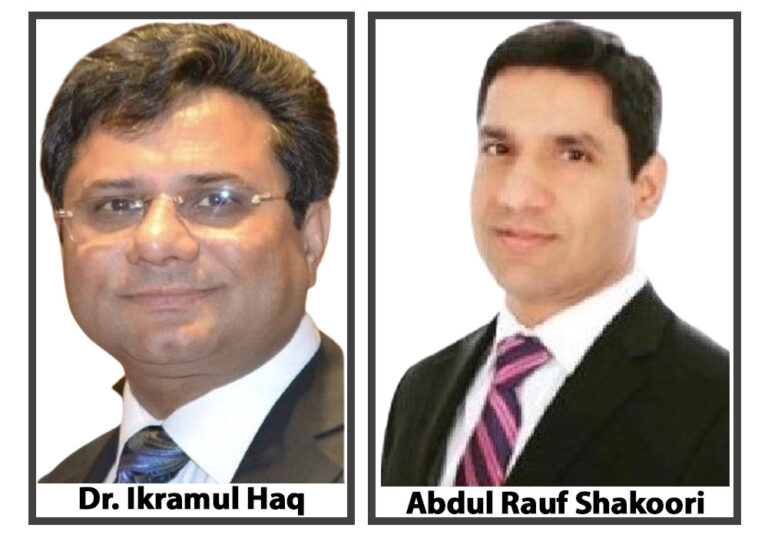
Dr. Ikramul Haq, Advocate Supreme Court, Adjunct Faculty at Lahore University of Management Sciences (LUMS), member Advisory Board and Visiting Senior Fellow of Pakistan Institute of Development Economics (PIDE), holds an LLD in tax laws. He was full-time journalist from 1979 to 1984 with Viewpoint and Dawn. He also served Civil Services of Pakistan from 1984 to 1996.


Similar Posts

  • Ending the Insurgency in Months, Not Decades: What…

    I have stood in places most policymakers only read about in briefing papers. I spent time in Afghanistan during the Ashraf Ghani years, and the whole of 2010 in what was then Ex-FATA — a zone so dangerous that even seasoned aid workers called it the place where devils refuse to go. Later, I worked on rehabilitation efforts in Azad Jammu and Kashmir. None of what I am about to argue is theoretical. It is drawn from villages of EX-FATA I walked through, water I watched women carry for miles on donkeys, and children I saw crossing frozen ground without shoes while, an hour’s drive away, the Afghan elite lived behind walls that looked like fortresses. That contrast is the whole story of why the Taliban won. Over two decades, the Western-backed Afghanistan collapsed not primarily on the battlefield but in the space between Kabul’s donor-funded skyline and the rural provinces that never saw a rupee — or a dollar — of that money trickle down. Billions moved through Kabul. Almost none of it moved past it. Into that vacuum, the Taliban did not need to conquer the countryside. They simply had to show up where the state never had, and offer order where there was only neglect. In 2010, in FATA, I watched the same mechanism recruit teenage boys into suicide bombing — and the driving force was rarely ideology in its purest form. It was poverty, weaponised by men who understood exactly how to turn deprivation into obedience. I say this because Pakistan is now watching its own soldiers and citizens bleed in Balochistan, Khyber Pakhtunkhwa, and Azad Jammu and Kashmir, and we keep mistaking the symptom for the disease. In Balochistan, it is poor living conditions and the absence of work that push young men toward the BLA and other militant groups — not some inherited hatred of the state, but the calculation of someone with nothing left to lose. In KPK, mining activity that could employ tens of thousands sits frozen, and extremist preachers walk into that economic silence with a ready-made narrative of grievance, exactly as I watched happen in FATA 16 years ago. In Azad Jammu & Kashmir (AJK), where I subsequently served on the front lines of post-disaster rehabilitation, the work executed under the leadership of General Musharraf and Lieutenant General Nadeem was nothing short of extraordinary. They transformed the region—erecting world-class infrastructure that spanned rural housing, modern hospitals, and state-of-the-art universities. Having witnessed his work firsthand, I can unhesitatingly attest that Lt. Gen. Nadeem exemplified the highest standards of professional integrity and selfless duty in the field. Regrettably, subsequent regimes, particularly the current political regime, failed to capitalize on this monumental achievement. Worse still, political negotiators deliberately suppressed these successes under strict orders to deny General Musharraf the credit he rightly deserved It was neither the foreign conspiracies spun about Modi nor the shadow plays attributed to Netanyahu that brought us to our knees—it was the quiet, deliberate treason of our own. The true architects of our ruin sat comfortably in our own cabinets, presiding over the Ministry of Planning and the Ministry of Petroleum. Let the record be unsealed, and let the ledger of corruption show the reality of our sabotage. While the global solar revolution was gaining unstoppable, undeniable momentum as far back as 2012, our planners turned a blind eye to the sun. Instead, they peddled dirty imported coal and structurally flawed LNG infrastructure, deceitfully masquerading them as national “game-changers.” They were not mistakes; they were choices. They willfully shackled this nation to predatory FSRU contracts, riddled with toxic force majeure loopholes that bled our public treasury dry to enrich foreign syndicates and domestic middlemen. Their actions expose a chilling, unvarnished truth: capital was never the bottleneck. Financial constraints were a myth. The true poverty of this nation was the shameless, treasonous lack of political will to break free from the payout loop and build a sovereign future. According to Pakistan’s own energy regulator, NEPRA, consumers were burdened with roughly Rs1.81 trillion in capacity payments in fiscal year 2024–25 alone — fixed payments to power producers simply for having plants available, regardless of whether they generated a single unit of electricity. That figure made up 61 percent of the country’s entire power purchase cost. On a per-unit basis, Pakistanis paid roughly Rs14.3 for capacity alone, compared to about Rs9.0 for the energy actually consumed. Multiply that pattern across recent years and the country has handed over trillions of rupees to keep idle machinery on standby, while Pakistani manufacturers pay electricity rates nearly double what their competitors pay in India and Vietnam, hollowing out the very industries that could have employed the young men now being recruited by militants instead. Even a third of what has been paid out in capacity charges over the past five years — redirected honestly into youth employment programs in KPK, Balochistan, and AJK — would have done more to end this insurgency than any military operation conducted so far. This is not sentiment. It is arithmetic that any finance ministry could run in an afternoon. And here the accountability question becomes unavoidable. The man who, as federal minister for petroleum and natural resources from 2013 to 2018, championed the LNG import architecture that helped lock Pakistan into the very capacity-payment structure now crushing consumers, later became Prime Minister of Pakistan. He subsequently faced formal NAB proceedings, an indictment, and questions in court over unexplained deposits connected to that period — a matter of public record, still contested by his supporters as political victimization, but investigated nonetheless by the country’s own anti-graft body. I raise this not to relitigate one man’s guilt or innocence in a courtroom I am not sitting in, but to make a structural point: the same energy policy architecture that produced Pakistan’s capacity-payment crisis was built, negotiated, and defended by people who moved seamlessly from ministry to premiership to private life, largely untouched by the consequences their decisions imposed on

  • When Will Childhood Be Safe?

    The true measure of a society is not its skyscrapers, motorways, economic statistics or political slogans. It is revealed by something much simpler: how safe its children are. If a child cannot feel safe at home, in the neighbourhood, at a madrassa, at school or even on the street, then all our claims of progress deserve to be questioned. The growing number of cases of child abuse in Pakistan is not merely a matter of crime statistics. It reflects our collective indifference, weak institutions and a social culture that too often chooses silence over justice. Behind every reported case is a childhood that has been stolen, a family that has been shattered and an innocent mind carrying wounds that may never fully heal. According to the material available for this article, 1,914 cases of child abuse were reported across Pakistan during the first six months of 2026. Meanwhile, Sahil’s report recorded 3,630 cases of child abuse across the country in 2025, an increase of eight per cent over 2024. These figures were compiled from reports published in 81 newspapers across the four provinces, Islamabad, Azad Jammu and Kashmir and Gilgit-Baltistan. According to the report, more than nine children were subjected to some form of abuse every day in 2025. But is this the complete picture? Probably not. These figures represent only the cases that were reported. Countless incidents never reach the police or the courts because of fear, social stigma, family pressure, financial difficulties and the long, exhausting process of seeking justice. The reported numbers, therefore, should not be mistaken for the full scale of the problem. There is also a widespread assumption that children are mainly at risk from strangers. The reality is far more complicated. Long-term analyses of child abuse cases have repeatedly shown that a significant number of incidents involve people known to the child or the family. This is an uncomfortable truth, but one that parents must acknowledge. Teaching children simply to avoid strangers is no longer enough. They must also be taught that if a relative, teacher, neighbour, family acquaintance or influential person makes them uncomfortable or pressures them into doing something they do not want to do, they have the right to speak up. They should know that they can tell their parents or another trusted adult without fear of being blamed or punished. Such education is not about frightening children. It is about giving them confidence.Perhaps the most painful aspect of this crisis is that danger sometimes comes from the very place that should be a child’s safest refuge. Home is a child’s first shelter. The family environment is supposed to provide love, security and protection. But if that space becomes unsafe, where does a child go? Parents also need to pay close attention to sudden and unexplained changes in a child’s behaviour. Fear of a particular person, refusing to go to school, unusual silence, anger, withdrawal or a sudden change in behaviour may sometimes be warning signs. Not every behavioural change means that a child has been abused, but ignoring every unusual change is certainly not wise. Pakistan does not lack laws relating to child protection. The Zainab Alert, Response and Recovery Act 2020, the Juvenile Justice System Act 2018 and various provincial laws and policies provide a legal framework for protecting children. The real problem, however, is not the absence of laws. It is the failure to translate those laws into effective action. During a hearing at the Islamabad High Court in June 2026 concerning the implementation of the Zainab Alert law, the court was informed that some important provisions, including the practical operation of an immediate alert mechanism for missing children, had yet to be implemented as intended. The court was also told that 562 criminal cases relating to missing children and child abuse had been registered in Islamabad between 2022 and 2025. These figures raise a fundamental question: how seriously do we monitor the implementation of laws after passing them? The National Assembly’s Standing Committee on Human Rights also expressed concern in February 2026 over the performance of government institutions responsible for child protection and the lack of coordination between departments. It pointed out that several policies appeared to remain largely confined to official documents. We also need to understand that registering an FIR is not justice. It is merely the beginning of the process. If a child is abused, a case is registered and the accused is arrested, but the trial continues for years, witnesses come under pressure, evidence becomes weaker and the family eventually loses hope, then where is the justice despite the existence of laws? Cases involving children require a particularly sensitive approach to investigation and prosecution. Making a child repeatedly recount a traumatic incident, subjecting them to unnecessary questioning or taking their statement in an intimidating environment can deepen the trauma. Every district should therefore have properly trained child protection units where police officers, prosecutors, social workers and psychologists can work together. Specially trained investigators and prosecutors should deal with child abuse cases, while unnecessary delays in trials must be eliminated. We teach our children mathematics, science, English and computers. But do we teach them what to do if someone touches them inappropriately? Do they know that they have the right to say no? Do they understand that they are not obliged to obey an adult when something is wrong? Do they know whom to approach if someone threatens or intimidates them? Age-appropriate child safety education is no longer a luxury. It is a necessity. The purpose of such education should not be to frighten children but to give them a basic understanding of personal boundaries, appropriate and inappropriate touch, online risks and ways of seeking help. Parents and teachers also need training because children often communicate distress through changes in behaviour rather than directly asking for help. The dangers facing children today are not confined to streets, schools and neighbourhoods. Mobile phones and the internet have created another world in which children can

  • Makkah Joint Defence Agreement and 9th Generation …

    A few days ago, Mr. Hakan Fidan, the Foreign Minister of Turkey, briefed the media on the MJDA. He said that the operational mechanisms will be decided at the first meeting of the joint committee comprising the foreign and defense ministers and the Chief of General Staff. He also provided an overview of possible areas of cooperation. In this context, it is high time to discuss the future orientation of the MJDA, especially areas of cooperation and investment to build a future-oriented alliance. A few areas have been identified for consideration.   First of all, the three partners must understand that the era of traditional war is rapidly becoming irrelevant. The concepts of 5th-, 6th-, 7th-, and 8th-generation warfare are evolving into new dynamics: 9th-generation warfare. Thus, Cooperation under MJDA must be based on the new elements and needs of 9th-generation warfare, in addition to traditional areas. Now the question is, what is 9th-generation warfare? 9th-generation warfare has a few characteristics that distinguish it from past generations of warfare.   First, 9th-generation warfare will minimize, if not eliminate, the role of humans to a greater extent. The first glimpse of this type of warfare is evident in the form of unmanned UVs. Russia-Ukraine and USA-Iran wars further reinforce this argument. However, humans are still engaged in one way or another in wars, including devising and executing plans and engaging in face-to-face combat. For example, during the application of 4th- and 5th-generation warfare in the Middle East, humans remained a constant factor in leading and executing the wars. After the bombardment of Iraq, it was humans who captured the land.   However, it is anticipated that artificial intelligence will take over this job in future wars, and future wars will be run by artificial intelligence and its tools. For example, in 9th-generation warfare, artificial intelligence-based robots can take over the role of humans. Robots can invade a country, or they can also be used in guerrilla warfare. Countries can also use robots to conduct terrorist activities. They can send the robots with an anonymous identity, and no one will be able to trace the origin. Organized crime organizations can also use them to conduct their activities, such as targeted killings.   Let’s imagine another scenario. Robots are invading a country. They fight either humans or other robots. Countries with better technology can turn robots into double-edged weapons. On the one hand, robots will be fighting machines. However, they can also equip robots with destructive explosives, such as nuclear material or other explosives. Then what would be the opponent’s choices? How will opponents fight an explosive-ridden robot? They will take over the country if they do not stop the robots. On the other hand, if they try to destroy the robots, the nuclear explosives will detonate, which can cause serious damage. The scenario would be quite scary, and countries with advanced robot and AI technology can maneuver situations in their favor.   Second, the most developed countries have recently taken war into outer space, especially the USA. The USA’s obsession with and investment in outer space have compelled other countries to follow the suit. As a result, they are investing heavily, instigating an outer space race for dominance. The race has accelerated since the establishment of the US Space Force. According to the Vice President of the USA, Mr. Pence, the force was launched with four specific objectives. First, U.S. Space Command “will establish unified command and control for our Space Force operations; ensure integration across the military; and develop the space warfighting doctrine, tactics, techniques and procedures of the future.” Second, a military astronaut corps, which Pence called “an elite group of joint warfighters specializing in the domain of space.” Third, a Space Development Agency that will research and develop new technologies and “ensure cutting-edge warfighting capabilities.” Fourth, new bureaucratic structures that will define “clear lines of responsibility and accountability to manage the process of standing up and scaling up the United States Department of the Space Force.”   The USA and its allies are enhancing cooperation to outpace others and dominate outer space. As a result, they have launched a malicious campaign against China and Russia. They are portraying China and Russia as threats to global peace and to the use of outer space to attract public attention, support, and financial resources. At the same time, they also want to hinder the advancement of other countries in space technology to maintain their hegemony in the application of space technologies for war dominance. For example, during the Gulf War of the 1990s, the USA and allied forces used space technologies to outmaneuver their opponents. Since then, the USA and its allies have been working to further improve space technology and prevent other countries from developing these technologies.   Therefore, it is anticipated that space war will be multifaceted. On the one hand, there will be a race to control or maneuver opponents’ satellites by interfering with their software. This will be done to obtain information or spread disinformation. Sending arms into space to destroy opponents’ satellites is also possible. On the other hand, some countries have developed capabilities to hit satellites from the ground. This has opened a new field of military offense.   The use of space technology for military dominance created fear in the developing world. They fear that leading countries in space technology will use space for control and interference, collect information, and dictate to other countries. For example, the USA uses navigation systems to collect data and outmaneuver others in wars.   Third, in recent times, we have observed that COVID-19 has played havoc with humanity. It has shaken the whole world. The whole world came to a standstill. Markets were closed, and the tourism industry sank. It has introduced the world to a new danger of biological war. Biological war is considered one of the most lethal forms of war, as only one person can paralyze the world. One virus can shut down the whole world

  • Beyond Riba: Reconstruction of Just Financial Orde…

    The preceding part of this series ended with a limit that productive finance cannot cross. Illness, unemployment, education, disability, orphanhood and temporary distress cannot always be converted into profitable investments. Human vulnerability itself cannot become another financial product. That is where a riba-free order must move beyond banking. A society may successfully redesign murabaha, musharakah, salam or ijarah and still remain unjust if a family facing cancer treatment must borrow at any cost, a student must enter adult life under debt, or a widow depends upon a local patron for survival. Prohibition of riba becomes socially meaningful only when basic human need is protected from financial extraction. Pakistan does not have to invent the institutional vocabulary from zero. It already has Pakistan Bait-ul-Mal, established under the Pakistan Bait-ul-Mal Act, 1991. Its official mandate includes assistance to the destitute, widows, orphans, persons with disabilities and other needy citizens, with support extending to medical treatment, education and rehabilitation. Its official position is that assistance is available to the poorest without differentiation of religion, creed, sect or region. This is an important foundation. It is not yet the structure required for a just financial order. Bait-ul-Mal should cease to be understood primarily as an agency dispensing discretionary relief to the “poorest of the poor”. Its larger purpose should be to guarantee a legally defined social floor. Food in destitution, essential healthcare, basic education, protection of children without support, disability assistance and temporary subsistence during involuntary unemployment should become matters of entitlement under transparent criteria, not favours obtained through political access. This distinction is fundamental. Charity depends upon the generosity of the giver. Entitlement rests upon the responsibility of society. It is one of the most emphasised Quranic directive on this idea. The directions given in the holy Quran need not be accepted in totality. This principle is accepted in all the classical juristic traditions. The practical discussion on this is important. In the transitional phase, all the scholarly works envisage gradual movement rather than an overnight abolition of existing economic arrangements. Individuals progressively devote more of their resources to collective purposes while organised society assumes responsibility for the basic necessities of life.   The transition, in any pragmatic scheme, is institutional rather than merely charitable. That insight deserves attention. An Islamic polity cannot measure success by the number of ration bags distributed after deprivation has occurred. Its test is whether institutions progressively remove the conditions that force citizens into dependence upon creditors, property owners, political patrons or charitable intermediaries. Bait-ul-Mal should therefore form the first pillar of social finance: the guarantee against destitution. The second should be waqf. Waqf historically converted wealth into enduring social capital. Whatever the juristic differences concerning its precise legal character, its institutional genius lies in removing an asset from ordinary private consumption and dedicating its benefit to a continuing purpose. Land, buildings and income-producing properties can support hospitals, schools, hostels, water systems, vocational institutions, research centres, shelters and community infrastructure across generations. Pakistan already possesses statutory waqf institutions. Punjab’s Auqaf Department, for example, operates under the Punjab Waqf Properties Ordinance, 1979, for the administration and regulation of waqf properties. Income arising from properties under its control is credited to the Auqaf Fund under the statutory framework. The potential is much larger than administration of shrines and mosques. Pakistan should develop professionally governed public waqf institutions—waqf lillah—at national, provincial and local levels. Public land lawfully dedicated for community benefit, voluntarily endowed private property and other permissible assets could constitute permanent pools of social capital. Their corpus should remain protected while their income finances clearly defined public purposes. This cannot become another avenue for bureaucratic or political capture. Every waqf property should be digitally registered. Its title, purpose, valuation, income, expenditure and beneficiaries should be publicly accessible. Independent audit, professional management and strict conflict-of-interest rules are indispensable. No minister, shrine manager, political family or local notable should be able to convert property dedicated for public benefit into an instrument of patronage. The third pillar is zakat. It should remain distinct from both the ordinary budget and waqf. Its compulsory redistributive character and specified purposes give it an institutional identity of its own. Combining every form of social finance into one government account would destroy these distinctions. The fourth pillar is qard hasan. Not every person requiring temporary liquidity is destitute. A worker may face a medical emergency. A small farmer may need funds after a flood. A graduate may require equipment to begin earning. A household may need a short bridge between unemployment and a new job. Such circumstances do not necessarily call for a grant. They require finance without extraction. Revolving qard hasan funds administered through Bait-ul-Mal, public waqf institutions and local cooperatives could provide precisely that bridge. Principal would return when the recipient regains capacity, allowing the same pool to assist another household. The institution earns no commercial return from distress; society recycles solidarity. This connects directly with the cooperative model discussed in Part IV. The ultimate objective cannot be to create permanent classes of beneficiaries. Social protection should lead towards economic agency. A citizen receiving emergency assistance today should, wherever possible, become tomorrow’s producer, saver and member of a cooperative financial institution. Bait-ul-Mal prevents collapse. Waqf creates enduring social assets. Qard hasan provides a bridge back to economic activity. Cooperatives enable citizens to pool savings, own institutions and finance one another. These mechanisms should operate together rather than as isolated schemes. The structure can be visualised as a ladder. At its base is an enforceable social floor below which no citizen is allowed to fall. Above it are education, healthcare and skills supported partly through public waqf. Temporary setbacks are met through qard hasan. Productive citizens then move towards cooperative and commercial risk-sharing finance of the kind discussed in Part IV. The direction is from dependency to capability, not from one form of dependency to another. Governance will determine whether this succeeds. Pakistan has repeatedly created institutions in the name of disadvantaged citizens and then allowed

  • The Intellectual Odyssey: Revisiting Daryabadi

    Bio: Hamza Tareen is a student at LUMS, majoring in Political Science and with a keen interest in philosophy and theology.   Few individuals’ legacies are defined more by their peculiar life accounts than by their vast scholarly contributions. Majid Daryabadi is probably of that ilk. An exceptionally gifted child, raised in a deeply devout family, his life was in complete accord with the theological influences that enveloped him: from wearing the characteristic religious turban to being tutored in Quran and Arabic from the very early years. And, at the precocious age of thirteen, Daryabadi began penning polemical articles and essays aimed at defending Islamic doctrines—and refuting rival traditions. However, hardly anyone could have anticipated the drastic tempest that would soon ensue and shake Daryabadi to his core. Coming across the book titled The Elements of Social Science was the critical juncture in his life which struck at the very heart of his values. This work did not flagrantly castigate Islam or denounce any other religion; it assaulted something else: the underpinning social and moral frameworks which form the bedrock of society. Little wonder that Daryabadi, still a 16-year-old who had just finished his Matriculation, was disillusioned with the guiding theological foundations he had long cherished ‘when the claims and arguments of the book were in complete accord with libidinal urges’. This episode was the turning point in his life which estranged him from his beliefs and was the nascent emergence of a decade-long journey of doctrinaire atheism. Although his shift to skepticism was driven and cemented by encounters with the works of eminent atheists and philosophers, one thing particularly arrests attention and exposes the academic dishonesty present profusely in Western academia: the spurious claim that the citadel of their scholarship is erected upon objectivity and dispassionate ‘impartiality’. Daryabadi, in his autobiography, elaborates that ‘a poison ran through the lines’ of seemingly ‘objective’ and ‘scientific’ scholarship. In a remarkably furtive and implicit manner, the most profound religious convictions would be scoffed at and trampled underfoot. Two such illustrations are worth noting: a voluminous piece of psychology argued, targeting the blessed Prophet (PBUH), that it was possible for a man suffering from epilepsy to leave behind a great legacy. In another instance, the Prophet was depicted—reprehensibly and coarsely—in an artificially concocted image, which was merely the deplorable translation of West’s bias towards Islam. Daryabadi persisted in his skepticism of religion and would fiercely critique it through his various publications. But despite the outright repudiation, there was a concealed, but potent, bond with Islam, which did not wither away; when Samuel Zwemer, a Christian polemicist who had come to British India for a conference, began his critique of the religion, Daryabadi—by then an atheist—would offer his rejoinders in defense of the faith. The subtle and discreet traces of sacred convictions had survived the materialistic tumult. It was after a decade that Daryabadi would, slowly and gradually, experience a shift in trajectory. His voracious propensity to read, coupled with sheer curiosity, led him to scrutinize the works of semi-atheistic philosophers who had entertained spiritual dimensions and possibilities beyond the cold, materialistic realm. Subsequently, he delved into the study of Buddhism, Hinduism and theosophy. Something profound had changed. Seeds of belief had been sown—once again. Engaging with the spiritual aspects of the traditions led him to deliberate the possibility of the unseen. Taken aback by the profundity of insights and reflecting upon their perennial truths, Daryabadi was intrigued. His quest for the truth eventually led him to Mawlana Jalaluddin Rumi’s Masnavi—the classic fountain of spirituality. The exemplar of Tasavvuf left a lasting imprint on Daryabadi’s rationalist outlook, unfolded before him a new horizon, and imbued him with an acute consciousness of the divine. Rumi’s Masnavi uplifted him from the recesses of oblivion to the light of the sacred. An epiphany reverberated through his austerely skeptical frameworks: the expanse of truth was too wide to be captured by the empiricist. And then came the final ‘nail in the coffin of atheism and apostasy’ when Daryabadi once again ventured to open the divine book, now bestowed with the ability to perceive the truths contained therein. That translation of the holy book was rendered by Muhammad Ali Lahori, a member of the Ahmadiyya movement, and Daryabadi’s enduring gratitude to him was a reminder to the puritanical Muslims who refuse to see the value in the works of those they deem astray. A poignant pilgrimage to the former self followed thereafter, and Daryabadi pledged allegiance to the renowned Sufi master Shaykh Ashraf Ali Thanavi—his father’s prayers had been finally answered. He went on to author a multitude of books, with his magnum opus being the multi-volume exegesis of the Holy Quran, Tafsir-i-Majidi, and was ultimately etched into history as a towering Muslim scholar who contributed immensely to Islamic scholarship.

  • Imran khan’s health and the state’s respon…

    It’s not about the prisoner’s health only its about Pakistan. When a state holds a political leader in prison, it assumes a responsibility that goes beyond the enforcement of a court sentence. It assumes responsibility for the person’s safety, dignity and health. That principle should be beyond politics. In Pakistan, however, even a prisoner’s eyesight has become part of the country’s bitter political struggle. The continuing controversy over Imran Khan’s health is therefore about much more than one man. It raises a fundamental question about the relationship between the citizen and the state: what happens to individual rights when political conflict becomes so intense that every state decision is viewed through the prism of partisan politics? Imran Khan, Pakistan’s former prime minister and one of its most influential political figures, has been in prison since 2023 in connection with multiple legal cases. His supporters have repeatedly raised concerns about his health and access to appropriate medical care. More recently, particular concern has focused on his eyesight. Reports in early 2026 said that Khan had developed a retinal condition affecting his right eye. His family and political representatives questioned whether he had received adequate specialist treatment, while the authorities maintained that he was being properly cared for. A government-appointed medical board subsequently reported improvement in his eyesight. The conflicting accounts should not be allowed to become another chapter in Pakistan’s political war. There is a remarkably simple way to address the problem: independent medical assessment and complete procedural transparency. If Khan is medically stable, independent specialists should be able to establish that fact. If he needs treatment, it should be provided without delay. If his family disputes the government’s medical assessment, credible specialists should be permitted to review it. There should be no political advantage in either concealing a medical problem or exaggerating one. This should be obvious in any functioning democracy. Yet Pakistan’s political history makes it anything but simple. For decades, political power in Pakistan has been accompanied by institutional confrontation. Governments have used legal and administrative mechanisms against their opponents, only to find themselves out of power and vulnerable to similar treatment later. Political parties that once demanded accountability have subsequently complained of victimisation when they became targets themselves. The result is a vicious cycle in which accountability is increasingly viewed through the language of revenge. Imran Khan’s imprisonment has become one of the most visible manifestations of that crisis. His supporters see him as the victim of an establishment-backed campaign to remove him from politics. His opponents argue that the cases against him are matters of law and accountability and that political popularity cannot place anyone above the law. Both arguments can be debated. Courts can determine questions of guilt and innocence. Voters can judge political performance. Parliament can debate constitutional questions. But none of these arguments should determine the standard of medical care available to a prisoner. That distinction is essential. The state has the authority, within the law, to imprison a person. It does not acquire unlimited authority over that person’s body or dignity. Detention restricts liberty, it does not erase humanity. This principle becomes even more important when the prisoner is a former head of government. The treatment of such a person inevitably becomes a test of institutional maturity. The government may have legitimate reasons for keeping Khan imprisoned, but it should have an equally compelling interest in ensuring that his medical treatment cannot reasonably be portrayed as political punishment. The irony is that transparency would serve everyone. It would protect Khan from inadequate treatment. It would protect his family from uncertainty. It would reassure his supporters. And it would protect the government from accusations that medical care is being manipulated for political purposes. Instead, Pakistan often chooses the opposite path. Official statements are followed by political counterstatements. Medical reports become partisan documents. Families make allegations. Governments issue denials. Social media turns uncertainty into outrage. And a question that should have been answered by doctors becomes another battlefield between political camps. This is not merely a communications failure. It is an institutional failure. A credible democratic state must have mechanisms capable of resolving such disputes without requiring citizens to choose which political side they trust. Pakistan could establish precisely such a mechanism. High-profile prisoners could be examined by independent medical boards selected through transparent professional criteria. Prisoners could have access, where appropriate, to independent specialists. Medical records could be maintained according to professional standards, while necessary information could be shared with families and the courts. Where a serious disagreement arises, an independent medical opinion should be available. Such safeguards should not be created specifically for Imran Khan. They should apply to everyone. The ordinary prisoner matters too. Pakistan’s prisons contain thousands of people whose health concerns rarely receive national attention. They may not have political parties, lawyers appearing on television every evening, influential families or millions of supporters on social media. Yet their right to humane treatment is no less important. Indeed, the treatment of ordinary prisoners may be the more meaningful measure of the state’s commitment to human rights. But Khan’s case provides Pakistan with an unusual opportunity. Because his imprisonment is already under intense national and international scrutiny, the government can demonstrate that the state is capable of separating political disagreement from humanitarian responsibility. That would require political courage. A government does not become weaker by allowing an opponent proper medical treatment. It becomes weaker when it appears afraid of transparency. A government does not demonstrate authority by controlling every narrative. It demonstrates authority by allowing facts to withstand scrutiny. This is particularly significant for Pakistan’s international reputation. Pakistan frequently presents itself as a democratic state committed to constitutionalism, human rights and the rule of law. Yet international credibility is not built through diplomatic declarations alone. It is built through conduct, especially when circumstances are politically uncomfortable. The treatment of political opponents is one of the clearest indicators of democratic health. A democracy cannot be judged only by how it treats

Leave a Reply

Your email address will not be published. Required fields are marked *