
sindhs education revolution

Sindh’s Education Revolution: Transforming C…

Education  is no longer measured merely by the number of schools or students enrolled. In the modern era, success depends on transparency, accountability, quality learning, financial empowerment, and the effective use of technology. Over the past few years, the School Education & Literacy Department (SELD), Government of Sindh, has introduced a series of reforms that are gradually transforming the province’s education landscape. These initiatives reflect a shift from conventional administration to a modern, technology-driven education system focused on improving learning outcomes and governance.

One of the most significant reforms is the Student Attendance Monitoring & Redress System (SAMRS). This digital platform records students’ attendance in real time, allowing school heads and education authorities to identify absenteeism, monitor enrollment trends, and intervene promptly to reduce dropout rates. By replacing manual reporting with digital monitoring, SAMRS enables data-driven decision-making and strengthens accountability throughout the education system.

Complementing this initiative is FRAMES (Facial Recognition Attendance Monitoring System), a facial recognition-based attendance mechanism for teachers and non-teaching staff. By replacing traditional attendance registers with biometric verification, the system minimizes proxy attendance, enhances punctuality, and ensures greater transparency and discipline across government schools.

Another landmark initiative is the e-Transfer System, which has digitized the transfer process for government school teachers. Instead of relying on lengthy manual procedures, teachers can now apply online, making the process more transparent, merit-based, efficient, and accessible while reducing unnecessary administrative delays.

Financial decentralization has also emerged as a defining feature of Sindh’s education reforms through the School Specific Budget (SSB). During FY 2025–26, the Government of Sindh allocated Rs. 18.67 billion directly to government schools, empowering Head Teachers to manage repairs, maintenance, sanitation, furniture, learning materials, and other operational requirements according to local needs. Recognizing the positive impact of this initiative, the allocation was increased to Rs. 22.64 billion in the FY 2026–27 budget, representing an increase of approximately 21 percent. This reform has significantly strengthened school-level autonomy and improved service delivery.

Equally important are the Curriculum Reforms, which aim to prepare students for the demands of the 21st century. The revised curriculum emphasizes competency-based learning, critical thinking, creativity, problem-solving, inquiry-based education, and student-centered teaching methodologies. Modernized textbooks and improved publishing standards are helping create a more relevant and engaging learning experience while promoting tolerance, inclusion, and responsible citizenship.

A landmark achievement in inclusive education is the introduction of religious textbooks for Hindu students in government schools. For the first time, Hindu students are being provided with textbooks based on their own faith, ensuring that minority students can study their religion within the formal education system. This historic initiative reflects Sindh’s commitment to religious harmony, equal educational opportunities, and respect for diversity.

These reforms are further reinforced through merit-based teacher recruitment, digital education management systems, improved monitoring mechanisms, free textbook distribution, and technology-enabled governance. Collectively, these initiatives demonstrate that education reform is no longer confined to infrastructure alone; it now encompasses transparency, accountability, innovation, curriculum modernization, and school empowerment.

The transformation of Sindh’s education sector is an ongoing journey rather than a single achievement. Yet, the direction is unmistakable. Through digital innovation, decentralized governance, curriculum modernization, financial empowerment, and inclusive policies, the leadership of Syed Sardar Ali Shah has helped lay the foundation for a more transparent, efficient, and student-centered education system. If these reforms continue with the same commitment and consistency, Sindh has the potential to become a leading model of public education reform in Pakistan.

Author:
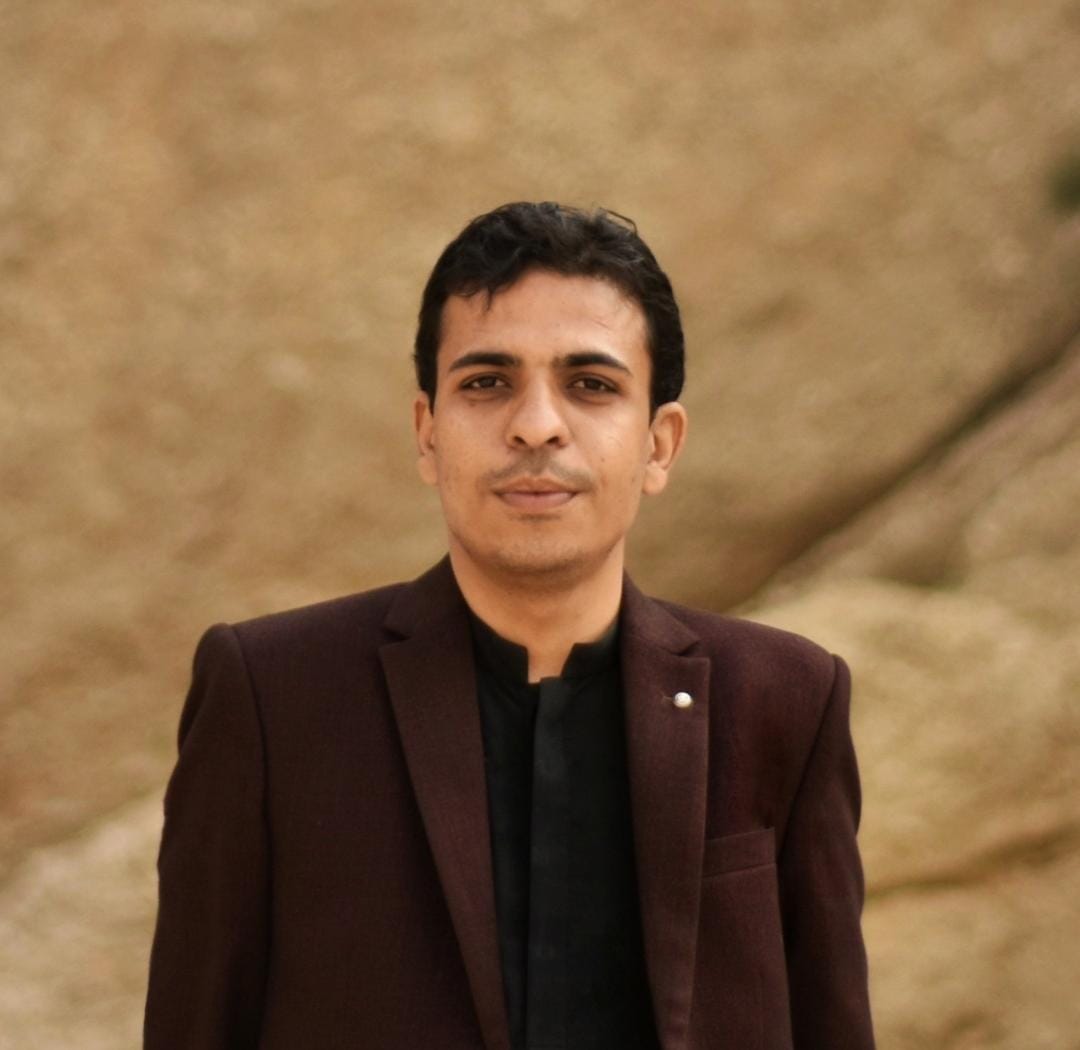
Dr Muhammad Rafique
Wahi Pandhi, District Dadu
Similar Posts

  • The AJK Crisis 

    Azad Jammu and Kashmir has recorded at least 40 deaths since early June in clashes tied to the Joint Awami Action Committee’s campaign against the region’s twelve refugee assembly seats, a toll that predates the events of July 27-28, when JAAC and AJK police gave conflicting counts of 14 to 21 more killed in Rawalakot. The combined total since June likely sits in the high 40s to high 50s, though no independent body has confirmed a single figure; every clash in this sequence has produced a JAAC count and a police count that don’t match, and neither has been verified from outside. The July violence fell during the first phase of a legislative election that AJK’s election commission split into three stages because of the unrest, a break from the territory’s usual practice of voting in a single day. Mirpur division cast ballots on July 27. Rawalakot, in Poonch division, was deliberately held back for the third phase because it has been the epicenter of the agitation. The clashes there on July 27-28 came as JAAC’s long march tried to push through the city toward Muzaffarabad, not on a day its own constituents were voting. That the state felt it necessary to stagger an election by geography to manage a protest movement is itself a measure of how far the crisis had already gone. Law enforcement personnel have been repeatedly targeted through the unrest. Police say an armed JAAC contingent opened fire on officers near Combined Military Hospital Rawalakot in a planned attack, which the region’s police chief called outright terrorism. JAAC disputes this, as it has disputed nearly every account of nearly every clash, saying its own people came under fire after power was cut to the area. Neither version has been independently verified, and the Human Rights Commission of Pakistan has called for an impartial probe into the Rawalakot deaths for that reason. What is not contested is that a movement now banned under anti-terrorism law has been in near-continuous confrontation with police for eight weeks, and that officers have died in it. The dispute traces back to a structural question the state has already answered through the proper channel. Six of the twelve seats go to refugees from the Jammu division, numbering around 434,000; six more go to refugees from the Kashmir Valley, numbering around 30,000. JAAC calls this disproportionate and argues the seats let people who do not live in AJK shape its politics from outside. The AJK Supreme Court ruled on June 7 that the seats are constitutionally protected and can only be altered through a formal amendment, not by administrative order or by protest. The government’s proscription of JAAC under anti-terrorism law came two days earlier, on June 5, ahead of a planned June 9 protest; the worst of the killing followed the ban rather than preceding it. Both sides of that sequence can be argued. What can’t be argued is that the state waited for a body count before invoking the law , it acted first, and the deaths followed. On the demands themselves, the government reports 24 of JAAC’s 44 total demands fully implemented and 16 more partially complete or in process, with 4 at an impasse. That record is substantial, larger than most governments manage against a protest charter. But it does not settle the argument on its own, because none of the 24 completed demands is the refugee-seat question. That one sits among the 16 still unresolved, and it is the demand driving the current violence. A compliance rate built mostly from other line items ; subsidies, cabinet size, judicial commissions, demonstrates the state’s good faith in general. It does not demonstrate its handling of the one issue JAAC is dying and killing over, and that distinction should not be blurred. Even so, the seat question has been settled by the only body with authority to settle it. Abolishing the seats to appease pressure tactics would be unconstitutional on its face, and it would tell any future movement in Pakistan that enough disruption can override a court and a negotiated settlement alike. A state that has followed its own constitutional process, implemented most of an agreed reform charter, and still faces an intensifying campaign of blockades and attacks on security personnel has grounds to hold its position; grounds that rest on the process it followed, not on an implementation statistic that doesn’t reach the actual grievance. The state’s strongest move now is to negotiate from the position it has already earned, not concede from a position of weakness. Reweighting the seats toward Jammu’s larger population, pursued through the amendment process the Supreme Court has itself outlined, would resolve the proportionality complaint on the state’s own terms and timeline, not JAAC’s. Offered now, immediately after a disputed mass-casualty event, it would read as capitulation. Offered once the group’s remaining leadership either accepts the court’s authority or is dealt with through the law, it becomes a demonstration of a functioning constitutional order rather than a retreat from one. The state does not owe JAAC a seat at the table it has spent eight weeks helping to blow up. It owes AJK’s residents a government that can enforce the law, account honestly for its own role in how this got this bloody, and eventually fix what is fair within the constitution , in that order.

  • Muslim Nationalism: From Economic Exclusion to Sov…

    ​As Pakistan celebrates its Independence Day on August 14, the twentieth-century history of the South Asian subcontinent demands a reflective analysis that goes far beyond a mere anti-colonial struggle or a simplistic narrative of imperial power transition. The creation of Pakistan represents a profound, philosophical, and structural saga centered on collective economic survival, uneven development, and the discovery of a modern political identity. Western Orientalists and traditional nationalist historians of India have often tended to reduce the genesis of Pakistan to emotional religious fervor or the peripheral consequence of a British “divide and rule” strategy. However, when analyzed through the prisms of political economy and structural analysis, a distinct reality emerges: the Muslim demand for a separate homeland was fundamentally a rational, material response to systemic economic marginalization, structural imbalances, and the acute objective fear of becoming a permanent minority under Westminster-style majoritarian democracy. This trajectory unfolded with unbroken intellectual, economic, and constitutional continuity from the post-eighteenth-century decline down to the geopolitical remapping of 14th August 1947. ​To comprehend the evolution of Muslim nationalism in South Asia, a rigorous analysis of the post-1857 economic and structural disruption is indispensable. The collapse of the Mughal state and the consolidation of East India Company rule subjected Muslim society to a catastrophic economic crisis rooted in colonial land and fiscal policies. Through the Permanent Settlement of 1793 in the Muslim-majority region of Bengal, traditional landholding rights were systematically stripped from Muslims and transferred to a newly created non-Muslim landed class. As the historian W. W. Hunter observed in his seminal work, The Indian Musalmans, British administrative interventions pushed the Muslims of Bengal—who had previously constituted the ruling elite and agrarian proprietors—into a condition of severe peasant impoverishment and structural decay. This agricultural dislocation was paralleled by institutional disenfranchisement. The replacement of Persian with English as the official language in 1835 instantly alienated the Muslim intelligentsia and professional classes from the bureaucracy, judiciary, and civil service. In his analysis of the post-colonial state, the political economist Hamza Alavi conceptualized this segment as the “salariat”—a bureaucratic-bourgeois element whose economic dislocation and exclusion from state patronage generated deep structural grievances that ultimately fueled the demand for a distinct national identity. ​As industrial and commercial capitalism took root in the late nineteenth and early twentieth centuries, its structure was inherently skewed. India’s emerging indigenous bourgeoisie—comprising Marwari, Gujarati, and Parsi capitalist networks—monopolized banking, insurance, and primary manufacturing. In burgeoning industrial nodes such as Bombay, Calcutta, and Madras, Muslims were largely relegated to the ranks of agrarian labor, petty artisans, or urban proletariats. As economic historian Benjamin Zachariah notes, the nature of Indian industrialization created a stark spatial and structural imbalance: Muslim-majority provinces like Bengal, Punjab, Sindh, and the North-West Frontier became agrarian hinterlands relegated to supplying raw materials—such as jute, cotton, and wheat—for external processing. While Bengal produced the vast majority of the world’s raw jute, the processing mills, financial capital, and commercial profits were strictly concentrated in Calcutta under non-Muslim mercantile ownership. This economic asymmetry solidified a growing realization among Muslims that an integrated, highly centralized economy in a united India would permanently trap them in an exploited periphery. ​Against this backdrop of economic and institutional decline, the intellectual trajectory of Muslim nationalism evolved in a deliberate, phased manner. Sir Syed Ahmad Khan’s Aligarh Movement sought the scientific renaissance and modernizing realignment of Muslim society. As early as the 1880s, Sir Syed critically dissected the mechanics of British parliamentary democracy, arguing that numerical majoritarianism in a multinational, heterogeneous subcontinent would inevitably result in the permanent hegemony of an ethnically and economically dominant majority. By the 1930s, Allama Muhammad Iqbal elevated this political economy argument into a robust philosophical and territorial framework. In his historic 1930 Allahabad Address, Iqbal rejected Western territorial nationalism, asserting that South Asian Muslims constituted a distinct nation in their own right, given their unique socio-legal and cultural matrix. Crucially, Iqbal linked the preservation of Muslim spiritual and cultural identity directly to territorial and economic self-determination in Muslim-majority regions. As political scientist Paul Brass observed through his theoretical lens of instrumentalism, Muslim nationalism in South Asia was not merely an abstract identity movement, but a structured mobilization by an educated, politically conscious elite seeking an equitable distribution of state power and economic resources. ​Translating this intellectual framework into a tangible, international constitutional reality became the historic mission of Quaid-e-Azam Muhammad Ali Jinnah. Rather than relying on hagiographic narratives, Jinnah’s political evolution must be evaluated through his rigorous legal and constitutional record. As historian Ayesha Jalal demonstrates, Jinnah’s primary objective remained the ironclad safeguarding of the economic, political, and administrative rights of Muslim-majority regions within the subcontinental architecture. For three decades, Jinnah operated as the foremost champion of constitutional guarantees within a united, federal India—evidenced by the Lucknow Pact of 1916 and his Fourteen Points of 1929. However, the centralized ethos of the 1928 Nehru Report, followed by the authoritarian conduct of Congress provincial ministries between 1937 and 1939, forced a decisive paradigm shift in Jinnah’s strategy. The twenty-eight months of Congress rule—marked by educational engineering, discriminatory economic measures, and the marginalization of Muslims in local administrations—proved that paper constitutional guarantees were fragile against an unchecked numerical majority. ​It was from the crucible of this constitutional failure that the Lahore Resolution of 1940 emerged, serving as the definitive blueprint for the creation of Pakistan. Jinnah articulated to the international community that the subcontinental impasse was not a minor minority-majority dispute or a sectarian problem, but an irreconcilable structural conflict between two distinct nations, two differing political economies, and two separate civilizational matrixes. The elections of 1945–46 delivered an overwhelming democratic mandate, confirming that Muslim agrarian masses, merchants, urban laborers, and young professionals unanimously viewed Pakistan as the sole guarantee of their economic emancipation and political sovereignty. Consequently, the Pakistan movement transformed from an elite constitutional debate into a broad-based socio-economic revolution. ​The emergence of Pakistan on August 14, 1947, remains a landmark event in global history, challenging classical theories of post-colonial state formation. It

  • Who Is Responsible for the Truth?

    One question stayed with me long after I attended a workshop under the project titled ‘Digital Trust and Free Expression in the Era of AI’, organized by the Department of Media and Development Communication, University of the Punjab with the support of the U.S. Mission to Pakistan in partnership with the Pakistan-U.S. Alumni Network, was, ‘How will we preserve digital trust and free expression in the age of AI’? As AI becomes an integral part of digital journalism, the question is no longer whether it should be used, and more importantly who should be held responsible when things go wrong. Artificial Intelligence has definitely proven to be a powerful tool for journalists. It can summarize long reports, translate content into multiple languages, follow breaking news, analyze vast quantities of data and even write complete news reports in seconds. All of these capabilities have revolutionized newsroom processes and enabled journalists to process information more efficiently than ever before. But efficiency is not the only measure of ethical journalism. Journalism isn’t about being fast, it’s about informing the public accurately, fairly and responsibly. One of the most valuable lessons I learned from the workshop was that AI does not understand information; it predicts the most likely response based on patterns in the data it has learned from. This distinction is important because when reliable information is unavailable at the time, AI generates responses that seem convincing but inaccurate, but are wrong, which is often referred to as AI hallucination. What’s most concerning is that the AI generated mistakes can appear convincing enough for people to accept them as true. This poses an ethical question: Who should be held responsible if AI-generated news contains misleading information? The burden can’t be placed entirely on the algorithm. AI has no moral judgement or legal accountability. It cannot distinguish between public interest and public harm and is not aware of the social consequences of publishing inaccurate information. This means that the responsibility rests with those who decide to employ these technologies: journalists, editors, newsroom leaders, and media organizations. While AI can help create content, it cannot replace responsibility. This is where ethics become more important than technological advancements. Checking information should not take a back seat to the ‘Publish first’ mentality. With all of the digital platforms that exist today, misinformation can spread from continent to continent within minutes and corrections often fail to reach the same audience. Each unverified headline altered photo or AI-generated mistake can damage the public’s trust, both in a specific news organization and in journalism.   The discussions also reinforced the importance of Media and Information Literacy (MIL). Verification is not only the responsibility of journalists, but also something that is necessary for every digital citizen. Learning how to use reverse image search, source verification techniques, and critical evaluation of online information is no longer an option, it’s essential for protecting ourselves from deception. As AI-generated content becomes increasingly sophisticated, it is essential to verify information before accepting it as true. AI will continue to evolve and so will digital journalism. The challenge is not innovation itself but using it responsibly. Trust is not something algorithms can build, it is something that can be gained only through transparency, accountability and a steadfast dedication to truth. While adopting new technologies to do journalism, let’s not forget that the tools should enhance journalism’s values, not shape journalism. AI may help write the news, but only humans can uphold the ethics behind it. The views, thoughts, and opinions expressed in this blog are solely those of the author and do not necessarily reflect the official policy or position of the U.S. Mission to Pakistan or USEFP.

  • Refill the Aral Sea First: A Life Spent Watching W…

    I have stood on the dry floor of the Aral Sea, and I can tell you that no photograph prepares you for it. It is not a desert in the way the Sahara is a desert, ancient and self-consistent. It is a wound — a seabed still faintly shaped like the water that used to cover it, salt crusted white across the sand, rusting fishing trawlers stranded kilometres from any shore, and children playing in the hulls of boats their grandfathers once sailed to catch sturgeon. It is, without exaggeration, the worst environmental tragedy I have ever witnessed with my own eyes. And I have spent thirty years of my life witnessing tragedies of water, in one direction or the other. The Aral Sea was once the fourth-largest inland body of water on Earth, spread across more than 68,000 square kilometres between what is now Uzbekistan and Kazakhstan, fed for centuries by the Amu Darya and Syr Darya rivers. Soviet planners diverted those rivers at massive scale to irrigate cotton fields, and the sea began to die — slowly at first, then catastrophically. More than ninety percent of it is gone. What remains has splintered into four smaller lakes covering barely 3,500 square kilometres. The fishing economy that once fed the region collapsed entirely. The exposed seabed, laced with agricultural pesticide residue and salt, now rises on the wind as toxic dust that settles on crops and in human lungs hundreds of kilometres away. Villages that once sat on the water’s edge now sit stranded in a dead landscape, and the world, for the most part, has forgotten this happened at all. That forgetting is its own quiet tragedy. I did not come to this subject as a tourist of disaster. I have spent three decades campaigning for the preservation of the Himalayan glacier system, including a sustained, and ultimately unsuccessful, effort to see the Siachen Glacier converted into a demilitarised peace park — a proposal grounded in a simple technical fact: Siachen is melting faster than almost any glacier on Earth, in significant part because of the sustained military presence stationed on its ice. I made the case, repeatedly, that removing that military footprint would slow a specific, measurable source of glacial loss, feeding directly into the Indus watershed that sustains hundreds of millions of people downstream. I did not succeed. The glacier continues to melt. The troops remain. I say this not as a complaint but as an honest accounting: I have given a large share of my working life to glacier preservation, and by the plainest measure — ice mass — I have not stopped the loss. That failure has not left me cynical. It has left me convinced that the scale of the response has to match the scale of the crisis, and that we have consistently chosen the smaller response. I think about this every time I look at the Maldives. It is a nation of low coral islands, its highest natural point barely more than two metres above sea level, and it is not speaking in metaphor when its own government has warned that the country could become uninhabitable, and eventually vanish beneath the waves, within this century if sea-level rise is not slowed. I do not think most people outside the region understand how literally existential that threat is. This is not a country that will lose some coastline. This is a country that could, within the lifetime of children alive today, cease to have any land at all. That is the other half of the water crisis I have spent my life watching, and it is the mirror image of the Aral. Where the Aral Sea disappeared because rivers were mismanaged and diverted without thought for the consequences, the oceans are rising because the atmosphere has absorbed decades of greenhouse gas emissions, and the ice sheets and glaciers that once held the planet’s frozen water in reserve are releasing it. Through most of the twentieth century, global sea levels rose at roughly 1.4 millimetres a year — barely perceptible within a human lifetime. Between 2006 and 2015, that rate had already accelerated to roughly 3.6 millimetres a year, and it continues to climb. A rise measured in inches sounds trivial until you understand what it does: it turns rare storm surges into routine flooding, drowns wetlands that once buffered coastal cities, backs up drainage systems and rivers, and makes what used to be called a hundred-year flood into a fixture of ordinary life. New York and Miami already experience “sunny-day flooding,” where nothing more than an unusually high tide sends seawater into city streets with no storm at all. Shanghai, Bangkok, Kolkata, Mumbai, and Dhaka — cities holding tens of millions of people and trillions of dollars of infrastructure — face the same mechanism at a scale that could displace populations larger than most countries. And the danger does not arrive gently. In July 2025, an 8.8-magnitude earthquake off Russia’s Kamchatka Peninsula — among the ten strongest ever recorded — sent tsunami warnings racing across the Pacific, triggering evacuations from Russia to Japan to Hawaii to the western coast of the United States. It was, by fortune more than design, a disaster the world mostly escaped. Scientists have been explicit that higher baseline sea levels make the next such event, and the next cyclone, more destructive than the last one would have been at a lower starting point. We are not simply facing more disasters. We are facing the same disasters arriving on a stage that has been quietly raised beneath them. I do not believe these two crises — a vanished inland sea and a rising global ocean — are separate stories. I believe they are the same failure, viewed from opposite ends of the same hydrological system: a civilisation that has never learned to treat the planet’s water as a single, finite, interconnected balance, to be managed with foresight rather than reordered by short-term convenience and corrected only after

  • When Ambition Meets Reality

    On July 04 every year the United States of America (USA) celebrates its Independence Day with great fanfare. This year grand fireworks were carried out by a local educational institution that has been established in collaboration with a US university. Perhaps Americans were the only colonial subjects who were able to break the colonial molds to gain real freedom from the Brits. Ellis Island was the entry point where an inscription caught my attention; “What good rain or shine if freedom fails.” Patrick Henry went even further by asserting; “Give me liberty or give me death.” Freedom is at the core of the American dream that continues even after 250 years. On August 14, 1947, Pakistan emerged on the world map after the division of the Indian Subcontinent. After the riots that followed, millions left their homes to pursue their dream of freedom. There was bloodshed on the way. My late father Nazir Ahmed Malik, Tehreek-e-Pakistan Gold medalist and a soldier of the Quaid, had to fight a pitched battle in Ludhiana (East Punjab) to save his neighborhood from the Hindu mob. He was convicted in absentia. The family left a flourishing watch business to start all over again in the new land. My late father-in-law Shehzad Ahmed Khan travelled all the way from Brailey to keep the trains running as refugees poured in from all over India. According to him, there was a scarcity of engine drivers and mechanics. The officers stood with appeals for expert help on the platforms. Those who could help did not rest; they kept the wheels turning. Ghulam Haider Wyne, as Chief Minister (CM), started a very ambitious project called ‘Bab-e-Pakistan’ (Door to Pakistan) to preserve history. He had arrived in Pakistan from Amritsar via Ferozepur. Unfortunately, after his term ended, the project was shelved. In the words of Zulfiqar Ali Bhutto (ZAB) is a grand laboratory where the workability of Islam was to be tested. True to our ambition, we started off well. The founding fathers burnt the midnight oil to establish functional institutions. The first born free generation was being prepared to take over. Sir Syed Ahmed Khan’s vision, Allama Iqbal’s dream and Jinnah’s struggle had paid off. The republic was poised to emerge as the first Asian Tiger when tragedy set in. Our Bengali brothers, the majority population, decided to go their way. Jinnah’s Pakistan was dismembered. My father suffered a heart attack and remained depressed for days. ZAB raised hopes of the nation that was left behind. In his words, “I have come to pick up the pieces.” To make our defence impregnable, he started the Nuclear Program in early 1972. Finally, in May 1998 Pakistan entered the ranks of the Nuclear Powers. Unnecessary misadventures have derailed the country which was poised for glory. Afghan War I proved to be deadly. The very fabric of the nation was stressed. Then Afghan War II was even more lethal. Suddenly a U-turn turned friends into enemies. Hope was rekindled when the United States withdrew from Afghanistan in August 2021 after 20 years of war. On August 14, 2026, the Islamic Republic of Pakistan will be 79 years old. Instead of dangerous one-wheeling by the youth, it is time to review and refwords,n the reality, putting ambition on the side for the time being. Today only the border with China is secure. Iran is fighting a survival battle. Diplomacy is non-functional both with India and Afghanistan. The economy continues to struggle. Challenges of debt are becoming insurmountable. There is some good news about energy. Finally, the government has decided on the use of Thar Coal to meet our energy needs. An agreement has been signed by Karachi Electric for the expansion of the mine in Block I. Mined Black Gold will replace the imported commodity to produce inexpensive electricity. Fauji Fertiliser has signed on the expansion of the mine in Block II to gasify coal, which will then be used to produce the much-needed urea fertiliser.

  • The Invisible Infrastructure of a Civil Society

    A man’s hand emerges from a moving car window on Lahore’s Ferozepur Road, opens, and lets go, garbage tumbling onto the road like something the city never asked for. He drives on, does not look back. Nearby, another man treats a red light as inconvenience, not command, and guns through it because the road, for one careless breath, looks empty, not realizing a motorcyclist is already crossing into that emptiness. Neither would call himself careless. Ask them, and they will say, with the confidence of the unexamined life, that they are decent, law-abiding citizens, and narrowly, they are not wrong. Neither has broken a law that will ever find them. What they are missing is something smaller than law and, in the end, far heavier: civic sense. Civic sense is a phrase worn smooth by overuse and rarely defined. It is not patriotism, that loud, flag-waving thing. It is not obedience, that bowed, fearful thing. It is, instead, a kind of seeing, the awareness that one’s actions ripple into rooms one will never enter: the neighbour’s wall, turned dumping ground; the footpath, swallowed by parked motorcycles, leaving the pedestrian nowhere to stand but the road; the river downstream, carrying someone else’s filth to a family that never asked for it. It is the quiet discipline of behaving as though other people exist and matter, even when no policeman stands at the corner. Pakistan is not short of laws. Karachi’s bylaws on waste disposal would look entirely respectable in any city hall in the world. Islamabad’s traffic regulations are detailed enough to please the most exacting planner. What is missing is not ink on paper but something beneath the skin: the private sense that a rule is worth keeping even when no one is watching. This is why civic sense cannot be legislated into being, however many statutes are stacked atop one another. You can fine a man for littering. You cannot fine him into loving the street he lives on. Take something as unremarkable as a queue. Anyone who has stood at a bank counter, a railway window, a hospital OPD here knows the choreography by heart: the line exists as an idea until someone decides their time outweighs everyone else’s, and it dissolves like sugar in water. This was never really about queues. It is about a deeper assumption: that public space belongs to no one in particular, and rules, somehow, are meant for other people. Multiply that across a city of ten million restless souls, and you get gridlock that swallows whole afternoons, bins overflowing like wounds left untended, and parks abandoned within a year of their own birth. There is a cost to all this, rarely counted honestly. Karachi bleeds away enormous productive hours each year to congestion worsened, not created, by drivers who treat lanes as suggestions and red lights as optional punctuation. Public health suffers when open drains and uncollected waste become nurseries for disease, an arithmetic residents of nearly every major Pakistani city have learned to expect each monsoon. None of this appears, tidy and legible, in a budget document. It appears in hospital wards, in wages lost to sick days, in a low-grade sense that public life is something to survive rather than inhabit. It would be convenient to lay the blame entirely at poverty or lack of schooling, and there is a grain of truth there; a person fighting daily to feed a family has little room left for civic virtue. But the explanation only carries so far. Plenty of well-off, well-schooled Pakistanis fling litter from car windows and treat public parks as private gardens annexed from the commons. Civic sense is not a simple function of income. It is a habit, built through repetition, example, and whatever a society quietly agrees to call normal. This is precisely where schools could do far more. Civic education in most Pakistani classrooms, where it exists at all, survives as a chapter memorized for an exam rather than a practice lived out. A child taught that littering is wrong, who watches the adults around her litter daily without flinching, will absorb the adults’ hands, not the textbook’s words. Civic sense must be modelled, not narrated: teachers who insist on a clean classroom, parents who do not fling wrappers from car windows in front of watching children, local governments that follow a complaint through to its end instead of letting it dissolve into some forgotten file. None of this demands grand reform. It demands a shift in what ordinary people find embarrassing. In cities where civic sense runs deep, a litterer feels a small, hot flush of shame, not because a fine is coming, but because it simply is not done, the way one does not spit at a wedding. That social pressure is more powerful, and far cheaper, than any enforcement machinery a government could design. Building it takes time, and begins small: a shopkeeper sweeping the pavement outside his door, a driver waiting his turn at a roundabout though no one would know if he cheated, a resident reporting a broken streetlight instead of learning to walk around the dark. Cities are not, in truth, built by planners and engineers alone. They are built street by street, choice by choice, by the accumulated decisions of the people who walk them. A country may possess the widest roads and tallest towers in the region and still feel chaotic if the people moving through them share no responsibility toward them. Civic sense is not a lesson for children, nor a slogan for a billboard. It is the invisible infrastructure, unseen and indispensable, that makes every other infrastructure actually work. The writer is serving as Director of the Institute of Humanities and Arts at Khwaja Fareed University of Engineering and Information Technology, Rahim Yar Khan, Pakistan.

Leave a Reply

Your email address will not be published. Required fields are marked *