regulating defi risk

Regulating DeFi Risk

The development of decentralized finance represents a material reconfiguration of financial intermediation rather than a peripheral experiment in virtual assets. DeFi enables trading, lending, borrowing, liquidity provision and asset management through blockchain based smart contracts, with continuous availability, programmable execution, global accessibility and reduced dependence on conventional intermediaries.

The FATF records total value locked at USD 86.644 billion in 2026, approximately 85 percent above the 2023 level, while institutional investors, virtual asset service providers and regulated entities are increasingly committing capital to DeFi arrangements. This track suggests that DeFi will not simply compete with traditional finance, but will progressively intersect with it through tokenized assets, settlement, payments, liquidity and market infrastructure.

The policy significance of that convergence lies in the need to preserve innovation without permitting functional substitutes for regulated finance to escape equivalent safeguards. Traditional finance provides legal accountability, prudential discipline, customer identification and institutional channels for enforcement, while DeFi contributes automation, composability, transparency of public ledger transactions, broader access and rapid settlement.

The future architecture is therefore likely to be hybrid: regulated institutions will use decentralized infrastructure where it produces efficiency, whereas supervisors will require comparable financial integrity outcomes whenever equivalent financial functions are performed.

FATF, the Financial Stability Board, IOSCO and the IMF converge on a technology neutral and function oriented conception under which substance, activity, control and risk prevail over labels or technological form.

The July 2026 FATF Targeted Report is consequently best understood as an implementation instrument that updates the 2021 Guidance in light of DeFi’s expansion. Its scope is to identify emerging money laundering, terrorist financing and proliferation financing risks, clarify when the FATF Standards apply.

It also provide practical tools for identification, regulation, supervision and investigation, develop criteria for identifying controllers or persons exercising sufficient influence, and recommend measures for public and private actors.

The report is expressly non-binding, but its analytical significance is substantial because it translates Recommendation 15 into a functional supervisory methodology for a market whose legal form, governance and territorial nexus are frequently indeterminate.

The defining characteristics of DeFi create both utility and vulnerability. Similarly, smart contract automation removes many conventional execution functions, open source and composable architecture permit rapid replication and interaction among protocols, algorithmic market mechanisms automate liquidity, pricing and liquidation, pseudonymous liquidity provision permits participation without conventional identification, permissionless access may eliminate customer due diligence, and reliance on oracles imports external data into automated decisions.

These characteristics permit rapid and complex movement of value but also allow illicit proceeds to be layered through liquidity pools, decentralized exchanges, bridges, swaps and multiple chains before supervisory or enforcement systems can react. The regulatory fragmentation, weak compliance, cyber vulnerabilities and diminishing dependence upon regulated entry and exit points further aggravate supervisory difficulty.

The applicable legal framework begins with technological neutrality. The recommendation 15 applies where a natural or legal person, as a business, conducts or actively facilitates activities falling within the VASP definition.

The software itself is not regulated merely because it executes a financial function, but persons exercising control or sufficient influence over a DeFi arrangement may fall within the regulatory perimeter.

FATF differentiates centralized arrangements with identifiable controllers, centralized arrangements in which control exists but controllers are difficult to identify, and truly decentralized arrangements in which no person maintains control or sufficient influence. The first two categories fall within the Standards, the third falls outside direct application, although it remains subject to alternative risk mitigation through adjacent regulated actors.

The principal implementation deficit is therefore institutional rather than conceptual. FATF’s 2026 survey found that only 26 of 142 responding jurisdictions had assessed DeFi risks, 132 had not identified qualifying DeFi arrangements operating in their territory, only four had implemented licensing or registration requirements, and only two had licensed or registered such arrangements.

The resulting supervisory gap facilitates regulatory arbitrage and demonstrates why national authorities must integrate DeFi into national, sectoral or virtual asset risk assessments, calibrated to materiality, domestic exposure, cross border activity, governance structures and actual financial crime threats.

The financial crime typologies identified by FATF demonstrate that DeFi risk is not confined to speculative misconduct. The fraudsters have used purported DeFi structures to misrepresent liquidity and divert investor assets, professional money laundering networks fragment funds across wallets and then use decentralized exchanges, bridges, mixers, swaps and chain hopping to obscure provenance, ransomware groups and hackers use DeFi immediately after compromise to convert and disperse proceeds, and proliferation financing actors have exploited governance weaknesses, oracles, bridges and limited compliance environments.

The policy concern is intensified by speed: automated movement can complete layering before authorities, intermediaries or analytics providers can identify the event, establish attribution and initiate restraint.

The decisive supervisory question is the identification of control or sufficient influence. FATF treats control as the practical ability to determine or materially influence key operations, service delivery or economic benefits.

The relevant indicators include authority to modify or pause smart contracts, alter protocol parameters, control oracles, administer treasury assets, determine participation, appoint key actors, receive material fee flows, control governance votes, operate public interfaces, manage corporate entities, determine development priorities, control essential infrastructure, or direct branding and communications.

No single indicator is conclusive. Additionally, authorities should combine public blockchain evidence, governance records, audits, service provider information, financial intelligence and investigative material, and should assess economic reality rather than formal claims of decentralization.

The assessment of control must remain continuous because governance can migrate from a company or foundation to a decentralized autonomous organization without relinquishing substantive authority. The concentrated governance tokens, delegated voting blocs, special proposal rights, veto powers, administrative keys, clustered wallets and continuing receipt of protocol revenues may disclose retained control.

On the contrary, a genuinely decentralized arrangement, after independent assessment, falls outside direct FATF obligations because no accountable person can be identified. That conclusion does not equate to absence of risk.

The authorities should instead influence stablecoin issuers, regulated VASPs, financial institutions and controlled application interfaces, whereas encouraging digital identity, embedded customer due diligence and blockchain analytics within genuinely decentralized environments.

The licensing and supervisory consequence is straightforward for centralized arrangements. The legal person controllers should be licensed or registered where the arrangement is created, natural person controllers where their business or residence is located, and jurisdictions may also regulate persons that promote or facilitate services to domestic customers.

The supervisors should undertake perimeter reviews, trace governance and wallet relationships, use financial intelligence and regulated institutions as information gateways, and reassess unidentified controllers over time.

The effective supervision should avoid mechanical compliance testing and instead use proportionate requirements, independent smart contract audits, embedded AML and CFT controls, transparent emergency powers, oversight of interfaces and oracles, blockchain monitoring, governance transparency and, where useful, regulatory sandboxes.

The interaction between DeFi and traditional regulated finance is the central policy bridge and financial institutions and VASPs should assess the DeFi products with which they interact, conduct customer due diligence on centralized arrangements, determine licensing and supervisory status, examine the adequacy of AML and CFT controls, and apply Recommendation 13 where correspondent relationships arise.

Where controllers cannot be identified or an arrangement is truly decentralized, regulated entities remain responsible for the integrity of their own systems and should apply proportionate controls to underlying customers, including identity verification and ongoing blockchain monitoring. The institutions should decline relationships where applicable FATF obligations cannot be fulfilled.

The enforcement architecture must match the velocity and technical complexity of DeFi. FATF calls for blockchain analytics capable of tracing funds across chains, bridges, mixers and smart contract interactions, mapping wallet relationships and detecting layering patterns, whereas recognizing limitations arising from specialized networks and pooled smart contracts.

The domestic coordination should combine supervisors, financial intelligence units, cybercrime authorities and law enforcement through operational procedures, shared analytics and specialized task forces. The asset freezing should focus on legally reachable control points, including stablecoin issuers able to freeze or reissue tokens, VASPs serving as custodial exit points, controlled interfaces capable of rejecting illicit assets, and persons holding administrative or multi-signature powers capable of pausing vulnerable protocol functions.

The international dimension ultimately determines whether domestic regulation will be effective. The FATF urges supervisors and financial intelligence units to exchange information concerning controllers, governance and illicit flows through established channels, whereas law enforcement should supplement formal mutual legal assistance with expedited secure exchange of blockchain intelligence because decentralized transfers can traverse multiple jurisdictions in seconds.

Additionally, public private cooperation is equally indispensable, VASPs, financial institutions, analytics firms, developers and DeFi arrangements can assist authorities in identifying control structures, developing typologies, strengthening digital identity, improving incident response and embedding compliance into programmable infrastructure.

The policy objective should therefore not be to force decentralized finance into the institutional form of traditional banking, but to impose equivalent accountability wherever financial functions, control and economic benefit exist, by constructing proportionate external controls where genuine decentralization removes the conventional regulated intermediary.

_____________________________________________________________

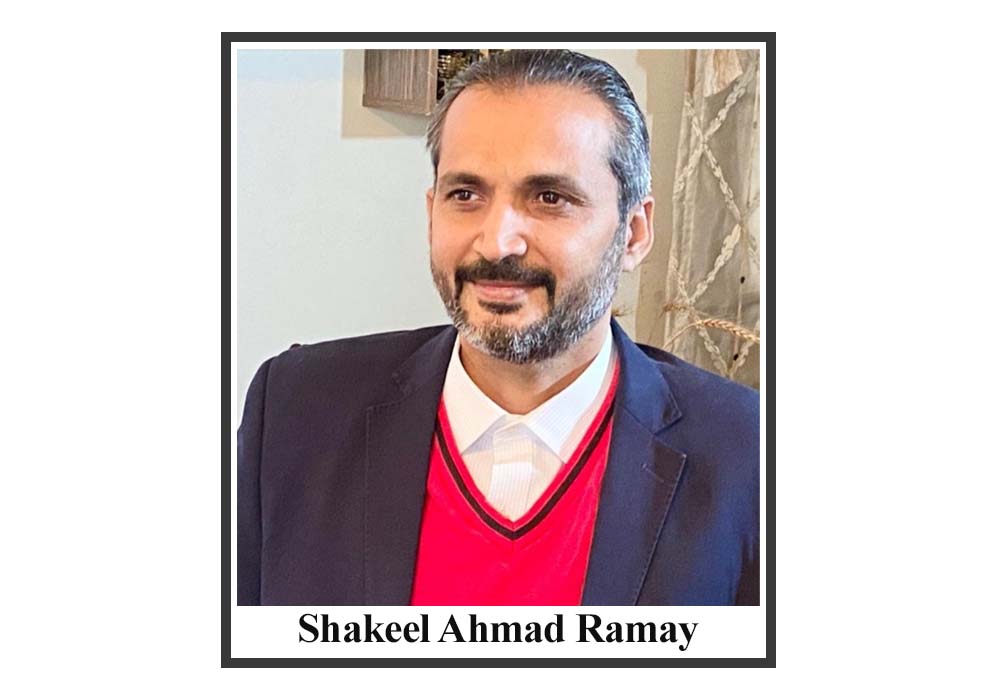
Dr. Ikramul Haq, Advocate Supreme Court, specializes in constitutional, corporate, environment, media, ML/CFT related laws, IT, intellectual property, arbitration and international tax laws.  He holds an LLD in tax laws with specialization in transfer pricing. He was full-time journalist from 1979 to 1984 with Viewpoint and Dawn. He served Civil Services of Pakistan from 1984 to 1996.

He established Huzaima & Ikram in 1996 and is presently its chief partner. He studied journalism, English literature and law. He is Chief Editor of TaxationHe is country editor and correspondent of International Bureau of Fiscal Documentation (IBFD) and member of International Fiscal Association (IFA).

He is Visiting Faculty at Lahore University of Management Sciences (LUMS) and member Advisory Board and Visiting Senior Fellow of Pakistan Institute of Development Economics (PIDE).

He has coauthored with Huzaima Bukhari many books that include, Tax Reforms in Pakistan: Historic & Critical Review, Towards Broad, Flat, Low-rate, and Predictable Taxes (third edition, 2024),  Pakistan: Enigma of Taxation, Towards Flat, Low-rate, Broad and Predictable Taxes (revised/enlarged edition of December 2020), Law & Practice of Income Tax, Law , Practice of Sales Tax, Law and Practice of Corporate Law, Law & Practice of Federal Excise, Law & Practice of Sales Tax on Services, Federal Tax Laws of Pakistan, Provincial Tax Laws, Practical Handbook of Income Tax, Tax Laws of Pakistan, Principles of Income Tax with Glossary and Master Tax Guide, Income Tax Digest 1886-2011 (with judicial analysis).

He is author of Commentary on Avoidance of Double Taxation Agreements, Pakistan: From Hash to Heroin, its sequel Pakistan: Drug-trap to Debt-trap and Practical Handbook of Income Tax. Two books of poetry are Phull Kikkaran De (Punjabi 2023) and Nai Ufaq (Urdu 1979 with Siraj Munir and Shahid Jamal).

He regularly writes columns/article/papers for many Pakistani newspapers and international journals and has contributed over 3500 articles on a variety of issues of public interest, printed in various journals, magazines and newspapers at home and abroad.

_______________________________________________________________

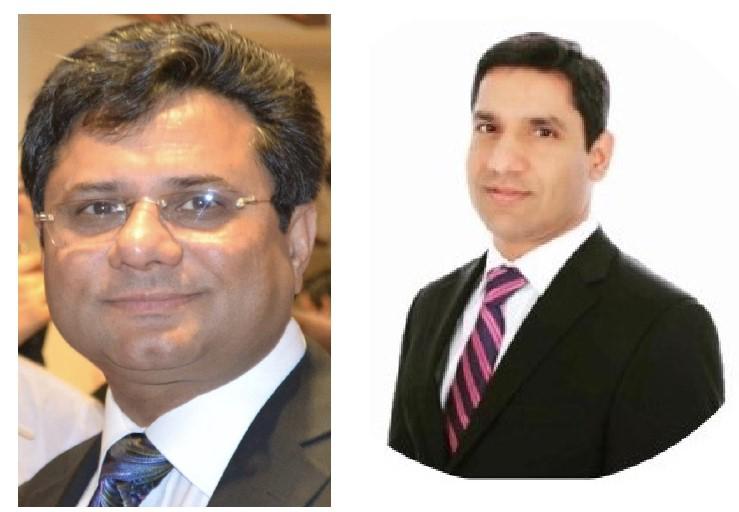
Abdul Rauf Shakoori, Advocate High Court, is a subject-matter expert on AML-CFT, Compliance, Cyber Crime and Risk Management. He has been providing AML-CFT advisory and training services to financial institutions (banks, DNFBPs, Investment companies, Money Service Businesses, insurance companies and securities), government institutions including law enforcement agencies located in North America (USA & CANADA), Middle East and Pakistan.

His areas of expertise include legal, strategic planning, cross-border transactions including but not limited to joint ventures (JVs), mergers & acquisitions (M&A), takeovers, privatizations, overseas expansions, USA Patriot Act, Banking Secrecy Act, Office of Foreign Assets Control (OFAC).

Over his career he has demonstrated excellent leadership, communication, analytical, and problem-solving skills and have also developed and delivered training courses in the areas of AML/CFT, Compliance, Fraud & Financial Crime Risk Management, Bank Secrecy, Cyber Crimes & Internet Threats against Banks, E–Channels Fraud Prevention, Security and Investigation of Financial Crimes. The courses have been delivered as practical workshops with case study driven scenarios and exams to ensure knowledge transfer.

His notable publications are Rauf’s Compilation of Corporate Laws of Pakistan, Rauf’s Company Law and Practice of Pakistan and Rauf’s Research on Labour Laws and Income Tax and others.

His articles include: Revenue collection: Contemporary targets vs. orthodox approach, It is time to say goodbye to our past, US double standards, Was Due Process Flouted While Convicting Nawaz Sharif?, FATF and unjustly grey listed Pakistan, Corruption is no excuse for Incompetence, Next step for Pakistan, Pakistan’s compliance with FATF mandates, a work in progress, Pakistan’s strategy to address FATF Mandates was Inadequate, Pakistan’s Evolving FATF Compliance, Transparency Curtails Corruption, Pakistan’s Long Road towards FATF Compliance, Pakistan’s Archaic Approach to Addressing FATF Mandates, FATF: Challenges for June deadline, Pakistan: Combating the illicit flow of money, Regulating Crypto: An uphill task for Pakistan. Pakistan’s economy – Chicanery of numbers. Pakistan: Reclaiming its space on FATF whitelist. Sacred Games: Kulbhushan Jadhav Case. National FATF secretariat and Financial Monitoring Unit. The FATF challenge. Pakistan: Crucial FATF hearing. Pakistan: Dissecting FATF Failure, Environmental crimes: An emerging challenge, Countering corrupt practices .

The recent publication, coauthored by these writes with Huzaima Bukhari is:                       

Pakistan Tackling FATF: Challenges & Solutions, available at:

https://aacp.com.pk/book-detail/pakistan-tackling-fatf-challenges-and-solutions-35

https://www.amazon.com/dp/B08RXH8W46   



Similar Posts

  • Vietnam as an Economic Lesson for Pakistan

    Vietnam and Pakistan are often viewed as very different economies, yet they share several important characteristics: large populations, substantial labor forces, strategic geographic locations, sizeable domestic markets and considerable potential in agriculture, manufacturing and services. The more important difference, however, is not simply what the two countries possess, but how effectively they have leveraged those assets into production, exports, investment, foreign exchange and sustained economic growth. The contrast is increasingly visible in the numbers. In 2025, Vietnam’s economy reached approximately $514.7 billion, compared with $407.3 billion for Pakistan, despite Pakistan having more than twice Vietnam’s population. GDP per capita was about $5,066 in Vietnam against $1,596 in Pakistan, while economic growth was 8.0 percent compared with 3.7 percent. Vietnam also attracted FDI equivalent to 4.2 percent of GDP, compared with only 0.5 percent in Pakistan. These figures do not mean that the two countries started from identical circumstances. They do, however, demonstrate the consequences of different approaches to leveraging economic potential.   Vietnam’s transformation began with the Doi Moi reforms in 1986, which gradually moved the economy towards market oriented production and greater integration with international markets. Over the following decades, Vietnam built a growth model around manufacturing, exports, foreign direct investment, infrastructure and participation in global value chains. Trade became one of their principal engine of growth. The scale of this transformation is striking. Vietnam’s merchandise exports reached about $475 billion in 2025, while imports were around $455 billion, producing a trade surplus of approximately $20 billion. Total merchandise trade was therefore close to $930 billion, almost twice the country’s GDP. Manufacturing accounted for nearly 89 percent of exports. This demonstrates the power of economic leverage: labour, infrastructure, foreign investment and imported technology have been combined to produce goods for global markets and generate foreign exchange. The access to US provides a particularly revealing comparison. Vietnam exported approximately $153 billion of goods to the U.S. market in 2025. China, meanwhile, remained its largest source of imports. This reflects Vietnam’s position within regional production networks, where it imports machinery, components and intermediate goods and transforms them into products for export. Vietnam’s experience shows that imports are not necessarily a weakness when they support productive investment and future export capacity. Pakistan’s trade structure remains considerably different. According to the State Bank of Pakistan, goods exports were $32.3 billion in FY2025, while goods imports reached $59.1 billion, resulting in a merchandise trade deficit of $26.8 billion. Services exports were $8.4 billion, including ICT exports of $3.8 billion. The difference becomes even more significant when viewed through the balance of payments. Pakistan recorded a current account surplus of $2.1 billion in FY2025, but workers’ remittances contributed $38.3 billion to the external account. The goods and services trade balance remained in deficit by approximately $29.4 billion. This highlights a fundamental difference between the two economies. Pakistan has been able to stabilize its external account partly through remittances, whereas Vietnam has built a much larger export generating productive base. Remittances are vital for Pakistan, but they cannot substitute for an economy capable of generating foreign exchange through competitive production and exports. The U.S. market further illustrates the gap. The United States is Pakistan’s largest export destination, yet Pakistan’s goods exports to the U.S. are only a small fraction of Vietnam’s. The opportunity therefore exists, but Pakistan has not yet developed the scale, diversification and industrial capacity required to capture a much larger share of the market. The lesson is not simply to increase exports to the United States, but to develop the productive ecosystem that makes sustained export growth possible. Vietnam’s experience also contains an important warning. Its impressive export performance has been driven heavily by foreign invested companies. This has helped Vietnam integrate into global value chains, but it has also created concerns about domestic value addition and linkages between multinational corporations and local firms. The lesson for Pakistan is clear: attracting FDI should not be the final objective. FDI should contribute to technology transfer, supplier development, skills, local procurement and domestic value addition. Pakistan therefore needs to rethink the relationship between imports, investment and exports. Restricting imports may temporarily reduce pressure on the balance of payments, but it does not create competitiveness. Machinery, technology, industrial equipment and productive intermediate goods can expand future production and exports. The objective should be to reduce consumption driven imports while facilitating investment driven imports that strengthen domestic productive capacity. Pakistan’s strategic location linking South Asia with China, Central Asia, Afghanistan, Iran and the Middle East offers major economic opportunities, but infrastructure alone cannot deliver transformation. CPEC, Gwadar, economic corridors, industrial zones and digital connectivity must be linked with productive clusters, reliable energy, logistics, skills and international markets. Pakistan should leverage its existing strengths by moving agriculture towards processing and higher value exports, textiles towards design and technical products, minerals towards processing and value addition, and IT, engineering, pharmaceuticals, tourism and business services towards stronger export performance. Pakistan also needs to make exports a central objective of economic policy. Balance of payments stability cannot depend indefinitely on remittances, external borrowing and periodic financial assistance. FDI policy should focus on quality rather than simply quantity, with incentives linked to technology transfer, local supplier development, skills, domestic value addition and exports. Special economic zones should be developed around clearly identified industries and markets, supported by reliable infrastructure and efficient regulation. CPEC, ports, industrial zones, roads and digital infrastructure should function as integrated production and trade systems rather than isolated projects. Public private partnerships can help mobilize investment where projects are economically and financially viable. The central lesson from Vietnam is that economic success depends on leveraging existing advantages through strong institutions, policy continuity and effective coordination. Pakistan has a large market, substantial workforce, strategic geography, natural resources and access to major markets. The priority should be to convert these assets into productivity, exports, investment and sustainable foreign exchange earnings. Pakistan must turn geography into connectivity, population into productive human capital, resources into value added exports, infrastructure into industrial capacity

  • From Mediator to Ally: Pakistan’s Balancing …

    In the space of a single year, Pakistan has moved from the periphery of Middle Eastern diplomacy to its center. Prime Minister Shehbaz Sharif and army chief Field Marshal Syed Asim Munir have positioned the country as both a mediator between Washington and Tehran and, more recently, a formal treaty partner of Saudi Arabia and Turkey. The result  the Makkah Joint Defence Agreement, signed on August 7 in Islam’s holiest city  marks one of the most consequential shifts in South Asian foreign policy in decades. Yet it also raises hard questions about who is really steering Pakistan’s course, and at what long-term cost.   A war that reshaped the region   The backdrop is a war between the United States and Iran that erupted on February 28, drawing in Saudi Arabia, the Gulf states, Iraqi militias and Yemen’s Houthi movement, and disrupting roughly a fifth of the world’s seaborne energy supplies through the Strait of Hormuz. Missile and drone exchanges reached Saudi cities, unsettling a region that had spent years trying to de-escalate after the 2015 nuclear deal’s collapse.   Pakistan, one of the few states with working channels to both Washington and Tehran, stepped into the gap. Sharif’s government hosted preliminary contacts that produced the so-called Islamabad Memorandum, under which Iran signalled it would not pursue nuclear weapons  a pledge it had already made under the Nuclear Non-Proliferation Treaty and the 2015 accord  in exchange for a mechanism allowing it to dilute stockpiles of highly enriched uranium. Iranian President Masoud Pezeshkian later thanked Islamabad for its “constructive engagement” in securing a ceasefire and agreed to send negotiators to further talks in the Pakistani capital. Analysts at the Washington-based Stimson Center have noted that Munir personally staked considerable political capital on the diplomacy, given how easily it could have collapsed.       The Makkah pact   That mediating role fed directly into last week’s agreement. Saudi Arabia, repeatedly struck during the war by Iranian missiles and by Tehran-aligned forces in Yemen and Iraq, had already signed a bilateral defence pact with Pakistan in September 2025  struck, notably, just over a week after an Israeli strike on Hamas negotiators in Doha rattled Gulf capitals’ confidence in American security guarantees. The Makkah agreement extends that arrangement into a trilateral pact with Turkey, declaring that an armed attack on any one of the three signatories will be treated as an attack on all.   Pakistani officials describe the pact as purely defensive. Foreign Minister Ishaq Dar said this week it was “not directed against any country” and remained open to other regional states. President Asif Ali Zardari called it a reflection of “shared resolve for peace and security,” while Sharif credited Munir’s “tireless efforts” in securing an arrangement he said had been years in the making. For Riyadh and Ankara, the pact offers a hedge against dependence on any single outside power at a moment when American commitments to the region look less certain than they once did. For Pakistan, it offers closer ties with two wealthy allies, a symbolic role as guardian of Islam’s holiest sites, and outsized influence for a country whose economy remains fragile.   Praise, and pointed scepticism   The agreement has been celebrated in much of Pakistan’s domestic media as evidence that the country’s leadership  civilian and military alike  is finally translating decades of geopolitical positioning into tangible strategic weight. Supporters point to a similar dynamic in May, when a brief but intense military confrontation with India ended within days, after which the government promoted Munir to the rare, largely ceremonial rank of Field Marshal, only the second officer in Pakistan’s history to hold it.   But that same promotion has drawn sharp criticism from analysts who see it as part of a broader consolidation of power by the military at the expense of elected institutions. Munir, appointed army chief in November 2022, has presided over a period in which  according to critics including jailed former prime minister Imran Khan’s supporters  courts, the media and Sharif’s own coalition have operated increasingly under military direction, a system some commentators have dubbed a “hybrid regime.” The Middle East Institute has described Munir’s elevation as “a thunderous declaration of the military’s unassailable supremacy,” while other analysts note that his growing role in foreign and economic policy  well beyond the traditional remit of an army chief  blurs the line between civilian governance and military command in a country with a long history of that line collapsing altogether.   What comes next   None of this diminishes the immediate diplomatic achievement: a ceasefire process that, however fragile, has held; a new pact that binds three influential Muslim-majority states more closely together; and a Pakistan that finds itself, for now, indispensable to great-power diplomacy in a region convulsed by war. Whether that translates into durable stability  for the Gulf, for the broader Middle East, or for Pakistan’s own democratic institutions  remains an open question. The coming months, as the Islamabad talks resume and the Makkah pact’s practical implications become clearer, will test whether this new era represents a genuine diplomatic breakthrough or a further tightening of military control dressed in the language of strategic necessity.

  • Beyond Public Finance: Towards Constitutional Poli…

    The preceding parts of this series began with a simple question: why do technically sound economic and tax reforms repeatedly fail in Pakistan? The answer cannot be found in tax rates, revenue targets or administrative capacity alone. Pakistan’s fiscal failures arise from the constitutional and political order within which taxation, expenditure, borrowing and distribution take place.  The country does not merely have an inefficient tax system. It has a fiscal state whose incentives favour immediate extraction, selective enforcement, negotiated privilege and recurring external dependence. The previous part IX applied this framework to contemporary proposals for closing Pakistan’s tax gap. Empirical estimates of untaxed capacity, sectoral inequality and revenue potential are valuable.  Data tell us where disparities exist and what additional resources might theoretically be mobilised. However, data do not explain why those disparities have survived repeated reform efforts, nor why the same burdens continue to fall upon documented businesses, salaried persons and ordinary consumers. That explanation lies beyond public finance. Constitutional Political Economy (CPE) begins from the recognition that the state is not an abstract guardian automatically pursuing collective welfare. It consists of institutions and individuals responding to incentives, protecting authority, bargaining over resources and operating within formal and informal rules.  Fiscal outcomes reflect the distribution of political power as much as principles of efficiency or equity. Pakistan’s tax crisis is the fiscal expression of that political order. Revenue without a fiscal compact A sustainable tax system rests upon a fiscal compact between citizen and state. Citizens contribute according to lawful and reasonably distributed burdens. The state, in return, provides security, justice, education, healthcare, infrastructure, economic opportunity and protection against vulnerability.  Pakistan has progressively weakened both sides of that compact. The state demands more from those already visible while tolerating privileges for those capable of political resistance.  Citizens encounter taxes in electricity bills, fuel prices, banking transactions, telecommunications, imports, contracts and ordinary consumption. Much of this extraction occurs without determining their actual income or ability to pay. Public services remain inadequate and uneven. Taxpayers are then told that services cannot improve because revenue is insufficient. The state responds to the resulting mistrust with more withholding, surveillance and coercion.  This creates a destructive cycle: weak services reduce consent; declining consent increases reliance on coercive collection; coercion deepens mistrust; mistrust encourages informality; and informality becomes the justification for still more transaction-based taxation. A fiscal compact cannot be created through fear. Restoring income taxation The first requirement is to restore the meaning of income tax. Income taxation should ordinarily measure net income after legitimate costs and losses and impose liability according to capacity to pay. Pakistan has instead constructed a vast structure of advance, minimum, final, presumptive and withholding taxes imposed upon transactions, turnover and gross receipts. This structure is administratively convenient. It allows the state to collect through banks, employers, utilities, import authorities and private businesses without developing the institutional capacity to determine real income. Its convenience is precisely the problem. Withholding should remain where deduction at source is logically connected with the recipient’s income and operates as an adjustable advance—principally salaries, dividends and profit on debt. It should not function as a substitute for return-based taxation, proper assessment and intelligent audit. Turnover cannot permanently replace income. A business earning a narrow margin cannot justly be taxed in the same manner as one earning extraordinary profits merely because both record similar receipts. Minimum and presumptive regimes penalise investment, distort business structures and convert losses into taxable events. The objective should not be abolition of withholding overnight. It should be a legislated transition towards a system in which withholding becomes limited, adjustable and subordinate to final determination of income. A genuine value added tax The second requirement is restoration of sales tax as a genuine value added tax. Pakistan has retained the vocabulary of VAT while repeatedly breaking its chain through exemptions, special schedules, blocked credits, fixed regimes, multiple rates and arbitrary restrictions. The result is cascading, litigation, refund accumulation and a bias against documented production. A genuine VAT should apply through a broad and coherent base, a substantially lower standard rate and unrestricted adjustment of legitimate input tax.  Exemptions should be confined to carefully identified necessities and public-interest activities. Refunds should be treated as taxpayers’ money, not as an unofficial source of financing for the state. The constitutional division between sales tax on goods and services need not condemn businesses to fragmented administration. Harmonised definitions, a common return, integrated registration, shared information and an agreed clearing mechanism can preserve provincial taxing authority while reducing compliance costs. Coordination is essential. Re-centralisation is not. Pakistan’s federation was not designed solely for administrative convenience. Article 160 of the Constitution protects the distribution of specified revenues between the Federation and provinces, while Article 140A requires devolution of political, administrative and financial responsibility to elected local governments.  Fiscal reform must strengthen all three levels of constitutional government rather than treating provinces and local bodies as spending agencies dependent upon federal discretion.  Ending taxation through labels A constitutional fiscal order must also respect the actual nature of each levy. Parliament cannot convert a provincial tax into a federal tax merely by attaching a different label. Nor can the executive create a new taxable event through rules, notifications or administrative directions where the legislature has not imposed one. Article 77 requires federal taxation to rest upon parliamentary authority. Articles 4, 24 and 25 bring legality, protection against arbitrary deprivation and equality into the same constitutional inquiry. Legislative enactment is indispensable, but enactment alone does not validate a levy that exceeds legislative competence, discriminates irrationally or denies due process.  The annual Finance Act should not be used as a container for major structural changes receiving limited parliamentary examination. Essential elements of a tax—the subject, person liable, measure, rate and taxable event—must be stated clearly in primary legislation. Delegated legislation may implement the law. It cannot become an alternative legislature. Expenditure is the other side of taxation The debate over Pakistan’s tax-to-GDP ratio often proceeds as though every additional rupee

  • |

    The Education Dilemma

    By Tuba Khan Literacy is the key to a successful political, economic and social structure of a country. Nations that prioritize education give birth to a strong, responsible and intellectual generation that could foster civic culture in the country. A well-educated and politically aware youth is the backbone of a country’s development. Society can only progress if it invests in its youth, allocating resources and opportunities to young people. Pakistan ranks fifth among the countries having the largest young population in the world. This youth bulge could become a driver of economic prosperity and social progress if quality education and skills development are provided to the youth. Unfortunately, Pakistan lacks an education system that can produce civic-minded, skilled and informed people. The education sector has remained stagnant for several decades and the quality of education is declining day by day, producing an intellectually enslaved generation. Pakistan ranked 164th out of a total of 194 countries globally in education quality, lagging far behind from the other countries in the region. Education in Pakistan is treated as a business for generating revenue and in return creating inequality across all levels of education.   In Pakistan, around 54% of students are enrolled in public sector institutions, where the quality of education and the infrastructure are in a state of severe deterioration. The country’s education standard is so poor that no Pakistani university ranks among the world’s top 350 reputable universities as per QS World University Rankings 2026. Moreover, approximately 26 million children are out of school and those who are enrolled in schools are often products of the rote learning system, unable to think critically and lack the ability to build independent opinions. They are deprived of basic facilities, such as safe and secure buildings, furniture, laboratories, libraries, electricity, clean drinking water, proper sanitation facilities and other basic amenities at the public educational institutions. The outdated syllabus and unprofessional staff at public educational institutions add fuel to the fire, aggravating the education crisis in Pakistan. According to the data provided by UNESCO in 2024, there were 25.38 million students in total for all public and private elementary schools in the country, while only 445,877 teachers were available to facilitate the students. This highlights that there are around 57 children for each teacher. This highlights the ailing condition of the education system of Pakistan.   Despite the educational challenges and poor education system, government spending on the education sector has declined significantly. From 0.8% of GDP allocated to the education sector in 2024, the education spending has dropped to only 0.2% of the federal budget in 2026. Additionally, the privatization of public schools in Punjab is also the biggest failure of the government as it raised the costs and fees, putting a financial burden on low-income families and provoking more elimination of students from the schools. The privatization policy is contrary to the constitutional promise, introduced under the 18th amendment in 2010 of providing free and compulsory education up to Matriculation, exacerbating the education breakdown. This underscores the incompetence of the government in addressing the paramount issue, the root cause of several multidimensional problems of Pakistan.   Education is a fundamental right of every human being and it must be delivered to its citizens by the state. The government of Pakistan must realize that without an educated nation, the country could never be placed on the path of progress. The government should focus on eliminating gender inequality in the education sector while raising awareness in rural areas, making the educational institutions safe for women and holding the institutions accountable. It should encourage digital and vocational training programs, research, practical learning, skills development and the ability of youth to think critically and form independent opinions about the important issues. It is the duty of the government to provide quality education, maintain educational institutions, strengthen checks and balances within the education system, fulfil the constitutional promise of providing free education to children between the ages of 5 and 16 and strengthen the economy so that the middle and lower-middle class can easily afford education. Investing in education is not merely the responsibility of the government, but a national necessity. However, education alone is not enough unless it is coupled with employment opportunities. Otherwise, the youth bulge would become a demographic burden, marked by unemployment, poverty and instability. Pakistan urgently needs reforms in the education sector and strategies to transform the young population from a demographic challenge into a valuable demographic dividend for sustainable growth. The government must treat the education crisis as a priority issue to ensure a prosperous future.

  • From Hormuz to Hiroshima: Is the Iran War Approach…

    By Saqlain Abid Tarrar The 60-day U.S.-Iran understanding expired on August 17 without the breakthrough Washington and Tehran had hoped—or claimed—to seek. The agreement has effectively stalled, the Strait of Hormuz remains at the centre of the confrontation, and both sides continue to blame the other for the diplomatic failure. Iran has now warned that it could shift towards a more offensive posture if diplomacy does not progress. This leaves a disturbing question on the table: is the nuclear option becoming the next neutralisation node in the Iran war? The question gained momentum after former Congresswoman Marjorie Taylor Greene claimed that the use of nuclear weapons had been discussed in Trump administration strategy meetings. Such a claim should be treated cautiously because there is no independent evidence that President Donald Trump has ordered or formally approved a nuclear strike. Nevertheless, the allegation itself demonstrates how far the strategic debate has moved. The White House has maintained that nuclear use is not a proposal on the table. Yet Trump’s own rhetoric has made the situation increasingly difficult to ignore. He has declared that the United States has “total control” of Hormuz and described the idea of making the strategically vital waterway U.S. territory as attractive. The Strait of Hormuz is not merely another battlefield. Around one-fifth of the world’s oil and gas supplies normally pass through this narrow maritime chokepoint. Any prolonged closure therefore creates consequences far beyond Iran and the United States: higher energy prices, disrupted shipping, inflationary pressure and another shock to an already fragile global economy. So, what are the chances of the United States actually using nuclear weapons? At present, they remain extremely low—but low is not the same as impossible. History demonstrates how quickly supposedly unthinkable options can become military realities. The United States became the first country to use nuclear weapons in warfare when it dropped atomic bombs on Hiroshima and Nagasaki in August 1945. However, it would be historically inaccurate to argue that those attacks were simply conducted to test plutonium and uranium against the Soviet Union. The motives remain debated, including compelling Japanese surrender and influencing the emerging post-war balance with Moscow. The lesson, nevertheless, is unmistakable: once a state believes that an extraordinary weapon can achieve an extraordinary political objective, the threshold can become dangerously negotiable. That is why today’s situation deserves scrutiny. The Trump administration needs an exit from a war that has become increasingly difficult to convert into a decisive political settlement. The USS Abraham Lincoln has also endured an exceptionally long deployment, reportedly more than 240 days at sea, adding another layer of military and political pressure. But nuclear weapons would not provide a rational solution to that problem. Iran’s nuclear capability is certainly a serious concern. The IAEA reported that Iran had accumulated about 440.9 kilograms of uranium enriched to 60 percent before the 2025 attacks disrupted international verification. That material could theoretically produce significant quantities of weapons-grade material if further enriched, but possession of 60-percent enriched uranium does not mean Iran already possesses nuclear weapons. Iran, meanwhile, has suffered severe economic and infrastructural damage, yet its resistance has not disappeared. Tehran continues to signal that it will not simply surrender under pressure. The danger is therefore that military escalation creates the very nuclear insecurity Washington says it wants to prevent. Russia and China could condemn any nuclear use and mobilise diplomatic opposition. The United Nations could debate emergency resolutions. European governments could strongly object. But none of these actors could physically intercept an American warhead once Washington had made the decision. That makes the most important restraint internal: the political and strategic judgment of the American leadership itself. And there is an even larger regional consequence. If Iran were struck with nuclear weapons, Gulf states could reach a frightening conclusion: conventional alliances may no longer provide sufficient security. Saudi Arabia, the UAE, Türkiye and others could reconsider their long-term strategic options. Nuclear hedging and proliferation could become increasingly attractive. That would transform the Middle East permanently. The irony would be profound. An American nuclear strike intended to prevent Iran from becoming a nuclear power could encourage an entire region to seek nuclear deterrence. Hormuz may eventually be reopened through negotiations, military pressure or a new regional security arrangement. But once the nuclear taboo is broken, restoring it would be far more difficult. The nuclear option should therefore remain the last option—not because it is weak, but because its consequences are stronger than any victory it could deliver. Power can neutralise an opponent. But when power is unleashed without restraint, it can ultimately neutralise the international order itself.

  • Nine Days and Five Months: Open-Source Evidence, t…

    By Aleena Saif Ullah The writer is an MPhil Scholar in International Relations, specializing in global defence and security, University of the Punjab, Lahore. On February 28, the first day of Operation Epic Fury, a strike hit the Shajareh Tayyebeh girls’ elementary school in Minab, in Iran’s Hormozgan province. Iranian state media reported that 168 children and 14 adults were killed. Anadolu reported two strikes roughly forty minutes apart. President Trump said on March 7 that in his opinion Iran had done it, citing Iranian inaccuracy with munitions. Bellingcat had already established otherwise. Its researchers identified a Tomahawk cruise missile — a munition no other belligerent in the conflict fields — in footage released by Iran’s Mehr agency, and geolocated the strike sequence. The New York Times, the Associated Press and CNN reached compatible conclusions through independent satellite and video analysis. By March 11, NPR reported that a preliminary Pentagon assessment had determined the United States was at fault. Five months later, the accountability failure is not the one I described when I first wrote about this case, and the actual failure is more instructive. A process was initiated. On March 13, Secretary Hegseth announced a formal command investigation, with CENTCOM appointing a senior officer from outside the command to lead it — the correct procedural choice. Lawmakers have said that officer submitted an initial report in April. CENTCOM has held it since. On May 19, Admiral Brad Cooper told lawmakers under oath that the investigation was complex, near completion, and that “I’m fully committed to transparency” once it concluded. No findings have been published. Then in July, CNN reported the detail that reframes the case. Within a week of the strike, the first two stages of the battle damage assessment were complete, establishing that American forces had hit the location. The third stage — the standard review in which Defense Intelligence Agency analysts examine the full body of satellite imagery and intelligence to determine holistically what occurred — had not been ordered as of early July. One source familiar with the matter told CNN there had been no detailed analysis and that CENTCOM had locked down the investigation. NBC reported that preliminary findings pointed to outdated intelligence as the likely cause. This is a different kind of institutional failure from the one international lawyers usually describe, and it is worse. An absent process can be demanded. A process that ran, produced a document, and stopped is much harder to move, because officials can accurately say an investigation took place. The context makes it harder still. On May 13 the Pentagon’s own Inspector General found that the Department had systematically failed to implement its Civilian Harm Mitigation and Response Action Plan, with all eleven objectives reclassified as at risk and the legally mandated Civilian Protection Center of Excellence lacking key staff and leadership. The architecture built specifically to prevent and account for incidents like Minab had been allowed to decay before the war that tested it. Congress has asked the right questions and been ignored. A letter led by Senator Chris Van Hollen and signed by more than forty senators asked Secretary Hegseth directly whether American forces conducted the strikes, what the intended target was, whether AI tools were used in targeting, and whether a no-strike list was established before operations began. Answers were requested by March 18. More than 150 House members signed a parallel letter on the broader civilian toll. The comparison the Pentagon itself invites is unflattering. As NBC noted, the Department has publicly disclosed its role in comparable incidents before: a special forces raid in Yemen, a bombing in Iraq that killed more than a hundred civilians, the strike on an Afghan hospital that killed at least forty-two, a drone attack in Afghanistan that killed ten. Disclosure in those cases was not generous, but it happened. What Minab demonstrates is that the binding constraint on accountability is not evidence. Volunteer open-source investigators, working entirely from public material, established the essential facts within nine days. The state that conducted the strike established them internally within seven. The constraint is that no mechanism exists to compel publication of a report a government has decided not to publish — not the Rome Statute, to which the United States is not a party; not the Security Council, where it holds a veto; and not the Inspector General, who can find institutional failure but cannot release another command’s findings. One lever remains, and it is domestic rather than international. Congress can require declassified release of the findings through the National Defense Authorization Act. Whether it does will indicate more about the state of accountability for civilian harm than any further open-source analysis. The evidence is not missing. The report is not missing. Both exist. Neither can be read.    

Leave a Reply

Your email address will not be published. Required fields are marked *