beyond public finance

Beyond Public Finance: Towards  Constitutional Po…

Pakistan has never lacked economic advice. Since independence, successive governments have experimented with socialist planning, import substitution, nationalisation, structural adjustment, privatization, fiscal decentralisation, value added taxation, documentation drives, digital governance and, most recently, artificial intelligence in tax administration. 

Almost every reform has been presented as the missing ingredient that would place the country on the path of sustained prosperity. However, Pakistan continues to oscillate between balance-of-payments crises, external dependence, fiscal instability and repeated recourse to the International Monetary Fund (IMF).

This persistent failure raises a more fundamental question. Is Pakistan’s crisis primarily economic, or are economists asking the wrong questions? For decades, the dominant explanation has remained remarkably consistent. Pakistan is said to suffer from a narrow tax base, inadequate domestic resource mobilisation, weak public institutions, poor governance and inconsistent implementation of otherwise sound policies. According to this view, if taxes were broadened, exemptions withdrawn, administration digitalised and markets allowed to function efficiently, sustainable growth would eventually follow.

There is much truth in these observations. They identify many of the symptoms. But they do not fully explain why technically sound reforms repeatedly fail in Pakistan while producing very different outcomes elsewhere. The reason, as suggested in earlier writings, is that Pakistan cannot be understood through the conventional assumptions of public finance alone. Economic policy does not operate in a constitutional vacuum; it reflects the incentives created by the political and legal institutions within which governments function.

Orthodox economics generally assumes a constitutional order within which governments seek, however imperfectly, to maximise public welfare. Fiscal policy, taxation and expenditure are analysed as instruments for correcting market failures, financing public goods and promoting economic growth. Political constraints are acknowledged but usually treated as external distortions rather than integral components of economic analysis.

Pakistan presents a different reality. Here, constitutional arrangements, political incentives, strategic considerations and informal institutions have shaped fiscal outcomes as much as, and often more than, economic policy itself. Taxation has frequently reflected the distribution of political power rather than principles of efficiency or equity. 

Public expenditure has often been determined by strategic imperatives rather than developmental priorities. External assistance has repeatedly substituted for difficult domestic reforms. Elite bargains have preserved privilege while transferring the burden of adjustment to documented businesses, salaried individuals and ordinary consumers. These outcomes cannot be adequately explained by models that assume an impartial state pursuing coherent economic objectives. The analytical framework itself, therefore, requires reconsideration.

This series proceeds from a simple but powerful proposition: before analysing taxes, budgets or debt, one must first understand the constitutional rules that shape political incentives. This is the central insight of Constitutional Political Economy (CPE). 

Unlike conventional public finance, CPE begins not with taxes or budgets but with the constitutional rules, institutional incentives and political structures that determine how economic decisions are actually made. It asks a prior question: Who designs the rules under which economic policy operates, whose interests do those rules serve, and how do they shape incentives for both governments and citizens?

Once that question is asked, many of Pakistan’s recurring puzzles begin to appear less mysterious. Why do technically sound tax reforms repeatedly fail? Why do successive governments rely on indirect taxation while avoiding politically influential sectors? Why has documentation remained elusive despite extraordinary advances in digital technology? Why does every external crisis quickly become a fiscal crisis? Why has debt expanded despite repeated stabilisation programmes?

The answers lie not merely in economics but in the constitutional and political environment within which economics operates.

This series proposes a different approach. Rather than examining taxation, debt or fiscal federalism as isolated subjects, it will analyse them as interconnected manifestations of Pakistan’s constitutional political economy. Future parts will explore how colonial legacies, post-independence constitutional choices, geopolitical dependency, elite capture, federal arrangements, judicial interpretation and administrative incentives have combined to shape Pakistan’s economic trajectory.

The purpose is not to reject orthodox economics. Public finance remains indispensable. Sound taxation, efficient expenditure and macroeconomic stability are essential for any modern state. However, these instruments cannot achieve their intended objectives when the institutional environment within which they operate generates incentives that systematically frustrate reform.

Pakistan’s crisis is not simply a fiscal crisis. Nor is it merely a crisis of governance. It is, more fundamentally, a crisis of constitutional political economy. Unless that deeper reality is understood, technical reforms, however well designed, will continue to produce disappointing results because they address the symptoms rather than the constitutional incentives that generate them.

In the next part, we shall examine why the assumptions of orthodox public finance differ fundamentally from those of constitutional political economy, and why that distinction matters profoundly for understanding Pakistan.

[To be continued]

 ____________________________________________________________________

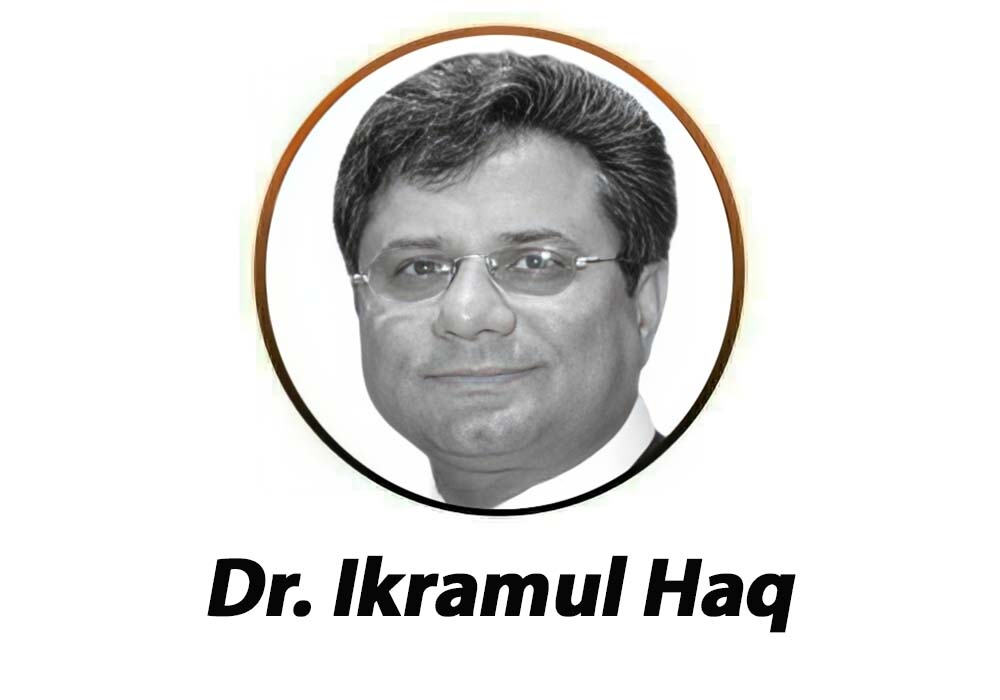
Dr. Ikramul Haq, Advocate Supreme Court, Adjunct Faculty at Lahore University of Management Sciences (LUMS), member Advisory Board and Visiting Senior Fellow of Pakistan Institute of Development Economics (PIDE), holds an LLD in tax laws. He was full-time journalist from 1979 to 1984 with Viewpoint and Dawn. He also served Civil Services of Pakistan from 1984 to 1996. 

Similar Posts

  • Beyond Riba: Reconstruction of Just Financial Orde…

    The preceding part of this series examined a question ordinarily left outside discussions on riba: who should create money? It argued that commercial-bank money creation is not, by itself, riba, but that the power to create purchasing power through credit is a matter of public importance requiring transparency, restraint and accountability. One possible reform is to separate transaction money, fully backed by sovereign money, from funds deliberately committed for investment. That proposition leads to an even more fundamental question. What exactly is a bank deposit? The answer appears obvious only because modern banking has merged several economically different relationships into the same institution. A person places salary in a current account because it must be available tomorrow morning. Another person places accumulated savings with a bank hoping to earn a return over five years. A business maintains money for payroll and suppliers. An investor deliberately commits capital to a project knowing that commercial gain is accompanied by the possibility of loss. Calling all these balances “deposits” conceals distinctions that become crucial in a financial order seeking to eliminate riba. There is a basic difference between money and investment. Money held for payment performs the functions of medium of exchange and store of nominal value. Its owner expects Rs.100 deposited today to remain Rs.100 tomorrow and to be transferable on demand. Investment capital performs another function. It is consciously placed in productive activity in expectation of gain and consequently bears the possibility of commercial loss. One cannot logically demand both absolute safety and entrepreneurial return from the same contractual relationship unless somebody else is made to carry the risk. Islamic jurisprudence recognised these distinctions long before modern banking. Funds entrusted purely for safekeeping can constitute amanah. A trustee does not own them and is not ordinarily liable for loss occurring without negligence or misconduct. Where fungible money is transferred to another person with authority to use it and an obligation to return its equivalent, the relationship acquires the character of qard, or loan. State Bank of Pakistan’s own glossary reflects precisely this reasoning. It describes an amanah as property held in trust and states that current accounts may initially be regarded as trust deposits. Once a bank obtains authority to use current-account funds in its business, however, the relationship becomes a loan because the bank must repay the full amount. This point deserves much greater attention. If a bank accepts Rs.100,000 from a customer, is free to use that money for its own financing operations and remains legally bound to repay Rs.100,000 whenever demanded, the customer is not bearing an investment risk. Whatever terminology appears on the account-opening form, economically the bank has received financing from the customer. No difficulty necessarily arises if the customer receives nothing beyond repayment of the amount advanced. The difficulty arises when banking system treats this repayable-at-par money simultaneously as the raw material from which additional financing and monetary claims can be generated. Part II suggested one possible solution: transaction accounts should be treated entirely differently. A current account used for wages, household expenditure, business payments and ordinary transfers should represent protected transaction money. If such balances are fully backed by sovereign money or central-bank reserves, they need not be exposed to the bank’s commercial financing decisions. The account holder would possess money, not an investment claim upon the success of a bank. The bank would provide custody, payments, transfers, cards, digital access and settlement services. It could legitimately charge transparent fees for those services. What it would not receive is free investment capital merely because citizens require access to a payment system. The consequences are significant. Fully backed transaction accounts would remain available on demand and at par. They would not earn an investment return because their owners have assumed no investment risk. Nor would their repayment depend upon the quality of the bank’s commercial portfolio. This is not merely a theological distinction. Modern central banking itself recognises the peculiar character of bank deposits. The Bank of England recently described commercial-bank deposits as liabilities used as money, expected to be redeemable at par on demand and relied upon as a safe store of value. It contrasted them with investment products whose values fluctuate and whose losses are borne by investors. A riba-free financial system should take that distinction seriously. The second category would consist of genuine investment accounts. Here the relationship is entirely different. A customer does not merely park money awaiting payment instructions. He consciously makes capital available for investment and accepts that lawful profit cannot be separated completely from commercial risk. Mudarabah provides one classical framework. One party supplies capital and the other enterprise and expertise. Profit is divided according to an agreed ratio; financial loss, in the absence of negligence or breach by the manager, falls upon the provider of capital. SBP itself explains Islamic investment deposits on this basis: the depositor acts as rabb-ul-maal and the bank as mudarib. Restricted mudarabah allows the investor to specify where the funds may be deployed; unrestricted mudarabah gives the bank wider investment authority. The principle is straightforward. If the depositor wants profit because capital is being employed commercially, the depositor must understand what capital is doing and what risk attaches to it. This is where present banking practice requires closer examination. Islamic banks commonly pool deposits, calculate weighted-average yields and distribute profits under elaborate regulatory rules. SBP presently prescribes profit-distribution arrangements for savings depositors, including minimum distribution requirements linked to the weighted-average gross yield of the institution. It also permits additional hiba in specified circumstances. These measures protect customers against inequitable allocation of profits by banks. Their consumer-protection purpose is understandable. At the same time, an increasingly managed and smoothed return can create in the depositor’s mind an expectation remarkably similar to a conventional savings rate. The crucial question is not whether the return happens to fluctuate by a few basis points. It is whether the depositor actually bears the economic character of an investor. An investment account should identify the pool in

  • Riyadh’s Strategic Triangle: Security, Stabi…

    The visit of Pakistan’s Prime Minister and Chief of Defence Staff to the Kingdom of Saudi Arabia on 6–7 August 2026 was officially presented as a meeting with Crown Prince Mohammed bin Salman (MBS), accompanied by the performance of religious rituals in Islam’s holy cities. Yet, diplomacy is often conducted between the lines rather than in official communiqués. French newspapers, Indian news agencies, and Israeli media all reported that Pakistan, Türkiye, and Saudi Arabia were working toward a defence agreement expected to be signed on Friday. While no official confirmation has emerged, the reports have generated an important strategic debate. If such an agreement is indeed under discussion, what is its real agenda? Would it amount to a military alliance, and if so, against whom would it operate? More fundamentally, why would Pakistan and Türkiye, both facing considerable economic pressures, seek to enter such an arrangement? Or are we witnessing the gradual birth of a new regional security architecture in the vacuum created by the declining American military footprint in the Middle East, with Pakistan assuming an anchoring role?   The first narrative comes from Pakistan. Political analyst Parveen Sawamy argues that Pakistan is gradually emerging as the principal anchor of a broader Muslim strategic framework. According to this view, Islamabad has evolved from being merely a facilitator of dialogue to becoming a mediator and now potentially a guarantor of regional security. Among the members of the OIC, Pakistan enjoys a unique diplomatic position. It maintains working relations with almost every important regional actor, consistently supports the Palestinian cause, and remains outside the circle of states that have normalized relations with Israel. This balanced diplomacy provides Islamabad with credibility across the Muslim world.   Pakistan also possesses one of the most experienced armed forces in the Islamic world, capable of contributing to Gulf security should regional circumstances demand it. At the same time, Washington may not necessarily oppose such a role, particularly given the perception that General Asim Munir enjoys constructive relations with the Trump administration. Pakistan’s geographic proximity to Iran further strengthens its credentials, allowing it to maintain channels of communication with Tehran while preserving strategic partnerships with Gulf monarchies. If Islamabad succeeds in converting this diplomatic leverage into economic opportunity, a defence understanding with Riyadh and Ankara could mark the beginning of a new Muslim security framework based on deterrence, mediation, and regional peace rather than confrontation.   The second narrative revolves around Türkiye. President Recep Tayyip Erdoğan, despite facing domestic economic challenges, brings decades of NATO experience, an advanced defence industry, and diplomatic flexibility. Türkiye remains a NATO member, maintains dialogue with the United States, preserves working relations with Israel, and simultaneously engages actively with Asian and Muslim nations. Such strategic diversity enables Ankara to serve as a bridge between competing geopolitical camps.   From Türkiye’s perspective, participation in a trilateral framework would capitalize on its military technology and defence manufacturing capabilities while expanding economic cooperation with Pakistan and Saudi Arabia. Ankara also offers valuable diplomatic experience and could serve as a neutral venue for negotiations during future regional crises. If such cooperation enjoys quiet support from Washington, Türkiye would strengthen both its strategic autonomy and its influence across the Muslim world.   The third and perhaps most decisive narrative belongs to Saudi Arabia. Crown Prince Mohammed bin Salman (MBS) seeks durable security guarantees to preserve investor confidence in Vision 2030 and mega-projects such as NEOM. Economic transformation cannot succeed without regional stability. Recent conflicts have exposed the vulnerability of Gulf infrastructure to missile and drone attacks, prompting Riyadh to reassess its long-term security strategy. MBS increasingly recognizes that American military bases alone cannot guarantee the Kingdom’s security in an era of rapidly changing regional dynamics.   Pakistan and Türkiye therefore emerge as relatively affordable yet credible strategic partners. Saudi energy sustains both economies, while Islamabad and Ankara can provide military expertise, training, and strategic reassurance. More importantly, MBS appears less interested in confronting Iran through perpetual military rivalry than in managing competition through diplomacy backed by credible deterrence. If this approach succeeds, it could reduce regional tensions while safeguarding Saudi Arabia’s ambitious economic transformation.   Whether the reported defence agreement materializes or remains diplomatic speculation, the convergence of Pakistan, Türkiye, and Saudi Arabia reflects an important geopolitical trend. All three states require economic stability, strategic autonomy, and a more reliable regional security framework. Their interests intersect around the need to protect trade, investment, energy infrastructure, and political stability. If this strategic triangle evolves into a formal partnership, its true success will not be measured by the strength of its military capabilities but by its ability to prevent conflict, encourage dialogue, and foster prosperity. In a region long defined by rivalry, the most enduring alliance may ultimately be the one built not for war, but for peace.

  • Who Owns Your Digital Self? The Emerging Market fo…

    For years, people uploaded photographs, videos and voice recordings believing they were sharing moments or building audiences. What many did not realise was that public material could become training data for artificial intelligence. Large AI systems may be developed using datasets containing personal information collected from websites and platforms. European regulators acknowledge that AI models can be trained on personal data, while the UK Information Commissioner says developers still need a lawful basis even when information comes from the open web. Training a general model and cloning a person are not identical. The first learns patterns across datasets; the second uses targeted samples to reproduce an identifiable voice or appearance. Yet both raise the same question: who authorised the use? A new proposition is emerging: instead of companies quietly collecting human material, people may knowingly license their faces, voices and movements for AI development or commercial digital replicas. In return, they could receive a one-time payment, royalties or a fee whenever their synthetic identity is used. This is beginning. Shutterstock operates a contributor fund that compensates contributors when material from its library is licensed for AI model development. SAG-AFTRA has negotiated protections for digital replicas. The voice platform Narrativ allows performers to set prices and advertising preferences for AI-generated versions of their voices, with payment for approved uses. At first glance, this is progress. People’s data has already been feeding digital systems, often without their knowledge, meaningful choice or financial benefit. A transparent marketplace could be fairer. At least individuals would know that a voice sample or facial scan was being collected. There would be a contract, and some value created from human identity could return to the human being. It could also create work. A person might license a recorded voice for educational narration in several languages. A model could approve a digital replica for advertisements without attending repeated shoots. People far from production centres might gain opportunities previously unavailable to them. But payment is not the same as protection. A person offered a modest amount may sign away far more than they understand. A broadly written agreement could allow a company to reproduce a face or voice for years, transfer it to other businesses, train additional models and place the replica in contexts the person would never endorse. The human receives one payment; the synthetic version may generate revenue indefinitely. Faces and voices are not ordinary digital products. A password can be changed after a breach. A face cannot. A cloned voice can imitate a family member, support a fraudulent request or manufacture a statement that was never made. The US Federal Trade Commission has warned that scammers can create convincing voice clones from short audio clips found online. The answer is not to ban every voluntary AI licence. It is to establish non-negotiable human protections. Consent must be specific, informed and renewable. Companies should state whether material will be used for training, identity replication or both. Agreements must define the product, audience, country, platform and time period. Permission for an educational video must not silently become permission for political advertising, gambling, medical claims, intimate material or religious messaging. Compensation should continue when the replica continues earning. Where a digital identity is repeatedly used, the person should receive royalties or per-use payments, not merely a small initial fee. Individuals should be able to set minimum prices, reject industries and see where their replica appeared. There must also be a genuine right to stop future use. Companies should delete source files, block new generations and notify third parties when a licence ends. Independent audits should test compliance. Strong security and penalties for leaks are essential because biometric material cannot simply be replaced. Every synthetic performance should carry visible disclosure and a machine-readable marker. The European Union’s transparency rules, applicable from 2 August 2026, require certain AI-generated or manipulated material to be identifiable and deepfakes to be disclosed. Labels will not prevent every abuse, but they help preserve the distinction between human action and machine-generated imitation. Children need stronger protection. Parents should not be able to permanently commercialise a child’s future identity. Any limited agreement should expire and require the individual’s fresh consent upon adulthood. Pakistan should treat this as urgent. As of 2026, the country still lacks a comprehensive enacted personal data protection law. This creates vulnerability just as international companies may seek diverse and comparatively inexpensive populations for AI training.  The greatest risk is not that humans will earn from AI. Fairly sharing value could correct years of silent extraction. The danger is that people will exchange permanent control for temporary payment. As AI advances, societies must recognise the face, voice and digital personality as extensions of the human person, not raw material waiting to be harvested. Without consent, continuing compensation, traceability and the power to say no, we may lose more than jobs or privacy. We may lose the trust that allows us to believe what we see, hear and recognise. AI should expand human possibility, not gradually replace human ownership of the self.

  • The missing half of Independence, a nation’s…

    The real meaning of 14th August and the unfinished journey of Pakistan Every year, on 14th August, Pakistan dresses itself in green and white. Flags appear on buildings, vehicles and streets. National songs fill the air. Speeches remind us of the sacrifices of our forefathers, and we proudly celebrate the creation of Pakistan on 14 August 1947. And rightly so. Pakistan was not created without sacrifice. Millions suffered displacement, countless families were torn apart, and an entire generation endured enormous pain to establish a homeland. But every Independence Day should also make us ask a difficult question. What does independence actually mean? Is independence merely the absence of foreign rule? Or is true independence something much deeper? A country may possess a flag, a national anthem, a constitution, a parliament, an army and a sovereign territory, and yet its people may still remain trapped in poverty, injustice, corruption, ignorance, inequality and institutional weakness. If so, then perhaps political independence has been achieved, but the journey toward real national freedom is still incomplete. Freedom from whom, and freedom for what? The independence of 1947 gave the people of this land the right to govern themselves. But self-government carries a responsibility. The purpose of independence was not simply to replace foreign rulers with local rulers. It was to create a society in which people could live with dignity, justice, security and opportunity. The real question, therefore, is not whether Pakistan is an independent country. Of course it is. The real question is: Have we built the kind of society for which independence was meant to provide the opportunity? A nation is not truly free when an ordinary citizen cannot obtain justice without influence. A nation is not truly free when merit is defeated by connections. A nation is not truly free when public resources are treated as private property. A nation is not truly free when people are forced to pay bribes to obtain services that are already their legal rights. A nation is not truly free when the powerful can escape accountability while the weak struggle to be heard. And a nation is certainly not truly free when its citizens themselves participate in the corruption, dishonesty and lawlessness that they condemn in their rulers. The uncomfortable truth, governments are not the only problem We often blame politicians, bureaucrats, institutions and rulers for everything that is wrong with Pakistan. There is certainly plenty to criticize in our institutions and governance. But there is another uncomfortable question that we must have the courage to ask: What about us? Can a dishonest society produce an honest system? Can people who routinely evade taxes demand an honest government? Can someone who gives a bribe to get his work done then claim that corruption exists only in government offices? Can a person who uses political connections for personal benefit demand meritocracy when someone else gets an opportunity through influence? Can we demand justice from the state while refusing to practice justice in our own homes, businesses, workplaces and communities? This is where the real challenge begins. A nation’s character is ultimately reflected not only in its rulers, but also in the everyday conduct of its citizens. Corruption does not survive because only corrupt officials exist. It survives because there is often an ecosystem in which the giver, receiver, beneficiary and silent observer all contribute to its continuation. Independence without character is incomplete. The greatest weakness of a nation is not necessarily poverty. Nations can recover from poverty. They can recover from economic crises. They can rebuild after wars and natural disasters. But when dishonesty becomes socially acceptable, when corruption becomes a normal shortcut, when merit becomes negotiable and when people stop believing that laws should apply equally to everyone, the foundations of the state itself begin to weaken. This is why national independence must eventually become moral and civic independence. We must become independent from the mentality that says: “If everyone is doing it, why shouldn’t I?” We must become independent from: Corruption, bribery, nepotism, political favoritism, tax evasion, dishonesty in business, misuse of public property, intolerance, lawlessness, the worship of wealth and status, and the belief that rules are only for ordinary people. These are not merely personal weaknesses. When they become widespread, they become national problems. The mirror of 14th August Perhaps this Independence Day we should look into a mirror instead of merely looking at the flag. The flag tells us that we have a country. The mirror asks us. What kind of people are we becoming? We proudly say that Pakistan is a nuclear power. We proudly celebrate our armed forces, who have made enormous sacrifices in defending Pakistan. But a truly strong Pakistan must also possess strong institutions, rule of law, economic stability, justice, education and honest citizenry. We speak proudly about our sovereignty. But do ordinary citizens have economic, social and legal security? We celebrate democracy. But do we practice democratic values in our everyday lives? We demand accountability from rulers. But are we prepared to hold ourselves accountable? These questions may be uncomfortable, but Independence Day is precisely the right occasion to ask them. Real independence begins with the individual. We often imagine that changing Pakistan requires a great leader. Of course, competent and honest leadership matters. Good institutions matter. Strong laws matter. Independent courts matter. Professional administration matters. Transparent elections matter. But no institutional reform can permanently succeed if society itself refuses to change. Real national transformation begins much closer to home. It begins when a citizen decides. I will not give a bribe. It begins when an official decides: I will not misuse my authority. It begins when a businessman decides: I will not deceive my customer. It begins when a taxpayer decide. I will fulfil my responsibility. It begins when a teacher decides. I will teach honestly. It begins when a student decides. I will earn my degree through knowledge, not cheating. It begins when a voter decides. I will not sell my vote for

  • Nine Days and Five Months: Open-Source Evidence, t…

    By Aleena Saif Ullah The writer is an MPhil Scholar in International Relations, specializing in global defence and security, University of the Punjab, Lahore. On February 28, the first day of Operation Epic Fury, a strike hit the Shajareh Tayyebeh girls’ elementary school in Minab, in Iran’s Hormozgan province. Iranian state media reported that 168 children and 14 adults were killed. Anadolu reported two strikes roughly forty minutes apart. President Trump said on March 7 that in his opinion Iran had done it, citing Iranian inaccuracy with munitions. Bellingcat had already established otherwise. Its researchers identified a Tomahawk cruise missile — a munition no other belligerent in the conflict fields — in footage released by Iran’s Mehr agency, and geolocated the strike sequence. The New York Times, the Associated Press and CNN reached compatible conclusions through independent satellite and video analysis. By March 11, NPR reported that a preliminary Pentagon assessment had determined the United States was at fault. Five months later, the accountability failure is not the one I described when I first wrote about this case, and the actual failure is more instructive. A process was initiated. On March 13, Secretary Hegseth announced a formal command investigation, with CENTCOM appointing a senior officer from outside the command to lead it — the correct procedural choice. Lawmakers have said that officer submitted an initial report in April. CENTCOM has held it since. On May 19, Admiral Brad Cooper told lawmakers under oath that the investigation was complex, near completion, and that “I’m fully committed to transparency” once it concluded. No findings have been published. Then in July, CNN reported the detail that reframes the case. Within a week of the strike, the first two stages of the battle damage assessment were complete, establishing that American forces had hit the location. The third stage — the standard review in which Defense Intelligence Agency analysts examine the full body of satellite imagery and intelligence to determine holistically what occurred — had not been ordered as of early July. One source familiar with the matter told CNN there had been no detailed analysis and that CENTCOM had locked down the investigation. NBC reported that preliminary findings pointed to outdated intelligence as the likely cause. This is a different kind of institutional failure from the one international lawyers usually describe, and it is worse. An absent process can be demanded. A process that ran, produced a document, and stopped is much harder to move, because officials can accurately say an investigation took place. The context makes it harder still. On May 13 the Pentagon’s own Inspector General found that the Department had systematically failed to implement its Civilian Harm Mitigation and Response Action Plan, with all eleven objectives reclassified as at risk and the legally mandated Civilian Protection Center of Excellence lacking key staff and leadership. The architecture built specifically to prevent and account for incidents like Minab had been allowed to decay before the war that tested it. Congress has asked the right questions and been ignored. A letter led by Senator Chris Van Hollen and signed by more than forty senators asked Secretary Hegseth directly whether American forces conducted the strikes, what the intended target was, whether AI tools were used in targeting, and whether a no-strike list was established before operations began. Answers were requested by March 18. More than 150 House members signed a parallel letter on the broader civilian toll. The comparison the Pentagon itself invites is unflattering. As NBC noted, the Department has publicly disclosed its role in comparable incidents before: a special forces raid in Yemen, a bombing in Iraq that killed more than a hundred civilians, the strike on an Afghan hospital that killed at least forty-two, a drone attack in Afghanistan that killed ten. Disclosure in those cases was not generous, but it happened. What Minab demonstrates is that the binding constraint on accountability is not evidence. Volunteer open-source investigators, working entirely from public material, established the essential facts within nine days. The state that conducted the strike established them internally within seven. The constraint is that no mechanism exists to compel publication of a report a government has decided not to publish — not the Rome Statute, to which the United States is not a party; not the Security Council, where it holds a veto; and not the Inspector General, who can find institutional failure but cannot release another command’s findings. One lever remains, and it is domestic rather than international. Congress can require declassified release of the findings through the National Defense Authorization Act. Whether it does will indicate more about the state of accountability for civilian harm than any further open-source analysis. The evidence is not missing. The report is not missing. Both exist. Neither can be read.    

  • Artificial Intelligence and the Future of the Lega…

    By Asma Rahmat, Final Year Law Student, SLC, Superior University and Muhammad Ameer Hamza, Final Year Law Student, SLC, Superior University   The legal profession has long been regarded as one of the most respected and tradition-bound institutions in society, founded on human intellect, ethical judgment, and the pursuit of justice. Yet, like every other profession, it is now experiencing the profound impact of Artificial Intelligence (AI). Across the globe, AI is transforming industries by automating routine tasks, enhancing productivity, and improving decision-making. The legal sector is no exception. While countries with advanced legal systems have already begun integrating AI into legal practice and judicial administration, Pakistan is only beginning to explore its potential. The challenge before us is not whether AI will become part of the legal profession, but whether we are prepared to embrace this technological revolution while preserving the fundamental values of justice, fairness, and the rule of law. Artificial Intelligence has the ability to process vast amounts of information within seconds, making it an invaluable tool for legal professionals. Today, AI-powered software can conduct legal research, review contracts, summarize lengthy case files, identify relevant judicial precedents, and even assist in drafting legal documents. These are tasks that traditionally consumed hours or even days of a lawyer’s time. By automating repetitive and time-consuming work, AI enables lawyers to focus on the more complex aspects of their profession, including legal strategy, courtroom advocacy, negotiation, and client counseling. Rather than replacing legal professionals, AI has the potential to become a reliable assistant that enhances both efficiency and accuracy. For Pakistan, where the judicial system continues to struggle with delays and an ever-growing backlog of cases, the responsible use of AI could bring much-needed reform. Thousands of litigants wait years for the resolution of their disputes, often because courts are overburdened and administrative processes remain largely manual. AI can assist in organizing digital records, managing court schedules, classifying legal documents, and simplifying legal research for judges and lawyers alike. These improvements could significantly reduce delays, improve case management, and make the justice system more efficient without compromising judicial independence. Importantly, AI should support judicial decision-making rather than replace it, as the final responsibility for interpreting the law must always remain with judges. Beyond improving efficiency, AI also offers an opportunity to strengthen access to justice. A significant portion of Pakistan’s population cannot afford legal representation or lacks access to basic legal information. AI-powered legal assistance platforms, particularly those available in Urdu and regional languages, could provide citizens with preliminary guidance on their legal rights, court procedures, and available remedies. Such tools would not replace qualified lawyers but could empower individuals by helping them understand the legal system before seeking professional assistance. In a country where legal awareness remains limited, technology can become a powerful means of promoting legal literacy and strengthening public confidence in the justice system. The emergence of AI is equally significant for legal education. Law students now have access to intelligent research tools that can summarize judgments, explain complex legal principles, compare international legal systems, and assist in legal writing. These technologies can make legal education more interactive and research-oriented. However, they also present a challenge. Students must avoid becoming overly dependent on AI-generated content, as legal education is ultimately designed to develop analytical reasoning, critical thinking, and independent judgment. Future lawyers must learn not only how to use AI responsibly but also how to question its outputs, verify legal authorities, and apply legal principles thoughtfully. Despite its many advantages, Artificial Intelligence raises several legal and ethical concerns that cannot be ignored. AI systems are not infallible. They may generate inaccurate information, misinterpret legal authorities, or reflect biases contained within the data on which they were trained. A lawyer who relies solely on AI without verifying its results risks providing incorrect legal advice or presenting flawed arguments before the court. Furthermore, the use of AI raises important concerns regarding client confidentiality and data protection. Lawyers have a professional and ethical obligation to protect sensitive client information, and any use of AI must ensure that confidential data is handled securely. These concerns highlight the importance of developing ethical guidelines governing AI’s use within the legal profession. Pakistan currently lacks a comprehensive legal framework specifically regulating Artificial Intelligence. While existing laws address cybercrime and certain aspects of electronic transactions, they do not adequately address issues such as AI accountability, transparency, liability, algorithmic bias, or the protection of personal data in AI-assisted legal services. As AI becomes more prevalent, policymakers must establish a clear regulatory framework that encourages technological innovation while safeguarding constitutional rights, including privacy, equality before the law, and the right to due process. Such regulation will be essential to ensuring that AI serves society without undermining public trust in legal institutions. Perhaps the greatest misconception surrounding AI is the belief that it will eventually replace lawyers. In reality, the legal profession depends upon qualities that no machine can fully replicate. Lawyers do not merely apply legal rules; they exercise judgment, interpret complex factual situations, negotiate settlements, understand human emotions, and advocate persuasively before courts. Similarly, judges must balance competing rights, interpret legislation in light of constitutional principles, and deliver reasoned decisions based on justice and equity. These responsibilities require wisdom, experience, empathy, and moral reasoning—qualities that remain uniquely human. AI can provide information and support, but it cannot replace the conscience, ethical responsibility, and professional judgment that define the legal profession. The future of the legal profession in Pakistan therefore lies in collaboration rather than competition between humans and technology. Law schools should introduce courses on Artificial Intelligence, legal technology, and digital ethics to prepare future lawyers for an increasingly technology-driven profession. Bar councils and regulatory authorities should establish professional standards governing the ethical use of AI in legal practice, while the judiciary should continue investing in digital infrastructure to improve the administration of justice. At the same time, legal professionals must embrace lifelong learning so they can adapt to technological advancements without compromising the integrity

Leave a Reply

Your email address will not be published. Required fields are marked *