saudi airstrikes hodeidah
|

Saudi airstrikes on Hodeidah trigger Houthi warning, raising regional tensions

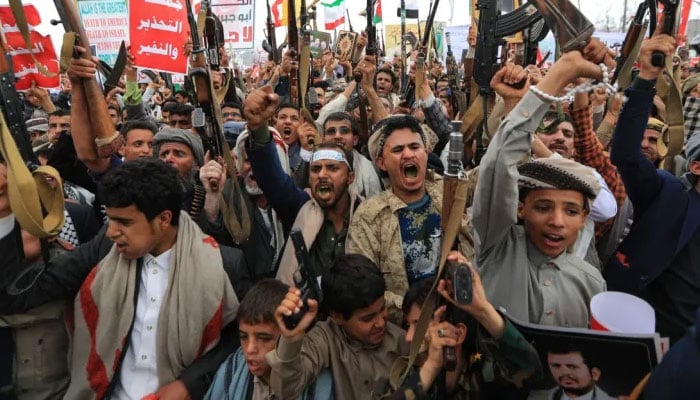
Saudi Arabia’s airstrikes on the Houthi-controlled Yemeni city of Hodeidah have triggered a strong response from the group, with the Houthis warning that the attacks could have serious consequences and further escalate tensions in the region.

According to Arab media reports, Houthi officials said Saudi-led forces targeted telecommunications facilities in Hodeidah as well as Kamaran Island. A woman was reportedly injured in the strike on Kamaran Island.

Witnesses also reported hearing explosions near Hodeidah port. However, the Saudi-led military coalition denied targeting the port itself.

The coalition said its operations were aimed at Houthi military positions in Hodeidah.

Hodeidah port is a major commercial and humanitarian gateway for northern Yemen. The port plays an important role in bringing essential goods and humanitarian supplies into areas controlled by the Houthis.

The latest strikes followed growing tensions in the Red Sea. Saudi-led coalition spokesman Turki al-Malki had described recent Houthi activities in the area as irresponsible and provocative.

He warned that the coalition would take further military action if Houthi attacks continued.

The Houthis recently claimed responsibility for attacks on Saudi oil tankers in the Red Sea. The group said the vessels had violated a naval blockade it had announced against Saudi Arabia.

The Houthis declared the blockade on July 20. They described it as a response to an attack on Sanaa International Airport a week earlier.

The internationally recognised Yemeni government, which is backed by Saudi Arabia, claimed responsibility for the airport attack. It said the strike was carried out after an Iranian aircraft allegedly arrived at the airport without authorisation.

Following the latest escalation, concerns are growing over the impact on commercial shipping and global trade.

Two Chinese oil tankers carrying Saudi crude reportedly crossed the Bab el-Mandeb Strait safely despite the heightened tensions.

The Red Sea is a crucial international shipping route. It handles a significant share of global container trade and connects major markets between Asia, Europe and the Middle East.

Any prolonged disruption to shipping in the Red Sea could increase transportation costs and put further pressure on global supply chains.

The situation is particularly sensitive because the Strait of Hormuz is also facing serious disruption amid the wider regional conflict.

Houthi spokesman Mohammed Abdulsalam said the group’s naval blockade does not amount to a complete closure of the Bab el-Mandeb Strait.

He said the measure is specifically focused on maritime activity linked to Saudi Arabia.

According to the Houthi position, the blockade is intended as a response to what the group describes as the continued blockade of Yemen.

The latest exchange of airstrikes, threats and attacks on shipping has increased fears that the conflict could spread further across the region.

Similar Posts

  • | | |

    Global oil prices drop 12% in three days, Pakistan…

    Pakistani consumers have yet to benefit from a sharp decline in global oil prices, despite international petroleum markets recording a fall of up to 12% over the past three days. The continued high fuel prices have added to the financial burden on households already struggling with rising inflation. Over the last 12 days, fuel prices in Pakistan have increased significantly, with diesel becoming Rs. 65.08 per litre more expensive and petrol rising by Rs. 25.10 per litre. The increases followed the federal government’s decision on July 17 to introduce a daily fuel price adjustment mechanism in line with international market trends. On July 17, petrol was priced at Rs. 310.71 per litre, while high-speed diesel was available at Rs. 323.30 per litre. As of July 29, petrol is being sold at Rs. 335.81 per litre, whereas diesel has climbed to Rs. 388.38 per litre, marking one of the steepest short-term increases in recent years. Although consumers witnessed two minor reductions in petrol prices during this period, the relief was limited. Petrol prices were cut by Rs. 0.35 per litre on July 21 and by Rs. 1.00 per litre on July 27. Diesel prices, however, have not been reduced since the daily pricing mechanism came into effect. International oil markets experienced a sustained upward trend after July 17, contributing to higher domestic fuel prices. However, between July 25 and July 28, global petroleum prices fell sharply, with reports indicating a decline of approximately 12% across major international benchmarks. Despite this significant drop in global prices, Pakistani consumers have not yet received any corresponding reduction at the pump. The absence of immediate relief has sparked concerns among motorists and businesses, particularly those heavily dependent on transportation and logistics, where fuel costs directly affect operating expenses. Economists note that lower international oil prices, if sustained, could create room for a reduction in domestic fuel prices in the coming days. Any adjustment, however, will depend on several factors, including exchange rate movements, government taxes and levies, freight costs, and the pricing formula adopted by the authorities. With inflation continuing to squeeze household budgets, many consumers are hoping the recent decline in global oil prices will soon translate into lower petrol and diesel prices in Pakistan, easing transportation costs and reducing pressure on the overall cost of living.

  • | |

    Pakistani hostages make desperate appeal after 100…

    Pakistani crew members held by Somali pirates have made another emotional appeal for government help. The hostages have been in captivity for more than 100 days. They are seeking urgent action for their release. The crew members are aboard the MT Honour 25. The Palau-flagged oil tanker was hijacked by armed pirates off the coast of Puntland, Somalia, on April 21. The vessel was carrying between 17 and 19 crew members. Ten of them are Pakistani nationals. Seven Indonesians, an Indian and a Sri Lankan are also among those being held. In newly released video messages, several hostages appeared weak and unwell. They appealed to the Pakistani government to intervene. Yasir Khan, one of the Pakistani hostages, said several crew members had fallen ill. He said they were facing difficulties in obtaining medicines. Khan urged Prime Minister Shehbaz Sharif to take immediate action. He also appealed to Foreign Minister Ishaq Dar and Maritime Affairs Minister Junaid Anwar Chaudhry. He asked the authorities to secure their release before their health situation became more serious. Khan also appealed to Jamaat-i-Islami chief Hafiz Naeemur Rehman. He requested him to continue efforts for the hostages. Another hostage, Hussain Yousuf, said more than 100 days had passed since their capture. He said the crew still had no clear information about when they would be released. Yousuf appealed to the prime minister and Chief of Defence Forces and Army Chief Field Marshal Asim Munir to intervene. He warned that further delays could lead to serious consequences. The crew has released several messages since the hijacking. In previous appeals, the hostages reported shortages of food, clean water and medicines. Their deteriorating condition has increased concerns among their families. The pirates have reportedly demanded a ransom of around $3 million. However, no confirmed breakthrough has been reported in negotiations. Pakistan’s Foreign Office said the government was closely monitoring the situation. Foreign Office spokesperson Tahir Andrabi said several government departments were involved in efforts to secure the crew’s release. The process includes the Ministry of Human Rights, the Ministry of Maritime Affairs and other relevant agencies. Andrabi said the case was particularly difficult because the hostages were being held in an autonomous region of Somalia. He said local tribal structures and influential figures had also complicated negotiations with the pirates. Pakistan, he added, remained in contact with the Somali government and relevant authorities. It was also coordinating with international organisations involved in the matter. The Foreign Office expressed sympathy with the families of the hostages. It said their concerns were understood and that the case remained a priority. The government said all possible efforts were being made to secure the crew’s release and bring them home safely. The case has also been complicated by uncertainty surrounding the ownership of the tanker. Questions remain over who legally owns the vessel. The person previously believed to be its owner was later reportedly identified as a middleman who had helped hire the crew. Meanwhile, the latest distress messages have renewed pressure for urgent action.

  • |

    Pakistan seal seven-wicket win over County Select XI

    BECKENHAM: Pakistan produced a strong second-half turnaround on Saturday, defeating the Professional County Club Select XI by seven wickets in their three-day practice match at the Kent County Cricket Ground. Chasing 262 runs for victory on the final day, Pakistan made the target look comfortable, reaching 265-3 in just 57.1 overs. The result provided an encouraging boost for the visitors ahead of their three-match Test series against England. The star of Pakistan’s successful chase was Saud Shakeel, who delivered a composed unbeaten century. Coming in at No. 3 after opener Azan Awais was dismissed for just one, Saud took control of the innings and finished with 100 not out from 147 balls, hitting 10 fours and three sixes. He found an ideal partner in Imam-ul-Haq, with the experienced opener producing an attacking 80 from 88 deliveries. Imam struck 13 boundaries and combined with Saud for a crucial 127-run partnership, effectively taking the game away from the hosts. Mohammad Rizwan added a useful 33, while Awais Zafar remained unbeaten on 30 to complete the chase. Earlier, the PCC Select XI resumed their second innings at 128-3, holding a 195-run lead. Pakistan’s bowlers, however, quickly turned the pressure into wickets. The hosts managed only 66 additional runs before being dismissed for 194. Falconer top-scored with 56, while Saif Zaib and Manny Lumsden contributed 24 each. Spinner Ali Usman was Pakistan’s standout bowler, finishing with an impressive five wickets for 42 runs. Ubaid Shah claimed two wickets for just nine runs, while Salman Ali Agha, Sajid Khan and Mohammad Ali took one apiece. The comeback victory comes at an important moment for Pakistan. With their first Test against England scheduled to begin in Leeds on August 19, the performances of Saud, Imam and the bowling attack offer Pakistan plenty of confidence. After struggling earlier in the match, Pakistan finished strongly — exactly the kind of response they will hope to carry into the Test series. Brief Scores Pakistan beat PCC Select XI by seven wickets PCC Select XI: 305 (S. Zaib 65, M. Fisher 62*, C. Falconer 59, T. Haines 51; M. Ali 3-23, M. Abbas 3-37) & 194 (C. Falconer 56, J. Rew 40; A. Usman 5-42, U. Shah 2-9) Pakistan: 238 (A. Shafique 61; S. Bashir 4-76) & 264-3 (S. Shakeel 100*, I. ul-Haq 80 retired not out) Result: Pakistan won by 7 wickets.

  • | |

    Sindh extends Section 144 for one more month

    The Sindh government has extended Section 144 across the province for another month, keeping several restrictions in place to maintain law and order. According to a notification issued by the Sindh Home Department in Karachi, the renewed restrictions will come into effect on August 1 and will remain enforced for the next month. The notification states that wall chalking, public rallies, demonstrations and the display of weapons in public places will continue to remain prohibited throughout the province. The government said the measures have been taken as part of efforts to preserve public peace and prevent any activities that could disrupt law and order. Authorities have directed law enforcement agencies to ensure strict implementation of the restrictions. Officials said action will be taken against anyone found violating the provisions of Section 144 during the enforcement period. The notification also clarified that only security guards employed by registered private security companies will be permitted to carry weapons while performing their official duties. No other individuals will be allowed to display or carry weapons in public unless authorised under the law. Section 144 is a legal provision that empowers district administrations to impose temporary restrictions on public gatherings and certain activities in the interest of public safety. It is often enforced during periods of heightened security concerns or to prevent possible disturbances.

  • |

    Saudi Arabia says It seeks strong ties with Iraq

      Riyadh:A senior Saudi government official has reaffirmed the Kingdom’s commitment to maintaining strong and friendly relations with Iraq, stressing that recent airstrikes carried out in Iraqi territory were directed solely at armed militia groups and not at the Iraqi government or its people. According to Arab media reports, the official said Saudi Arabia values its relationship with Iraq and remains committed to strengthening cooperation between the two neighboring countries. He emphasized that the military operation was not intended to undermine Iraq’s sovereignty or harm its citizens, but was instead a response to growing security threats posed by armed militias operating inside the country. The Saudi official stated that the airstrikes specifically targeted the military capabilities of armed militia groups that the Kingdom believes have threatened Saudi national security. He alleged that these militias had launched attacks against key Saudi civilian infrastructure and important economic facilities, including petroleum installations that are vital to the country’s economy. According to the statement, the military operation was carefully planned and limited to militia weapons depots and military storage facilities. Saudi Arabia maintained that these locations were being used to store weapons and launch attacks against strategic sites inside the Kingdom. The official added that the response came only after several months of restraint and patience, during which Saudi authorities had sought to avoid military escalation. The official further accused the militia groups of harming not only Saudi Arabia’s security but also Iraq’s own national interests. He argued that these organizations have damaged Iraq’s relationships with neighboring Arab and Islamic countries by using Iraqi territory and resources as a base for hostile activities against other states. He also claimed that the militias have attempted to weaken Iraq’s diplomatic standing by drawing the country into regional conflicts. According to the Saudi government, the actions of these armed groups threaten regional stability and undermine efforts to promote peace, security, and economic cooperation across the Middle East. Saudi Arabia reiterated that its objective is to protect its national security while preserving positive relations with the Iraqi government. The official emphasized that Riyadh supports Iraq’s sovereignty, stability, and development, and hopes to continue working with Baghdad to address common security challenges through cooperation and dialogue. The statement comes after military strikes carried out on July 29, when United States and Saudi forces reportedly targeted sites linked to alleged Iranian-backed militias in Iraq. According to available reports, the attacks resulted in the deaths of 20 people and left 32 others injured. The strikes have intensified regional tensions and drawn widespread international attention, with concerns growing over the possibility of further escalation in the region. The incident has once again highlighted the complex security situation in Iraq, where various armed groups continue to operate alongside government forces. Regional analysts warn that continued military confrontations could further destabilize the country and increase tensions between regional powers. While Saudi Arabia insists that the operation was a defensive measure aimed solely at preventing future attacks, the developments underscore the fragile security environment in the Middle East. The Kingdom has expressed hope that cooperation with Iraq and other regional partners will help address shared security concerns while preventing further violence and preserving stability throughout the region.

  • | |

    Norway FM praises Pakistan’s role in easing US-I…

    ISLAMABAD: Norwegian Foreign Minister Espen Barth Eide met Interior Minister Mohsin Naqvi in Islamabad on Friday, with the two sides discussing bilateral relations, regional developments and opportunities to expand cooperation in several key areas. The meeting focused on strengthening collaboration between Pakistan and Norway in counterterrorism, combating illegal immigration, police training and mutual legal assistance. The officials also exchanged views on the security situation in Afghanistan and the activities of banned organisations operating from its territory. Naqvi said Pakistan had adopted a zero-tolerance policy against illegal immigration and highlighted measures taken by the country to curb the issue. He said Pakistan’s efforts had contributed to a 47 per cent decline in illegal immigration to Europe, adding that the European Union had also acknowledged the effectiveness of these measures. The interior minister stressed the importance of expanding legal migration channels as part of efforts to tackle illegal immigration. Discussing Afghanistan, Naqvi said Pakistani security concerns remained linked to the continued use of Afghan territory by militant groups for attacks against Pakistan. He called for stronger international cooperation to eliminate terrorism and said the global community must work collectively to address the threat. During the meeting, Foreign Minister Eide praised Pakistan’s constructive and active efforts to help reduce tensions between the United States and Iran. He also appreciated the contribution of the Pakistani community living in Norway, noting its growing role in politics, healthcare and other sectors. Naqvi described the Norwegian foreign minister’s visit as an important opportunity to further strengthen relations between the two countries and expand cooperation in areas of mutual interest. Minister of State for Interior Talal Chaudhry, the federal interior secretary and other senior officials also attended the meeting. Moreover, A high-level Norwegian delegation led by Foreign Minister Espen Barth Eide met Pakistan’s Chief of Army Staff and Chief of Defence Forces, Field Marshal Syed Asim Munir, at General Headquarters (GHQ) in Rawalpindi on Thursday. According to the Inter-Services Public Relations (ISPR), the meeting focused on matters of mutual interest, regional security and Pakistan-Norway bilateral relations. During the meeting, Field Marshal Asim Munir presented Pakistan’s perspective on global peace and regional stability. He stressed the need for greater cooperation and joint efforts to address emerging security challenges. The two sides also discussed the evolving security environment in the region and the importance of strengthening coordination between Pakistan and Norway. The Norwegian foreign minister acknowledged the role of the Pakistan Armed Forces in contributing to regional peace and stability. Both sides expressed their commitment to further strengthening bilateral relations and expanding cooperation, particularly in the fields of defence and security. The meeting comes as Pakistan continues to engage with international partners on regional security, peace and broader strategic issues. The discussions with the Norwegian delegation provided an opportunity for both countries to explore avenues for deeper institutional and defence-related engagement. The two sides reaffirmed their resolve to maintain regular engagement and enhance cooperation in areas of mutual interest.

Leave a Reply

Your email address will not be published. Required fields are marked *