pakistani hostages make
| |

Pakistani hostages make desperate appeal after 100…

Pakistani crew members held by Somali pirates have made another emotional appeal for government help.

The hostages have been in captivity for more than 100 days. They are seeking urgent action for their release.

The crew members are aboard the MT Honour 25. The Palau-flagged oil tanker was hijacked by armed pirates off the coast of Puntland, Somalia, on April 21.

The vessel was carrying between 17 and 19 crew members. Ten of them are Pakistani nationals. Seven Indonesians, an Indian and a Sri Lankan are also among those being held.

In newly released video messages, several hostages appeared weak and unwell. They appealed to the Pakistani government to intervene.

Yasir Khan, one of the Pakistani hostages, said several crew members had fallen ill. He said they were facing difficulties in obtaining medicines.

Khan urged Prime Minister Shehbaz Sharif to take immediate action. He also appealed to Foreign Minister Ishaq Dar and Maritime Affairs Minister Junaid Anwar Chaudhry.

He asked the authorities to secure their release before their health situation became more serious.

Khan also appealed to Jamaat-i-Islami chief Hafiz Naeemur Rehman. He requested him to continue efforts for the hostages.

Another hostage, Hussain Yousuf, said more than 100 days had passed since their capture.

He said the crew still had no clear information about when they would be released.

Yousuf appealed to the prime minister and Chief of Defence Forces and Army Chief Field Marshal Asim Munir to intervene.

He warned that further delays could lead to serious consequences.

The crew has released several messages since the hijacking. In previous appeals, the hostages reported shortages of food, clean water and medicines.

Their deteriorating condition has increased concerns among their families.

The pirates have reportedly demanded a ransom of around $3 million. However, no confirmed breakthrough has been reported in negotiations.

Pakistan’s Foreign Office said the government was closely monitoring the situation.

Foreign Office spokesperson Tahir Andrabi said several government departments were involved in efforts to secure the crew’s release.

The process includes the Ministry of Human Rights, the Ministry of Maritime Affairs and other relevant agencies.

Andrabi said the case was particularly difficult because the hostages were being held in an autonomous region of Somalia.

He said local tribal structures and influential figures had also complicated negotiations with the pirates.

Pakistan, he added, remained in contact with the Somali government and relevant authorities. It was also coordinating with international organisations involved in the matter.

The Foreign Office expressed sympathy with the families of the hostages. It said their concerns were understood and that the case remained a priority.

The government said all possible efforts were being made to secure the crew’s release and bring them home safely.

The case has also been complicated by uncertainty surrounding the ownership of the tanker.

Questions remain over who legally owns the vessel. The person previously believed to be its owner was later reportedly identified as a middleman who had helped hire the crew.

Meanwhile, the latest distress messages have renewed pressure for urgent action.
Similar Posts

  • |

    Two missing women, toddler found dead in Dinga pon…

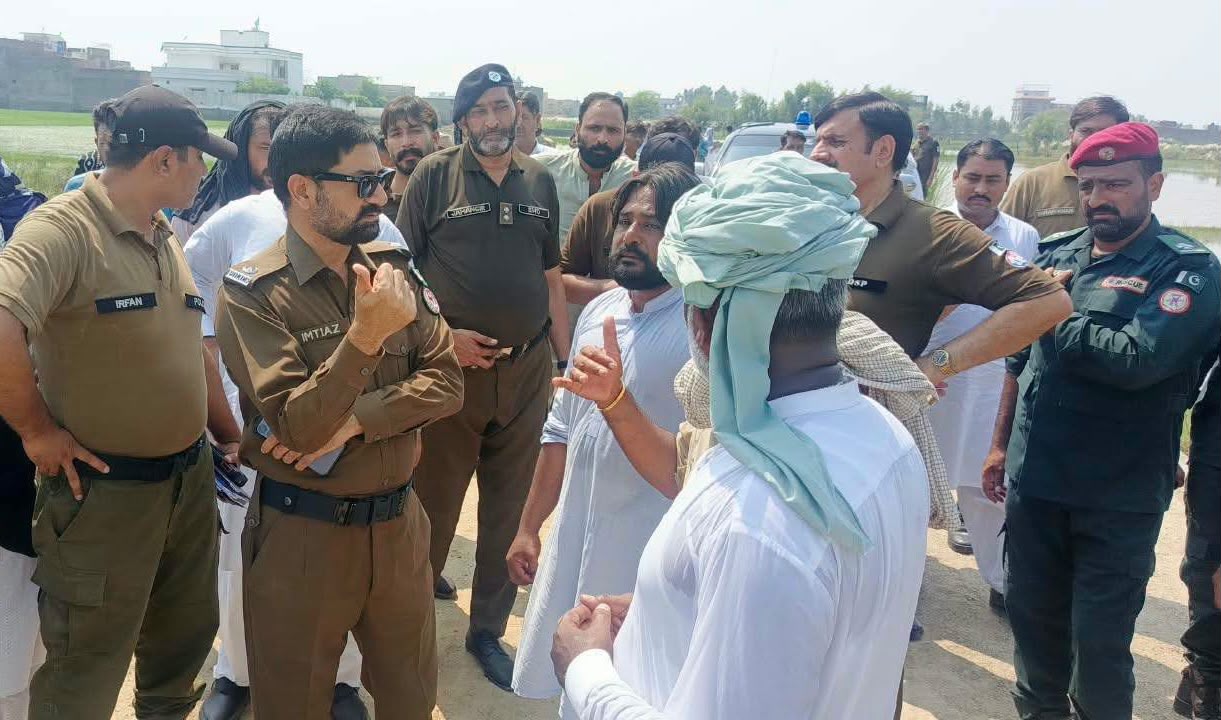
    GUJRAT: The bodies of three females, including a two-year-old girl, who had gone missing from the Dinga area a day earlier, were recovered from a pond in Mohallah Chaar Gah , police said. The deceased were identified as Arooj Fatima, Haleema Sadia and two-year-old Ruku Fatima. According to police, all three had gone missing from the jurisdiction of Dinga police station on August 25. Following their disappearance, a kidnapping case had been registered at Dinga police station on the complaint of the family. A search operation was underway when their bodies were found in a pond in Mohallah Chaar Gah. Police said a heavy contingent was deployed at the scene after the recovery of the bodies. Crime Scene Unit personnel and teams of the Punjab Forensic Science Agency (PFSA) also reached the site and collected evidence for further investigation. The bodies were later shifted to a hospital for post-mortem examinations. According to preliminary police findings, the three victims appeared to have died due to drowning. However, police said the matter was still being investigated from different angles and the final cause and circumstances of their deaths would be determined after the completion of medico-legal and forensic procedures. The recovery of the bodies sent shockwaves through the locality, particularly because a kidnapping case had been registered only a day earlier after the three females went missing. District Police Officer Gujrat Faisal Shehzad visited the scene following the recovery of the bodies. He was briefed by police officers and also gathered information from residents of the area about the circumstances surrounding the incident. The DPO directed the officers concerned to conduct a complete and transparent investigation and examine all possible aspects of the case. He said the legal and investigative process should be completed strictly on merit and no aspect of the incident should be overlooked. Faisal Shehzad also met the bereaved family members and expressed his condolences over the deaths. He assured them that police would complete all legal and investigative formalities in accordance with the law. Police officials said the post-mortem reports and forensic examination of evidence collected from the scene would play an important role in determining whether the deaths resulted solely from drowning or whether any other factor was involved. Investigators are also examining the timeline of the disappearance and other circumstances leading up to the recovery of the bodies from the pond. The Dinga police said further proceedings would be carried out in light of the post-mortem findings, forensic evidence and the results of the ongoing investigation. The bodies were handed over for further medico-legal procedures as police continued their investigation into what officials described as a tragic and sensitive case. No final conclusion regarding the circumstances of the deaths had been announced by police at the time of filing this report, while investigators continued to collect evidence and record statements from relevant persons.

  • | | | |

    Trump sets condition for Saudi Nuclear Pact

    US President Donald Trump has said that any future civilian nuclear agreement between the United States and Saudi Arabia will depend on the kingdom joining the Abraham Accords, the US-backed agreements aimed at normalising relations with Israel. Trump said Washington has no objection to Saudi Arabia developing civilian nuclear facilities as long as they are used only for peaceful purposes. He stressed that the proposed cooperation would focus on non-military nuclear energy, similar to civilian programmes in other countries. The proposed agreement would allow Saudi Arabia to enrich uranium and develop nuclear reactors with American technology. However, the deal reportedly does not require Riyadh to accept additional international inspections that are designed to detect undeclared nuclear activities. The absence of these extra safeguards has drawn attention because similar measures have been considered important in previous nuclear agreements. Saudi Arabia has been working for years to establish a civilian nuclear programme as part of its broader economic diversification strategy. The kingdom says nuclear energy will help reduce dependence on oil and meet future energy demand. Saudi leaders have also stated in the past that if Iran were to develop nuclear weapons, Riyadh would seek the same capability to maintain the regional balance. The latest remarks come as tensions between the United States and Iran continue to intensify. Iran’s Foreign Ministry warned American military personnel against carrying out attacks on civilian infrastructure. Tehran said targeting facilities such as bridges and power plants could amount to war crimes under international law. Iranian officials argued that following military orders would not protect individuals from legal responsibility if unlawful attacks were carried out. US Secretary of State Marco Rubio said Washington’s main objective remains preventing Iran from obtaining nuclear weapons. He accused Tehran of repeatedly violating agreements and said the Iranian government continues to support armed groups across the Middle East instead of focusing on its economy and people. Rubio also urged Yemen’s Houthi movement to avoid becoming more deeply involved in the conflict. He warned that further attacks could increase instability across the region and create additional security challenges. At the same time, Oman announced that it is working with Saudi Arabia, the United Nations and other regional partners to restart Yemen’s political peace process. Muscat called on all sides to avoid further escalation in the Red Sea and to protect international shipping routes. The Houthis claimed responsibility for missile and drone attacks on two Saudi oil tankers in the Red Sea. The group said the strikes were part of its maritime blockade campaign. Saudi authorities confirmed that one tanker was damaged and caught fire after the attack, while the status of the second vessel remained unclear. The attacks have raised fresh concerns about the security of one of the world’s busiest shipping lanes. Several commercial oil tankers have reportedly changed their routes to avoid the Red Sea, increasing transportation costs and raising fears of further disruption to global energy supplies. Elsewhere in the region, Bahrain activated emergency warning sirens following reports of a possible Iranian attack. Authorities urged residents to remain calm and move to safe locations while monitoring the situation. Jordan also said its air defence systems intercepted several missiles and drones approaching its airspace. The Jordanian military confirmed there were no casualties or damage and said security forces remain on high alert. Meanwhile, Iran’s Revolutionary Guard claimed it had carried out attacks on US military facilities in Jordan and Kuwait. The group alleged that it struck missile defence systems, military equipment and logistical sites. There was no immediate confirmation of those claims from either Jordan or Kuwait.

  • | | |

    Salman Ali Agha backs Babar Azam’s return to rev…

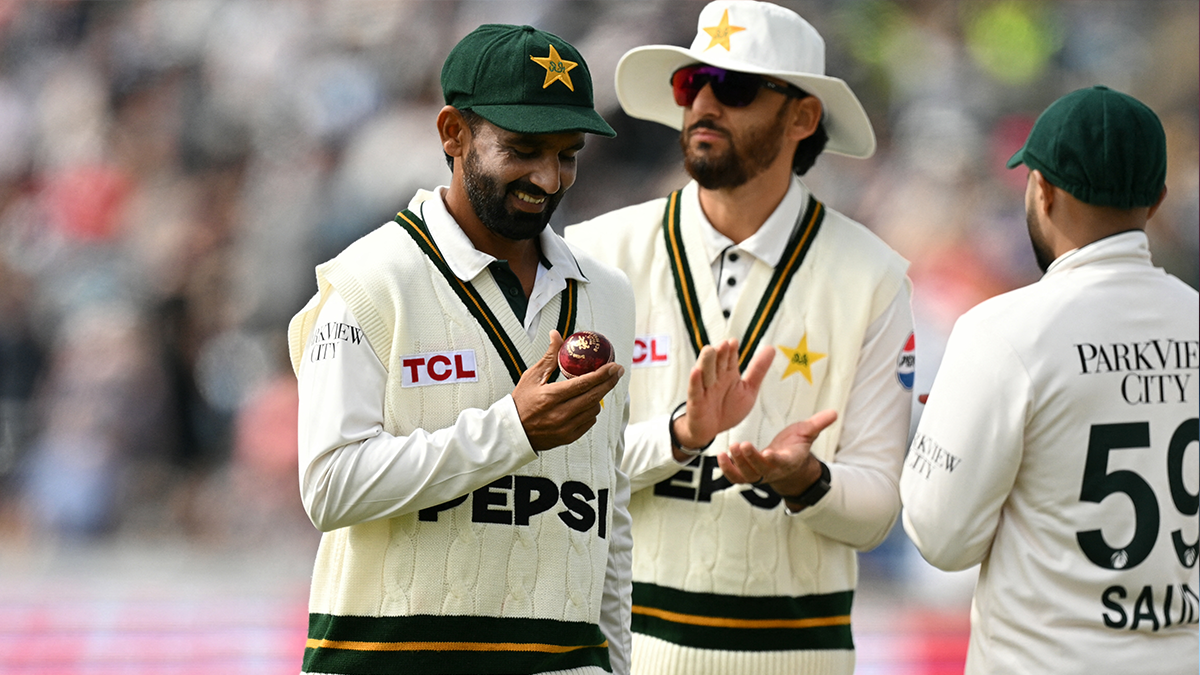
      Pakistan’s stand-in captain Salman Ali Agha has backed the return of Babar Azam, expressing confidence that the experienced batter can provide a much-needed boost to the team’s struggling batting lineup. His comments came after Pakistan suffered a heavy defeat against England in the opening Test at Headingley on Friday. England completely dominated the match and secured an innings-and-103-run victory, taking control of the Test series. Pakistan struggled throughout the game, particularly with the bat, as they were dismissed for just 171 runs in their first innings before being bowled out for 135 in the second. In contrast, England produced a strong batting performance, posting 409 runs in their first innings. Pakistan’s bowlers were unable to take full advantage of the helpful conditions, while England’s players maintained pressure throughout the match. Ollie Robinson was named Player of the Match after an impressive bowling display in which he claimed eight wickets. Speaking after the match, Salman Ali Agha acknowledged that England had been the superior team and admitted that Pakistan had made several costly mistakes. “England have outplayed us,” Salman said, emphasizing that the team’s inexperienced batting unit needed to become more consistent, especially when playing in challenging overseas conditions. The Pakistan captain also defended his fast bowlers despite their failure to capitalize on the moisture and overcast conditions at Headingley. He pointed out that the pace attack had performed well during Pakistan’s previous tour of the West Indies and believed the conditions in England should have suited them. According to Salman, Pakistan have bowlers capable of reaching speeds of around 140 kilometers per hour, but they were unable to produce their best performances in the first Test. He insisted that he continued to have faith in the bowling unit and said the team would work on correcting its mistakes before the next match. Despite the disappointing result, Salman praised the individual efforts of Ali Usman and Abdullah Shafique. He was particularly pleased with Usman’s bowling performance in difficult conditions and also highlighted Shafique’s determination with the bat. Looking ahead to the next Test, Salman believes the potential return of Babar Azam could significantly improve Pakistan’s batting. Babar’s experience and ability to perform under pressure could provide stability to a lineup that struggled against England’s bowling attack. “Hopefully Babar will come back in the next match and his presence will give a boost to our batting,” Salman said. Pakistan will now look to learn from their mistakes and make a strong comeback in the next Test. With Babar Azam potentially returning to the playing XI, the team will hope that his experience can help strengthen the batting order and give Pakistan a better chance of challenging England in the remainder of the series.

  • | |

    Pakistan’s Pharmaceutical exports reach 20-year …

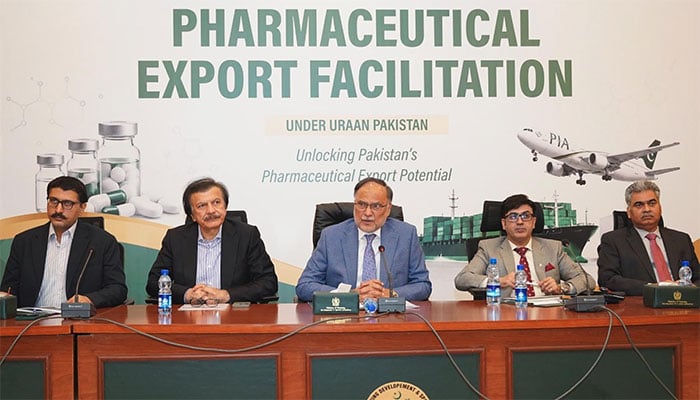
        ISLAMABAD: Federal Minister for Planning and Development Ahsan Iqbal has said that Pakistan’s pharmaceutical exports have reached a 20-year high of $457 million, stressing that the pharmaceutical industry must establish a clear contribution towards the country’s ambitious target of generating more than $100 billion in exports by 2035. Speaking at a roundtable conference in Islamabad organised to facilitate pharmaceutical exports under the government’s Uraan Pakistan initiative, the federal minister said the industry needed to adopt a long-term strategy to expand its presence in international markets. Ahsan Iqbal called on representatives of the pharmaceutical sector to hold consultations over the next month and prepare a comprehensive roadmap for the industry’s development through 2030 and beyond. He said Pakistan’s objective should be to transform the country into a global hub for pharmaceutical manufacturing and exports. The minister emphasised that Pakistan needed to secure a significant position in the international pharmaceutical market by improving the competitiveness and quality of locally manufactured products. He said cooperation between the government and private sector could help the industry compete more effectively at the global level. According to the minister, continuity in government policies and the creation of a business-friendly environment are essential for the sustainable growth of the pharmaceutical sector. He stressed that investors and manufacturers require predictable policies and a supportive regulatory framework to make long-term investments in production, research and exports. Ahsan Iqbal also highlighted the need to reduce Pakistan’s dependence on imported pharmaceutical inputs and increase domestic manufacturing capacity. He said approximately 85 percent of the raw material used by the pharmaceutical industry is currently imported, creating challenges for the sector and increasing its exposure to international supply disruptions and currency fluctuations. He called for strengthening the local pharmaceutical value chain so that a greater proportion of raw materials, intermediate products and finished medicines could be produced within Pakistan. The minister said enhancing domestic production would not only reduce the country’s import bill but could also improve the competitiveness of Pakistani pharmaceutical companies in international markets. A stronger local supply chain could help manufacturers reduce production costs, improve efficiency and develop products that meet international standards. He further stressed the importance of developing a coordinated strategy involving government institutions, pharmaceutical manufacturers, researchers and other stakeholders. Such cooperation, he said, would be necessary to identify the major obstacles facing the sector and develop practical solutions. The roundtable conference was held as part of efforts under Uraan Pakistan to promote exports and strengthen productive sectors of the economy. The initiative aims to improve Pakistan’s economic performance by encouraging investment, increasing exports and promoting sustainable industrial development. Ahsan Iqbal said the pharmaceutical industry had significant potential to contribute to Pakistan’s export growth if its structural challenges were addressed. He urged industry representatives to use the consultation process to develop realistic targets and identify measures that could help Pakistan increase its share in the global pharmaceutical market. The minister’s remarks come as Pakistan seeks to diversify its export base and reduce dependence on traditional export sectors. He said the pharmaceutical industry could become an important contributor to this effort by improving domestic production, investing in innovation and expanding access to international markets. The government, he added, would continue working with the private sector to create conditions that encourage investment and promote the long-term growth of Pakistan’s pharmaceutical industry.

  • | | |

    Govt raises Petrol and Diesel prices in fresh fuel…

    ISLAMABAD: The federal government has announced a fresh revision in petroleum prices, increasing the rates of both petrol and high-speed diesel with immediate effect. According to a notification issued by the Ministry of Energy, the price of petrol has been raised by Rs1.09 per litre, taking the new rate to Rs336.15 per litre. The government has also increased the price of high-speed diesel by Rs2.42 per litre, bringing its new price to Rs393.04 per litre. The revised fuel prices came into effect immediately and will remain applicable until the next official review, subject to future adjustments based on international oil market trends and other pricing factors.

  • |

    Saba Hameed’s double role as mom and wife sparks confusion

    Saba Hameed continues to prove her versatility as an actor, appearing in more projects than most of her peers. Her latest casting choices, though, have left fans and colleagues puzzled. In ARY Digital’s Bas Tera Saath Ho, now 28 episodes deep, Saba portrays the wife of the male lead’s uncle, played by Faran Tahir. Around the same time, she plays the mother of the female lead’s father in Dar-e-Nijaat, another ARY production, again opposite Tahir. She is essentially his wife in one show and his mother in another, with both airing simultaneously. Content creator K Khan raised the issue in an Instagram reel on Monday. He questioned how the makers of Dar-e-Nijaat decided she suited the role of Tahir’s mother, given that she plays his spouse elsewhere on the same channel. Actor Zhalay Sarhadi weighed in through the comments, arguing that only women seem to age in Pakistani show business, while men remain perpetually youthful on screen. She said the industry keeps reinforcing this outdated mindset, even as attitudes shift elsewhere in the world. Sarhadi called for better, more realistic roles written for female actors, and joked she might soon end up playing Humayun Saeed’s mother if the trend continues. Atiqa Odho voiced similar frustration on her show Kya Drama Hai, posted to YouTube on Tuesday. She praised the overall cast but admitted she could not understand the casting logic behind Hameed’s role. She added that Hameed’s look in the part felt unconvincing, since she does not resemble a grandmother. Not everyone agreed. TV host Juggun Kazim defended the casting, calling it proof of Hameed’s exceptional range as a performer. She said Hameed has a rare gift for making audiences forget she is acting and fully believe each character. This is not the first time ageism has stirred debate in Pakistani television. Atiqa herself was previously targeted over remarks about her appearance. Critics often point out that male actors in their 40s still land lead roles as young men, such as Fahad Mustafa in Kabhi Main Kabhi Tum, frequently paired with much younger actresses. Women of similar age, meanwhile, are routinely pushed into roles as mothers or older relatives, underscoring a persistent double standard in casting across the industry.

Leave a Reply

Your email address will not be published. Required fields are marked *