israel rejects trumps
| |

Israel rejects Trump’s 15-point Gaza plan

Israeli Prime Minister Benjamin Netanyahu has rejected US President Donald Trump’s proposed 15-point plan for Gaza, insisting that Israel will not withdraw its forces until Hamas is fully and genuinely disarmed.

Netanyahu made the statement during a cabinet meeting on Sunday. He said Israel would not accept any arrangement that allows Hamas to retain its weapons while Israeli troops are required to leave Gaza.

“Israel rejects the 15-point document,” Netanyahu said, adding that the Israeli military would continue operating against threats to its forces and citizens.

The dispute has created another obstacle for Trump’s efforts to establish a lasting ceasefire and political settlement in Gaza.

Trump’s Board of Peace had previously announced that an agreement had been reached on the complete disarmament of Hamas and other armed groups operating in the territory.

Hamas, however, has linked the handover of its heavy weapons to wider conditions. The group has demanded an end to Israeli military operations and a withdrawal of Israeli forces from Gaza.

Netanyahu said disarmament must take place before any Israeli military withdrawal. He rejected the possibility of what he described as a symbolic or “fictitious” disarmament process.

The Israeli premier said his government was discussing the next steps with US officials. He indicated that some American proposals were acceptable to Israel, while others remained unacceptable.

“We know how to stand our ground on these matters,” Netanyahu said.

The disagreement represents a major challenge for Trump’s Gaza initiative, which was presented as a framework for ending the conflict and creating conditions for reconstruction.

The proposed plan includes the disarmament of Hamas, a phased Israeli military withdrawal and the rebuilding of Gaza. It also envisages the creation of an international Board of Peace to oversee implementation of the agreement.

Hamas had previously signalled support for aspects of the disarmament framework. However, the group has maintained that weapons cannot simply be surrendered while Israeli forces remain in Gaza and military operations continue.

Israel, meanwhile, has continued military strikes in Gaza despite the initial ceasefire agreement reached last October.

Netanyahu is also facing political pressure at home. His far-right coalition partners have strongly opposed concessions that could allow Hamas to remain armed or secure a significant Israeli withdrawal.

National Security Minister Itamar Ben Gvir has rejected the proposed framework and called it unacceptable.

With Israeli elections approaching, Netanyahu faces pressure from both domestic allies and international partners. Any major concession on Gaza could create tensions within his governing coalition.

The latest rejection therefore puts Trump’s peace initiative under renewed pressure. The central disagreement remains over the sequence of events: Hamas wants Israeli forces to withdraw and military action to end before completing disarmament, while Israel insists that Hamas must first surrender its weapons.

Similar Posts

  • | |

    SBP appoints 10 primary dealers for FY27

    KARACHI: The State Bank of Pakistan (SBP) has appointed 10 financial institutions as Primary Dealers (PDs) and two institutions as Special Purpose Primary Dealers (SPDs) for the fiscal year 2026-27. The appointments will strengthen the government’s domestic borrowing programme and support the country’s financial market. The government continues to rely heavily on domestic borrowing to finance its fiscal requirements. In this system, primary dealers play an important role by participating in government debt auctions and helping raise funds through Treasury Bills and Pakistan Investment Bonds. According to the central bank, United Bank Limited (UBL), National Bank of Pakistan (NBP), and Bank Alfalah secured the top three positions among primary dealers during the fiscal year 2025-26. Their rankings were based on overall performance in government securities auctions and market activities. The 10 institutions selected as Primary Dealers for FY2026-27 are United Bank Limited, National Bank of Pakistan, Bank Alfalah, Habib Bank Limited, Habib Metropolitan Bank, MCB Bank, The Bank of Punjab, Pak Oman Investment Company, JS Bank, and Citi Bank NA Pakistan Branch. The State Bank has also appointed the Central Depository Company of Pakistan Limited (CDC) and the National Clearing Company of Pakistan Limited (NCCPL) as Special Purpose Primary Dealers for the new fiscal year. The appointments were made after evaluating applications submitted by financial institutions under the eligibility criteria laid down in the Primary Dealer System Rules. The central bank had invited applications for the new fiscal year through a circular issued earlier this year. Primary dealers are responsible for purchasing government securities directly from the central bank during auctions. They then distribute these securities among commercial banks, financial institutions and other investors. Their participation ensures that government borrowing operations continue without disruption. These institutions also play an important role in the secondary market by providing liquidity and facilitating the buying and selling of government securities. Their presence helps improve market efficiency and contributes to transparent price discovery. The role of primary dealers has become increasingly important as Pakistan continues to depend on domestic sources to meet its financing needs. Through their participation in debt auctions, they help the government raise funds while supporting stability in the country’s financial system.

  • |

    US prepares to restore diplomatic staff at middle East embassies following Iran war

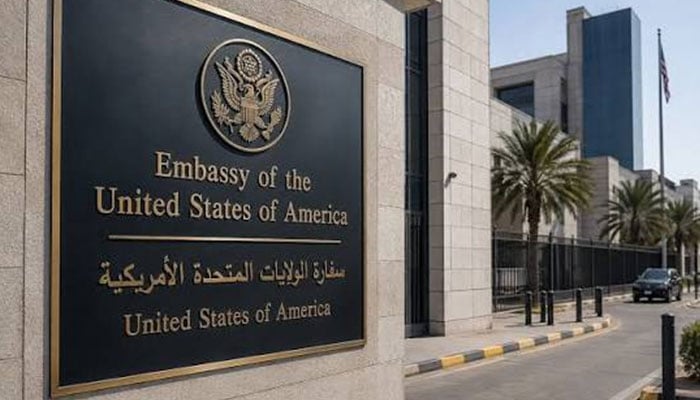
      WASHINGTON: The United States has begun preparations to return diplomatic personnel to several embassies across the Middle East that were previously evacuated amid concerns over the conflict with Iran. According to a report, an internal document from the US State Department indicates that the process of bringing American diplomats back to the region and scaling down emergency security measures could begin as early as this week. The development is being viewed as a possible indication that the administration of US President Donald Trump does not currently expect a full-scale war with Iran to resume. The planned return of diplomatic personnel suggests Washington may be assessing the security situation as sufficiently stable to gradually restore normal diplomatic operations. The internal document reportedly outlines plans to increase staffing levels at several US diplomatic missions across the region. These include American embassies in Israel, Lebanon, Saudi Arabia, Qatar, Jordan, Oman, Iraq and Kuwait. The planned changes would mark a gradual shift from the emergency measures implemented by the US government after the conflict began. American diplomatic missions had faced heightened security concerns as tensions between Iran, Israel and the United States escalated. Following the outbreak of the war in February, the US State Department ordered the evacuation of personnel from several diplomatic missions in the Middle East. The measures were introduced as a precaution amid concerns that the conflict could expand and expose American diplomats and other personnel to increased risks. The decision to begin reversing some of those measures indicates that Washington may now have greater confidence in the security environment. However, the reported plans do not necessarily mean that all emergency precautions will immediately be removed or that diplomatic operations will return to their previous levels overnight. Instead, the process is expected to take place gradually, with staffing levels and security arrangements adjusted according to conditions in individual countries. The Middle East remains a strategically important region for the United States, with Washington maintaining diplomatic missions across countries that play significant roles in regional politics, energy supplies and security affairs. US embassies also provide important channels for communication with governments and local authorities. The possible return of diplomats comes at a time when Washington continues to closely monitor developments involving Iran and its regional relationships. Any renewed escalation could potentially affect American diplomatic personnel and military interests in the region. The State Department’s reported internal plans therefore suggest an attempt to balance diplomatic needs with security considerations. Returning personnel would allow American missions to resume broader diplomatic activities while maintaining measures designed to protect staff. The report did not indicate that the United States considers the broader security situation completely resolved. Rather, the planned reduction in emergency measures appears to reflect a reassessment of the immediate threat following the conflict. The move could also have wider diplomatic implications. Restoring normal staffing levels at embassies may enable Washington to strengthen engagement with regional governments and improve coordination on political and security matters. For now, the process is expected to depend on developments on the ground. Any significant escalation between the United States, Israel and Iran could lead Washington to reconsider the planned deployment of diplomats and reinstate stricter security measures. The reported preparations nevertheless represent a notable shift from the evacuation measures introduced after the outbreak of the conflict in February.

  • | |

    Cross border strikes kill at least fourteen as Ukr…

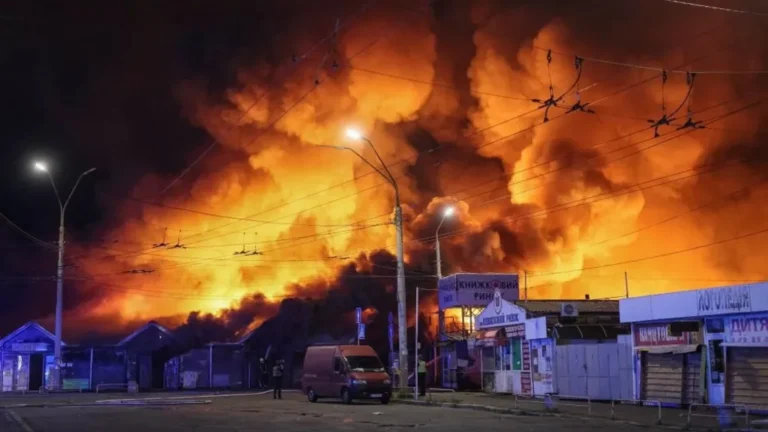
    At least seven people died in Russia following what officials described as Ukraine’s largest scale attack of the year, while separate Russian strikes on Ukraine killed at least seven more people and injured over 39 others. Ukraine launched roughly 822 drones in the assault, with 600 of them targeting Moscow, according to the region’s governor, who called it one of the most massive drone attacks the Russian capital has faced in recent memory. The strikes hit a warehouse belonging to online retailer Wildberries among other targets. In Russia’s southwestern Rostov region, five people died following overnight strikes, the regional governor said. In Belgorod, which borders Ukraine, officials said a woman died after a civilian bus was hit, while Moscow region governor Andrey Vorobyov reported that an 83 year old man died in a separate drone attack. Moscow Mayor Sergei Sobyanin said a Wildberries warehouse in Koledino, about 25 kilometers, or 15.5 miles, from central Moscow, was struck and left three people injured, with video footage showing fire and heavy smoke rising above the facility. Wildberries, often compared to Amazon, has faced repeated attacks since July, when Kyiv said it was deliberately targeting logistics hubs Russians use to acquire military equipment as part of a broader effort to disrupt supply lines feeding the Russian army. In Ukraine, officials said a 66 year old man and a 64 year old woman died after a guided aerial bomb struck a private home in the Zaporizhzhia region. Two additional deaths were reported in Kryvyi Rih, a city in the Dnipropetrovsk region, while officials in Sumy, Donetsk and Kherson each reported one fatality, including a 51 year old killed in a drone strike in Sumy. Air raid sirens sounded four times overnight in Kyiv as Russian forces struck the capital. Mayor Vitali Klitschko said at least six people, including a child, were injured in the attacks. Russian officials said their strikes on Kyiv Saturday night targeted a FirePoint facility that produces components for Ukraine’s Flamingo missiles, along with a factory manufacturing drone parts. The strikes also damaged a book market in the city’s Pochayna district, leaving charred books scattered across the ground as firefighters worked to extinguish the remaining flames. Valentina, 69, whose husband ran a stall at the market, described searching through the debris and recognizing books that had belonged to his stall lying scattered on the ground. She said she never imagined something like this would happen to her family. Luba, 42, who owns a vinyl record store nearby, said she lost stock worth roughly 500,000 hryvnias, or about £8,262, in the strikes. She called the shop her life’s work and said many of the destroyed records were rare and could not be replaced. Ukrainian President Volodymyr Zelensky said 13 regions across the country came under attack this week, with Russia launching more than 1,550 attack drones, nearly 1,560 guided aerial bombs and 62 missiles during that period. He said Russian forces strike civilian infrastructure wherever their ballistic missiles can reach. Russia launched its full scale invasion of Ukraine in February 2022 and currently controls roughly a fifth of Ukrainian territory. With neither side making significant progress along the lengthy front line in recent months, the war has increasingly shifted toward an aerial contest, with both countries trading missile and drone strikes aimed at degrading the other’s capacity to keep fighting.

  • | |

    Nobel sustainability trust invites Maryam Nawaz to…

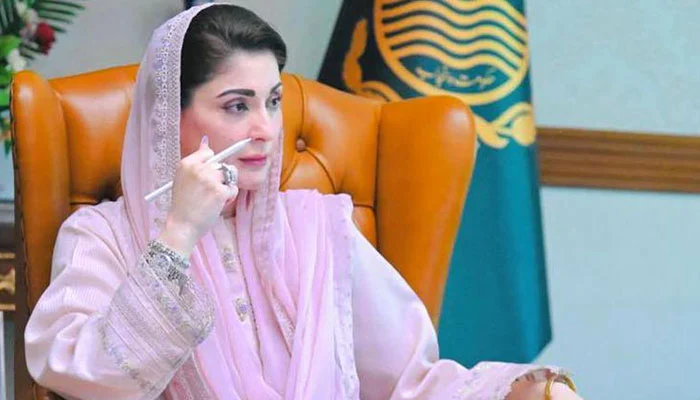
    Punjab Chief Minister Maryam Nawaz Sharif has received an invitation from the Nobel Sustainability Trust (NST) to take part in its international sustainability initiatives and upcoming global summits, highlighting growing international interest in Punjab’s environmental and climate-related policies. NST Chairman Peter Nobel extended the invitation in a letter dated August 22, expressing the Trust’s interest in welcoming the Punjab chief minister to future international engagements. The organisation said it had closely followed the provincial government’s efforts in climate resilience, environmental protection, wildlife conservation, forestry, ecosystem restoration and air-quality management. The Trust particularly highlighted Punjab’s increasing use of technology in environmental governance. It praised initiatives involving digital monitoring, geospatial analysis, remote sensing, artificial intelligence and environmental data systems, saying such tools could help authorities identify climate risks, manage resources and formulate evidence-based policies. According to the NST, Punjab’s emphasis on technology-driven governance and environmental protection reflects a modern approach to sustainable development. It said Maryam Nawaz’s experience could contribute valuable perspectives to discussions involving international policymakers, scientists, sustainability experts and other global leaders. The Trust also expressed its interest in establishing long-term cooperation with the Punjab government, stressing that stronger collaboration among governments, academia, businesses, financial institutions and civil society is essential to tackling environmental and social challenges. Established in Switzerland in 2007 by members of the Nobel family, the Nobel Sustainability Trust focuses on promoting sustainability, scientific cooperation and progress towards the United Nations Sustainable Development Goals. It organises international summits and sustainability initiatives that bring together leaders and experts from around the world.

  • |

    Karan Johar credits Shah Rukh Khan for filmmaking success

    Indian filmmaker Karan Johar marked the occasion of Guru Purnima with an emotional tribute to two people he says transformed his life and career—superstar Shah Rukh Khan and filmmaker Aditya Chopra. Through a heartfelt social media post, Karan reflected on the guidance, encouragement, and unwavering faith they showed in him long before he became one of Bollywood’s most successful directors. Sharing nostalgic photographs with Shah Rukh Khan and Aditya Chopra, Karan looked back on the early days of his journey in the film industry. He recalled a life-changing moment when Aditya Chopra invited him to assist on the iconic film Dilwale Dulhania Le Jayenge. At the time, Karan was planning to continue his studies, but Aditya convinced him to stay back and experience filmmaking from behind the scenes. According to Karan, Aditya spoke to him late one night and urged him to work on the film. More importantly, he encouraged Karan to become a director, insisting that he had the talent for it. Karan remembered Aditya telling him that avoiding this path would be one of the biggest mistakes of his life. Those words remained with him and eventually changed the direction of his future. The following morning, Karan discussed the opportunity with his father, the late producer Yash Johar. He asked for one year to work on a film set before making any long-term decisions. Karan shared that his father questioned whether he understood the responsibilities of working on a set. When Karan admitted he did not, Yash Johar offered advice that stayed with him forever. He explained that technical knowledge alone could make someone a producer, but becoming a director required genuine passion and commitment. Karan acknowledged that Aditya Chopra believed in his potential at a time when he lacked confidence in himself. That encouragement gave him the courage to step into filmmaking and eventually direct his first feature film. The filmmaker also reflected on another unforgettable moment involving Shah Rukh Khan. During a trip to Switzerland, the actor confidently told Karan that he would one day become a director and that Shah Rukh himself would star in his debut film. Karan admitted he did not take the promise seriously at the time, assuming it was simply a kind gesture. However, after returning to India, Shah Rukh Khan fulfilled that promise. He stood by Karan and supported him as he prepared for his directorial debut. That support eventually led to the creation of Kuch Kuch Hota Hai, the film that launched Karan Johar’s career as a director and became one of Bollywood’s biggest successes. Concluding his Guru Purnima message, Karan expressed deep gratitude to both Shah Rukh Khan and Aditya Chopra. He said their trust, mentorship, and belief helped him overcome self-doubt and pursue storytelling with confidence. Karan added that every success and failure he has experienced in his career has been possible because of the guidance and support they gave him. He described the two as the greatest influences on his journey and thanked them for making it possible for him to tell stories on the big screen.

  • | | |

    Oil prices surges avove $91 as Iran war fuels Horm…

    Oil prices climbed on Tuesday, with Brent crude moving above $91 a barrel as stalled diplomacy over the Iran conflict raised fresh concerns about global energy supplies. Brent futures gained 27 cents, or 0.3%, to $91.14 a barrel, while US West Texas Intermediate rose 42 cents to $85.04. WTI had earlier reached $85.37, its highest level since July 31. Markets remained tense after Iran signalled a shift toward a more offensive military posture, while Washington ruled out extending a temporary ceasefire. Progress toward reopening the Strait of Hormuz to normal tanker traffic has also slowed, adding to fears of prolonged supply disruptions. Only a handful of commodity vessels crossed the strategic waterway over the weekend, sharply below normal traffic levels. Concerns were further heightened by attacks in the Red Sea, reinforcing fears over disruptions at both the Strait of Hormuz and Bab el-Mandeb. Despite the growing tensions, reports of possible back-channel contacts between the US and Iran offered a limited sign of hope for renewed diplomacy. Meanwhile, markets are also watching US crude inventories, which are expected to have declined last week. Earlier, Oil prices climbed on Monday as uncertainty over a possible diplomatic breakthrough between the United States and Iran increased, while a sharp slowdown in tanker movements through the Strait of Hormuz heightened concerns about disruptions to global crude supplies. Brent crude futures gained as much as 1% during early trading to reach $89.40 per barrel. The benchmark was later up 72 cents, or about 0.8%, at $89.20 a barrel by 0229 GMT. US West Texas Intermediate (WTI) crude also moved higher, rising 44 cents to $82.83 per barrel. Both international benchmarks posted gains of more than 5% last week after a series of attacks involving energy and shipping assets in and around the strategically important Strait of Hormuz. The incidents have intensified fears that further escalation could affect one of the world’s most important oil transit routes. Market sentiment was further affected by developments over the weekend, when Iranian Foreign Minister Abbas Araqchi said Tehran had yet to decide whether it would resume negotiations with Washington. US President Donald Trump, meanwhile, told Americans to prepare for somewhat higher gasoline prices as the conflict continues. Analysts said the renewed uncertainty had brought geopolitical risk back into crude markets after oil prices had previously come under pressure on expectations that diplomatic efforts could ease tensions. “Oil prices have now rebounded almost completely from the lows seen in early August, as hopes for a more permanent resolution between the US and Iran have faded and geopolitical risk premiums have returned to the market,” said Priyanka Sachdeva, head of market insights at Phillip Nova in Singapore. Sachdeva cautioned, however, that the rally could lose momentum unless there is evidence of a further deterioration in the situation. She said the market would need to see renewed aggression in the Strait of Hormuz, particularly significant damage to oil tankers or energy infrastructure, before prices were likely to move substantially higher. Hormuz shipping activity slows Concerns over physical supply disruptions increased after ship-tracking data showed a marked decline in vessel traffic through the Strait of Hormuz over the weekend. According to data from Kpler, only five commodity vessels crossed the strategic waterway on Saturday, while no such transits were recorded on Sunday. This compared with 31 commodity vessel crossings during the previous weekend. The slowdown is significant because the Strait of Hormuz is a critical route for international energy shipments. Any prolonged disruption could increase transportation risks, raise insurance costs and place additional upward pressure on crude prices. The United Arab Emirates also accused Iran of attacking another vessel operated by Abu Dhabi National Oil Company (ADNOC) while it was passing through the strait on Friday, according to the Emirati state news agency WAM. The UAE had earlier blamed Iran for two separate incidents involving ADNOC-operated vessels on Thursday evening. The latest incidents have added to concerns among traders that the conflict could increasingly affect commercial shipping and energy infrastructure, rather than remaining confined to military and diplomatic confrontation. The Strait of Hormuz remains particularly important to global oil markets because a substantial volume of crude and petroleum products moves through the waterway. Any sustained interruption could therefore have consequences well beyond the region. For now, traders are closely monitoring developments involving US-Iran diplomatic contacts, attacks on shipping and the movement of tankers through the strait. While the latest price gains reflect a higher geopolitical risk premium, analysts remain cautious about predicting a prolonged rally. If shipping activity resumes and diplomatic channels reopen, some of the premium built into crude prices could quickly unwind. Conversely, additional attacks on tankers, oil facilities or other critical infrastructure could trigger a stronger market reaction and push prices higher as traders reassess the security of regional supplies.

Leave a Reply

Your email address will not be published. Required fields are marked *