prepares restore diplomatic
|

US prepares to restore diplomatic staff at middle East embassies following Iran war


WASHINGTON: The United States has begun preparations to return diplomatic personnel to several embassies across the Middle East that were previously evacuated amid concerns over the conflict with Iran.

According to a report, an internal document from the US State Department indicates that the process of bringing American diplomats back to the region and scaling down emergency security measures could begin as early as this week.

The development is being viewed as a possible indication that the administration of US President Donald Trump does not currently expect a full-scale war with Iran to resume. The planned return of diplomatic personnel suggests Washington may be assessing the security situation as sufficiently stable to gradually restore normal diplomatic operations.

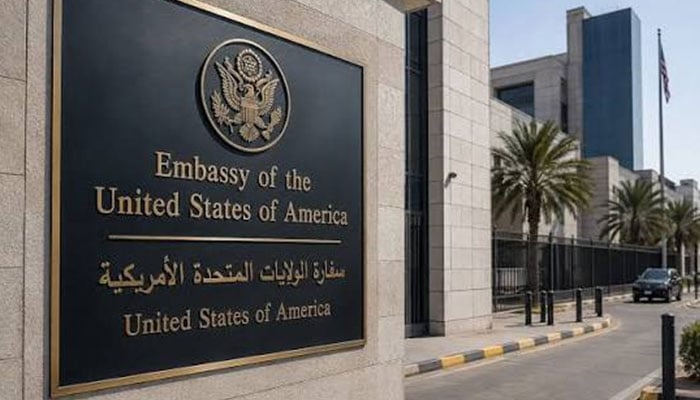
The internal document reportedly outlines plans to increase staffing levels at several US diplomatic missions across the region. These include American embassies in Israel, Lebanon, Saudi Arabia, Qatar, Jordan, Oman, Iraq and Kuwait.

The planned changes would mark a gradual shift from the emergency measures implemented by the US government after the conflict began. American diplomatic missions had faced heightened security concerns as tensions between Iran, Israel and the United States escalated.

Following the outbreak of the war in February, the US State Department ordered the evacuation of personnel from several diplomatic missions in the Middle East. The measures were introduced as a precaution amid concerns that the conflict could expand and expose American diplomats and other personnel to increased risks.

The decision to begin reversing some of those measures indicates that Washington may now have greater confidence in the security environment. However, the reported plans do not necessarily mean that all emergency precautions will immediately be removed or that diplomatic operations will return to their previous levels overnight.

Instead, the process is expected to take place gradually, with staffing levels and security arrangements adjusted according to conditions in individual countries.

The Middle East remains a strategically important region for the United States, with Washington maintaining diplomatic missions across countries that play significant roles in regional politics, energy supplies and security affairs. US embassies also provide important channels for communication with governments and local authorities.

The possible return of diplomats comes at a time when Washington continues to closely monitor developments involving Iran and its regional relationships. Any renewed escalation could potentially affect American diplomatic personnel and military interests in the region.

The State Department’s reported internal plans therefore suggest an attempt to balance diplomatic needs with security considerations. Returning personnel would allow American missions to resume broader diplomatic activities while maintaining measures designed to protect staff.

The report did not indicate that the United States considers the broader security situation completely resolved. Rather, the planned reduction in emergency measures appears to reflect a reassessment of the immediate threat following the conflict.

The move could also have wider diplomatic implications. Restoring normal staffing levels at embassies may enable Washington to strengthen engagement with regional governments and improve coordination on political and security matters.

For now, the process is expected to depend on developments on the ground. Any significant escalation between the United States, Israel and Iran could lead Washington to reconsider the planned deployment of diplomats and reinstate stricter security measures.

The reported preparations nevertheless represent a notable shift from the evacuation measures introduced after the outbreak of the conflict in February.

Similar Posts

  • |

    Suspect in Berlin pride attack shot dead by police

    The suspect accused of driving a minivan into a crowd near Berlin’s annual LGBTQ Pride gathering, killing one person and injuring 29 others, was shot dead by police in the city’s Spandau district on Sunday, authorities confirmed . The ramming attack occurred at approximately 10 pm (2000 GMT) on Saturday in Tiergarten park, near the Brandenburg Gate and close to one of Europe’s largest LGBTQ celebrations, Christopher Street Day . Berlin police identified the suspect as Abdul B, a 21-year-old German citizen of Lebanese heritage, born in Germany in 2005 . According to Interior Minister Alexander Dobrindt, the suspect had “attracted attention in the past through a high number of criminal offences and was known to be radicalised” . Police located the suspect at an allotment garden complex in Spandau at around 6 pm (1600 GMT) on Sunday . “According to initial findings, he ran towards officers while armed with a bladed weapon; police subsequently opened fire,” Berlin police wrote on X . Despite immediate resuscitation efforts by the Berlin Fire Department, the suspect was pronounced dead, a federal prosecutor’s spokesperson confirmed . Earlier, police had published the suspect’s picture and appealed to the public for information on his whereabouts . The attack marks the latest in a series of vehicle-ramming incidents on crowds in Germany in recent years, which have intensified debate around security and immigration amid a surge in support for the far-right . A memorial service was planned at St Mary’s Church in Berlin, with Chancellor Friedrich Meuthen expected to attend . The Christopher Street Day parade, which was called off following the attack, had been expected to draw hundreds of thousands of participants and spectators to the German capital .

  • |

    Hundreds arrested in France as destructive wildfires spread across Europe

    European emergency services are battling fierce wildfires triggered by a record-breaking heatwave, with French authorities arresting nearly 500 individuals on suspicion of starting blazes since July 1. France’s interior ministry reported that 474 people, including 183 minors, have been detained, with approximately 70% suspected of intentional arson. In south-west France, a rapid blaze in the Landes region consumed nearly 1,100 hectares of pine forest in under 24 hours, prompting the emergency evacuation of more than 525 residents from the village of Luglon. The severe weather conditions have caused destruction and displacement across multiple European countries. In Croatia, a gale-driven wildfire swept through the coastal tourist town of Lokva Rogoznica, leaving one person dead, 40 injured, and forcing 1,200 people to evacuate to emergency shelters. In western Germany, over 2,000 residents fled the village of Gey as a forest fire advanced, while emergency crews faced additional hazards from detonating Second World War ammunition buried in the terrain. Elsewhere on the continent, military personnel in north-east Spain evacuated the historical remains of three 11th-century kings from the San Juan de la Peña monastery as flames threatened the site. In northern Greece, a fleet of small boats rescued approximately 500 holidaymakers stranded on beaches along the Halkidiki peninsula after a two-mile fire front threatened local resorts. Firefighters in the UK also faced severe conditions, as wildfires across the West Midlands destroyed several residential properties.

  • |

    Romanian forces execute controlled detonation on Danube to safeguard nuclear energy supply

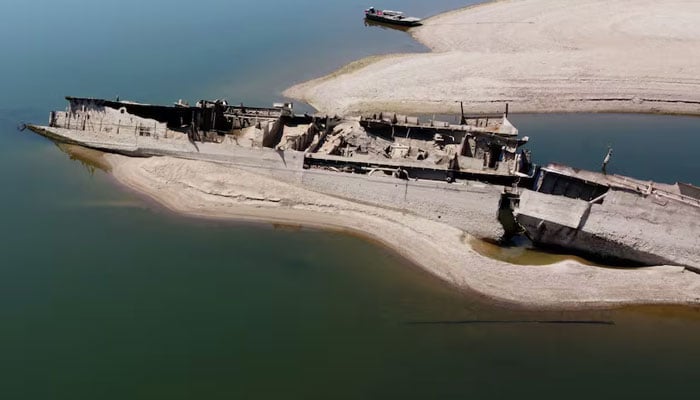
    Romanian naval forces detonated 180 kilogrammes of explosives to clear a massive rock obstruction in the drought-stricken Danube River, attempting to channel essential cooling water towards the country’s sole remaining functional nuclear reactor at Cernavoda. The blast was designed to clear the riverbed and facilitate the construction of a temporary dam to boost water volume heading to the facility. The intervention follows Romania’s declaration of a nationwide state of emergency for August after record-low water levels forced one reactor to shut down entirely. Romanian Defence Minister Radu Miruta defended the costs of the operation, emphasising that maintaining operational capacity at the facility even for a few additional days far outweighs the financial expenditure. Regional energy strains are mounting simultaneously in neighbouring Hungary, where severe water depletion at the Paks nuclear power station has drastically cut output. Prime Minister Peter Magyar warned that a complete plant shutdown could occur next week without weather relief, urging regional coordination and energy restraint to avoid a wider crisis as low rainfall continues across Eastern Europe.

  • | |

    US and Japan join hands to stabilize weakening Jap…

    In a rare show of financial coordination, the United States and Japan have confirmed that they jointly intervened in currency markets last week to support the Japanese yen after it plunged to its weakest level in four decades against the US dollar. The move marks the first coordinated intervention between the two allies since 2011, when they acted together following Japan’s devastating earthquake and tsunami. The intervention comes as both governments seek to stabilize the yen and prevent further market volatility that could ripple across the global financial system. Japanese officials and US Treasury Secretary Scott Bessent made it clear that they are prepared to take additional coordinated action if needed to counter excessive fluctuations in the currency. Economists say the joint effort reflects growing concerns that a prolonged depreciation of the yen and instability in Japan’s government bond market could have wider consequences, including increased borrowing costs for the United States and heightened uncertainty in global markets. Analysts also believe that even limited interventions can discourage speculative trading by signaling that authorities are willing to act decisively. The yen has remained under pressure largely because Japan continues to maintain significantly lower interest rates than other major economies. While the Bank of Japan raised its benchmark interest rate to 1% in June—the highest level in nearly three decades—it remains well below the US Federal Reserve’s policy rate of 3.50% to 3.75%, making the dollar a more attractive choice for investors. Japan is also grappling with long-term economic challenges, including a shrinking working-age population, sluggish productivity growth and heavy dependence on imported energy priced in US dollars, all of which have contributed to the currency’s weakness. Japan’s Ministry of Finance stated that the coordinated intervention was aimed at countering excessive volatility and restoring orderly conditions in foreign exchange markets. Secretary Bessent echoed that message, saying the United States strongly supports Japan’s efforts to correct what it views as a significantly undervalued yen. President Donald Trump also defended the move, saying Japan had sought assistance in stabilizing its currency and reaffirming Washington’s commitment to supporting its longtime ally. Following the announcement, the dollar briefly weakened against the yen before regaining some ground. Market observers estimate that Japan may have spent nearly $59 billion purchasing yen in recent interventions, while reports suggest the United States may have bought between $5 billion and $10 billion worth of the Japanese currency, although US officials have not officially confirmed the amount. Financial markets are now closely watching whether further coordinated interventions will be required if pressure on the yen continues, with analysts expecting both governments to remain ready to act in order to preserve stability in global currency markets.

  • | | |

    Israeli strikes kill 11 in southern Lebanon, Hezbo…

    BEIRUT: Southern Lebanon has been plunged into renewed uncertainty after Israeli airstrikes killed at least 11 people, including three children, and injured 19 others, in the deadliest such escalation since the June ceasefire between Israel and Hezbollah. The strikes hit the towns of Ansar and Deir al-Zahrani on Saturday, according to Lebanese authorities. In Ansar, an airstrike on a residential home killed seven people, while another attack in Deir al-Zahrani killed four and wounded several others. Rescue workers and local residents rushed to the damaged sites, searching through rubble for survivors and recovering bodies. Lebanon’s Health Ministry confirmed the casualty figures, while reports said women and children were among those killed. The attacks have raised fresh concerns about the durability of the ceasefire and the possibility of another escalation along the Israel-Lebanon border. Israel said its military operations targeted Hezbollah infrastructure and were carried out in response to attacks that had seriously wounded three Israeli soldiers. The Israeli military also said a senior Hezbollah commander was among those targeted. Israeli officials maintained that Hezbollah activity in the area posed a continuing threat. Lebanese leaders strongly condemned the strikes. President Joseph Aoun described the attacks as a dangerous message at a time when Lebanon and Israel are preparing for another round of US-backed direct negotiations. He warned that repeated violations of the ceasefire could undermine diplomatic efforts aimed at restoring stability. Prime Minister Nawaf Salam also denounced the attacks, stressing that the women and children killed in Ansar were not military targets. He called on Israel to halt what he described as dangerous escalation. The strikes have also put Hezbollah’s position under renewed scrutiny. The group condemned the Israeli attacks and vowed to deliver an “appropriate response”, warning that continued violations could not go unanswered. Hezbollah also criticised the Lebanese government’s negotiations with Israel and called for a tougher position. The latest violence comes as Lebanon faces a delicate political and security challenge. A US-backed framework announced in June was intended to reduce hostilities, address Hezbollah’s weapons and facilitate an Israeli withdrawal from parts of southern Lebanon. Instead, continued attacks and retaliatory actions have kept the region on edge. For residents of southern Lebanon, the latest strikes have brought back memories of prolonged conflict. With civilians once again caught between military operations and political disputes, fears are growing that the fragile ceasefire could give way to a much wider confrontation. The coming days may prove critical. Any Hezbollah retaliation could trigger further Israeli military action, while continued diplomatic efforts face the difficult task of preventing the latest bloodshed from becoming the beginning of another cycle of violence.

  • |

    Kyiv rocked by massive Russian missile and drone assault

    More than 30 explosions shook Ukraine’s capital, Kyiv, during a fresh wave of Russian missile and drone attacks, according to Russian media reports. The strikes triggered large fires in several parts of the city, with thick smoke rising over parts of the capital as emergency crews rushed to contain the damage. Initial reports confirmed that at least one person lost their life, while five others suffered injuries. Authorities also activated air raid sirens across Kyiv and its surrounding suburbs, warning residents to seek shelter as the attacks continued. The latest assault caused significant disruption across the city and raised concerns about damage to civilian infrastructure. Emergency responders remained on the ground to extinguish fires, assist the injured, and assess the full extent of the destruction. Russian media claimed that Moscow’s forces used advanced precision-guided missiles and drones during the operation. The reports also stated that Ukraine’s air defense systems failed to intercept several of the incoming weapons, allowing multiple strikes to reach their intended targets. Ukrainian authorities have not immediately commented on those claims. The attack marks another escalation in the ongoing conflict, as both sides continue to exchange long-range strikes while fighting persists on several fronts.

Leave a Reply

Your email address will not be published. Required fields are marked *