israel faces new
| |

Israel faces new challenges after Iran conflict

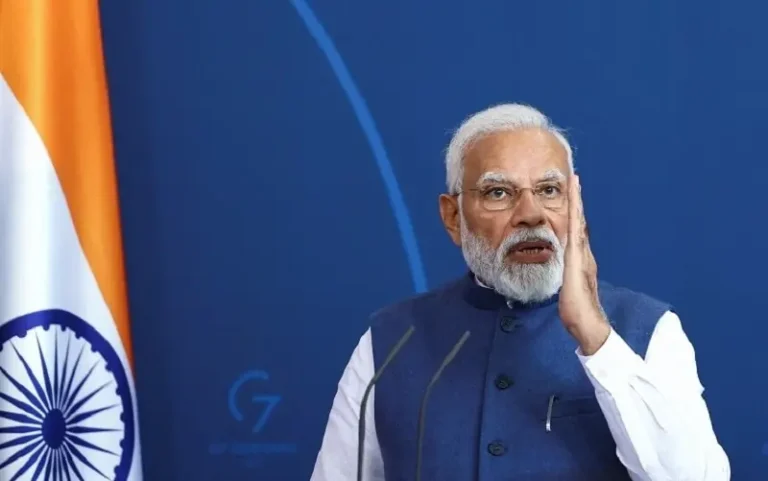
After years of pushing the United States to confront Iran, Israeli Prime Minister Benjamin Netanyahu saw Washington join Israel in military action against Tehran. However, after six months of inconclusive conflict, Israel could now face a more difficult strategic situation than before the war.

Iran has survived the confrontation and appears increasingly confident. Analysts say Israel achieved significant military successes but failed to translate them into a lasting strategic advantage.

A major factor behind the uncertainty has been US President Donald Trump’s shifting policy. Trump joined Israel in launching the conflict in late February but called for a ceasefire in April and backed renewed negotiations with Iran amid growing public opposition and rising oil prices.

“This is a colossal failure of Israeli strategy regarding Iran,” said Danny Citrinowicz, a former senior Israeli intelligence analyst on Iran who now works at the Institute for National Security Studies in Tel Aviv. He acknowledged Israel’s operational gains but said the country had failed strategically.

Israel killed Iranian Supreme Leader Ayatollah Ali Khamenei on the first day of the conflict. Khamenei had suppressed domestic dissent and supported groups hostile to Israel, including Hamas, which carried out the October 7, 2023 attacks.

However, his removal could create a new problem for Israel. Khamenei was also viewed as cautious about pursuing a nuclear weapon. Analysts warn that Iran could now reconsider that position if it believes its conventional military deterrents have weakened.

Trump has recently threatened further economic pressure and occasionally ordered new strikes against Iran, while also supporting a possible agreement that could provide Tehran with sanctions relief. Netanyahu strongly opposed the 2015 nuclear agreement negotiated under former US President Barack Obama.

Citrinowicz said Israel now faces a difficult choice: accept a new nuclear agreement that could strengthen Iran economically, or continue military pressure and risk pushing Tehran toward developing a nuclear weapon. “Israel is trying to do both but it’s not going to work,” he said.

Degrading Iran or seeking regime change

A June survey by the Hebrew University of Jerusalem and the Agam Institute found that 92% of Israelis believed Iran had either won or gained from the conflict. The findings could create additional political pressure on Netanyahu ahead of the October 27 elections.

Netanyahu previously said he wanted to “create conditions for regime change,” although he stopped short of making the overthrow of Iran’s government an official war objective.

Some analysts believe Netanyahu may instead be following an Israeli strategy used in Gaza, Lebanon and Syria: inflicting extensive damage on an adversary and maintaining the ability to launch future attacks when necessary. Israel has often referred to this approach as “mowing the grass.”

A foreign diplomat based in Israel told AFP that Netanyahu may not view the conflict as a failure, arguing that the United States had been drawn directly into confrontation with Iran while Israel had, for now, stepped back.

Iranian counterattacks killed 25 people in Israel and four in the occupied West Bank. In the later stages of the conflict, however, Tehran increasingly focused its attacks on Gulf Arab countries hosting US military bases.

Alex Grinberg, a senior Iran-focused fellow at the Turan Research Centre, said the conflict had dealt a serious blow to Iran by destroying parts of its nuclear infrastructure, eliminating key personnel and worsening its economic situation.

He argued that Israel had achieved its immediate objective of reducing Iran’s strategic ability to threaten Israel, but questioned whether Washington and Tehran could reach an agreement that would serve Israel’s long-term interests.
Similar Posts

  • |

    China’s Chang’e-7 Moon mission to launch on August 24

    China is preparing to launch a complex, multi-spacecraft mission to the Moon. The mission will land near the Moon’s south pole and search for evidence of water and ice. The mission is scheduled to launch on August 24 from the Wenchang Satellite Launch Center on China’s Hainan Island. According to a statement issued by the China Manned Space Agency, the Chang’e-7 mission will be launched aboard a Long March 5 rocket. The mission will focus on the Moon’s south pole and attempt to determine whether water and ice are present inside the craters as well as their quantity and other related details. Water vapour has previously been detected in this region of the Moon through remote sensing but scientists have not yet been able to measure it directly or obtain samples. Chang’e-7 will also help lay the technological groundwork for China’s crewed lunar mission planned for 2030. The mission will consist of an orbiter, lander, rover and hopper spacecraft. Five days after launch, the spacecraft is expected to enter lunar orbit. The orbiter will then identify and determine the target landing area. Chinese authorities have not yet announced the exact landing date and the landing is expected to take place several months after launch. The hopper spacecraft will make multiple flights over the permanently dark craters near the Moon’s south pole. It will also be equipped with landing legs to allow it to land and analyze the surface of the selected locations. The mission will also carry scientific payloads from several countries. China’s Chang’e-5 mission in 2020 and Chang’e-6 mission in 2024 successfully collected lunar samples and returned them to Earth.

  • |

    Russia ready for Ukraine peace ideas, but sets con…

    MOSCOW: Russia is prepared to consider fresh proposals aimed at ending the war in Ukraine, but any initiative must take account of what Moscow describes as the “realities on the ground”, a senior Russian diplomat said on Friday. Deputy Foreign Minister Sergei Ryabkov said Moscow remained willing to maintain dialogue with Washington, while questioning whether the United States could exert enough influence over Kyiv and its European supporters to move negotiations forward. His comments came as diplomatic efforts to end the conflict remain largely stalled, with international attention also focused on the wider tensions surrounding the war in Iran. In an interview with Russian media outlet News.ru, Ryabkov said Moscow had seen signs that Washington was prepared for constructive discussions and showed some understanding of Russia’s position. “At this stage, it is more important to what extent Washington is able to influence the decisions of the Kyiv regime and its European sponsors,” he said. Ryabkov accused some European countries of continuing to seek what he called a “strategic defeat” of Russia, highlighting one of the central obstacles facing any potential peace agreement. Moscow Awaits New Proposals Russia and the United States have held discussions aimed at finding a path towards ending the Ukraine conflict, but negotiations have made little visible progress. The Kremlin said on Thursday that it had not received information about a possible new visit to Moscow by US presidential envoys Jared Kushner and Steve Witkoff. The two have previously played prominent roles in contacts with Russian officials. US Secretary of State Marco Rubio said last month that Washington remained committed to helping end the war after meeting Russian Foreign Minister Sergei Lavrov in Manila. However, Rubio also warned against expecting a rapid agreement, saying Washington was attempting to find a middle ground between the positions of the two sides. Ryabkov said Russia would be ready to examine any proposals put forward by Washington, provided they were consistent with Moscow’s stated objectives. “The Russian Federation is ready to listen to any reasonable proposals and ideas that are in line with the goals set by the Russian president and meet the ‘realities on the ground’,” he said. Territorial Disputes Remain Central The comments underline the continuing importance of territory in the negotiations. After almost four and a half years of war, Russia controls around one-fifth of Ukraine’s internationally recognised territory. Moscow has repeatedly said it is willing to negotiate, but insists that any settlement must acknowledge what it calls the new realities created by the conflict. Ukraine and its Western allies have opposed recognising Russian territorial gains, making the issue one of the most difficult elements of any potential peace agreement. The challenge for Washington is therefore not simply bringing Moscow and Kyiv back to negotiations, but finding terms that could satisfy competing demands over territory, security guarantees and the future political order in the region. Nuclear Dialogue Also on the Table Ryabkov also signalled that Moscow wants to keep diplomatic channels open with Washington on nuclear weapons. The issue has gained urgency since the New START treaty expired in February, leaving Russia and the United States without binding limits on their strategic nuclear arsenals for the first time in more than five decades. Moscow has said it would continue observing the treaty’s limits on missiles and warheads as long as Washington does the same. “We remain open in the future to find political and diplomatic ways to stabilise this area,” Ryabkov said. The nuclear issue adds another layer to an already complicated US-Russia relationship. Even as the two countries remain deeply divided over Ukraine, Moscow appears keen to prevent the collapse of communication on strategic weapons. For now, Russia’s message is that the door to diplomacy remains open — but only proposals that reflect Moscow’s stated conditions and its view of the battlefield are likely to receive serious consideration. With the war continuing and previous negotiations stalled, the next major test will be whether Washington can persuade Kyiv, Moscow and European governments to move beyond competing positions and return to substantive peace discussions.

  • |

    Guatemalan emergency services initiate community evacuations following eruption of Fuego volcano

    Guatemalan disaster management authorities ordered the preventive evacuation of settlements surrounding the Fuego volcano after the geological structure entered a paroxysmal eruptive phase, sending plumes of volcanic ash and pyroclastic density currents down its flanks. The National Coordinator for Disaster Reduction (CONRED) issued a nationwide institutional orange alert, while escalating departmental warnings to red across Sacatepéquez, Chimaltenango, and Escuintla. Emergency personnel coordinated the relocation of over 1,700 residents from high-risk communities, including El Porvenir and Las Lajitas in the San Juan Alotenango municipality. Monitoring reports from the National Institute of Seismology, Volcanology, Meteorology and Hydrology (INSIVUMEH) confirmed that high-temperature pyroclastic flows, composed of volcanic gases, ash, and incandescent rock, descended across five major ravines. Officials warned that dispersed ash clouds could affect municipalities up to 130 kilometres west and northwest of the crater. In response, regional transport authorities temporarily closed National Route 14 to civilian traffic, while the Ministry of Education suspended in-person schooling across nearby districts.

  • |

    Cuban president accuses US of attempting to seize island amid economic pressure

    Cuban President Miguel Díaz-Canel has denounced Washington’s escalating pressure campaign against Cuba as a “genocidal policy”, alleging that the United States is seeking to “appropriate” the nation. Speaking in Pinar del Río during the 73rd anniversary of the Moncada Barracks assault, Díaz-Canel stated that “Cuba is today waging a historic battle … against the walls of a genocidal policy whose objective is to suffocate an entire people in order to appropriate the country”. He further described the US blockade as “a weapon of war” that “causes deaths” and accused Washington of attempting to trigger a “social explosion with the sole aim of installing governments aligned with its imperial interests”. The sharp condemnation comes amid severe energy shortages, rolling blackouts, and financial distress brought on by expanded US sanctions, an oil blockade, and recent restrictions targeting Cuba’s overseas medical missions program. While Washington maintains that Cuba poses a regional security threat, Díaz-Canel called for national unity and the implementation of recent economic reforms, reaffirming that Cuba’s political model remains non-negotiable.

  • |

    US Navy begins testing 2,000-nautical-mile underwa…

    WASHINGTON: The US Navy has begun testing a new low-cost unmanned underwater vehicle designed to travel more than 2,000 nautical miles, marking another step in the development of long-endurance autonomous maritime technology. According to US media reports, the new underwater drone, known as HADALUS, has been developed for missions that require long periods of operation without a crew on board. Its developers say the system could offer a lower-cost alternative to other vehicles in the same category. The 34-foot-long vehicle features a carbon-fibre outer structure and has a cross-section of about six feet. It is equipped with sonar and other electronic systems intended to support underwater operations and data collection. The reported range of more than 2,000 nautical miles is among the system’s most notable features. Such endurance could allow an unmanned vehicle to operate over considerable distances before returning to its launch area or requiring further support. The US Navy has increasingly explored unmanned maritime systems as a way to expand underwater surveillance and other capabilities while reducing the need to place personnel directly in potentially hazardous environments. The HADALUS trials will help assess how the vehicle performs in real-world conditions, including its endurance, navigation, communications and onboard systems. Developers say keeping the platform relatively inexpensive is another key objective. If testing proves successful, the technology could become part of a broader effort to deploy larger numbers of autonomous underwater vehicles for extended maritime missions. The latest trial highlights the growing competition among major military powers to develop longer-range, more capable and cost-effective unmanned systems beneath the sea.

  • |

    Over 80,000 flee as escalating wildfires ravage south-west France and Spain

    More than 80,000 people have been forced to flee their homes and holiday accommodation across south-west France and central Spain as fierce, uncontained wildfires continue to sweep through the region. Fanned by relentless winds and intense heatwave conditions, the blazes have triggered national emergency declarations and prompted urgent requests for international military and civilian aerial support. In France, authorities ordered the total evacuation of the Cap Ferret peninsula on the Atlantic coast as a vast wildfire in the Gironde department consumed over 12,500 hectares of forest and destroyed at least 80 homes. With the main access road threatened by advancing flames, hundreds of residents and holidaymakers were evacuated by sea using ferries and local boats. A secondary blaze further south near Biscarrosse has burned an additional 2,500 hectares, leaving coastal emergency services struggling to contain the perimeter. Across the border in Spain, the central government declared a national emergency after two massive blazes merged outside Madrid and threatened to join a third active fire in the neighbouring province of Ávila. Over 19,000 people were evacuated overnight across affected municipalities as thick acrid smoke reached the capital’s outskirts. Spanish officials described the convergence of high temperatures, parched terrain, and strong winds as an unprecedented crisis for the region. Both nations have activated the European Union’s Civil Protection Mechanism to request specialized firefighting aircraft, with reinforcements deployed from Portugal, the Czech Republic, Croatia, and Slovakia. Environmental scientists highlight that Europe is warming at roughly twice the global average rate, warning that prolonged droughts and extreme seasonal weather patterns are driving wildfire destruction to historic levels across the continent.

Leave a Reply

Your email address will not be published. Required fields are marked *