| |

Iran’s parliament backs bill criminalizing c…

Iran’s parliament approved the general framework of a bill Sunday that would make it a crime to give interviews or engage in other communication with media outlets considered hostile to the Islamic Republic, including American or Israeli outlets and any media funded by either country, according to Iran’s Shargh newspaper.

Osman Salari, a member of parliament’s judicial and legal commission, said individual provisions within the bill, which aims to counter what officials describe as foreign intelligence influence, still require separate debate and approval. He told the Mizan news agency that details reported so far about the bill should not be treated as final.

Under the proposed legislation, interviews or participation in discussions with media deemed hostile would be banned outright, with violations carrying prison terms ranging from six months to two years. Interviews with other foreign media outlets would require advance notification to the intelligence ministry, while any contact with foreign embassies, offices of foreign organizations or other non Iranian institutions, conducted without notification and written permission from the foreign ministry, would draw fines and the loss of certain social rights.

The bill would also increase penalties for economic crimes carried out under the direction or supervision of foreign actors, prohibit sharing information with foreigners without intelligence ministry approval, and limit scientific cooperation with foreign institutions to those on an approved list. It would further criminalize policy or legislative proposals made under the direction of foreign intelligence services if such proposals are found to harm Iran’s security or independence, with penalties reaching up to 30 years in prison. Cases brought under this provision would fall under the jurisdiction of Iran’s Revolutionary Courts.

Parliament will now review the bill article by article. Once lawmakers approve a final text, the legislation must still pass review by the Guardian Council before it can take effect as law.

This is not the first time Iran has moved to criminalize cooperation with foreign entities. A law passed in 2025, following a 12 day war with Israel, introduced harsher penalties for alleged cooperation with hostile states. Earlier this month, Iranian photojournalist Yalda Moaiery was sentenced to 15 years in prison under that law over accusations that included giving interviews to media considered hostile and supplying photographs to organizations linked to the United States and Israel.

Similar Posts

  • | |

    IHC seeks answers over delay in judicial appointme…

    ISLAMABAD: The Islamabad High Court (IHC) has asked the federal government to explain the constitutional implications of keeping Prime Minister Shehbaz Sharif’s advice on judicial appointments pending with President Asif Ali Zardari. Justice Arbab Muhammad Tahir issued notices to the president, the federal government and the attorney general on Monday while hearing a petition challenging the delay in approving appointments to the superior courts. The court also directed the respondents to submit separate concise reports detailing when the prime minister’s advice was sent to the president and what action had been taken on it. The case has been fixed for hearing on August 11. The petition was filed by lawyer Luqman Zafar through his counsel Zahid Asif Chaudhry, who questioned the prolonged delay in completing the constitutional process for judicial appointments. The Judicial Commission of Pakistan, headed by Chief Justice Yahya Afridi, had recommended 19 additional judges and the confirmation of five judges for the high courts during meetings held on July 20 and 21. The recommendations were subsequently forwarded by the prime minister to President Zardari for approval under Article 48 of the Constitution. During Monday’s proceedings, the petitioner’s lawyer argued that the use of the word “shall” in Article 48(1) placed a constitutional duty on the president to act on the prime minister’s advice. He maintained that although the president could return the advice for reconsideration within the prescribed period, the Constitution did not permit an indefinite delay. The counsel further argued that the delay was affecting the administration of justice at a time when the superior courts were already struggling with a growing backlog of cases. According to the petitioner, prolonged vacancies could also undermine the public’s constitutional right to timely access to justice. Justice Tahir directed that notices be served through all available modes. Additional Attorney General Rashid Hafeez was also asked to ensure that the respondents provide the court with clear timelines regarding the submission and handling of the judicial appointments summary. The presidential delay has already had consequences for the high courts. Four additional judges of the Peshawar High Court whose confirmation had been recommended by the Judicial Commission ceased to hold office on August 4 after their terms expired without formal notifications. A similar situation arose in the Sindh High Court, where an additional judge left office after his extended tenure ended on July 29. The oath-taking ceremony for the newly recommended judges had originally been scheduled for July 27 but was postponed indefinitely after the president neither approved the summary nor returned it for reconsideration. With the matter now coming under judicial scrutiny, the Islamabad High Court is set to examine whether the continued delay in acting on the prime minister’s advice is constitutionally permissible.

  • | |

    Sindh solar project to benefit 275,000 families

    Karachi: Sindh Senior Minister for Information, Transport, and Mass Transit Sharjeel Inam Memon has announced that the Sindh government’s Rs18.2 billion Solar Home System Project will provide clean and affordable energy to 275,000 deserving families across the province. In a statement issued on Tuesday, Memon said the initiative, launched under the guidance of Pakistan Peoples Party (PPP) Chairman Bilawal Bhutto Zardari, is a major step toward expanding access to renewable energy, particularly for low-income households and remote communities. According to the minister, the project will benefit 132,000 off-grid families living in areas without access to the national electricity network, while 143,000 on-grid families facing electricity-related challenges will also receive solar home systems. Each beneficiary family will be provided with a 180-watt solar panel, batteries, a central control unit, a charge controller, mobile charging facility, electric fans, and LED lights. The comprehensive package is designed to meet basic household energy needs while reducing dependence on conventional electricity sources. Sharjeel Memon said the project is progressing rapidly, with more than 15,000 solar home system kits already distributed across various districts of Sindh. He added that the government aims to complete the distribution to all 275,000 eligible families by June 2027. The senior minister described the initiative as more than just an electricity project, saying it represents a significant welfare program aimed at improving the quality of life for economically disadvantaged families. He noted that access to reliable and clean energy would help reduce household expenses, improve living standards, and support sustainable development across the province. The Sindh government views the solar project as an important investment in renewable energy and social welfare, aligning with broader efforts to promote clean energy solutions and provide long-term relief to vulnerable communities.

  • | |

    Sajal Aly’s edgy photoshoot sparks debate

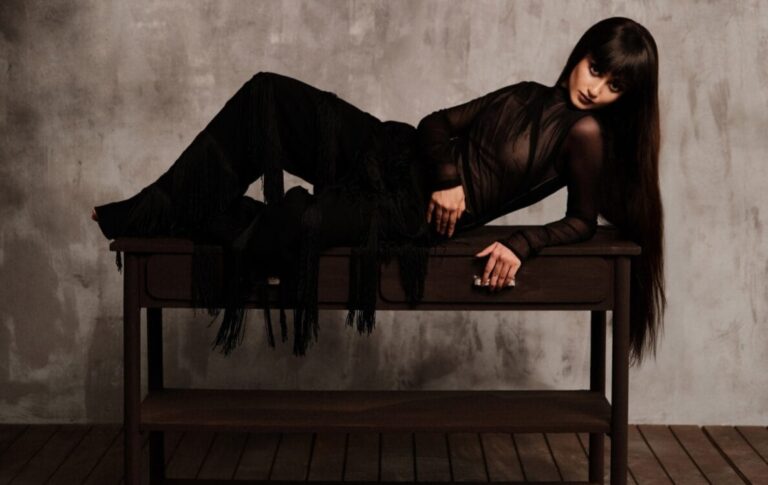
    Pakistani actor Sajal Aly has become the centre of attention after unveiling a dramatic new fashion photoshoot that has generated widespread discussion across social media. Known for her elegant screen presence and natural beauty, the award-winning star surprised fans by embracing a bold, gothic-inspired look that marked a sharp departure from her recent television appearance. Sajal, who is currently earning praise for her performance as Rabiya in the drama Zanjeerain, transformed her image for the latest editorial shoot by wearing a long black wig, dark-toned makeup and all-black designer outfits. The high-fashion concept presented the actor in a mysterious and unconventional style rarely seen by her fans. The photos quickly went viral, attracting thousands of reactions on social media. While many fashion enthusiasts applauded Sajal for experimenting with a new aesthetic and praised her confidence in carrying such a challenging look, others expressed surprise and preferred her more natural on-screen appearance. Several users admired the actor’s willingness to step outside her comfort zone, describing the photoshoot as artistic, stylish and visually striking. Supporters said the concept showcased her versatility as a model and performer, proving she can adapt to different fashion trends with ease. However, not everyone was convinced by the transformation. Some social media users compared her appearance to fictional gothic characters, while others questioned the styling, saying they preferred the softer and more traditional look she has become known for in television dramas. A few comments also criticised the makeup and styling, arguing that it did not complement her usual appearance. Despite the divided opinions, the photoshoot has succeeded in creating a strong online buzz, with fans and fashion followers continuing to debate the creative direction behind the project. Industry observers note that celebrity fashion editorials often aim to challenge conventional beauty standards and encourage artistic expression rather than reflect everyday style. Sajal Aly has built a reputation as one of Pakistan’s most accomplished actors through her performances in numerous hit television dramas and films. Beyond her acting career, she has also become a prominent fashion icon whose public appearances and photoshoots frequently attract attention

  • | | |

    Rana Sanaullah dismisses AJK rigging claims, calls…

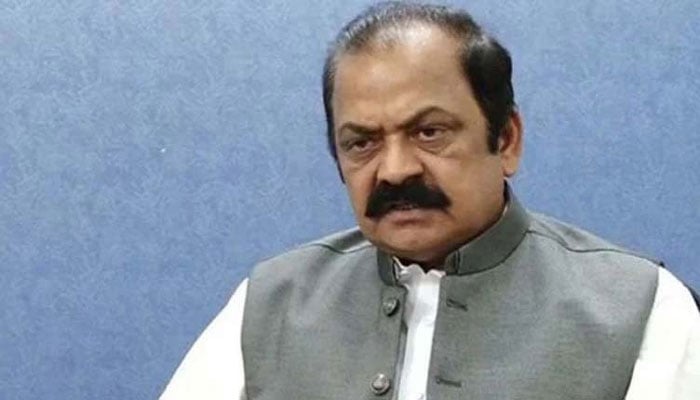
    Prime Minister’s Adviser on Political Affairs Rana Sanaullah  has strongly rejected allegations of electoral rigging in Azad Jammu and Kashmir’s LA-27 constituency, calling the claims baseless and politically motivated. Speaking to reporters, Rana Sanaullah said a fake video was being circulated on social media to create the impression that irregularities had taken place during polling in the Muzaffarabad constituency. He alleged that the video was being used as part of a campaign to mislead the public and damage the credibility of the electoral process. He challenged the Pakistan Peoples Party (PPP) to produce credible evidence if it believed rigging had occurred. He said accusations alone were not enough and urged the party to present proof before making such serious claims. Rana Sanaullah said polling in LA-27 had been conducted peacefully since the morning. He added that no complaints had been received regarding polling staff or the administration of any polling station during the voting process. The adviser also questioned whether the PPP had filed any formal complaint with the Election Commission regarding the alleged irregularities. He said the appropriate legal and constitutional forum was available for any political party that wished to challenge the election process. According to Rana Sanaullah, the PPP had adopted a narrative of election rigging from the very beginning instead of waiting for the electoral process to conclude. He maintained that if the party had evidence, it should submit it to the Election Commission for investigation rather than relying on unverified videos and public statements.

  • |

    Pralhad Joshi named India’s new education minister

    India’s Union Minister for Food and Consumer Affairs Pralhad Joshi has been given the additional responsibility of the Education Ministry. The development comes after the resignation of Dharmendra Pradhan. His resignation was accepted by the Indian president, according to an official notification. The notification also confirmed Joshi’s appointment to the additional portfolio. He will continue to handle his existing responsibilities while overseeing the Education Ministry. Speaking to journalists after the appointment, Joshi said he accepted the new responsibility with humility and a strong sense of duty. He thanked Prime Minister Narendra Modi for placing his trust in him. Joshi also praised the Modi government’s performance during its 12 years in power. He said the government had achieved several important milestones during this period. He added that the education sector had also witnessed major developments. Joshi acknowledged the work carried out by Pradhan during his tenure as education minister. He said Pradhan had played an important role in implementing India’s National Education Policy. According to Joshi, several significant initiatives were introduced during the previous four to five years. He also said India had made considerable progress in moving towards a new education system. Joshi pledged to carry out his new duties with dedication. He said he would use his abilities to fulfil the responsibilities assigned to him. The change at the Education Ministry follows weeks of student protests across India. The demonstrations were linked to allegations of examination paper leaks and irregularities. Students had demanded action from the authorities and greater accountability within the education system. Pradhan submitted his resignation on the 35th day of the protests. The 57-year-old minister stepped down as pressure continued to grow over the controversy. The protests were largely driven by young people. Their campaign gained significant attention through social media and public demonstrations. Pradhan’s resignation was subsequently welcomed by the protesters, who had made his removal one of their major demands. The leadership change now places Joshi at the centre of efforts to address the concerns surrounding India’s education and examination system. His immediate responsibilities are expected to include overseeing the ministry’s ongoing programmes and ensuring continuity in the implementation of education policies. The new minister will also face pressure to respond to concerns raised by students over examination procedures, transparency and accountability.

Leave a Reply

Your email address will not be published. Required fields are marked *