use rosemary moderation

Use rosemary in moderation

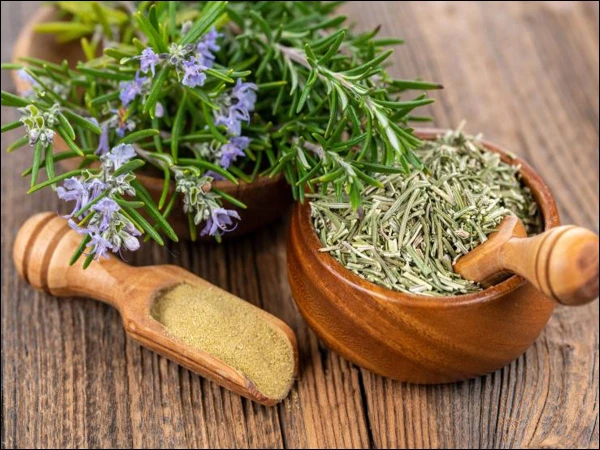
Rosemary is a popular herb used to add a fresh and pleasant aroma to food. But it is more than just a kitchen ingredient.  This evergreen herb comes from the Mediterranean region and belongs to the mint family.  It is commonly used as dried leaves or in powdered form.

Rosemary contains nutrients such as iron calcium and vitamin B6. It has also been used for centuries because of its possible health benefits. Modern research has explored how its natural compounds may affect the body.

Rich in Antioxidants

Rosemary contains antioxidants and anti-inflammatory compounds that may help protect the body from harmful free radicals.  These compounds may also support the immune system and healthy blood circulation.

May support digestion

rosemary has traditionally been used to help with digestive problems such as indigestion. In Europe it has been used for this purpose for many years and Germany’s Commission E has recognized its traditional use for digestive discomfort.

May help focus and mood

The smell of rosemary may also have an effect on mental performance. Research published in Therapeutic Advances in Psychopharmacology found that rosemary aroma was linked with better attention mental performance speed accuracy and mood.

Possible brain benefits

Rosemary contains a natural compound called carnosic acid.  Scientists are studying this compound because it may help protect brain cells from damage caused by free radicals.

This is one reason rosemary is being researched for its possible role in brain and nerve health.

What about Cancer?

Some laboratory studies have explored rosemary extracts and their possible anti tumor effects.  One study found that a rosemary extract slowed the growth of human leukemia cells in laboratory conditions.

Other research has also looked at its anti inflammatory and anti-tumor properties.

However these findings do not mean that rosemary can treat or cure cancer. More research is needed to understand its effects in humans.

Use it in moderation

Rosemary is generally safe when used in normal amounts as a food ingredient.  However taking very large amounts may cause harmful effects including vomiting and other serious problems.

For this reason rosemary is best used in moderate amounts. If you plan to take rosemary as a supplement or use it for a specific health purpose it is better to speak with a healthcare professional first.

Similar Posts

  • Ultrasound patch may help improve sleep without medication

    Scientists at the University of Texas in the United States have developed an advanced wearable patch that may help people enter REM (Rapid Eye Movement) sleep more quickly and remain in this stage for longer without surgery or medication. According to scientists, the device called NEUSLeeP combines electrodes that monitor brain activity in real time. Researchers say the technology can target deeper areas of the brain associated with REM sleep while simultaneously monitoring the brain’s response. Scientists tested the patch on 28 people and the findings were published in the scientific journal Nature Communications. According to the study, people using the device entered REM sleep an average of 43 minutes earlier and spent approximately 16 additional minutes in this stage. The effect was observed both in healthy individuals and in people experiencing sleep problems. Participants reported that the patch was comfortable to wear while only minimal side effects were observed during the study. Researchers also found that ultrasound treatment caused certain changes in the body associated with stress regulation. Among healthy participants, a significant increase in heart-rate variability was observed which is generally associated with the body’s ability to cope with and respond to stress. Changes were also observed in brain circuits involved in emotional processing during brain imaging. According to researchers, these findings are important because disruptions in REM sleep have been linked to mental health conditions such as depression, anxiety and post-traumatic stress disorder (PTSD). Scientists emphasized that further large-scale research is needed before NEUSLeeP can be used as a standard treatment. Future studies are planned to determine whether the technology could also be effective for people experiencing chronic insomnia, depression and PTSD.

  • Wave clouds go viral in California

    People in the California city of Santa Cruz were left amazed after unusual wave shaped clouds appeared across the evening sky. According to media reports the stunning cloud formation was seen on Tuesday evening. Dark and white clouds stretched across the sky creating a pattern that looked like ocean waves. As the sun began to set its golden light reflected off the clouds making the view even more beautiful. Many local residents captured the rare moment on their phones and shared photos and videos on social media, where they quickly went viral. One woman at the beach posted a video of the breathtaking sky, and it has attracted widespread attention online.

  • Journalism Education in AI Era: Harmonizing Traditional Skills and Emerging Technologies

    By Muhammad Aaraiz Altutmish  Two weeks ago, I attended a workshop under the project titled “Digital Trust and Free Expression in the AI Era” at the Department of Media and Development Communication, University of the Punjab, supported by the U.S. Mission to Pakistan in partnership with the Pakistan-U.S. Alumni Network (PUAN). The Workshop fetched together students, media persons, and experts to address one of the most significant topics framing advanced communication: the impression of AI on Media & Journalism.  Across the set of captivating sessions, presenters highlighted how Artificial Intelligence revolutionizing newsrooms, altering the way journalists collect information, inspect the facts and generate content. The fast development of technology specifically Artificial Intelligence (AI) has reshaped the advance digital world. AI is no longer a far-off concept; it has already integrated into the newsrooms and become a part of modern media networking. Therefore, media professionals and journalists can’t neglect this technology anymore. Instead they are continuously expected to develop their expertise and to modernize their skillset according to the changing media environment. This circumstance raises a significant question for journalism students who aim to foster their careers in the media industry. Should they first concentrate on learning the traditional basics or foundations of journalism, or should they prefer AI and developing technologies? While AI is transforming the means of working in media industry, journalism students are still needed to practice and learn the conventional principles and standards of journalism that have long been instructed in academic institutions. The AI development has brought prominent changes to writing, editing, publishing and content creation. Most of the operations can now be done in more quick and efficient way. Research functions have become effortless and many of newsroom tasks have been managed via technological tools. These advancements have transformed the media organizations operate and have affected many aspects of journalistic practices. Regardless of these changes, journalism education proceeds to emphasize the conventional methods of reporting, news values, interviewing techniques, fact- verification, and other foundational skills. Students are expected to master these standard practices while they also have to upskill themselves understanding and adapting to AI driven technologies and tools. As a result, journalism students often face the challenge of learning both traditional techniques and mastering themselves to developing technological skills within the same academic timeframe. This challenge becomes even more substantial for upcoming generations of media education and profession. They will have the same timeframe of study as former generations, still they may need to master a wide range of subjects and practical skills. Alongside traditional training of journalism, they will also require to develop their skillset related to AI, Digital media technologies, data driven networking and developing newsroom techniques. Consequently, media instructors, academic institutions, field professionals, and experts are set upon with a significant problem. They must reflect upon that how journalism education can accommodate both traditional practices of journalism and developing technological requirements. The hurdle stems in empowering students to master a wider spectrum of knowledge and practical experience within the existing timeframes and educational structures. The development of AI in journalism has therefore produced a new educational reality. While conventional journalism stands a central component of media education, technological developments continues to transform professional expectations. This continuing transformation spotlight the growing requirement to confront how future journalists can productively learn both the traditional practices of journalism and developing skills needed in an AI-driven media environment. The views, thoughts, and opinions expressed in this blog are solely those of the author and do not necessarily reflect the official policy or position of the U.S. Mission to Pakistan or USEFP/PUAN.

  • |

    The limits and depth of human consciousness

    For millions of years, the survival of living species depended almost entirely on practical adaptations. The core of living was finding food, securing shelter, avoiding predators, and reproducing. Yet, at a crucial juncture in evolutionary history, Homo sapiens began engaging in a behavior that offered no immediate physical utility like making art. From red ocher hand stencils on cave walls in Sulawesi and Western Europe to intricate bone flutes and sculpted figurines, early humans devoted valuable time and energy to symbolic creation. Today, neuroscientists, cognitive psychologists, and evolutionary anthropologists increasingly view art not as a secondary cultural luxury, but as a foundational hallmark of human consciousness. The Evolutionary Emergence of Symbolic Thought The birth of artistic expression marks a profound cognitive transition. While many animals exhibit complex behaviors, these actions are largely instinctual and functional. Human art, by contrast, relies on abstract symbolic thinking. The capacity to let one object, shape, or sound represent an idea, emotion, or absent reality. When an early human carved a figure or painted a thundering herd of bison onto rock, they were not merely copying their surroundings. They were projecting an internal mental world onto an external physical canvas. This ability to externalize subjective experience required a sophisticated architecture of consciousness, including robust working memory, metacognition (thinking about one’s own thinking), and a developed theory of mind. It’s the understanding that others possess distinct mental states and can interpret shared symbols. The Neurobiology of Aesthetic Experience Modern neuroimaging reveals that creating and contemplating art engages large-scale, interconnected brain networks. When a person immerses themselves in a painting, music, or literature, the Default Mode Network (DMN) works with sensory and emotional circuits. Artistic engagement triggers a dynamic dialogue between the visual or auditory cortex, the limbic system (which processes emotion), and executive regions in the prefrontal cortex. This complex cross-talk allows humans to experience qualia. The subjective, qualitative feel of conscious experiences. A visual composition does not simply register as light wavelengths in the brain; it evokes nostalgia, awe, melancholy, or inspiration. This capacity to synthesize raw sensory inputs with deep emotional resonance and reflective thought is a unique feature of high-level conscious awareness. Lived Experience versus Machine Patterning In an era dominated by artificial intelligence algorithms capable of generating hyper-realistic images and musical compositions in seconds, the relationship between art and consciousness has taken on renewed urgency. While generative models analyze billions of data points to predict and replicate aesthetic patterns, they operate entirely without subjective awareness, intent, or emotional feeling. Human art originates from a grounded biological reality: the lived experience of mortality, joy, heartbreak, bodily sensation, and social existence. The power of a masterpiece lies not merely in its formal technique, but in the implicit bridge it constructs between the inner world of the artist and that of the observer. Art is fundamentally a dialogue of consciousnesses. It is a mechanism through which one conscious entity communicates what it feels like to exist. A Mirror to Human Identity Ultimately, art serves as both a product and a mirror of conscious awareness. It enables individuals to simulate hypothetical scenarios, process complex social dynamics, and navigate existential questions about purpose and mortality. By translating internal emotional states into tangible forms, humans construct shared cultural meaning and foster deep social cohesion.   As science continues to explore the mystery of how physical brain matter generates subjective experience, art remains our most visible and enduring cognitive fingerprint. It stands as compelling proof that human consciousness is defined not just by how we perceive the objective world, but by our infinite capacity to imagine and construct new ones.

  • 5 Morning drinks for weight loss

    Many people think losing weight requires expensive diet plans strict food restrictions or complicated meal programs. However health experts say that eating a balanced diet staying physically active and starting your day with healthy drinks may help support your weight loss journey. While there is no magic drink for weight loss some morning beverages may help improve digestion boost metabolism and keep you feeling full for longer. Here are five drinks that are commonly recommended to enjoy on an empty stomach. •Herbal detox tea A cup of herbal detox tea in the morning may help wake up your digestive system and support metabolism.  It is often made with natural ingredients such as dandelion ginger and licorice root. Experts say dandelion may help support healthy weight management while ginger can improve digestion and increase metabolism. Licorice root may also help reduce hunger making it easier to avoid unnecessary snacking. •Turmeric water Turmeric is well known for its anti-inflammatory properties. Since long term inflammation may be linked to weight gain adding turmeric to your daily routine may offer health benefits. Mix a small amount of turmeric powder into warm water. You can also add honey or lemon for taste. Drinking it in the morning may help improve digestion support metabolism and reduce inflammation. •Warm water with ghee In Ayurveda ghee is considered a healthy source of fat. Some experts believe that taking a small amount of ghee with warm water may support digestion and metabolism. The healthy fats in ghee may also help you feel full for a longer time which could reduce overall calorie intake during the day. • Apple cider vinegar drink Apple cider vinegar is a popular natural ingredient used by many people trying to lose weight.  It contains acetic acid which may help the body process fat more efficiently. It may also help control appetite and support metabolism. Mix a small amount of apple cider vinegar with water. You can add lemon juice and a little honey if you like. This drink may also help improve digestion reduce inflammation and support healthy blood sugar levels which may lower cravings for sweet foods. •Lemon water Lemon water is a simple and refreshing way to start the day. Lemons are rich in vitamin C which supports normal metabolism. They also contain pectin a type of fiber that may help you feel less hungry. Experts say drinking lemon water on an empty stomach may improve digestion support hydration and help reduce inflammation. Tips These drinks are not a quick fix for weight loss. They work best when combined with a healthy diet regular exercise and an active lifestyle. If you have diabetes stomach problems or any other medical condition it is important to speak with your doctor before making these drinks a daily habit.

  • Favoritism in Schools

    Hani Rasheed Through the pages of your esteemed newspaper, I wish to draw attention to the growing problem of favoritism in schools. Education is meant to provide equal opportunities to every student, but favoritism is destroying the spirit of fairness and merit. In many schools, some students receive special attention and better opportunities because of their personal connections or background. Meanwhile, hardworking and deserving students are often ignored. This creates disappointment among students and damages their confidence. Favoritism also teaches young people a dangerous lesson: that success depends on connections rather than hard work and talent. If this issue is not addressed, it will negatively affect the future of our education system. The authorities must take strict action against favoritism and ensure equal treatment for every student. Teachers and school administrations should promote merit, justice and fairness. I hope your newspaper will highlight this important issue and urge the authorities to take immediate steps to end favoritism in schools

Leave a Reply

Your email address will not be published. Required fields are marked *