islamic world can
| |

Islamic World can unite like NATO, says Hafiz Tahi…


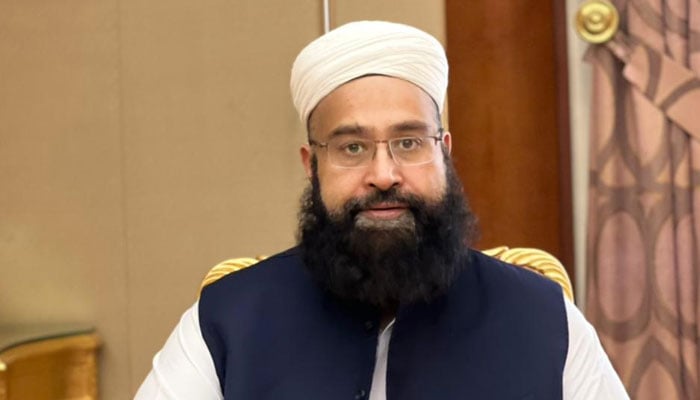
Chairman of the Pakistan Ulema Council, Hafiz Tahir Mahmood Ashrafi, has said that the Muslim world has the potential to unite and cooperate in a manner similar to the North Atlantic Treaty Organization (NATO).

Speaking at a press conference in Lahore, Hafiz Tahir Mahmood Ashrafi emphasized the importance of unity and collective efforts among Muslim countries. He said that the Islamic world could work together more effectively if countries focused on common interests and strengthened cooperation among themselves.

Ashrafi said that religious scholars have an important role to play in safeguarding Pakistan and promoting peace, stability and unity within society. According to him, the role of the ulema is particularly important at a time when the country faces various social, political and security challenges.

He stressed that religious scholars should contribute to strengthening harmony among people and discouraging divisions based on sectarian, political or social differences. He said that unity and consensus were essential for the stability and progress of Pakistan.

The Pakistan Ulema Council chairman also spoke about the registration of religious seminaries across the country. He said that around 22,000 seminaries had already completed their registration. He described the development as an important step toward bringing religious institutions into a more organized framework.

Ashrafi maintained that cooperation between the government, religious scholars and religious institutions could help address several challenges facing the country. He said that seminaries and their scholars could play a constructive role in promoting education, social responsibility and national cohesion.

Referring to the wider Muslim world, Ashrafi suggested that Islamic countries could establish stronger mechanisms for collective cooperation. He pointed to NATO as an example of countries working together for shared security and strategic interests. In his view, Muslim-majority countries also have the potential to develop stronger cooperation if they demonstrate unity and mutual understanding.

He said that the Muslim world possesses significant human, economic and strategic resources, but greater coordination is needed to make these strengths more effective. Cooperation among Muslim countries, he added, could help them address common challenges and protect their collective interests.

Ashrafi further emphasized that Pakistan’s stability depends not only on government institutions but also on the positive contribution of religious scholars and other segments of society. He called on the ulema to continue playing their role in promoting peace, tolerance and national unity.

He reiterated that the Pakistan Ulema Council believes in unity and consensus rather than division. According to him, differences of opinion can exist, but they should not become a source of conflict or weaken the country.

The remarks come amid continuing discussions about the role of religious institutions and scholars in Pakistan’s social and national affairs. The registration of seminaries has remained an important issue, particularly in relation to regulation, documentation and the integration of religious education with broader national objectives.

Ashrafi’s comments also highlight the importance of cooperation among Muslim countries at a time when the Islamic world faces a range of political, economic and security challenges. He argued that greater unity could provide Muslim countries with a stronger collective voice in international affairs.

Concluding his remarks, Hafiz Tahir Mahmood Ashrafi reaffirmed his belief in unity, cooperation and consensus. He said that religious scholars, educational institutions and ordinary citizens all have a role to play in strengthening Pakistan and promoting harmony across society.


Similar Posts

  • Senate questions OPF MD’s Rs1m salary and appointment

    Islamabad: A controversy has emerged over the appointment of the Managing Director of the Overseas Pakistanis Foundation (OPF) after Senator Aimal Wali Khan raised serious questions in the Senate Standing Committee on Cabinet Secretariat regarding the selection process, salary package and background of the appointed official. During the meeting chaired by Senator Rana Mahmood ul Hassan, Senator Aimal Wali Khan questioned the appointment of the OPF Managing Director and demanded complete details from the concerned authorities. Senator Aimal Wali Khan said that while the government has discussed the financial difficulties faced by ordinary citizens, concerns arise when senior government positions receive very high salaries. He pointed out that the Prime Minister had publicly stated that a person can manage monthly expenses with Rs8,000, while an individual appointed in OPF was receiving a salary of Rs1 million per month. He further informed the committee that another individual had been appointed in OPF with a monthly salary of Rs2.5 million, raising questions about government pay structures and appointment policies. The senator also raised questions regarding the nationality and background of the OPF Managing Director. He alleged that the appointed individual does not possess a Pakistani National Identity Card and is a British citizen by birth. He also questioned how a person who had faced conviction by the National Accountability Bureau (NAB) could receive another government appointment. Following these concerns, the Senate Committee took notice of the matter and directed the relevant authorities to provide complete details regarding the appointment of the Managing Director of Overseas Pakistanis Foundation. The committee stressed that appointments in public institutions must follow transparency, accountability and proper procedures to maintain public confidence. Responding to questions regarding government appointments, officials of the Establishment Division informed the committee that suitable candidates are not available for certain specialised positions, which creates difficulties in filling important posts. Senator Aimal Wali Khan also criticised the broader culture of retaining officials in important positions despite long periods of inability to perform duties. He remarked that some individuals continue to hold positions even when they are unable to actively perform their responsibilities. The matter was discussed during a meeting of the Senate Standing Committee on Cabinet Secretariat held at the Establishment Division under the chairmanship of Senator Rana Mahmood ul Hassan. The meeting was attended by Senators Saadia Abbasi, Abdul Qadir, Dilawar Khan, Aimal Wali Khan and Saleem Mandviwalla, along with the Secretary Cabinet Division and Secretary Establishment Division. The committee directed authorities to submit the required information so that the issue of public appointments, governance and institutional reforms could be reviewed in detail in upcoming meetings.

  • | | |

    Zara Noor Abbas and Asma Abbas win hearts with gra…

    Pakistani actress Zara Noor Abbas has delighted fans after sharing a charming dance video with her mother, veteran actress Asma Abbas. The mother-daughter duo appeared together in traditional outfits in the video. Their graceful performance quickly attracted attention on social media. Zara shared the video on Instagram. She was seen dancing with her mother to a song featuring renowned musician A.R. Rahman and other artists. Both actresses wore coordinated traditional attire. They appeared comfortable and happy while performing together. The video was accompanied by an emotional message from Zara. She spoke about her close relationship with her mother and the special bond shared between generations. Zara explained that the video was not simply about dancing with her mother. She said it represented a deeper connection between them. According to the actress, some qualities are not taught formally. Instead, they are naturally passed from one generation to another. Zara said she did not learn every dance step from her mother in a traditional way. Despite this, she feels that her body naturally understands her mother’s rhythm and style. She reflected on the many little things she has learned from Asma Abbas over the years. She said these lessons were often picked up naturally rather than through direct teaching. Zara also shared a sweet moment from their dance practice. She said that whenever she makes a mistake during a dance step, her mother gently places a hand on her shoulder and brings her closer. Her mother then shows her the correct movement. Zara said the same affection and guidance continue in her everyday life. She described her mother as someone who continues to guide her even in the smallest matters. The actress highlighted the emotional connection behind their performance. She said some things are deliberately taught, while others become part of a family through generations. Her heartfelt caption resonated with many fans. The video soon received positive reactions from social media users and fellow members of the entertainment industry. Actress Hira Mani reacted to the post with heart emojis. Hira Khan also left an affectionate comment. Hina Afridi and several other users praised the mother-daughter duo and expressed their love for the performance. The video has attracted attention not only for the dance but also for the warmth between Zara and Asma. Fans appreciated the natural chemistry between the two actresses. Many also praised the emotional message attached to the performance.

  • |

    Mohammad Abbas breaks Pakistan’s Test bowling record

    TAROUBA: Pakistan fast bowler Mohammad Abbas has created a new national record in Test cricket. Abbas has surpassed legendary former captain Imran Khan to achieve Pakistan’s best bowling average among pacers with at least 100 Test wickets. The 36-year-old reached the milestone during Pakistan’s first Test against the West Indies at the Brian Lara Cricket Academy in Tarouba. Abbas dismissed Brandon King and Kavem Hodge during the West Indies’ second innings. He had already taken three wickets in the first innings. The performance took Abbas to 115 Test wickets in 30 matches. His bowling average improved to 22.78. Imran Khan previously held the record with an average of 22.81. He took 362 wickets in 88 Tests during his career. Former Pakistan fast bowler Waqar Younis is third on the list. He claimed 373 wickets in 87 Tests at an average of 23.56. Abbas made his Test debut against the West Indies in Kingston in 2017. He received his Test cap from then Pakistan captain Misbah-ul-Haq. Despite his strong domestic record, Abbas spent more than three years away from Pakistan’s Test team. He returned to the side during the tour of South Africa in December 2025. Since his comeback, he has once again become an important part of Pakistan’s pace attack. In 2026, Abbas has taken 15 wickets in three Tests. His performances also include a five-wicket haul. Abbas has also built an impressive record in first-class cricket. He has taken 894 wickets in 220 matches at an average of 20.36. Among active first-class bowlers, Abbas ranks fourth for wickets. James Anderson leads the list with 1,181 wickets, followed by Simon Harmer with 1,054 and Malinda Pushpakumara with 1,010. Abbas’ latest achievement adds another milestone to his career. His accuracy and consistency have helped him become one of Pakistan’s most effective Test bowlers.

  • |

    ‘Sick of It All’ frontman Lou Koller dies at 59

    Lou Koller, the powerful voice behind New York hardcore legends, ‘Sick of It All’, has died at the age of 59. The news was confirmed by his bandmates through an emotional statement posted on Instagram on Friday, July 24. The band described the loss as overwhelming, telling fans across the globe that their brother and frontman had passed. They called it a moment of unbelievable sadness for everyone connected to the hardcore scene that Koller helped shape for decades. The timing carries extra weight. This year was set to mark ‘Sick of It All’s’ 40th anniversary, a milestone the band had been gearing up to celebrate. His bandmates reflected on how Koller’s loyalty, drive, and passion never wavered across four decades together, calling him both a cherished friend and a defining voice of the genre. Beyond the music, it was his presence that left the deepest impression. According to the statement, Koller had a rare gift for lifting the mood at every show, often with nothing more than a grin and a well-timed sarcastic remark. That charm reportedly won him fans in every country the band toured, cutting across cultures and borders in a way few frontmen manage. The statement also turned toward gratitude, thanking everyone who had contributed to Koller’s medical fund during his illness. His bandmates said the outpouring of support helped him feel cared for and valued throughout a difficult two-year battle. They noted that his fight had now come to an end, and that he could finally find rest. The message closed with hope that Koller could somehow still sense the lasting, positive impact he had made on the world around him. Koller had been diagnosed with esophageal adenocarcinoma in June 2024, a diagnosis that set off a prolonged and difficult health battle. Despite the illness, he remained a central figure in the hardcore community, with fans rallying behind him throughout his treatment. ‘Sick of It All’ emerged from New York in the mid-1980s and became one of the most influential acts in hardcore punk, known for their raw energy and uncompromising sound. Koller’s voice was at the center of that identity for nearly the band’s entire existence. As tributes continue to pour in from musicians and fans worldwide, the hardcore community is left mourning not just a frontman, but a figure who embodied the spirit of the scene itself.

  • | |

    OGDC top executives receive monthly salaries rangi…

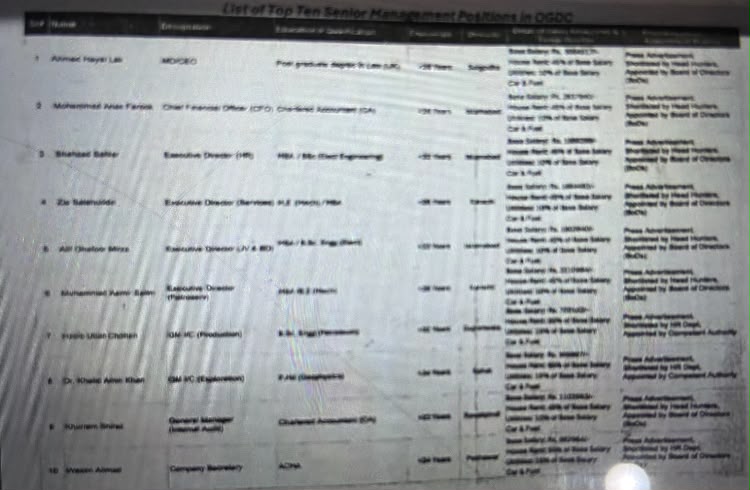
      Islamabad:Details of the salaries and benefits of senior officials at Oil and Gas Development Company Limited (OGDC) were presented before the Senate, revealing that the company’s Managing Director and Chief Executive Officer receives a basic monthly salary of more than Rs. 5.56 million. The information was shared with parliament as part of a disclosure concerning the remuneration packages of senior executives at the state-owned exploration and production company. The figures show significant differences in the basic salaries of OGDC’s top management, with the company’s highest-paid official earning several million rupees each month before allowances and other facilities are added. According to the details presented in the Senate, Ahmed Hayat Lak, OGDC’s Managing Director and CEO, receives a basic monthly salary of Rs. 5,564,171. Chief Financial Officer Muhammad Anas Farooq earns Rs. 2,837,940 per month, while Executive Director Petroleum Muhammad Aamir Saleem receives Rs. 2,211,990. Among other executive directors, Shehzad Safdar, Executive Director Human Resources, has a basic monthly salary of Rs. 1,889,298. Zia Salahuddin, Executive Director Services, receives Rs. 1,849,433, while Atif Ghafoor Mirza, Executive Director Joint Ventures and Business Development, earns Rs. 1,893,434. The salaries of general managers are comparatively lower but still substantial. Khurram Shehraz, General Manager Internal Audit, receives Rs. 1,100,929 per month. Dr. Khalid Ameen Khan, General Manager Exploration, earns Rs. 900,881, while General Manager Production Habib Ullah Chohan receives Rs. 700,443. The company secretary, Waseem Ahmad, has a basic monthly salary of Rs. 607,754. In addition to their basic salaries, the ten senior officials are entitled to several allowances and facilities. These include a house-rent allowance equivalent to 45 percent of their basic salary and utilities allowance amounting to 10 percent of the basic pay. They are also provided with car and fuel facilities. After the applicable allowances are included, the monthly remuneration package of the OGDC managing director exceeds Rs. 8.6 million. The CFO’s overall monthly package is reported to be more than Rs. 4.4 million. The information presented to the Senate also showed that all ten officials have more than three decades of professional experience. Most of the executives were recruited through press advertisements and headhunters before being appointed by OGDC’s Board of Directors. Their educational qualifications include professional and advanced degrees in fields such as law, chartered accountancy, business administration, engineering and geophysics. The MD is based in Islamabad, while other senior executives are posted in Islamabad, Karachi, Quetta and Sukkur. OGDC is Pakistan’s largest exploration and production company and is listed on the stock exchange, with the government holding a majority share. The disclosure has drawn attention to the compensation structures followed by state-owned enterprises. During the Senate proceedings, questions were raised regarding whether OGDC’s remuneration packages are comparable with those offered by private-sector exploration and production companies. Senators also discussed the possible impact of high executive compensation on the company’s overall operational expenses. However, no change to the existing salary and benefits structure was announced during the briefing.

  • |

    Italy faces growing childhood obesity crisis as diets change

    Italy is confronting a growing childhood obesity problem as traditional Mediterranean eating habits are increasingly replaced by calorie-heavy and highly processed foods. The issue is particularly serious in southern Italy. In parts of the Campania region, more than 40% of children aged eight and nine are reported to be overweight. Naples and surrounding communities have become major areas of concern for health professionals. Doctors say they are seeing increasingly younger patients with severe obesity. At a hospital in Naples, specialists who once mainly treated adults are now treating teenagers with serious weight-related problems. In severe cases, patients may require bariatric surgery to reduce the size of the stomach. However, doctors say some teenagers are now arriving at weights that make such procedures too risky. Some are first given medical treatment to help control appetite and lose enough weight to undergo surgery safely. Health experts point to major changes in Italian eating habits as one factor behind the trend. The traditional Mediterranean diet, built around vegetables, legumes, whole grains, olive oil and fish, is becoming less common. Instead, children are increasingly exposed to processed snacks, sugary drinks, refined carbohydrates and calorie-dense foods. Experts say the problem is not necessarily one particular meal but the cumulative effect of frequent snacking and poor diet quality. Doctors also say many parents struggle to recognise when their children are overweight. In some communities, a heavier child may traditionally be viewed as healthy or well-fed, making it harder for families to identify a potential health problem early. Physical activity can also be difficult for some children. Many schools operate in historic buildings that were not designed to provide adequate space for modern sports and exercise. Authorities are now attempting to address the problem through schools and community programmes. A regional initiative in Campania plans to involve more than 17,000 students across 25 schools in nutrition education and healthy lifestyle programmes, with families also receiving guidance. Italy has also taken a broader approach to obesity. In 2025, it became the first country to introduce a national law recognising obesity as a chronic, progressive and relapsing disease. Campania is also being used to test new approaches, including a controlled “fast-mimicking” diet for overweight adolescents. Researchers hope the programme could improve metabolic health, although some paediatric specialists have raised concerns about the limited evidence and possible psychological effects of restrictive diets on young people. Health experts stress that tackling childhood obesity will require more than simply telling children to eat less or exercise more. Families, schools, healthcare providers and policymakers all have a role in changing the environment around young people.

Leave a Reply

Your email address will not be published. Required fields are marked *