senate questions opf

Senate questions OPF MD’s Rs1m salary and appointment

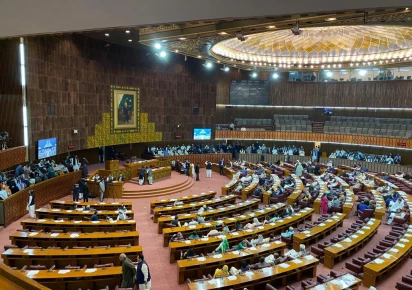
Islamabad: A controversy has emerged over the appointment of the Managing Director of the Overseas Pakistanis Foundation (OPF) after Senator Aimal Wali Khan raised serious questions in the Senate Standing Committee on Cabinet Secretariat regarding the selection process, salary package and background of the appointed official.

During the meeting chaired by Senator Rana Mahmood ul Hassan, Senator Aimal Wali Khan questioned the appointment of the OPF Managing Director and demanded complete details from the concerned authorities.

Senator Aimal Wali Khan said that while the government has discussed the financial difficulties faced by ordinary citizens, concerns arise when senior government positions receive very high salaries. He pointed out that the Prime Minister had publicly stated that a person can manage monthly expenses with Rs8,000, while an individual appointed in OPF was receiving a salary of Rs1 million per month.

He further informed the committee that another individual had been appointed in OPF with a monthly salary of Rs2.5 million, raising questions about government pay structures and appointment policies.

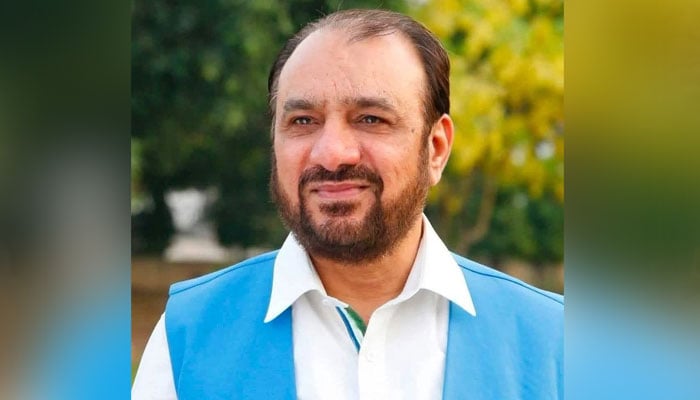
The senator also raised questions regarding the nationality and background of the OPF Managing Director. He alleged that the appointed individual does not possess a Pakistani National Identity Card and is a British citizen by birth. He also questioned how a person who had faced conviction by the National Accountability Bureau (NAB) could receive another government appointment.

Following these concerns, the Senate Committee took notice of the matter and directed the relevant authorities to provide complete details regarding the appointment of the Managing Director of Overseas Pakistanis Foundation.

The committee stressed that appointments in public institutions must follow transparency, accountability and proper procedures to maintain public confidence.

Responding to questions regarding government appointments, officials of the Establishment Division informed the committee that suitable candidates are not available for certain specialised positions, which creates difficulties in filling important posts.

Senator Aimal Wali Khan also criticised the broader culture of retaining officials in important positions despite long periods of inability to perform duties. He remarked that some individuals continue to hold positions even when they are unable to actively perform their responsibilities.

The matter was discussed during a meeting of the Senate Standing Committee on Cabinet Secretariat held at the Establishment Division under the chairmanship of Senator Rana Mahmood ul Hassan.

The meeting was attended by Senators Saadia Abbasi, Abdul Qadir, Dilawar Khan, Aimal Wali Khan and Saleem Mandviwalla, along with the Secretary Cabinet Division and Secretary Establishment Division.

The committee directed authorities to submit the required information so that the issue of public appointments, governance and institutional reforms could be reviewed in detail in upcoming meetings.


Similar Posts

  • | | |

    Ducky bhai questions parents’ role in children?…

    Pakistani YouTuber Ducky Bhai has questioned the growing criticism of YouTubers over their alleged negative influence on children, arguing that parents must also take responsibility for their children’s upbringing and online activities. In his recent remarks, Ducky Bhai rejected the idea that YouTubers alone are responsible when children are exposed to inappropriate or negative content. He questioned where parents are when children are spending significant amounts of time online and consuming digital content. According to Ducky Bhai, content creators should make an effort to keep their videos clean and appropriate. However, he stressed that YouTubers cannot be expected to act as parents for every child watching their content. He argued that parents have a key role in deciding what their children watch and how much time they spend online. Monitoring internet activity, setting boundaries and discussing appropriate content with children, he suggested, should be part of responsible parenting. Ducky Bhai also referred to his own childhood while explaining his perspective. He recalled that his father encouraged him to focus on his studies and used rewards, including the promise of a PlayStation for good performance, as motivation. He further revealed that his father had installed security measures on his computer that allowed him to monitor his activities. According to Ducky Bhai, this close supervision helped his parents remain aware of what he was doing online. His comments have renewed discussion about the responsibilities of parents and digital content creators in an age when children have easy access to YouTube and other online platforms. While creators can influence young audiences through the content they publish, Ducky Bhai believes parents cannot simply shift the entire responsibility onto YouTubers. Instead, he says families should actively monitor children’s digital activities and guide them toward appropriate content. The debate highlights a broader challenge for modern families: balancing children’s access to entertainment and technology with parental supervision. As online platforms continue to become an important part of children’s daily lives, both content creators and parents face increasing pressure to ensure that young viewers are exposed to safe and suitable material.

  • | |

    Water level rises in the Chenab river, flooding se…

      The Irrigation Department has reported a significant increase in the water flow of the Chenab River, raising concerns about flooding in nearby riverine areas. According to officials, the rising water level has already affected several low-lying settlements, forcing floodwater into residential and agricultural areas and creating difficulties for local communities. The department stated that the increase in the river’s discharge has caused water to spread into nearby villages located along the banks of the Chenab River. As a result, a protective embankment known as the Zamindara Bund in Jalalpur Pirwala Tehsil has been breached. The collapse of the embankment has allowed floodwater to move more rapidly into surrounding areas, increasing the risk to people, homes, livestock, and crops. According to the Irrigation Department, at least five villages have been submerged due to the rising floodwaters. Among the affected settlements are Basti Khuda Bakhsh, Basti Allah Rakha, and Basti Bakhsha, along with two other nearby villages. Residents in these areas are facing severe challenges as water continues to enter homes, farmland, and local roads. Many families are concerned about the safety of their property and the possibility of further flooding if water levels continue to rise. Officials have also reported that water levels have increased in the surroundings of Head Muhammad Wala Road and near Qasim Bela. These areas are being closely monitored as authorities assess the situation and evaluate the potential for additional flooding. The rise in water has affected transportation routes, making travel difficult for residents and increasing the need for precautionary measures. The Irrigation Department is keeping a close watch on the river’s flow and is expected to continue monitoring the situation in coordination with local administration and disaster management authorities. Residents living in vulnerable riverine areas have been advised to remain alert and follow official instructions. If water levels continue to increase, further evacuations and emergency measures may become necessary to ensure public safety. Flooding in the Chenab River region is a recurring challenge during the monsoon season, particularly when heavy rainfall upstream leads to a sudden increase in river discharge. Breaches in protective embankments can significantly worsen the situation by allowing water to spread rapidly into populated areas. Such incidents often result in damage to homes, agricultural land, and infrastructure, while also disrupting daily life and economic activities. Local authorities are expected to assess the extent of the damage once water levels stabilize. Relief efforts may include providing temporary shelter, food, clean drinking water, and medical assistance to affected families. The government and emergency response agencies are likely to continue monitoring weather conditions and river flows to reduce further risks. The situation remains under observation, and officials have urged residents in flood-prone areas to stay informed through official updates and cooperate with emergency responders. Authorities are working to minimize the impact of the flooding and ensure the safety of communities living along the Chenab River.

  • | |

    Kuwaiti Foreign Minister meets Army Chief  Asim M…

    RAWALPINDI: Kuwait’s Minister of Foreign Affairs, Sheikh Jarrah Jaber Al-Ahmad Al-Sabah, met Field Marshal Syed Asim Munir, Chief of Army Staff and Chief of Defence Forces, at the General Headquarters (GHQ) in Rawalpindi on Tuesday to discuss regional security and ways to strengthen cooperation between the two countries. The Kuwaiti foreign minister was accompanied by Kuwait’s Ambassador to Pakistan, Nassar Abdul Rahman J. Al-Mutairi. According to the Inter-Services Public Relations (ISPR), the two sides exchanged views on matters of mutual interest, the regional security environment, and opportunities to further deepen bilateral cooperation. During the meeting, the Kuwaiti foreign minister appreciated Pakistan’s continued support and its constructive role in promoting regional peace and stability. He also highlighted the longstanding fraternal relationship between Pakistan and Kuwait. Field Marshal Syed Asim Munir reaffirmed Pakistan’s commitment to further strengthening ties with Kuwait, stressing that both countries share a common vision for regional peace, stability, and prosperity. He expressed confidence that the enduring partnership between the two nations would continue to grow across multiple areas of cooperation.

  • | | |

    Russia, Pakistan advance Moscow-Karachi rail link

    Russia and Pakistan are working to launch a new freight railway service connecting Moscow with Pakistan, Russian Ambassador to Islamabad Albert P. Khorev has said. The proposed rail link is aimed at improving trade connectivity between the two countries and creating a more direct overland route for the movement of goods. In comments published by the Russian newspaper Izvestia on August 8, Khorev said Moscow and Islamabad were jointly working on launching freight railway services along the Moscow-Faisalabad and Moscow-Karachi corridors. The proposed routes would operate in both directions, allowing goods to be transported between Russia and Pakistan through a dedicated rail-based trade network. Khorev said the possibility of including Belarus in the project was also being examined. If the Belarusian side joins the initiative, the route could provide a wider connection across parts of Eastern Europe and South Asia. The project has faced delays because of changing geopolitical conditions in the region. According to the Russian ambassador, heightened geopolitical tensions during 2025 and early 2026 resulted in several postponements to the planned launch. Despite the delays, work on the project is continuing. Khorev said the countries involved are currently finalising a contract covering the required freight railway services. At the same time, officials are identifying companies in the countries along the proposed route that could use the railway network to transport commercial cargo. The identification of potential cargo owners is considered an important step before the service can begin. A stable volume of goods would be needed to make the railway corridor commercially viable. The Moscow-Karachi route could provide Pakistani and Russian businesses with another option for moving goods between the two markets. It could also reduce reliance on traditional maritime routes for certain types of cargo. The Moscow-Faisalabad corridor would provide a direct connection to one of Pakistan’s major industrial and commercial centres. Faisalabad is an important manufacturing hub, particularly for textiles and other export-oriented industries. For Russia, improved rail connectivity with Pakistan could open additional opportunities for trade with South Asia. Pakistani businesses could also gain access to wider markets through connections with Russia and potentially Belarus. The possible involvement of Belarus could further expand the corridor’s geographical reach. It may also strengthen transport cooperation among the countries involved. However, the project still requires the completion of commercial and logistical arrangements before the first freight service can be launched. The parties are therefore focusing on finalising the service contract and securing interest from companies that can provide regular cargo for the route. The proposed railway initiative is part of broader efforts by Russia and Pakistan to strengthen economic and transport cooperation.

  • | |

    PML-N rejects rigging claims as AJK polls head tow…

    ISLAMABAD: Pakistan’s ruling Pakistan Muslim League-Nawaz (PML-N) has strongly rejected allegations of election rigging in the ongoing Azad Jammu and Kashmir (AJK) legislative assembly elections, maintaining that the electoral process has remained transparent and democratic despite criticism from opposition parties. The three-phase election, being held under heightened security arrangements, has become one of the most closely watched political contests in recent years. The process has been marked by the boycott of the polls by Pakistan Tehreek-e-Insaf (PTI), accusations of irregularities by the Pakistan Peoples Party (PPP), and weeks of unrest linked to the Joint Awami Action Committee (JAAC), which has challenged the existing electoral structure, particularly the controversial refugee constituencies. Addressing a press conference after the completion of the second phase of polling, Prime Minister’s Adviser on Political Affairs Rana Sanaullah expressed confidence that the PML-N had already secured enough seats to form the next AJK government. He predicted the party would strengthen its position further after the remaining constituencies complete voting in the final phase. Sanaullah described the elections as free, fair and credible, crediting election officials, law enforcement agencies and the AJK administration for ensuring a peaceful voting process under difficult circumstances. He dismissed the PPP’s allegations of rigging, arguing that any complaints should be formally presented before the Election Commission, which has the constitutional authority to investigate and order re-polling wherever necessary. The senior PML-N leader also alleged that elements associated with the PPP and JAAC attempted to create unrest in Muzaffarabad before polling day to discourage voter turnout in areas considered favorable to his party. He said the PML-N would seek an official investigation into those incidents. The PPP, however, continues to challenge the credibility of the elections. Party Chairman Bilawal Bhutto Zardari has alleged widespread irregularities and insisted that several constituencies require independent investigations, claiming that the electoral process has not provided a level playing field for all contestants. One of the central issues surrounding the election remains the 12 refugee constituencies, which represent refugees from Indian-administered Kashmir residing in different parts of Pakistan. Critics argue that these seats allow Islamabad greater influence over government formation in AJK, while the government maintains they are constitutionally protected. Earlier this year, the AJK Supreme Court ruled that the constituencies cannot be abolished without a constitutional amendment. The political atmosphere has also been shaped by protests led by the Joint Awami Action Committee, which initially mobilized against rising electricity prices, taxation and the increasing cost of living before expanding its campaign to demand electoral reforms. Following weeks of demonstrations and clashes with security forces, the AJK government declared JAAC a banned organization under anti-terrorism laws. With unofficial results from the first two phases placing the PML-N in a leading position, attention has now shifted to the third and final phase of polling in Poonch Division, scheduled for August 10. The outcome will determine the composition of the next AJK government and conclude an election that has generated intense political debate across Pakistan.

  • | |

    FBISE unveils SSC 2026 results, 1st time AI assist…

    ISLAMABAD: The Federal Board of Intermediate and Secondary Education (FBISE) has announced the results of the Secondary School Certificate (SSC) Part-I and Part-II First Annual Examination 2026, revealing strong overall performance while introducing artificial intelligence (AI) in the paper-marking process for the first time. The results were officially declared during a ceremony in Islamabad, where Federal Minister for Education and Professional Training Dr Khalid Maqbool Siddiqui inaugurated the announcement. Addressing the event, FBISE Chairman Prof Dr Ikram Ali Malik highlighted the Board’s efforts to ensure smooth and transparent examinations. He said a total of 292,831 students appeared in the SSC examinations this year, with 1,006 examination centres established across the country. To oversee the process, 2,012 supervisory staff members and 6,996 invigilators were deployed. The chairman also revealed that more than 10,700 teachers applied to assess examination papers, while 4,855 examiners were selected for the task. He described the introduction of AI-assisted marking as a major step towards improving accuracy and efficiency in the evaluation process. During the examination period, 86 cases involving the use of unfair means were reported. According to the results, SSC Part-I recorded an overall pass percentage of 59.77 per cent, with 88,646 students passing out of 150,077 candidates. SSC Part-II achieved a significantly higher success rate of 91.33 per cent, as 128,070 of the 141,653 candidates cleared the examinations. In the Science Group, Afeera Ijaz secured the top position with 1,089 marks. Amna Nauman claimed second place with 1,088 marks, while Huzaifa Haider finished third with 1,086 marks. Among Humanities students, Fatima Zahra emerged as the overall topper with 1,037 marks. Muhammad Maaz and Manaal Zahid shared second position after each scoring 1,031 marks, while Aneesa Nisar secured third place with 1,023 marks. The Board said the introduction of AI-assisted marking reflects its commitment to modernising Pakistan’s examination system while maintaining transparency and fairness in the assessment process.

Leave a Reply

Your email address will not be published. Required fields are marked *