emotional dolphin moment

Emotional Dolphin moment

A touching video from Australia has left many people emotional after showing a mother dolphin swimming with her dead baby.

The viral footage shows the female dolphin gently carrying her calf while other dolphins stay close appearing to support her during the difficult moment.

According to the marine conservation group Geographe Marine Research the mother dolphin named Friggle gave birth to the calf about two weeks before the video was recorded.

The organization said the video was filmed last month. Friggle had reportedly lost four calves in the past and this calf was also born during winter a season when young dolphins have a lower chance of survival.

Experts say it is not unusual for mother dolphins to carry their dead calves for several days after they die.

This behavior is believed to be part of their grieving process. Eventually the mother must let go of the calf so she can find food and continue to survive.

Similar Posts

  • |

    Pakistan names first lunar rover “Jinnah-1”

    Islamabad: The Space and Upper Atmosphere Research Commission (SUPARCO) has officially announced the name of Pakistan’s first lunar rover. According to SUPARCO, Pakistan’s first lunar rover has been named “Jinnah-1.” The name was selected from suggestions submitted through a nationwide competition. More than 4,000 proposals were received from across the country. SUPARCO stated that seven participants had suggested the name “Jinnah-1.” The winner was selected through a lucky draw and 17-year-old Tayyab Karim from Bahawalnagar was declared the winner for proposing the name. Tribute to Quaid-e-Azam The Chairman of SUPARCO said that “Jinnah-1” is a tribute to Quaid-e-Azam Muhammad Ali Jinnah. He added that the name represents Pakistan’s determination, progress and pursuit of new frontiers in space exploration. It is worth mentioning that Pakistan’s first lunar rover is scheduled to be sent to the Moon in 2029 as part of China’s Chang’e-8 mission. The Jinnah-1 rover will conduct scientific research on the Moon’s south pole.

  • Spot the mountain lion in seconds

    It first glance this may look like an ordinary picture of a forest.  But there is actually a mountain lion hiding somewhere in the scene. The picture appears to have been taken in a US national park. A deer can be seen standing in the area with its back facing the camera.  What makes the scene interesting is that the deer has no idea that a mountain lion is hiding very close to it. If you are having trouble finding the mountain lion imagine how difficult it would be for the deer to notice its hidden predator. Only a few people can quickly spot the animal in this picture. Finding it requires careful observation and good eyesight. Take a close look at every part of the image and see if you can find the hidden lion. Did you find it? If not here is the answer. Look carefully toward the right side of the picture.  You can see the mountain lion’s face hiding among the bushes. The animal is so well hidden that it almost blends into its surroundings making this picture a great test of your observation skills.

  • |

    Echoes of 1971 in Pakistan’s Kashmir policy

    History rarely repeats itself in exact terms, but it frequently rhymes through patterns of power, dissent and state responses. In Pakistan, analysts and political observers are increasingly highlighting the parallels between historical missteps. It is specifically the events leading up to the loss of East Pakistan in 1971 and the contemporary public grievances in Pakistan-administered Kashmir. The Cost of Ignoring Electoral Mandates In 1970, General Yahya Khan permitted general elections across Pakistan. The Awami League in East Pakistan secured a decisive democratic victory by winning 162 out of 300 national seats. However, rather than facilitating a peaceful transfer of power, military leaders stalled negotiations in Dhaka through early 1971. This breakdown in dialogue culminated in Operation Searchlight, a military crackdown targeting intellectuals, students, and Bengali civilians. The resulting violence triggered a massive refugee crisis. Approximately ten million people were sent to India. A war that ultimately led to the creation of Bangladesh. Pakistan’s own Hamoodur Rahman Commission concluded that political failure and operational excess by military leadership were central to the catastrophe. Despite these official findings, the report remained suppressed for decades, leaving fundamental lessons about the dangers of military overreach largely unexamined within state institutions.  Unrest in Pakistan-Controlled Kashmir Today, army leadership under General Asim Munir continues to champion strong nationalistic rhetoric regarding Kashmir. He has been asserting it as the nation’s core and a willingness to fight further conflicts over Indian-administered territory. Yet, a  different internal dynamic has been evolving since 2025 within the territories Pakistan actually controls. Local populations have mobilized in widespread demonstrations driven by clear economic and political grievances. Unmanageable costs for basic essential goods. Disproportionately high pricing for local power distribution. Legislative structures that assign disproportionate authority to mainland administrators rather than local residents. State institutions responded with heavy-handed measures rather than operating for meaningful negotiation. The organizing groups were banned, communication blackouts were implemented and arrests occurred. Security forces deployed live fire against demonstrators  and caused dozens of civilian casualties. The Danger of Ignoring Unheard Grievances The concern raised by historians is not that history will reproduce the exact outcome of 1971, but that the state is relying on the same flawed logic. State is again attempting to suppress domestic economic and political grievances through state force. When state policy prioritizes coercion over political engagement, it risks alienating populations. The lingering question for Pakistan’s establishment is whether the lessons of past governance failures will finally be integrated, or whether suppressed grievances will once again lead to deep institutional crises.  

  • Japan’s PM shares funny cockroach story

    Japanese Prime Minister Sanae Takaichi has shared a surprising story about finding a cockroach at her official residence in Tokyo. The 65 year old prime minister recently answered questions about the residence on X, formerly known as Twitter. She was more scared of a Cockroach than a ghost One person asked Takaichi if she had ever seen a ghost at the official residence which has been the subject of various ghost stories. She said she had never seen a ghost there but she did have a frightening experience with a cockroach. Takaichi explained that she had never seen a cockroach while living in accommodation provided for lawmakers.However after moving into the prime minister’s official residence she once spotted one near her feet. She said she had carefully cleaned the floor under her dining table and removed food crumbs. So when a cockroach suddenly appeared she was hocked. Why she did Not Kill It Interestingly, Takaichi decided not to kill the insect. She explained that she has loved the Japanese manga Phoenix since childhood. The story focuses on themes of life death and rebirth. Because of this she said she could not bring herself to kill the cockroach. Instead she thought that perhaps the insect was also part of the long cycle of life and rebirth. So, she left the cockroach in the room and walked away. Her secretaries took action Takaichi said she tolerated the situation for some time and hoped the cockroach would eventually leave on its own. However when she told her secretaries about it they became frightened. One of them eventually arranged an operation to remove the unwanted visitor. After that Takaichi did not see another cockroach at the residence. She felt surprisingly lonely The funny part of the story came afterward. Although Takaichi felt relieved that the cockroach was gone she admitted that she also felt a little lonely and sad. She said she experienced both relief and a strange sense of loneliness after the insect disappeared.

  • |

     Why collectors pay millions for fractured porcelain

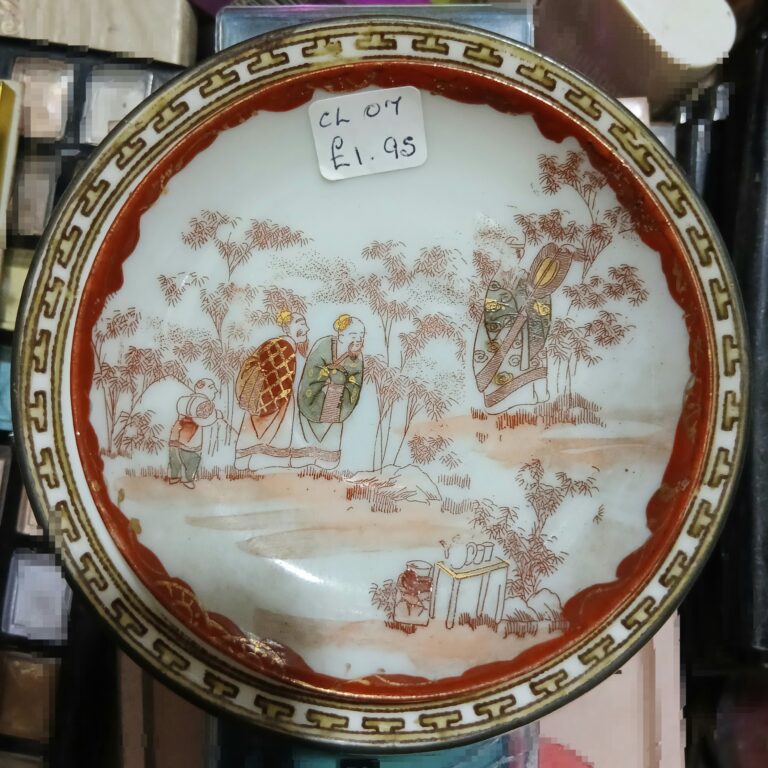
    There is a low-frequency hum inside an antique shop, an acoustic hush from dust and centuries of quiet survival. It is often the wounded object that commands the most reverence amidst the polished mahogany and gleaming silver. A spiderweb hairline fractured across the belly of a Qing dynasty jar; a cobalt Blue Willow plate stitched together with iron staples; a tea bowl held in delicate cohesion by golden veins of lacquer. In a modern economy obsessed with pristine surfaces and factory precision, these fractured ceramics defy logic. They do retain value despite their damage. Often, they derive their singular majesty precisely because they broke. The art market regularly bears witness to this quiet paradox. At major auction houses in London and New York, porcelain pieces bearing dramatic structural fractures, historic restorations or visible fractures routinely sell for astronomical sums. When a cracked 18th-century Chinese brush washer or a chipped Song Dynasty bowl is launched, purists do not turn away. Instead, connoisseurs see a vessel that has successfully negotiated with time. A pristine artifact can feel like an untouched relic in a glass museum case. A cracked ceramic, however, carries the irreplaceable friction of human history. This romantic obsession with fracture finds its deepest philosophical roots in the Japanese tradition of Kintsugi: literally, golden joinery. In 15th-century Japan, legend holds that the shogun Ashikaga Yoshimasa sent a damaged Chinese tea bowl back to China for repair. It returned bound by heavy and unsightly metal staples. Japanese craftsmen was displeased and sought a more poetic solution. He bonded the porcelain shards with Japanese lacquer dusting it with powdered gold. Rather than disguising the trauma, Kintsugi illuminated the break. This technique transformed a domestic accident into a radiant architecture of resilience. When collectors haunt dim antique parlors today for cracked celadon or worn earthenware, they are participating in a quiet rebellion against the disposable. We live in an era of engineered obsolescence where a small fracture on a smartphone screen renders the entire device wasted. Antique ceramics represent the opposite: fired earth that withstands centuries, absorbing the touch of generations, bearing scars as badges of longevity. A crack proves that the vessel was used, held, washed, dropped, mourned and salvaged. It shifts the object from a passive decoration to an active survivor. Even the historical methods of repair have become prized antiques in their own right. Before gold lacquer was widely available, 18th and 19th-century itinerant tinkerers repaired heirloom china using metal staples. They were drilling tiny holes on either side of a split and hammering in delicate bronze or iron rivets. To a contemporary eye, these industrial-looking stitches might seem like visual vandalism. Yet, to collectors of stapled china, those iron rivets are exquisite evidence of human ingenuity and resourcefulness from an era when nothing precious was ever casually thrown away.   Ultimately, the enduring value of cracked porcelain in antique shops lies in what it reflects about our own human condition. Perfection is intimidating, fragile and ultimately unfeeling. Rupture, on the other hand, is universal. When a buyer pays for a cracked jar, they are purchasing a physical manifestation of survival. They acquire a tangible reminder that broken things can be mended, that wounds can be highlighted with beauty and that time does not diminish value, but rather confers it.

  • How to empower women economically

    Women often face social pressure traditional restrictions and limited opportunities that can slow down their personal and professional growth.  Creating more opportunities for women and supporting their independence is important for building a stronger society. Economic independence can bring greater confidence stability and freedom to women’s lives. It allows them to use their skills make important decisions and contribute to the progress of their families and communities. When more women take part in economic activities the overall economy can also benefit.  Financially independent women are better able to make decisions about their education careers health and future. Education and skill development Education and professional skills are important steps toward economic independence.  Women should have access to education at every level along with training in areas such as technical skills digital skills and business management. Skill based training can help women find jobs start businesses or work independently according to their abilities. Support women entrepreneurs Women should have better opportunities to start and grow their own businesses.  Small loans and microfinance programs with reasonable conditions can help women invest in their business ideas. Government agencies and private organizations can also provide business training mentoring investment opportunities and networking programs. Such support can help women learn from other successful entrepreneurs and grow their businesses. Use digital platforms The internet has created new ways for women to earn money from home or work with people around the world. Women can learn skills such as freelancing e-commerce digital marketing graphic design and other online services. Online courses can help them improve their abilities while social media can be used to promote their products services and talents. Strong policies and legal protection Government policies also play an important role in supporting women at work.  Women should have equal opportunities fair pay and safe working environments. Strong laws against workplace harassment should be properly implemented. Maternity leave and other workplace facilities can also make it easier for women to continue their careers. Change social attitudes economic empowerment is difficult without changing social attitudes.  Families and communities should support women who want to study work start businesses or make financial decisions. Awareness campaigns and positive media messages can also help challenge outdated ideas and highlight the valuable role women play in society. Building a stronger society Women’s economic empowerment is not only about helping individual women. It can also benefit families communities and the wider economy. By improving education skills business opportunities digital access legal protection and social support women can create better opportunities for themselves while contributing to a stronger and more successful society.

Leave a Reply

Your email address will not be published. Required fields are marked *