echoes 1971 pakistans
|

Echoes of 1971 in Pakistan’s Kashmir policy

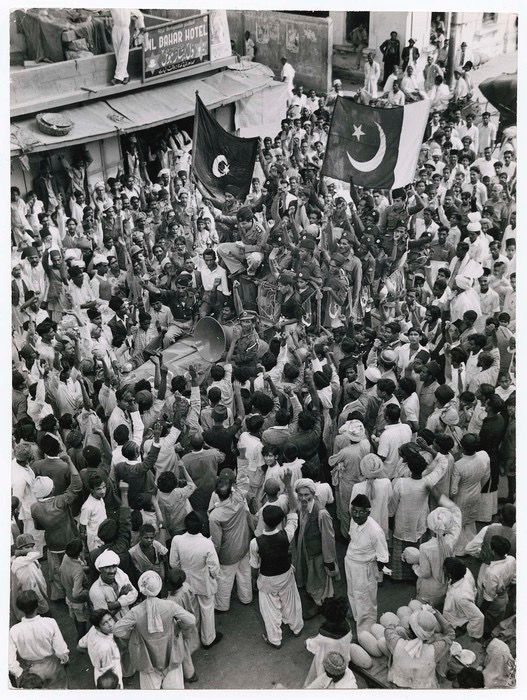
History rarely repeats itself in exact terms, but it frequently rhymes through patterns of power, dissent and state responses. In Pakistan, analysts and political observers are increasingly highlighting the parallels between historical missteps. It is specifically the events leading up to the loss of East Pakistan in 1971 and the contemporary public grievances in Pakistan-administered Kashmir.

The Cost of Ignoring Electoral Mandates

In 1970, General Yahya Khan permitted general elections across Pakistan. The Awami League in East Pakistan secured a decisive democratic victory by winning 162 out of 300 national seats. However, rather than facilitating a peaceful transfer of power, military leaders stalled negotiations in Dhaka through early 1971.

This breakdown in dialogue culminated in Operation Searchlight, a military crackdown targeting intellectuals, students, and Bengali civilians. The resulting violence triggered a massive refugee crisis. Approximately ten million people were sent to India. A war that ultimately led to the creation of Bangladesh.

Pakistan’s own Hamoodur Rahman Commission concluded that political failure and operational excess by military leadership were central to the catastrophe.

Despite these official findings, the report remained suppressed for decades, leaving fundamental lessons about the dangers of military overreach largely unexamined within state institutions.

 Unrest in Pakistan-Controlled Kashmir

Today, army leadership under General Asim Munir continues to champion strong nationalistic rhetoric regarding Kashmir. He has been asserting it as the nation’s core and a willingness to fight further conflicts over Indian-administered territory. Yet, a  different internal dynamic has been evolving since 2025 within the territories Pakistan actually controls.

Local populations have mobilized in widespread demonstrations driven by clear economic and political grievances. Unmanageable costs for basic essential goods. Disproportionately high pricing for local power distribution. Legislative structures that assign disproportionate authority to mainland administrators rather than local residents.

State institutions responded with heavy-handed measures rather than operating for meaningful negotiation. The organizing groups were banned, communication blackouts were implemented and arrests occurred. Security forces deployed live fire against demonstrators  and caused dozens of civilian casualties.

The Danger of Ignoring Unheard Grievances

  1. The concern raised by historians is not that history will reproduce the exact outcome of 1971, but that the state is relying on the same flawed logic. State is again attempting to suppress domestic economic and political grievances through state force.

When state policy prioritizes coercion over political engagement, it risks alienating populations. The lingering question for Pakistan’s establishment is whether the lessons of past governance failures will finally be integrated, or whether suppressed grievances will once again lead to deep institutional crises.

 

Similar Posts

  • Best fruits for children’s health and growth

    Every parent wants their child to grow up healthy active and protected from illness. However modern lifestyles and the growing popularity of fast food have changed many children’s eating habits. Many kids now prefer burgers, pizza and other junk food instead of fresh fruits. Nutrition experts say introducing children to a variety of fruits from an early age can help strengthen their immune system support healthy growth improve brain function and keep their bones strong. Apples are one of the healthiest fruits for children. They are rich in fiber vitamin C and other important nutrients that support growth and overall health. Eating an apple regularly may also help keep teeth and bones strong. Bananas are a great source of energy because they are rich in healthy carbohydrates.  They also contain vitamin B, vitamin C fiber and potassium which support the heart nerves and skin. Bananas can be eaten on their own or added to smoothies and other healthy snacks. Grapes are naturally sweet making them a favorite among children. They provide vitamin C, potassium fiber and antioxidants which help protect the body from infections and support a healthy immune system. Oranges are well known for their high vitamin C content. They also contain fiber and natural plant compounds that help the body fight common illnesses such as colds and flu. Experts recommend serving fresh oranges or fresh orange juice to children. Pineapple is packed with vitamin C, fiber manganese and a natural enzyme called bromelain. These nutrients support healthy bones brain development and a strong immune system. Pears provide fiber vitamins C and E and natural carbohydrates that give children energy. They are also considered a good fruit choice for supporting healthy digestion. Experts say fruits are an important part of a balanced diet and can help children stay healthy. However fruits should not replace medical care. If a child is sick or has ongoing health problems parents should seek advice from a qualified doctor to ensure proper treatment and nutrition.

  • | |

    Azad Kashmir: Police arrest IPP candidate Ali Shan…

    Police in Azad Jammu and Kashmir have arrested Istehkam-e-Pakistan Party (IPP) candidate Ali Shan Soni following allegations of interference in the electoral process during polling in Bhimber district. Authorities say the arrest was made after reports that ballot boxes were removed from multiple polling stations. According to Mirpur Commissioner Tahir Mumtaz, Ali Shan Soni, accompanied by several supporters, allegedly removed ballot boxes from four polling stations during the election. The commissioner confirmed the arrest and said legal action was initiated over the alleged disruption of the voting process. Election officials stated that the incident prompted an immediate response from law enforcement agencies to ensure the integrity of the polling process. Authorities have not released further details regarding the investigation, but officials indicated that the matter will proceed in accordance with the applicable election laws. Ali Shan Soni was contesting the election from LA-6 Samahni on the ticket of the Istehkam-e-Pakistan Party. The constituency witnessed a competitive race, with unofficial election results indicating that Chaudhry Muhammad Razaq secured the lead. Based on unofficial results from 156 polling stations, Chaudhry Muhammad Razaq received more than 30,000 votes, placing him in first position. Ali Shan Soni was reported to have received 17,974 votes, putting him in second place. Election-related incidents are closely monitored by authorities to maintain transparency and public confidence in the democratic process. Any allegations of interference, including the unauthorized handling or removal of ballot boxes, are generally subject to investigation under election regulations. Officials have emphasized that legal proceedings will determine the facts surrounding the incident. No further official statement has been issued regarding the charges or the next stage of the investigation. The arrest has drawn attention to the importance of safeguarding the electoral process and ensuring that voting is conducted in a free, fair, and transparent manner. Election authorities and law enforcement agencies are expected to continue reviewing the incident while maintaining security and order throughout the completion of the electoral process. As the investigation continues, officials have urged the public to rely on verified information from relevant authorities and await the outcome of the legal proceedings before drawing conclusions about the allegations.

  • |

    China’s Chang’e-7 Moon mission to launch on August 24

    China is preparing to launch a complex, multi-spacecraft mission to the Moon. The mission will land near the Moon’s south pole and search for evidence of water and ice. The mission is scheduled to launch on August 24 from the Wenchang Satellite Launch Center on China’s Hainan Island. According to a statement issued by the China Manned Space Agency, the Chang’e-7 mission will be launched aboard a Long March 5 rocket. The mission will focus on the Moon’s south pole and attempt to determine whether water and ice are present inside the craters as well as their quantity and other related details. Water vapour has previously been detected in this region of the Moon through remote sensing but scientists have not yet been able to measure it directly or obtain samples. Chang’e-7 will also help lay the technological groundwork for China’s crewed lunar mission planned for 2030. The mission will consist of an orbiter, lander, rover and hopper spacecraft. Five days after launch, the spacecraft is expected to enter lunar orbit. The orbiter will then identify and determine the target landing area. Chinese authorities have not yet announced the exact landing date and the landing is expected to take place several months after launch. The hopper spacecraft will make multiple flights over the permanently dark craters near the Moon’s south pole. It will also be equipped with landing legs to allow it to land and analyze the surface of the selected locations. The mission will also carry scientific payloads from several countries. China’s Chang’e-5 mission in 2020 and Chang’e-6 mission in 2024 successfully collected lunar samples and returned them to Earth.

  • Jiang Zemin at 100: A Visionary Reformer and a Friend Pakistan Remembers

     August 17, 2026 marked the 100th birth anniversary of Jiang Zemin, one of the most consequential leaders of modern China. A grand commemorative gathering at the Great Hall of the People in Beijing, presided over by President Xi Jinping, reflected the enduring importance of Jiang’s political and economic legacy. Jiang Zemin’s life was remarkable because he was, at his core, an engineer who later became a statesman. Born in Yangzhou, Jiangsu Province, on August 17, 1926, he studied electrical engineering at Shanghai Jiao Tong University and graduated in 1947. His technical training shaped a practical approach to leadership: understand the problem, assess the available resources and build a solution capable of lasting. His rise coincided with one of the most turbulent periods in modern history. After serving as mayor of Shanghai and later as secretary of the CPC Shanghai Municipal Committee, Jiang played an important role in the city’s reform and modernization. He supported the transformation of Pudong into a major international and modern urban district, helping establish the foundations for Shanghai’s emergence as a global economic center. When Jiang assumed China’s top leadership in 1989, the international environment was changing rapidly. The political transformation of Eastern Europe, the collapse of the Soviet Union and major domestic challenges created enormous uncertainty. Yet China maintained political stability and continued its programme of reform and opening up. One of the defining features of the Jiang era was the consolidation of the socialist market economy, following the strategic direction established by Deng Xiaoping and formally advanced after Deng’s southern tour in 1992. Jiang helped translate this vision into institutional and economic transformation. The result was a period in which China accelerated market-oriented reforms, expanded its engagement with the global economy and strengthened the foundations for the extraordinary growth that followed. China’s accession to the World Trade Organization in 2001 was among the most significant milestones of this period. It opened a new chapter in China’s integration with international trade and investment and contributed to the rapid expansion of Chinese exports and global economic engagement. Jiang’s leadership was also associated with deeper regional cooperation, including the establishment of the Shanghai Cooperation Organisation in 2001. For Pakistan, however, Jiang Zemin was more than a distant Chinese leader. His connection with Pakistan began long before he entered China’s highest office. In 1976, as a professional engineer and leader of a Chinese technical delegation, he spent time at Taxila and was involved in important technical and administrative decisions connected with the commissioning of the Foundry and Forge Works of the Heavy Mechanical Complex. This cooperation formed part of China’s broader contribution to Pakistan’s industrial and engineering capacity. The story of Jiang and Taxila carries special significance. It represents a relationship built not only through diplomatic statements but also through factories, machines, engineers and skilled workers. The Heavy Mechanical Complex became an important symbol of Pakistan-China industrial cooperation, and Jiang’s personal association with it gave Pakistan a unique connection with a man who would later lead the world’s most populous country. During his state visit to Pakistan in 1996, Jiang reportedly maintained contact with former Pakistani colleagues from his earlier days at Taxila, demonstrating that he had not forgotten the professional relationships and human connections formed decades earlier. It would therefore be fair to describe Jiang Zemin as a leader who helped strengthen the modern foundations of China-Pakistan friendship. He was not the founder of the relationship, whose roots go back to earlier generations of leaders, but he was a major bridge-builder who gave that friendship a distinctive personal and industrial dimension. At 100, Jiang Zemin’s legacy remains substantial. He was bold during uncertainty, pragmatic during transition and confident in China’s capacity to reform without abandoning its strategic direction. He understood Deng Xiaoping’s vision and helped carry the reform and opening-up process into a new era. For China, Jiang will be remembered as a major reform-era leader. For Pakistan, he will also be remembered as an engineer who once worked at Taxila, a statesman who valued friendship, and a leader whose life connected the development journeys of two nations. His legacy is not confined to history; it remains visible in the enduring strength of China-Pakistan cooperation. Author: Prof. Engr. Zamir Ahmed Awan, Sinologist – Diplomat – Advisor – Consultant, Founding Chair, Global Silk Route research Alliance.

  • How to drink lassi without bloating

    Lassi is a popular summer drink in Pakistan. It feels refreshing and can help add fluids to the body.  However some people notice that drinking very cold lassi makes them feel bloated gassy, or heavy. One possible reason is that very cold drinks may temporarily affect the digestive process.  A sudden change in temperature can make the stomach work more slowly which may cause food to move through the digestive system at a slower pace. Another common reason is lactose a natural sugar found in milk and dairy products. Some people have difficulty digesting lactose.  When they drink lassi, they may develop gas stomach cramps bloating or discomfort. Lassi itself can be a healthy choice because yogurt contains probiotics which are helpful bacteria that support digestion.  The problem may occur when it is consumed in large amounts, made extremely cold or taken at an uncomfortable time. Drinking lassi immediately after a heavy meal may also make some people feel too full.  People who regularly experience bloating or gas after consuming dairy products may have difficulty digesting lactose. If you enjoy lassi but often feel uncomfortable afterward try drinking it at a moderate temperature instead of adding lots of ice. Keep the portion small and avoid adding too much sugar. You can also add mint or roasted cumin for extra flavor. People with sensitive digestion may prefer thin buttermilk which can be a lighter alternative. If dairy products regularly cause severe bloating, cramps or other digestive problems it is better to speak with a doctor to find out whether lactose intolerance or another digestive issue could be the reason.

  • Everything you need to know about air turbulence

    Many people have experienced a flight suddenly shaking while flying thousands of feet above the ground.  It can feel as if the airplane has hit a large bump in the sky, leaving passengers frightened. This is called air turbulence a common part of air travel that is usually harmless but can sometimes be severe. What causes turbulence? Airplanes fly through different layers of moving air called air currents.  When the speed or direction of these air currents changes suddenly the aircraft passes through rough air causing it to shake. This is known as turbulence. Aviation experts say that most turbulence is mild and modern airplanes are built to handle forces much stronger than those experienced during normal flights. In most cases turbulence does not cause an aircraft to crash. The biggest risk is to passengers who are not wearing their seat belts. Types of air turbulence There are several types of turbulence Clear Air Turbulence (CAT) This is one of the hardest types to predict because it happens in clear skies and often cannot be detected by weather radar. It usually occurs between 30,000 and 40,000 feet due to fast moving jet streams. Wake Turbulence. This happens when a large aircraft leaves powerful swirling air behind it and another plane flies through it. Thermal turbulence On hot days warm air rises from the ground. If an aircraft flies through these rising air currents passengers may feel bumps. Frontal turbulence This occurs when warm and cold air masses meet often during storms rain or cloudy weather. Can turbulence be dangerous? Turbulence is usually more dangerous for people than for the airplane itself. Passengers who are standing or not wearing seat belts can be thrown from their seats and may suffer injuries to the head neck or bones. Strong turbulence can also cause luggage food carts and other loose items inside the cabin to move around increasing the risk of injury. Some passengers may also experience fear or anxiety during the shaking. In rare cases pilots may change the flight path or make a precautionary landing if the turbulence is unusually severe. How to stay safe Aviation experts recommend keeping your seat belt fastened whenever you are seated even if the seat belt sign is off. This is the best way to stay safe if unexpected turbulence occurs. Scientists also say that climate change may be increasing the number of clear air turbulence events in some parts of the world. To improve safety airlines use advanced weather forecasts satellite data and warning systems to avoid areas with severe turbulence whenever possible. Although turbulence can feel frightening experts stress that modern aircraft are designed to withstand very strong air movements. Staying calm following the crew’s instructions and keeping your seat belt fastened are the best ways to stay safe during a turbulent flight.

Leave a Reply

Your email address will not be published. Required fields are marked *