hamas agrees disarm
|

Hamas agrees to disarm as Gaza peace plan gains momentum


A significant breakthrough appears to have been achieved in efforts to end the conflict in Gaza, although many challenges remain before lasting peace and recovery can become a reality.

According to reports, Hamas has accepted a key proposal presented by international mediators, agreeing in principle to surrender its heavy weapons if Israeli forces completely withdraw from the Gaza Strip. The development has been described as an important step in a broader 20-point peace framework aimed at ending months of violence and creating conditions for rebuilding the war-ravaged territory.

Despite this progress, several major issues remain unresolved. One of the biggest questions concerns who will take control of Hamas’s heavy weapons once they are surrendered. The agreement has yet to clarify whether an international peacekeeping force, a regional authority, or another body will oversee the disarmament process.

Another critical issue is the sequence of implementation. It is still unclear whether Hamas will be expected to disarm before Israeli troops leave Gaza or whether both actions will occur simultaneously. The timeline is considered one of the most sensitive parts of the agreement because each side wants guarantees that the other will fulfill its commitments.

Israeli officials have maintained a firm position on the matter. A senior Israeli official stated that the Israel Defense Forces (IDF) would not withdraw from the current military positions, known as the Yellow Line, unless Hamas undergoes what Israel considers genuine and verifiable disarmament. This stance highlights the deep mistrust that continues to exist between the two sides despite the latest diplomatic progress.

Meanwhile, US President Donald Trump expressed optimism about the reported agreement while speaking at Camp David. He described Hamas’s decision as “a big step for the Middle East” and acknowledged that the situation remains extremely complicated. Trump suggested that while the agreement is encouraging, its success will ultimately depend on careful implementation and continued international engagement.

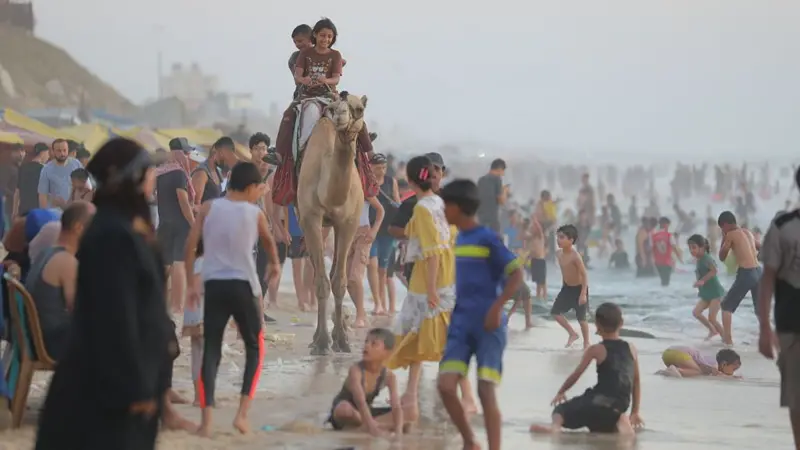
For the people of Gaza, who have endured years of conflict, destruction, and humanitarian suffering, the agreement offers a rare sense of hope. Although the proposed deal will not immediately restore homes, hospitals, schools, or other essential infrastructure destroyed during the war, it could provide the foundation for a more stable future.

If both parties fully implement the agreement, humanitarian organisations may be able to deliver significantly greater amounts of aid to civilians. The plan could also create opportunities for reconstruction projects, restore basic public services, and gradually re-establish more stable civilian governance across Gaza.

However, the success of the peace initiative will depend on more than Hamas’s willingness to disarm. Israel will also need to fulfill its commitments, including the agreed military withdrawal, if the process is to move forward. Equally important will be the role of international mediators, who must ensure that both sides carry out their obligations at the same time. Previous ceasefire and peace agreements have frequently collapsed because of delays, disagreements, and mutual accusations of non-compliance.

While many uncertainties remain, the latest development represents one of the most promising diplomatic openings in recent months. If implemented in good faith by all parties, it could become a decisive turning point, bringing Gaza closer to peace, humanitarian recovery, and long-term stability after years of devastating conflict.
Similar Posts

  • Global humanitarian crisis

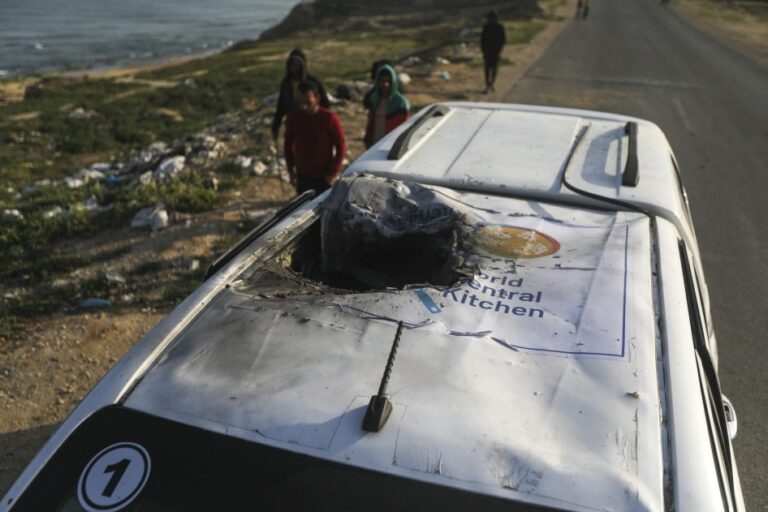
    Across multiple war zones around the globe, military hostilities and direct attacks on aid workers are pushing millions of civilians to the brink. Frontline personnel operating in Ukraine, the Middle East and Sudan are struggling to deliver basic survival services under increasingly perilous conditions. Strikes on Essential Infrastructure and Relief Assets in Ukraine Violence across Ukraine continues to inflict heavy civilian casualties. It claimed lives and injuring children across nine major regions, including Kyiv, Kharkiv, Odesa and Zaporizhzhia. The intense shelling has directly hindered humanitarian operations beyond damaging residential neighborhoods and essential municipal utilities. A recent strike in the city of Dnipro destroyed a primary World Health Organization (WHO) supply warehouse. The attack wiped out crucial medical inventory earmarked for frontline healthcare facilities. Meanwhile, emergency personnel in the Kherson region reported damage to a civilian evacuation transport and a direct hit on a World Food Programme (WFP) partner truck carrying essential food supplies. Despite these continuous risks, relief organizations remain active on the ground, delivering immediate trauma care, psychological support, and essential survival provisions to impacted communities. Rising Hostilities and Explosive Hazards Across the Middle East The security landscape in southern Lebanon and Gaza remains extremely volatile. Peacekeepers with the UN Interim Force in Lebanon (UNIFIL) monitored hundreds of artillery rounds and dozens of airspace incursions by Israeli forces over a single weekend. Direct fire incidents were recorded near UN observer positions in Meiss ej Jebel, alongside sightings of naval activity along the coast. Crucially, peacekeepers are working to clear hazardous remnants of war, having uncovered loaded rocket launchers, unexploded shells, and improvised explosive devices scattered across southern villages. In Gaza, ongoing military activity continues to imperil non-combatants and expand basic survival needs. Unexploded ordnance represents one of the most severe long-term dangers to returning residents and reconstruction crews. Specialist teams have identified and marked more than 1,000 explosive items across the Gaza Strip since late 2023. These clearance operations are vital for allowing workers to clear heavy rubble, restore water infrastructure, and safely access damaged facilities. To prevent further civilian casualties, mine safety specialists conducted targeted educational workshops reaching over 63,000 individuals in the past month alone. Sudan’s Escalating Displacement and Extreme Budget Drought In Africa, Sudan’s protracted conflict is driving mass displacement while relief budgets rapidly dry up. Severe insecurity around El Obeid in North Kordofan State has uprooted thousands of residents seeking sanctuary, forcing aid agencies to scramble to supply two million liters of drinkable water to roughly 133,000 displaced individuals facing acute shortages. Further west, intense fighting in the Sirba locality of West Darfur displaced around 18,000 civilians in a single week, sending thousands fleeing across the border into neighboring Chad. Compounding the human toll is a crippling financial deficit. The global humanitarian appeal for Sudan remains underfunded at just 41 percent, having received only $1.2 billion of the required $2.9 billion. This severe shortage has already forced the closure of multiple health centers in Central Darfur, leaving an estimated 75,000 displaced people completely cut off from basic healthcare services. Growing Risks of Regional Spillover in Yemen   The fragile stability in Yemen is also facing its most precarious moment since the 2022 truce. UN Envoy Hans Grundberg warned that recent escalations risk dragging the nation into a broader regional conflict, erasing years of diplomatic progress. Relief agencies emphasize that without immediate de-escalation, sustained diplomacy, and dedicated financial backing from international donors, global humanitarian networks will remain severely stretched, leaving millions of vulnerable civilians without access to life-saving assistance.

  • | | |

    Prince Harry, others face multi-million legal bill after Daily Mail lawsuit defeat

    In his ruling rejecting the case, Judge Matthew Nicklin says the claimants had needed to prove that information published about them had been obtained unlawfully, but had failed to do so, and that suspicion alone was not enough

  • |

    UN experts urge Canada to protect Sikh Activist

    United Nations human rights experts have called on Canada to strengthen security measures for Sikh activist Moninder Singh, citing repeated warnings from Canadian authorities about credible threats to his life. In a letter sent to the Canadian government on June 3 and released publicly under standard UN procedures, five independent experts expressed concern over allegations of foreign intimidation and reprisals targeting Singh, a Canadian citizen. The experts noted that since 2022, Canadian authorities have issued Singh four separate “duty to warn” notices, informing him of serious and imminent threats to his safety. They urged Ottawa to ensure his protection, safeguard his family, and provide security for others facing similar risks. The letter also called on Canadian authorities to speed up investigations, hold those responsible accountable, provide justice to victims, and take steps to prevent similar incidents in the future. The appeal was signed by UN special rapporteurs responsible for issues related to counterterrorism and human rights, freedom of peaceful assembly, human rights defenders, freedom of religion, and democratic international order. A copy of the communication was also shared with the Indian government. Singh visited Geneva earlier this year to seek international attention over what he described as the targeting of Sikh activists abroad and the broader issue of transnational repression. The case comes amid longstanding tensions between Canada and India following the 2023 killing of Sikh activist Hardeep Singh Nijjar near a Sikh temple in British Columbia. Canadian authorities alleged Indian involvement in the assassination, an accusation New Delhi has consistently denied. The dispute strained diplomatic relations, leading both countries to expel diplomats in 2024. Although bilateral ties have improved under Canadian Prime Minister Mark Carney, concerns over the safety of Sikh activists continue to draw international attention. Singh, who supports the Khalistan movement advocating for an independent Sikh homeland, said the UN experts’ intervention highlights growing concerns over the safety of Sikh voices abroad.

  • | |

    Israel rejects Trump’s 15-point Gaza plan

    Israeli Prime Minister Benjamin Netanyahu has rejected US President Donald Trump’s proposed 15-point plan for Gaza, insisting that Israel will not withdraw its forces until Hamas is fully and genuinely disarmed. Netanyahu made the statement during a cabinet meeting on Sunday. He said Israel would not accept any arrangement that allows Hamas to retain its weapons while Israeli troops are required to leave Gaza. “Israel rejects the 15-point document,” Netanyahu said, adding that the Israeli military would continue operating against threats to its forces and citizens. The dispute has created another obstacle for Trump’s efforts to establish a lasting ceasefire and political settlement in Gaza. Trump’s Board of Peace had previously announced that an agreement had been reached on the complete disarmament of Hamas and other armed groups operating in the territory. Hamas, however, has linked the handover of its heavy weapons to wider conditions. The group has demanded an end to Israeli military operations and a withdrawal of Israeli forces from Gaza. Netanyahu said disarmament must take place before any Israeli military withdrawal. He rejected the possibility of what he described as a symbolic or “fictitious” disarmament process. The Israeli premier said his government was discussing the next steps with US officials. He indicated that some American proposals were acceptable to Israel, while others remained unacceptable. “We know how to stand our ground on these matters,” Netanyahu said. The disagreement represents a major challenge for Trump’s Gaza initiative, which was presented as a framework for ending the conflict and creating conditions for reconstruction. The proposed plan includes the disarmament of Hamas, a phased Israeli military withdrawal and the rebuilding of Gaza. It also envisages the creation of an international Board of Peace to oversee implementation of the agreement. Hamas had previously signalled support for aspects of the disarmament framework. However, the group has maintained that weapons cannot simply be surrendered while Israeli forces remain in Gaza and military operations continue. Israel, meanwhile, has continued military strikes in Gaza despite the initial ceasefire agreement reached last October. Netanyahu is also facing political pressure at home. His far-right coalition partners have strongly opposed concessions that could allow Hamas to remain armed or secure a significant Israeli withdrawal. National Security Minister Itamar Ben Gvir has rejected the proposed framework and called it unacceptable. With Israeli elections approaching, Netanyahu faces pressure from both domestic allies and international partners. Any major concession on Gaza could create tensions within his governing coalition. The latest rejection therefore puts Trump’s peace initiative under renewed pressure. The central disagreement remains over the sequence of events: Hamas wants Israeli forces to withdraw and military action to end before completing disarmament, while Israel insists that Hamas must first surrender its weapons.

  • | |

    Shein turns to China as Hong Kong IPO nears

    Fast-fashion giant Shein is preparing to make its stock market debut in Hong Kong after years of efforts to list in the United States and Britain, marking a significant shift in how the company presents its relationship with China. The company is expected to raise around $1.7 billion through its Hong Kong initial public offering, with a valuation of about $26.5 billion. That figure is considerably below the company’s valuation in 2022. Shein had previously sought to establish itself as a global company. It moved its headquarters to Singapore in 2021 and promoted plans to expand manufacturing and operations in countries including Brazil, Türkiye and parts of Europe. However, its attempts to secure a Western listing faced regulatory and political obstacles. Chinese authorities were also reportedly involved in blocking earlier efforts to list in New York and London. After shifting its focus to Hong Kong in 2025, Shein founder Sky Xu increased his engagement with Chinese officials and became more involved in regulatory and capital-market discussions inside the country, according to people familiar with the matter. Xu also made a rare public appearance at a business forum in Guangdong earlier this year, where he announced plans for Shein to invest $1.5 billion in the province. He said the company would deepen its presence in Guangdong and develop its smart supply-chain system while contributing to the region’s fashion industry. Shein also opened a research and development centre in Nanjing, the eastern Chinese city where the company was founded in 2012. These moves helped reinforce the company’s economic links with China at a time when Beijing has been paying close attention to companies with major overseas operations. Officials in Guangdong also reportedly highlighted Shein’s contribution to employment and domestic economic activity when engaging with central authorities. The company has sought to emphasise that its main business is overseas rather than in China. Shein does not market its extremely low-priced products to Chinese consumers, allowing it to distance itself from the intense competition among domestic e-commerce platforms. Shein has instead argued that its international operations benefit China by generating foreign currency and supporting Chinese manufacturing and supply chains. The company’s Hong Kong prospectus describes China as the foundation of its global logistics and fulfilment network. Nearly 80 per cent of Shein’s workforce is based in mainland China. The shift comes after growing difficulties in Western markets. In the United States, lawmakers raised concerns over Shein’s supply chains and called for stronger assurances that its products were not linked to forced labour. The company has also faced scrutiny in Europe over competition, product safety and items offered through its online marketplace. At the same time, changes to low-value import rules in the US and Europe have created additional challenges for Shein’s business model, which relies heavily on inexpensive shipments directly to consumers. Analysts say the company’s experience demonstrates how geopolitical tensions are increasingly influencing corporate decisions and stock-market listings.

Leave a Reply

Your email address will not be published. Required fields are marked *