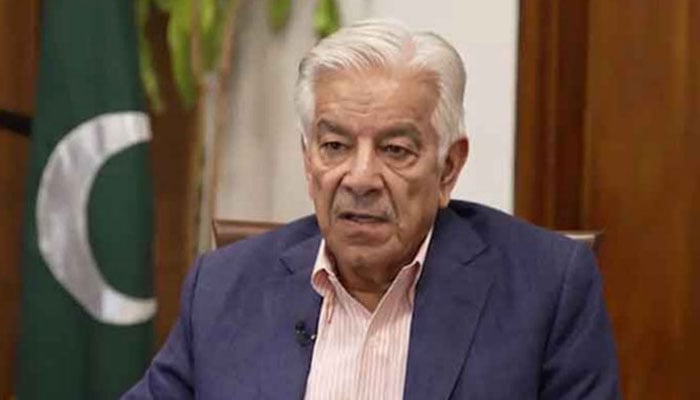
pralhad joshi named
|

Pralhad Joshi named India’s new education minister

India’s Union Minister for Food and Consumer Affairs Pralhad Joshi has been given the additional responsibility of the Education Ministry.

The development comes after the resignation of Dharmendra Pradhan. His resignation was accepted by the Indian president, according to an official notification.

The notification also confirmed Joshi’s appointment to the additional portfolio. He will continue to handle his existing responsibilities while overseeing the Education Ministry.

Speaking to journalists after the appointment, Joshi said he accepted the new responsibility with humility and a strong sense of duty.

He thanked Prime Minister Narendra Modi for placing his trust in him. Joshi also praised the Modi government’s performance during its 12 years in power.

He said the government had achieved several important milestones during this period. He added that the education sector had also witnessed major developments.

Joshi acknowledged the work carried out by Pradhan during his tenure as education minister.

He said Pradhan had played an important role in implementing India’s National Education Policy. According to Joshi, several significant initiatives were introduced during the previous four to five years.

He also said India had made considerable progress in moving towards a new education system.

Joshi pledged to carry out his new duties with dedication. He said he would use his abilities to fulfil the responsibilities assigned to him.

The change at the Education Ministry follows weeks of student protests across India.

The demonstrations were linked to allegations of examination paper leaks and irregularities. Students had demanded action from the authorities and greater accountability within the education system.

Pradhan submitted his resignation on the 35th day of the protests. The 57-year-old minister stepped down as pressure continued to grow over the controversy.

The protests were largely driven by young people. Their campaign gained significant attention through social media and public demonstrations.

Pradhan’s resignation was subsequently welcomed by the protesters, who had made his removal one of their major demands.

The leadership change now places Joshi at the centre of efforts to address the concerns surrounding India’s education and examination system.

His immediate responsibilities are expected to include overseeing the ministry’s ongoing programmes and ensuring continuity in the implementation of education policies.

The new minister will also face pressure to respond to concerns raised by students over examination procedures, transparency and accountability.


Similar Posts

  • Saudi crown prince pushes Trump for diplomacy

    Iranian military officials have rejected US President Donald Trump’s claim that Tehran asked for a planned American attack to be called off. The officials called the claim a lie. They said Trump was trying to pressure and blackmail Gulf rulers through threats. The officials said Iranian forces remain at the highest level of readiness and are prepared for any situation. They warned that if a confrontation becomes unavoidable, the outcome on the battlefield will settle who truly holds power. A source close to Iran’s negotiating team also denied that any agreement had been reached to reopen the Strait of Hormuz. Another military source told a local news agency that the strait will stay closed as long as the United States continues what Iran calls hostile actions. The source added that ships will only be allowed through a specific route and only with permission from the Islamic Revolutionary Guard Corps. Trump had said on Saturday that he called off a planned military strike on Iran after Tehran and other Middle Eastern countries asked for more time to complete a peace deal. He said Israel had also agreed to this arrangement. On his social media platform, Trump claimed both sides had agreed on the outline of a deal. He said the plan includes a complete and immediate reopening of the Strait of Hormuz and an end to what he called Iran’s nuclear threat. Meanwhile, Saudi Crown Prince Mohammed bin Salman spoke with Trump by phone and stressed the need to avoid a wider regional war. The Saudi Press Agency reported that the crown prince called for dialogue and de-escalation to protect regional stability. Both leaders also discussed cooperation between Saudi Arabia and the United States. Iran’s acting defence minister said all threats from adversaries are treated as real, even when they may be part of psychological pressure tactics. He said Iran will not be caught off guard and will use such threats to strengthen its military readiness. US Secretary of State Marco Rubio said American strikes have made Iran more willing to negotiate, including on its nuclear program and the Strait of Hormuz. He claimed the strikes had severely weakened Iran’s navy, air force and missile systems, though he admitted Iran still has missiles and drones capable of causing damage. Rubio said the US is now negotiating from a position of strength. Iran earlier warned the US against what it called adventurous action and said it would respond firmly to any fresh attacks. Iran’s foreign minister discussed the situation with senior officials from Turkey, Pakistan and Saudi Arabia, warning that any aggression would receive a proportionate response. A media outlet linked to Iran’s security establishment warned that any US strikes on Iranian energy sites would lead to Iranian strikes on oil and gas fields in Saudi Arabia, the UAE, Qatar and Israel. Oil prices have remained high since the conflict began in February. Brent crude rose sharply in July, and analysts expect prices to climb further as tensions in the region continue.

  • |

    Tom Holland admits Justin Bieber was his childhood obsession

    Tom Holland has confessed that he once idolised Justin Bieber and even tried copying his look as a kid. The actor opened up about his childhood crush during a recent TV appearance. Speaking on Julian Shapiro-Barnum’s “Celebrity Substitute” show on Wednesday, the 30-year-old actor named Bieber as his biggest childhood obsession. He said he genuinely believed Bieber was the coolest person he’d ever seen at the time. Holland admitted he tried to style his hair just like Bieber’s when he was around 11 or 12 years old. He joked that the attempt didn’t go too well, since his hair simply wasn’t built for that look. The confession quickly caught fans’ attention online, with clips of the moment spreading across social media. Many pointed out that Holland’s admiration for Bieber actually predates their now-friendly relationship by more than a decade. The two stars famously connected during the COVID-19 lockdown, when they went live together on Instagram. During that stream, both artists openly praised each other’s work and expressed mutual admiration. Holland’s latest comments add a fun bit of context to that earlier friendship, showing his appreciation for Bieber started long before they ever crossed paths professionally. Fans have since revisited the old livestream clip, drawing comparisons between his teenage fandom and his adult friendship with the singer. On the professional front, Holland remains busy promoting his newest Marvel film, “Spider-Man: Brand New Day.” The movie officially released on July 31 and has already crossed the billion-dollar mark at the global box office. Holland reprises his role as Peter Parker in the film, starring alongside his real-life wife, Zendaya. The couple’s on-screen and off-screen partnership has continued to draw significant attention from fans and media alike. With “Brand New Day” performing strongly worldwide, Holland’s star continues to rise both critically and commercially. His playful trip down memory lane, though, has given fans a lighter, more personal glimpse into the actor’s life outside the superhero suit.

  • |

    US deports thousands of Indians amid Trump immigration crackdown

    The administration of US President Donald Trump has intensified its crackdown on undocumented immigrants, leading to a sharp rise in arrests and deportations across the country. More than 4,800 Indian nationals have been deported from the United States, according to figures cited by foreign media. The latest enforcement drive has also pushed immigration arrests to record levels as US authorities step up efforts to remove people who lack legal immigration status. The US Immigration and Customs Enforcement (ICE) arrested around 51,000 people last month, marking a record monthly figure, according to reports. The Trump administration says ICE is now carrying out roughly 2,000 arrests every day, while officials recorded an average of about 4,200 arrests per day during the first week of August. Indian nationals have emerged as one of the largest Asian groups affected by the intensified enforcement campaign. According to India’s Ministry of External Affairs, US authorities deported **3,567 Indian citizens in 2025**, the highest annual figure recorded in 16 years. During the first half of 2026 alone, another **1,273 Indian nationals** were deported from the United States, bringing the total number of deportations over the latest period to more than 4,800. Data from the US-based organisation Stop AAPI Hate also highlights the disproportionate impact on Indian immigrants. Between January 2025 and March 2026, US authorities arrested 14,402 Asian nationals, of whom Indians accounted for around 28 percent. During the same period, authorities deported 6,218 Asian nationals, with Indian citizens again making up approximately 28 percent of those deported. The scale of the crackdown has raised concerns among human rights advocates and some former immigration officials. Critics argue that the aggressive enforcement campaign could affect families and long-term residents, particularly those facing uncertain legal or immigration status. The Trump administration has set an ambitious target of deporting one million people annually. However, ICE figures indicate that the US deported around 400,000 people in 2025, considerably below the administration’s stated goal. US officials also claim that more than **3 million undocumented immigrants have left the country, including approximately 2.2 million people who voluntarily returned to their home countries. The administration has presented the figures as evidence that its tougher immigration policies are encouraging undocumented migrants to leave the United States while expanding enforcement against those who remain. Immigration advocates, however, continue to question the methods and broader consequences of the campaign.

  • | | | |

    US forces disable two ships amid rising tensions i…

    WASHINGTON: Tensions around the Strait of Hormuz have intensified after the United States said its forces had disabled two commercial vessels that failed to comply with orders linked to its naval blockade of Iranian ports. The US Central Command (CENTCOM) said American forces had redirected 12 commercial vessels attempting to breach the blockade as of July 25. Two ships that allegedly refused to comply were disabled, while two others were boarded to verify compliance. The latest development adds another layer of uncertainty to maritime traffic through one of the world’s most strategically important waterways, where any disruption can have consequences for global energy and shipping markets. CENTCOM said the Mozambique-flagged M/T Lavine was disabled in the Gulf of Oman on July 24 after its crew allegedly attempted several times to violate the blockade and ignored repeated warnings. According to the US military, the vessel had been heading towards Iran but is no longer travelling to an Iranian port. The US military also reported a separate operation involving the Comoros-flagged M/T Charminar in the Arabian Sea. American forces boarded the tanker on July 25 for verification. After the inspection, the vessel was allowed to continue its journey, according to CENTCOM. CENTCOM has described the naval blockade as remaining fully in effect, saying its forces are continuing to monitor commercial shipping and enforce restrictions on vessels travelling to or from Iranian ports. The confrontation comes amid heightened US-Iran tensions and growing concerns over the security of maritime routes around the Gulf of Oman and Strait of Hormuz. The waterway is a crucial passage for international trade and energy shipments, making military activity in the area particularly sensitive. The US claims its measures are aimed at preventing vessels from violating the blockade, while Iran has continued to challenge restrictions on shipping in the region. The latest incidents could further complicate efforts to maintain safe commercial navigation. With American forces increasing enforcement and vessels facing greater scrutiny, shipping companies operating near the region are likely to remain on high alert. For now, the Strait of Hormuz remains a major flashpoint, with every confrontation at sea carrying the risk of a broader escalation.

  • | |

    Khawaja Asif backs federal control of Karachi, Gwa…

    Defence Minister Khawaja Asif has said that, in his personal opinion, Karachi and Gwadar should be directly administered as part of the federation, stressing that his remarks are intended to serve the national interest rather than any political or personal agenda. Speaking in a television interview, Asif clarified that the proposal reflects his own views and has not been discussed or approved by his party. He acknowledged that the Pakistan Muslim League-Nawaz (PML-N) may agree with some of his opinions while differing on others. “I am expressing my personal opinion. I have not sought my party’s approval for these remarks,” he said. “Some of my views may be supported by the party, while others may not.” The defence minister stressed that he has no personal interest in either Karachi or Gwadar and that his comments were made solely from the perspective of what he believes is best for the country. Asif also spoke about the importance of local government systems in modern democracies. He said effective local governments play a key role in governance, public service delivery and political development. He noted that local government institutions were revived during the 1980s and argued that many leaders currently serving at the provincial and federal levels began their political careers through the local government system. According to Asif, strengthening local governance remains essential for improving democratic institutions and ensuring better administration across the country. Commenting on the country’s administrative structure, the defence minister said provinces should not be created on the basis of provincial or ethnic identities. He suggested that national unity and effective governance should remain the guiding principles in discussions on administrative reforms.

  • |

    US authorises private firms to target cybercrime groups

    WASHINGTON: The United States has taken an unusual step in its fight against international cybercrime by allowing selected private companies to conduct government-approved hacking operations against foreign criminal organisations. President Donald Trump has signed a memorandum directing the departments of Justice and Homeland Security to establish a framework under which approved private-sector partners can investigate, infiltrate and disrupt transnational cybercrime networks. The move is aimed at tackling growing threats including ransomware attacks, online fraud and so-called sextortion schemes. The White House said such crimes caused more than $20 billion in losses to Americans during 2025. Under the new framework, authorised companies could potentially infiltrate cybercriminals’ computer systems, deploy spyware or disrupt servers used to conduct criminal activities. However, each operation would require approval from the US government before any action is taken. Participating companies would also be required to provide a bond of at least $1 million. Operations involving actions that could cause death or physical injury would remain prohibited. Activities that could qualify as the use of force under international law would also be excluded. The initiative has drawn comparisons with privateering, a practice used centuries ago when governments authorised private vessels to attack or seize enemy ships. Supporters argue that private technology companies possess specialised cyber expertise and access to data that government agencies may not have. They believe combining those capabilities with government authority could help disrupt criminal networks more effectively. However, cybersecurity experts have raised concerns about accountability, oversight and the possibility of unintended consequences. Critics warn that allowing private companies to conduct offensive cyber operations could create diplomatic complications and make it difficult to control activities once they begin. The policy also represents a notable shift in the Trump administration’s previous position. Earlier this year, senior US officials had indicated that the government was not interested in using private companies to fight cybercriminals through offensive operations. It remains unclear what prompted the change in policy. Some cybersecurity specialists believe the programme contains important safeguards because operations will be conducted under government authorisation. Others remain concerned that existing oversight institutions may not be strong enough to monitor such activities effectively. The initiative could also expose participating technology companies to new risks. Experts warn that firms involved in government-sanctioned cyberattacks could become targets themselves and face retaliation from criminal groups or foreign governments. The Trump administration has 60 days to finalise the programme’s operational framework, while some details are expected to remain classified.

Leave a Reply

Your email address will not be published. Required fields are marked *