india warns border
|

India warns border tensions could affect ties with China


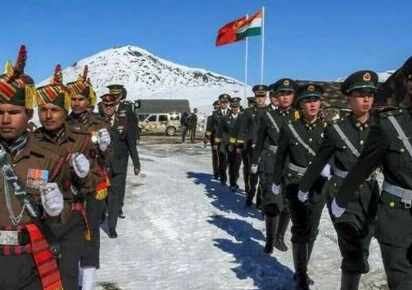
India has stressed that maintaining peace along its disputed border with China is essential for improving relations between the two Asian powers. The statement comes amid reports of renewed encounters between Indian and Chinese troops in a remote part of the Himalayas.

India’s latest remarks mark the second time in less than a week that New Delhi has addressed concerns over the border. The two countries have been attempting to rebuild relations after deadly clashes in 2020 severely damaged diplomatic ties. The issue is particularly significant ahead of the BRICS summit, scheduled to take place in New Delhi from September 12 to 13, where Chinese President Xi Jinping is expected to participate.

Speaking at a regular media briefing on Tuesday, Indian Foreign Ministry spokesperson Randhir Jaiswal said New Delhi considers border matters with China extremely serious. He stressed that the situation along the disputed frontier would have a direct impact on the broader relationship between the two countries.

Jaiswal said India had consistently communicated to Beijing that the condition of the border was closely connected to the overall state of bilateral relations. His comments came in response to questions about reports of a recent military encounter between troops from both countries.

China’s Foreign Ministry and Defence Ministry did not immediately respond to requests for comment regarding the reported developments.

According to news , Indian and Chinese military patrols reportedly came into contact in late July near Taksing, a remote village in Arunachal Pradesh’s Upper Subansiri district. The area lies along the border with Tibet and is located in the eastern Himalayas.

China claims Arunachal Pradesh as part of what it describes as southern Tibet, referring to the region as Zangnan. India strongly rejects Beijing’s claim and maintains that Arunachal Pradesh is an integral part of Indian territory.

The reported encounter allegedly occurred around 2.5 kilometres inside territory controlled by India. Chinese personnel reportedly withdrew from the area initially but returned in early August and set up two tents.

However, Indian defence officials have rejected reports suggesting that the developments represent a significant increase in military tensions. The defence spokesperson responsible for Arunachal Pradesh described the reports as unverified and lacking sufficient evidence.

A residents’ welfare organisation in the region had earlier raised concerns in a July 26 letter sent to local authorities. The group claimed that Chinese personnel were increasing their presence and moving into strategically important areas near the border. Reuters reviewed the letter.

Military patrols from India and China occasionally encounter one another along their disputed 3,488-kilometre frontier. Such confrontations are not unprecedented, although they do not happen regularly.

Relations between the two countries deteriorated sharply after a deadly confrontation in the western Himalayas in 2020. Twenty Indian soldiers and four Chinese troops were killed during the clashes, leading both sides to deploy tens of thousands of troops and large quantities of military equipment along the frontier.

Tensions gradually began to ease after Indian Prime Minister Narendra Modi and Chinese President Xi Jinping held talks in 2024. The two leaders agreed to take steps to end the prolonged military standoff and work toward reducing tensions.

Despite those efforts, the latest reports highlight the continuing sensitivity of the border dispute and the importance of maintaining stability as India and China attempt to restore their broader relationship.
Similar Posts

  • |

    UK prosecutors urge US court to deny bail to Andrew and Tristan Tate ahead of extradition hearing

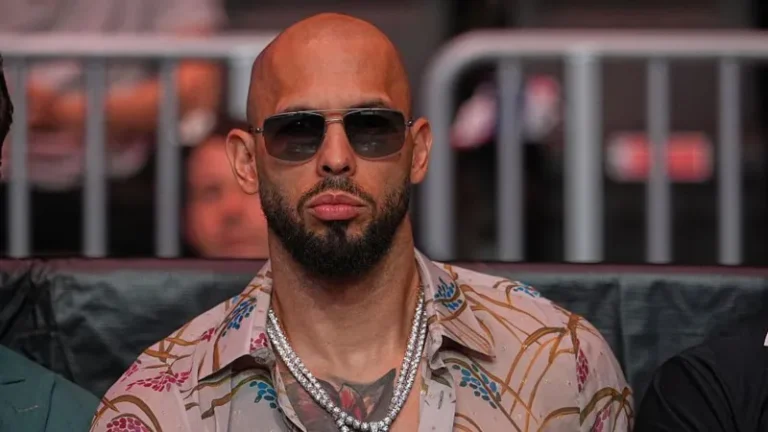
    British prosecutors have urged a US court to keep social media influencer Andrew Tate and his brother Tristan in custody ahead of a crucial detention hearing, warning the pair pose a severe flight risk and could intimidate witnesses if released. The brothers, who hold dual British and American citizenship, were arrested in Miami on 19 July following a formal extradition request by the United Kingdom. They face a total of 59 charges in the UK, including rape, human trafficking, and offences relating to indecent images of a child. In legal filings submitted ahead of Thursday’s bail hearing in the Southern District of Florida, the UK Crown Prosecution Service (CPS) argued through US prosecutors that the brothers possess the financial resources and global influence needed to evade justice. Prosecutors highlighted the vulnerability of complainants in the case, noting that several alleged victims reported being assaulted and threatened with weapons. The CPS also cited previous social media posts by Andrew Tate in which he mocked law enforcement and hinted at methods to avoid arrest. Lawyers representing the Tate brothers acknowledged that granting bail during international extradition proceedings is rare, but insisted their clients have shown no intention of fleeing prosecution. The brothers were previously arrested in Romania in 2022 on human trafficking charges, though Romanian courts lifted travel restrictions in early 2025, allowing them to travel to the United States. If the US courts rule in favour of extradition, the final decision to surrender the brothers to British authorities will rest with US Secretary of State Marco Rubio. If convicted in the UK, both men could face life imprisonment.

  • | | | |

    US strikes Iran for 13th night as Trump escalates threats

    The United States carried out fresh air strikes on Iran for the 13th consecutive night, further intensifying the military confrontation between the two countries. The latest attacks came as US President Donald Trump warned that Washington is prepared to launch even larger military operations if Iran continues targeting American interests and regional allies. According to the US military, the strikes targeted facilities linked to Iran’s Islamic Revolutionary Guard Corps (IRGC). Officials said the operation was intended to reduce Iran’s military capabilities and protect commercial shipping routes and US forces operating in the Middle East. Reports from Iran said explosions were heard in several parts of the country. Blasts were reported on Qeshm Island as well as in Khuzestan province. Missile strikes were also reported in the cities of Andimeshk and Omidiyeh. In the southern port city of Bandar Abbas, local media reported that attacks on a residential neighbourhood injured at least two civilians. Speaking earlier, President Trump said he was considering the largest military operation against Iran since the conflict began. He stated that preparations were complete and that a final decision could be taken soon if Iran continued its attacks on US allies and military assets in the region. The latest American strikes followed another round of Iranian missile and drone attacks on Bahrain, Kuwait and Jordan. Iranian military officials said the attacks targeted US military facilities stationed in those countries. Tehran described the strikes as retaliation for continued US attacks on Iranian territory and infrastructure. Iran also claimed responsibility for striking a telecommunications tower in Kuwait. Iranian officials said the attack was carried out in response to previous US strikes on communication facilities inside Iran. Kuwaiti authorities later confirmed that hostile drones also targeted the Abdali border crossing with Iraq, raising security concerns along the frontier. Iranian Foreign Minister Abbas Araghchi warned that the country would continue responding to every attack under an “eye for an eye” policy. Military officials said Iran’s retaliatory operations would continue for as long as American forces targeted Iranian infrastructure and coastal areas. The conflict has now spread beyond Iran and the United States, increasing fears of a wider regional war. Yemen’s Houthi movement claimed responsibility for attacks on two Saudi oil tankers in the Red Sea. The group warned that additional energy infrastructure could also become a target if the conflict continues. The growing violence has disrupted security across key maritime routes, including the Strait of Hormuz and the Bab al-Mandeb Strait, both of which are among the world’s most important oil shipping corridors. Continued attacks have increased risks to commercial shipping and raised concerns over global energy supplies. The worsening conflict has also pushed international oil prices above $100 per barrel, reflecting fears of prolonged supply disruptions. Analysts warned that further escalation could place additional pressure on the global economy by increasing fuel prices, disrupting trade and creating greater uncertainty in international energy markets.

  • |

    Xi backs Brazil against foreign interference in call with Lula

    Chinese President Xi Jinping expressed support for Brazil’s efforts to protect its sovereignty and resist foreign interference during a phone conversation with Brazilian President Luiz Inacio Lula da Silva, according to Chinese state media. The discussion took place just months before Brazil’s closely watched presidential election and against the backdrop of growing trade and diplomatic tensions with the United States. According to China’s Xinhua news agency, Xi praised Brazil’s role on the international stage and said Beijing values the country’s influence in global affairs. He stated that China supports Brazil in defending its independence, rejecting outside interference, and contributing to regional and international peace and stability. The phone call comes less than three months before Brazilians head to the polls in an election expected to be highly competitive. President Lula is seeking another term and faces a challenge from right wing candidate Flavio Bolsonaro, the son of former president Jair Bolsonaro. The Brazilian presidency said the two leaders also discussed strengthening economic cooperation. Both sides agreed on the importance of accelerating negotiations for a trade agreement between China and Mercosur, the South American trade bloc that includes Brazil, Argentina, Paraguay, and Uruguay. Such an agreement could expand trade opportunities between the region and the world’s second largest economy. During the conversation, which lasted more than an hour, Lula reaffirmed his commitment to expanding Brazil’s international trade network. He said his government is working to diversify export markets and reduce dependence on a limited number of trading partners, particularly as Brazil faces increased tariff pressure from the United States. Relations between Brasilia and Washington have become more strained in recent months. The United States introduced two additional rounds of tariffs on a range of Brazilian products this month, following a significant tariff increase imposed last year. The measures were linked to political tensions surrounding the legal case that resulted in former president Jair Bolsonaro being sentenced to prison over an alleged coup plot. Lula has strongly criticized the tariffs, arguing that they amount to political pressure during an election year. He has accused Washington of attempting to influence Brazil’s domestic affairs through economic measures, an allegation the United States has rejected. Diplomatic tensions have also surfaced over election related issues. According to diplomatic sources, Brazil recently refused entry visas for two American officials who planned to visit the country’s election authorities ahead of the October vote. The move reflected growing sensitivity within the Brazilian government over foreign involvement in electoral matters. Meanwhile, Flavio Bolsonaro has continued to question the reliability of Brazil’s electronic voting system despite repeated assurances from election officials that it is secure. His claims have echoed similar allegations made by US President Donald Trump regarding American elections, although no credible evidence has supported those accusations. While the Chinese government highlighted Xi’s support for Brazil in resisting external interference, the official statement released by the Brazilian presidency did not specifically mention that part of the discussion. Instead, it focused on economic cooperation and the importance of strengthening trade ties between Brazil, China, and the Mercosur bloc. The conversation underscores the increasingly close relationship between Beijing and Brasilia at a time when Brazil is balancing political challenges at home with shifting economic and diplomatic dynamics on the global stage.

  • Sarah Ferguson, the former Duchess of York, is said to be pushing back against feelings of isolation from the royal family. Insiders  claim that she is now seeking a direct audience with King Charles and Queen Camilla. The details were shared with Heat World by a source close to the situation. According to the confidant, Ferguson has no intention of quietly fading from public life. She is reportedly determined to make her case directly to the King and Queen, hoping to secure some form of leniency regarding her standing within the family. The source quoted Ferguson as saying she refuses to be discarded simply because it would make things easier for Charles and Camilla. She reportedly believes she deserves far better treatment than that, and is prepared to keep pressing until she gets it. Despite her resolve, the insider noted that Ferguson is not approaching this without apprehension. Returning to England reportedly fills her with nerves, but that anxiety is not enough to make her back down from pursuing the meeting. What seems to be driving her most, according to the source, is the pain of feeling disconnected from her daughters and grandchildren. That separation is reportedly the hardest part of her current situation, more so than any concerns about her public image. The renewed push comes after months of Ferguson keeping an unusually low profile, a shift that followed fresh revelations in January regarding her past association with Jeffrey Epstein. It is worth noting that being named in related documents does not, on its own, suggest any wrongdoing on her part. Ferguson has largely stayed out of the public eye since then. Reports from The Sun suggest she’s been staying with her former partner, Formula 1 businessman Paddy McNally, at his Swiss chalet in Verbier, a property reportedly worth around £15 million known as “Les Gais Lutins.” Her stay there followed her reported eviction from Royal Lodge, the residence she once shared with Prince Andrew. The situation marks a notable shift for Ferguson, who has spent recent months largely removed from royal circles and public appearances. Whether her reported appeal to Charles and Camilla will result in an actual meeting remains unclear, but insiders suggest she has no plans to retreat quietly, even as she navigates both personal anxiety and the complicated dynamics of her relationship with the royal family.

  • | |

    Kabaddi player’s wife dies in suspected suicide

    HARYANA: Muskan, the 23-year-old wife of international Indian kabaddi player Shailu Ballhara, was found dead at her residence in the Indian state of Haryana in what police believe to be a suspected suicide, according to Indian media reports. The incident reportedly took place on Friday afternoon. Family members informed the police after discovering her unconscious at the house. Law enforcement officials, along with a forensic team, reached the scene soon afterward and began collecting evidence. Police have launched an investigation to determine the circumstances surrounding the death. Officials said the exact cause behind the suspected suicide has not yet been established, and investigators are examining all possible aspects of the case. According to Muskan’s family, she married Shailu Ballhara in December 2023. The couple welcomed their son, Hardik, in November 2025. Relatives said the family had been living together following the birth of their child. Investigators are also reviewing Muskan’s recent social media activity. Indian media reported that a day before her death, she shared a video featuring a sad Punjabi song, which has become part of the ongoing investigation. However, police have not confirmed whether the post was linked to the incident. Officials said statements from family members and other individuals are being recorded, while forensic evidence collected from the residence is being examined. Authorities added that no conclusions will be drawn until the investigation is complete.

  • | | |

    South Korean energy firm seeks PM Shehbaz’s …

    A South Korean state-owned energy company has appealed directly to Prime Minister Shehbaz Sharif, claiming that prolonged regulatory delays have placed its planned $1 billion investment in Pakistan’s hydropower sector at serious risk. In a letter addressed to the prime minister, Korea South-East Power Co. Ltd. (KOEN) said it had spent nearly a decade developing two run-of-the-river hydropower projects on the Swat River in Khyber Pakhtunkhwa but remains unable to move forward because of unresolved regulatory approvals. The company, a subsidiary of Korea Electric Power Corporation (KEPCO), is developing the 229-megawatt Asrit Kedam and 238-megawatt Kalam Asrit hydropower projects. Together, the projects represent an investment of approximately $1 billion, with the company already investing around $25 million in feasibility studies, surveys, and other preparatory work. According to KOEN, the projects have met all major government requirements since development began in 2016. The company signed a memorandum of understanding with the Khyber Pakhtunkhwa government, obtained letters of intent from the Pakhtunkhwa Energy Development Organization (PEDO), completed feasibility studies, secured a power generation licence from the National Electric Power Regulatory Authority (Nepra), and maintained all required financial guarantees. Despite fulfilling these requirements, KOEN said the tariff determination for the projects has remained pending for nearly three years. The company noted that Nepra conducted a public hearing on its tariff petition in July 2023, but a final decision has yet to be issued. The company said it repeatedly approached Nepra and later appealed to the Nepra Appellate Tribunal, which directed the regulator to decide the tariff matter. However, KOEN claims that the tribunal’s order has still not been implemented. Adding to its concerns, the company said both hydropower projects have been excluded from the draft Indicative Generation Capacity Expansion Plan (IGCEP) 2025–35. KOEN warned that if the revised plan is approved without the projects, its proposed investment could remain stalled indefinitely. In its appeal, the company urged the prime minister to intervene and ensure a timely tariff determination while allowing the projects to continue under Pakistan’s Power Generation Policy 2015, the framework under which the investment was originally made. KOEN also stated that it understands Pakistan’s current surplus electricity generation and is willing to align the commercial operation of the projects with the country’s future energy requirements rather than adding unnecessary capacity. The issue comes as Pakistan and South Korea continue discussions aimed at strengthening bilateral trade and investment ties through a proposed Comprehensive Economic Partnership Agreement (CEPA). Analysts say resolving regulatory bottlenecks will be crucial for maintaining investor confidence and attracting future foreign direct investment into Pakistan’s energy sector.

Leave a Reply

Your email address will not be published. Required fields are marked *