strikes iran 13th
| | | |

US strikes Iran for 13th night as Trump escalates threats

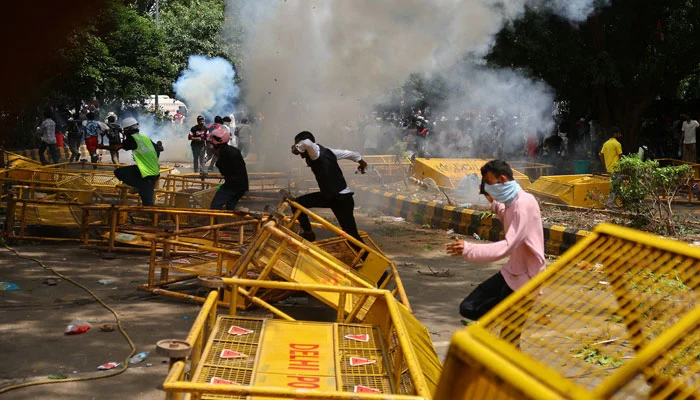
The United States carried out fresh air strikes on Iran for the 13th consecutive night, further intensifying the military confrontation between the two countries. The latest attacks came as US President Donald Trump warned that Washington is prepared to launch even larger military operations if Iran continues targeting American interests and regional allies.

According to the US military, the strikes targeted facilities linked to Iran’s Islamic Revolutionary Guard Corps (IRGC). Officials said the operation was intended to reduce Iran’s military capabilities and protect commercial shipping routes and US forces operating in the Middle East.

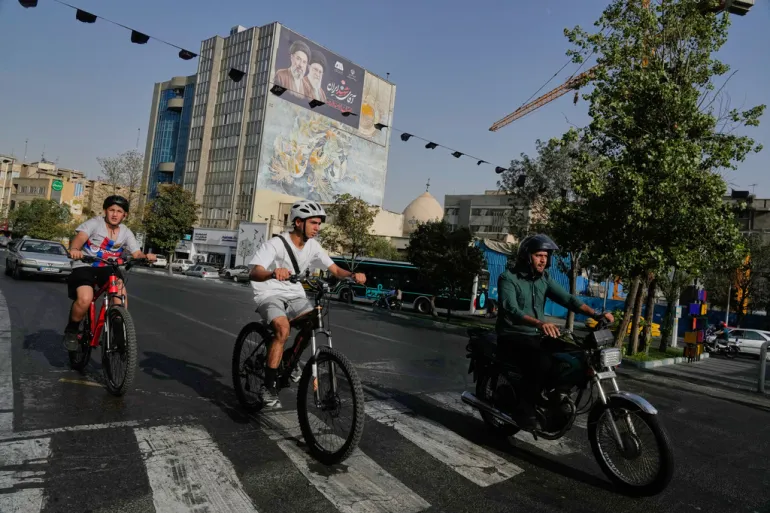
Reports from Iran said explosions were heard in several parts of the country. Blasts were reported on Qeshm Island as well as in Khuzestan province. Missile strikes were also reported in the cities of Andimeshk and Omidiyeh. In the southern port city of Bandar Abbas, local media reported that attacks on a residential neighbourhood injured at least two civilians.

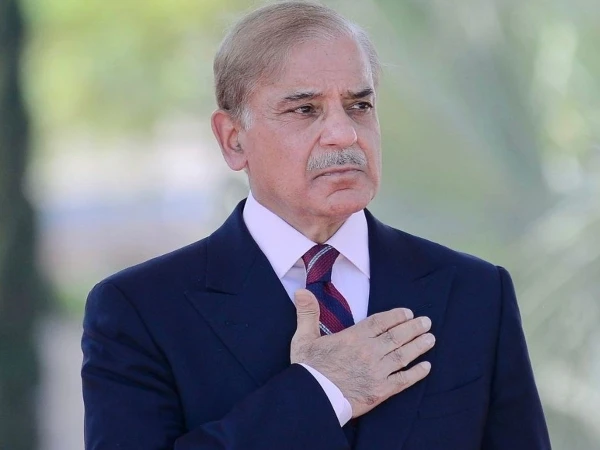
Speaking earlier, President Trump said he was considering the largest military operation against Iran since the conflict began. He stated that preparations were complete and that a final decision could be taken soon if Iran continued its attacks on US allies and military assets in the region.

The latest American strikes followed another round of Iranian missile and drone attacks on Bahrain, Kuwait and Jordan. Iranian military officials said the attacks targeted US military facilities stationed in those countries. Tehran described the strikes as retaliation for continued US attacks on Iranian territory and infrastructure.

Iran also claimed responsibility for striking a telecommunications tower in Kuwait. Iranian officials said the attack was carried out in response to previous US strikes on communication facilities inside Iran. Kuwaiti authorities later confirmed that hostile drones also targeted the Abdali border crossing with Iraq, raising security concerns along the frontier.

Iranian Foreign Minister Abbas Araghchi warned that the country would continue responding to every attack under an “eye for an eye” policy. Military officials said Iran’s retaliatory operations would continue for as long as American forces targeted Iranian infrastructure and coastal areas.

The conflict has now spread beyond Iran and the United States, increasing fears of a wider regional war. Yemen’s Houthi movement claimed responsibility for attacks on two Saudi oil tankers in the Red Sea. The group warned that additional energy infrastructure could also become a target if the conflict continues.

The growing violence has disrupted security across key maritime routes, including the Strait of Hormuz and the Bab al-Mandeb Strait, both of which are among the world’s most important oil shipping corridors. Continued attacks have increased risks to commercial shipping and raised concerns over global energy supplies.

The worsening conflict has also pushed international oil prices above $100 per barrel, reflecting fears of prolonged supply disruptions. Analysts warned that further escalation could place additional pressure on the global economy by increasing fuel prices, disrupting trade and creating greater uncertainty in international energy markets.

Similar Posts

  • |

    Backlash grows within conservative ranks as far-right AfD surges past German chancellor in polls

    German Chancellor Friedrich Merz is facing acute political pressure following a contentious cabinet reshuffle that triggered widespread friction within his conservative ranks. The internal discord comes at a critical juncture, as the far-right Alternative for Germany (AfD) pulls ahead in national opinion polls ahead of key regional elections in September. The shake-up was prompted by the abrupt departure of party heavyweight Jens Spahn over his decision to have a child via surrogacy abroad, a practice banned in Germany and previously opposed by Spahn himself. Merz appointed his chief of staff, Thorsten Frei, to replace Spahn as leader of the conservative parliamentary group, whilst moving Health Minister Nina Warken into the chancellery. However, additional dismissals, including Transport Minister Patrick Schnieder and junior minister Tino Sorge, provoked sharp backlash from party members in Rhineland-Palatinate and Saxony-Anhalt, who accused Merz of poor communication and unfair treatment. With approval ratings for the CDU/CSU alliance slipping to 21% behind the AfD’s 27%, the upcoming state elections in Saxony-Anhalt and Mecklenburg-Vorpommern present a formidable test. Merz has urged patience, predicting internal tempers will cool before parliament reconvenes in September. However, growing discontent within the coalition leaves the chancellor in a precarious position as he attempts to push forward economic and social reforms.

  • | |

    NAB recovers record Rs5.4 trillion in six months

    The National Accountability Bureau (NAB) has announced record recoveries worth Rs5.414 trillion during the first six months of 2026, describing it as the highest six-month recovery in the institution’s history. According to an official statement, the bureau recovered Rs2.452 trillion during the second quarter alone, significantly increasing the overall recovery figure for the first half of the year. Among regional offices, NAB Sukkur recorded the highest overall recoveries. Meanwhile, NAB Balochistan reclaimed 209,544 acres of forest and state land valued at Rs604.64 billion, including areas linked to Hingol National Park and land belonging to the Gwadar Industrial Estate Development Authority (GIEDA). In Karachi, the anti-corruption watchdog recovered 11,422 acres of illegally allotted government land and disputed housing society leases worth Rs467.11 billion. The Lahore bureau reclaimed 1,909 acres of state and PCBL land valued at Rs288.29 billion, while the Islamabad/Rawalpindi office recovered 810 acres of CDA amenity plots in various housing societies, with an estimated value of Rs66.63 billion. NAB also reported progress in housing and financial fraud cases. The bureau said more than 24,365 victims received compensation through the return of recovered money and assets worth Rs42.303 billion. The accountability body said the recoveries reflect its continued efforts to retrieve public assets, restore illegally occupied state land, and provide financial relief to citizens affected by fraud and corruption

  • |

    Russia-Ukraine war intensifies, 13 killed as Franc…

    KYIV: The Russia-Ukraine war has entered another dangerous phase as fresh attacks across both countries killed at least 13 people, while France moved to strengthen Ukraine’s air defences with additional missile interceptors. The latest violence came as Russian and Ukrainian forces continued exchanging long-range strikes, with civilian areas once again bearing much of the cost. Seven people were reported killed in Ukraine, while four died in Russia and two others were reportedly killed in Russian-occupied Crimea. In the Ukrainian city of Kryvyi Rih, emergency workers continued searching through the wreckage of a shopping centre damaged in a Russian drone strike a day earlier. That attack reportedly killed 16 people and left dozens injured, adding to growing concerns over the safety of civilians as aerial attacks intensify. The escalating strikes have also renewed pressure on Ukraine’s allies to provide stronger air-defence systems. French President Emmanuel Macron has pledged to accelerate the delivery of French interceptor missiles to Ukraine following discussions with Ukrainian President Volodymyr Zelensky. Macron has stressed that Ukraine needs the necessary means to protect its airspace and defend its population against Russian attacks. Ukraine has faced particular difficulty countering Russian ballistic missiles, which can reach targets within minutes and are considerably harder to intercept than many drones and cruise missiles. Kyiv has repeatedly appealed to Western allies for additional air-defence systems, especially Patriot interceptors. Recent Russian attacks have demonstrated the scale of the challenge. A major August assault on Kyiv and surrounding areas killed at least 16 people and damaged residential buildings, a school and a children’s medical facility, according to Ukrainian officials. The violence has been accompanied by Ukrainian drone strikes inside Russia. Russian officials said a Ukrainian drone attack in the southern city of Yeysk struck a residential property, killing two children and injuring their parents. With attacks intensifying, diplomatic efforts to end the war remain stalled. Several rounds of US-backed discussions have failed to produce a lasting breakthrough, leaving the prospect of a ceasefire uncertain. France and Britain are also preparing to bring allied countries together for further discussions on strengthening Ukraine’s defences and increasing pressure on Moscow. For civilians on both sides, however, the latest escalation is a grim reminder that despite diplomatic efforts, the war continues to expand its human toll. As missiles and drones cross borders, the immediate priority remains protecting people caught in the path of an increasingly intense conflict.

  • | | |

    KP considers law for computerized prescriptions an…

    The Khyber Pakhtunkhwa (KP) government is considering new legislation that would require doctors to prescribe medicines using their generic names instead of brand names and issue computerized prescriptions to patients. The provincial government has announced plans to consult the federal government, as the matter falls under federal jurisdiction. The proposal was discussed in the Khyber Pakhtunkhwa Assembly after Pakistan Peoples Party (PPP) lawmaker Mehr Sultana submitted a calling attention notice highlighting the absence of an effective legal framework requiring doctors to prescribe medicines by their generic names. According to the lawmaker, many physicians continue to prescribe branded medicines, limiting patients’ ability to choose more affordable alternatives. She argued that requiring doctors to write only the generic or formula name of a medicine would improve transparency, increase competition among pharmaceutical companies, and reduce treatment costs for patients. Mehr Sultana also emphasized the need to make computerized prescriptions mandatory, pointing out that handwritten prescriptions are often difficult to read. Illegible prescriptions can result in medication errors, delays in treatment, and confusion for pharmacists and patients. She urged the provincial government to introduce legislation or regulations that would modernize the prescription system and improve patient safety. Responding to the proposal, KP Health Minister Khaliq ur Rahman acknowledged the importance of the issue but explained that the authority to legislate in this area primarily rests with the federal government. He said the provincial government would formally approach the federal authorities to explore the possibility of introducing the necessary legal changes. The discussion also covered healthcare infrastructure in the province. During the assembly session, lawmaker Shahida Waheed raised concerns over non-functional CT scan and MRI machines at Mardan Medical Complex. In response, the health minister informed the assembly that the CT scan machine had already been repaired, while the MRI machine is expected to become operational within a week. If implemented, the proposed reforms could significantly improve prescribing practices across Khyber Pakhtunkhwa by encouraging the use of generic medicines and replacing handwritten prescriptions with digital records. Supporters of the proposal believe these changes would help reduce medication errors, lower healthcare costs, and improve access to affordable medicines, while also promoting greater efficiency in hospitals and clinics. Any legal amendments, however, will require coordination with the federal government before they can be introduced and enforced.

  • | |

    China voices concern over new US trade curbs

    BEIJING: China has raised strong concerns over the latest US trade restrictions, urging Washington to strengthen dialogue and maintain stable economic relations as both countries continue efforts to manage trade tensions. Chinese Vice Premier He Lifeng expressed Beijing’s concerns during a video conference with US Treasury Secretary Scott Bessent and US Trade Representative Jamieson Greer, according to Chinese state media. During the talks, both sides held detailed discussions on implementing the agreements reached by the leaders of the two countries. The officials also exchanged views on maintaining stable economic and trade ties, expanding practical cooperation and addressing each other’s concerns through continued engagement. Beijing criticized the latest US trade measures, including the recently announced 12.5% tariff on Chinese imports, describing them as a source of concern for bilateral economic relations. Despite the differences, both sides agreed to continue using the China-US economic and trade consultation mechanism to improve communication, strengthen mutual trust and reduce misunderstandings. They also pledged to expand cooperation and support the stable development of bilateral trade relations. The discussions come ahead of Chinese President Xi Jinping’s expected visit to the United States later this year, a meeting widely seen as an opportunity to ease tensions between the world’s two largest economies. Earlier agreements between Beijing and Washington included China’s commitment to address US concerns over the supply of rare earth minerals and related processing technologies. China also agreed to increase purchases of US agricultural products through 2028 as part of broader efforts to stabilize trade relations. The latest talks indicate that while differences remain over tariffs and trade policies, both governments continue to pursue diplomatic engagement to prevent further escalation in economic disputes.

  • |

    Unesco reports 2.4 million Afghan girls barred from secondary education under Taliban rule

    Roughly 2.4 million Afghan girls have been systematically denied access to secondary education since the Taliban regained power in 2021, the United Nations Educational, Scientific and Cultural Organisation (Unesco) announced, urging an immediate end to the policy. The UN agency noted that the number of girls excluded from high school has grown by 200,000 over the past year and warned that the figure could reach nearly four million by 2030 if the restrictions remain in place. Afghanistan remains the only country in the world where female students are formally prohibited from attending school beyond the primary level. The current restrictions mark a stark reversal of educational progress achieved over the preceding two decades. In 2001, female enrolment was severely limited, but by 2021, nearly one million girls were actively attending secondary schools across the country. Beyond human rights concerns, Unesco highlighted the severe long-term economic fallout, estimating that the prohibition on female education and employment could cost the Afghan economy $9.6 billion (£7.5 billion) by 2066. The wider educational landscape in Afghanistan faces critical systemic strain. More than half of primary-school-aged children are out of school entirely, and over 90 per cent of 10-year-olds are unable to read basic text. Infrastructure deficits, including widespread shortages of clean drinking water, sanitation, and heating, alongside recurrent natural disasters continue to exacerbate the ongoing crisis.

Leave a Reply

Your email address will not be published. Required fields are marked *