
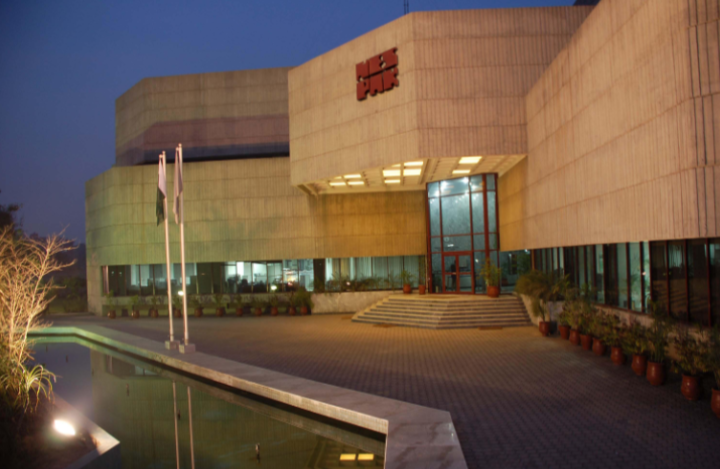
nespak sets record
| |

NESPAK sets record with 180 new engineering projec…

LAHORE: NESPAK, a premier organization of consulting engineers, has set an all-time record in business acquisition by securing 180 new engineering projects, both domestically and internationally, during the fiscal year 2025-26. Mr. Ahsan Anwar, Acting Managing Director of NESPAK, made this revelation here on Tuesday.

NESPAK has achieved unprecedented business by acquiring 172 national projects and 8 international projects securing substantial financial value at both levels. As a result, NESPAK has once again strengthened its presence felt in domestic and international markets securing diversified and high value projects in fields of transportation, energy, water resources, urban development and public infrastructure.

Among the landmark projects currently being executed during 2025-26 are consultancy services for the Battery Energy Storage System (BESS,2.5GWh) for the Saudi Electricity Company (SEC), Mass Transit System in Faisalabad & Gujranwala, Punjab Development Programme City Improvement Project (North and South Packages), K-IV Augmentation Works in Karachi, High-tension Transmission Line Project in Makkah, Saudi Arabia, Sultan Said Bin Taimur Road Project in Oman and the 30 MW Asifrah Diesel Fired Power Plant in Yemen. These projects demonstrate NESPAK’s growing footprint across the Middle East and South Asia while contributing significantly to sustainable infrastructure development.

The organization remains actively engaged on hundreds of projects covering highways, motorways, dams, hydropower, irrigation & drainage systems, flood protection & river training, buildings, airports, urban development, public health engineering, power transmission and digital infrastructure. With decades of experience and a highly qualified workforce, NESPAK continues to play a pivotal role in supporting Pakistan’s socio-economic development through innovative, sustainable and world-class engineering solutions. NESPAK stands out as one of the most successful and profitable organizations among the State-Owned Enterprises (SOEs). Its reputation, integrity, and track record speak volumes about its credibility and standing, both nationally and internationally.

NESPAK was conceived by its founders as an essential services entity, free from foreign dependence and capable of delivering the highest quality in engineering consultancy. It was envisioned to lead the consultancy market in Pakistan and compete abroad with excellence. Time has proven that NESPAK has succeeded in fulfilling its objectives to a large extent, thanks to the unparalleled dedication of its professional staff, who spared no effort in achieving their goals.


Similar Posts

  • | |

    Prosecution raises objections over Anmol Pinky cas…

    Three drug-related cases involving accused Anmol Pinky came under discussion before the Judicial Magistrate South court, where the prosecution raised objections over deficiencies in the police challans. Police had submitted interim charge sheets in all three cases to the prosecution for review. However, the Deputy District Public Prosecutor found several important details missing from the documents and returned them to the police with instructions to make the required corrections. The prosecution pointed out that the interim challans did not contain any mention of proceedings to declare Anmol Pinky a proclaimed offender. The prosecutor directed police to provide complete details of the legal proceedings related to her status and incorporate them into the revised challans. Another objection concerned accused persons who had already been acquitted in the cases. According to the prosecution, the police challans failed to provide details about those acquittals. The police were therefore instructed to attach copies of the relevant acquittal orders to the case records so that the challans contain complete information about all accused persons and the outcome of proceedings against them. The prosecutor directed the investigating authorities to address all the objections before resubmitting the documents. The revised interim challans will be presented to the prosecution after the required amendments and additional records have been included. The development comes as legal proceedings continue in the three drug cases against Anmol Pinky. The prosecution’s objections mean that the interim challans have not yet been accepted in their submitted form and must first be corrected according to the instructions issued by the prosecutor.

  • | |

    Iqtidar Wali Khan launches strong criticism of PTI…

      ISLAMABAD: Special Assistant to the Prime Minister Iqtidar Wali Khan has launched a strong criticism of the Pakistan Tehreek-e-Insaf (PTI), accusing members and supporters of the party of placing former prime minister Imran Khan above Quaid-e-Azam Muhammad Ali Jinnah and questioning their commitment to the country’s founding principles. Addressing a press conference in Islamabad, Iqtidar Wali Khan alleged that some PTI supporters consider Imran Khan a leader greater than Quaid-e-Azam and do not accept the Two-Nation Theory. He questioned how figures such as Barrister Gohar, Ali Zafar, Umair Niazi and Asad Qaiser, whom he described as patriotic individuals, could remain associated with the party while it was allegedly pursuing such politics. The prime minister’s aide accused PTI activists of repeatedly becoming part of what he called anti-state movements and attempting to continue the events of May 9. He also criticised slogans associated with PTI supporters, including “No Khan, No Pakistan,” and alleged that they compared Imran Khan with Quaid-e-Azam while making fun of Allama Iqbal’s vision for the country. Iqtidar Wali further criticised the PTI’s previous government and levelled serious allegations regarding its administration. He claimed that during the party’s tenure in power, the second floor of the Prime Minister’s House had allegedly been turned into a dance floor, where he alleged that drinking and dancing gatherings were held. He also made allegations about the presence of practices related to black magic within the government setup. He further accused the PTI leadership of making statements that, according to him, undermined the country’s defence capabilities during periods of tension with India. He claimed that when a conflict or Indian attack arose, some PTI figures would say that there was not even enough fuel available for Pakistan’s tanks. The special assistant also criticised PTI supporters for holding protests on Independence Day. He questioned why anyone would choose the national day for political demonstrations, arguing that such actions could cause concern among Pakistan’s enemies rather than contribute to national unity. He appealed to political parties to carefully consider PTI’s political conduct before forming alliances or cooperating with its leadership. Referring to comments attributed to Maulana Naseem Shah about the difficulties faced by Pakistan decades after Allama Iqbal’s dream, he urged political forces to examine what he described as the party’s actions before extending political cooperation. Iqtidar Wali also targeted the PTI-led government in Khyber Pakhtunkhwa. He claimed that the party had governed the province for around 15 years while repeatedly promoting slogans such as “Riyasat-e-Madina” and “Naya Pakistan.” He alleged that, despite these claims, individuals involved in drug trafficking, smuggling and the ice-drug trade had gained influence in the province. He further alleged that some people who previously lacked sufficient resources even for basic expenses had become owners of high-end hotels after gaining political influence. The remarks by Iqtidar Wali Khan come amid continued political tensions between the government and PTI. His statements reflect the sharp political divide between the two sides, with the government repeatedly accusing PTI of undermining state institutions, while PTI has consistently rejected such allegations and maintained that its political struggle is aimed at protecting democratic rights and securing political justice.

  • | |

    Man climbs electricity pole in Peshawar to steal P…

      A man climbed an electricity pole in Peshawar in an alleged attempt to steal power cables, according to the Peshawar Electric Supply Company (PESCO). The unusual incident took place in the Shahibagh Sub-Division area, where electricity supply had already been suspended because maintenance work was underway. According to PESCO officials, the man climbed onto the pole while power was switched off in the area. The incident reportedly occurred during a period when electricity lines were not operational due to repair and maintenance work being carried out by the power distribution company. PESCO said that the man appeared to have taken advantage of the temporary suspension of electricity supply. He reportedly climbed the pole with the intention of removing electrical wires. The incident was noticed by people in the area, who alerted the relevant authorities. Officials reached the location and took action to prevent the situation from becoming more serious. The man was eventually brought down safely from the electricity pole. The incident occurred in the Shahibagh Sub-Division, an area served by PESCO as part of its electricity distribution network in Peshawar. Authorities said that the power supply had been deliberately shut down because repair work was being conducted on the network. The temporary power outage may have created an opportunity for the suspect to attempt the alleged theft. Electricity cables and other equipment belonging to power distribution companies are frequently targeted by thieves because the materials can be sold as scrap or for their metal value. However, climbing an electricity pole can be extremely dangerous even when the power supply has been switched off. Electrical systems can contain residual risks, and unexpected restoration of electricity can also create a serious threat to anyone working on or near power lines. PESCO officials did not immediately provide further details about whether the man had successfully removed any cables before being stopped. It was also not immediately clear whether a formal case had been registered against him or what legal action would be taken. The incident highlights the challenges faced by electricity distribution companies in protecting their infrastructure from theft and illegal interference. Power cables, transformers and other equipment are essential for maintaining electricity supplies, and their theft can cause additional outages and financial losses. Authorities regularly warn members of the public against approaching electricity poles, wires and other electrical equipment without proper training or authorisation. Such actions can result in serious injuries or even death. Residents in the area reportedly alerted officials after noticing the man on the pole. His safe removal prevented a potentially dangerous situation from escalating. PESCO has been carrying out maintenance and repair activities in different parts of its service area to improve the reliability of electricity supplies. Planned outages are sometimes necessary to allow technical teams to safely work on power lines and related infrastructure. Officials have advised consumers to cooperate with maintenance schedules and report suspicious activity involving electricity infrastructure to the relevant authorities. The Peshawar incident serves as a reminder that electricity infrastructure remains vulnerable to theft, particularly during planned outages. It also demonstrates the dangers associated with attempting to interfere with electrical equipment. While the man was successfully brought down from the pole, authorities are expected to investigate the incident further and determine whether he intended to steal cables and whether any electricity infrastructure was damaged during the attempt.

  • | | |

    Army major martyred, five terrorists killed

    A Pakistan Army major was martyred while leading an intelligence-based operation (IBO) against terrorists in the Razmak area of North Waziristan, the Inter-Services Public Relations (ISPR) said on Saturday. According to the military’s media wing, security forces launched the operation after receiving intelligence about the presence of terrorists in the area. During the exchange of fire, five terrorists affiliated with Fitna al Khawarij were killed. ISPR identified the martyred officer as Major Hafiz Ihsan Elahi, 34, a resident of Mianwali district. The military said the officer was leading his troops from the front and fought bravely during the operation before embracing martyrdom. The statement said the slain terrorists were actively involved in multiple attacks against security forces, law enforcement personnel and civilians. Security forces also recovered a cache of weapons, ammunition and other military equipment from the militants during the operation. Following the successful raid, sanitisation operations were launched in the surrounding areas to eliminate any remaining terrorists and ensure the area is fully cleared. The military said the operation forms part of Pakistan’s ongoing counterterrorism campaign under the Azm-i-Istehkam strategy approved by the Federal Apex Committee on the National Action Plan. The ISPR reiterated that Pakistan’s security forces remain committed to eliminating all forms of terrorism and will continue intelligence-driven operations against militants across the country. It added that the sacrifices of soldiers strengthen the nation’s resolve to safeguard peace and security. Pakistan has witnessed an increase in terrorist incidents since the banned Tehreek-i-Taliban Pakistan (TTP) ended its ceasefire with the government in late 2022. Since then, security forces have intensified intelligence-based operations in Khyber Pakhtunkhwa and Balochistan to dismantle militant networks.

  • |

    CPEC 2.0: Pakistan, China shift focus to B2B investment

    ISLAMABAD: Pakistan and China are moving toward a more business-driven model of cooperation under the second phase of the China-Pakistan Economic Corridor (CPEC), with greater emphasis on Business-to-Business (B2B) partnerships, industrial development, exports and productivity rather than large-scale Government-to-Government (G2G) financing. The development emerged during a high-level Chinese delegation’s visit to the CPEC Secretariat, where discussions focused on strengthening industrial and commercial ties between the two countries. According to an official statement issued by the Ministry of Planning on Tuesday, the Chinese delegation was headed by Sun Dongsheng, Senior Advisor, Economic Affairs Press. The delegation met Federal Minister for Planning, Development and Special Initiatives Ahsan Iqbal, along with senior policymakers and development experts. The talks centred on ways to advance B2B and industrial cooperation under CPEC 2.0, reflecting a broader shift in the corridor’s priorities from infrastructure-led development toward industrialisation, exports, technology and private-sector participation. From infrastructure to industrialisation During the meeting, Ahsan Iqbal briefed the Chinese delegation on the government’s Uraan Pakistan economic transformation programme and outlined Islamabad’s priorities for the next phase of CPEC. The minister proposed closer cooperation with Chinese institutions, including counterparts of the National Centre of New Manufacturing, to benefit from China’s experience in advanced manufacturing, innovation, automation and robotics. He said Pakistan needed to strengthen its productive capacity and adopt modern technologies to remain competitive in the era of Industrial Revolution 4.0 and prepare for the emerging Industrial Revolution 5.0. Ahsan Iqbal identified Pakistan’s limited export base as one of the country’s major economic challenges. According to the minister, repeated attempts to accelerate economic growth have struggled to generate sustainable momentum because productive sectors have not been sufficiently integrated with export markets. He stressed that the government’s priority was therefore to turn agriculture, manufacturing and other productive sectors into stronger sources of exports and foreign exchange. Pakistan seeks greater access to Chinese market The minister also called for greater facilitation of Pakistani exports to China, highlighting the considerable gap between the two countries’ trade potential. He noted that China imports goods worth around $2.6 trillion annually, whereas Pakistan’s exports to the Chinese market remain close to $3 billion. Ahsan said Pakistan needed to increase its presence in the Chinese market by improving production standards, competitiveness and the ability of domestic businesses to meet international demand. He expressed the expectation that CPEC 2.0 could help Pakistan address what he described as its “export deficit”, just as the first phase of the corridor contributed to addressing the country’s energy shortfall. CPEC enters a new phase Under CPEC’s first phase, China committed substantial financing to infrastructure, energy and other development projects in Pakistan. Nearly $30 billion was invested in infrastructure and power-sector projects, including independent power producers. However, the focus is now increasingly shifting toward private-sector-led cooperation. Islamabad continues to pursue financing for selected road and motorway projects, but China has yet to demonstrate readiness to finance the long-delayed Main Line-1 (ML-1) railway upgrade, which had previously been regarded as one of CPEC’s flagship projects. The latest consultations indicate that CPEC 2.0 is expected to rely more heavily on commercial partnerships between Pakistani and Chinese companies. The government has already been encouraging enterprises from both countries to explore joint ventures and investment opportunities in sectors including manufacturing, agriculture and mining. Ahsan Iqbal said recent agreements between Pakistani and Chinese companies showed that B2B cooperation was beginning to gain momentum. He expressed confidence that stronger business-to-business engagement would support the modernisation of Pakistan’s industrial and agricultural sectors while creating opportunities for investment, employment and exports. China stresses productive capacity Sun Dongsheng reaffirmed the importance China attaches to its longstanding relationship with Pakistan and highlighted the achievements of CPEC’s first phase. He called for further cooperation in industrial and agricultural development, particularly in strengthening Pakistan’s productive capacity. The Chinese delegation also stressed the importance of involving small and medium-sized manufacturing enterprises in bilateral economic cooperation. Greater enterprise-to-enterprise engagement, according to the delegation, could help create commercially sustainable partnerships and expand opportunities for businesses in both countries. The discussions also focused on technology transfer, innovation, skills development and the creation of stronger industrial linkages. Five Corridors aligned with Uraan Pakistan Officials also discussed the strategic relationship between the Five Corridors of CPEC 2.0 and Pakistan’s 5Es framework under Uraan Pakistan. The government’s 5Es framework focuses on exports, e-Pakistan, environment and climate change, energy and infrastructure, and equity and empowerment. The participants stressed that alignment between the two initiatives needed to translate into concrete economic outcomes, including new enterprises, technology adoption, innovation, employment opportunities, skills development, increased exports and higher investment. The delegation was also briefed on the progress achieved during CPEC Phase I and Pakistan’s priorities for the second phase. The consultations suggest that the next stage of CPEC will increasingly be measured not only by the volume of infrastructure investment but also by its ability to improve Pakistan’s industrial competitiveness, expand exports, attract private investment and create sustainable employment.

  • | |

    Pakistan, Türkiye unite for Palestine

    Pakistan and Türkiye have reaffirmed their unwavering support for the Palestinian people while expressing deep concern over the worsening humanitarian crisis in Gaza, continued military operations in the occupied Palestinian territories, and repeated violations at the Al-Aqsa Mosque compound. The commitment came during a telephone conversation between Deputy Prime Minister and Foreign Minister Ishaq Dar and Turkish Foreign Minister Hakan Fidan. The two leaders reviewed the latest regional and international developments, with the situation in Palestine dominating their discussions. Both foreign ministers voiced serious concern over the continued violence in Gaza and the occupied West Bank, warning that the deteriorating humanitarian conditions require immediate international attention. They also condemned repeated violations at the Al-Aqsa Mosque compound in occupied East Jerusalem and stressed the need to protect religious and historical sites. The ministers reiterated their support for the legitimate rights of the Palestinian people and discussed Jordan’s proposal to convene a meeting of Arab and Islamic countries aimed at coordinating diplomatic efforts to address the crisis and strengthen international support for Palestine. The discussion follows Pakistan’s recent diplomatic engagements with several regional partners, including Egypt, where officials also called for an immediate ceasefire, unrestricted humanitarian assistance, and greater diplomatic coordination to end the ongoing conflict. Meanwhile, fresh violence was reported in Gaza despite an existing ceasefire, with Palestinian medical officials reporting casualties and injuries following new attacks. Military operations and raids also continued across the occupied West Bank, adding to concerns over the worsening security and humanitarian situation.

Leave a Reply

Your email address will not be published. Required fields are marked *