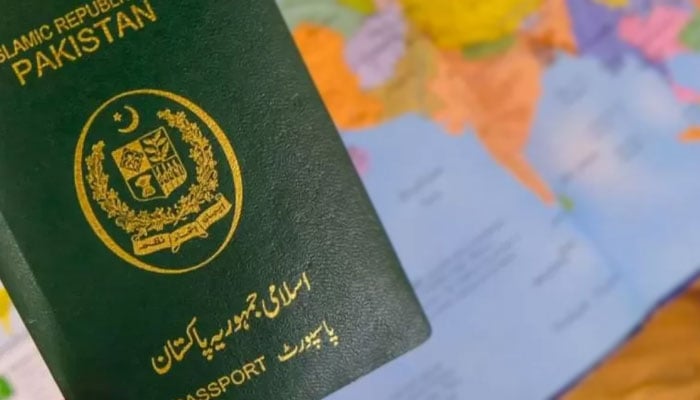
cpec pakistan china
|

CPEC 2.0: Pakistan, China shift focus to B2B investment

ISLAMABAD: Pakistan and China are moving toward a more business-driven model of cooperation under the second phase of the China-Pakistan Economic Corridor (CPEC), with greater emphasis on Business-to-Business (B2B) partnerships, industrial development, exports and productivity rather than large-scale Government-to-Government (G2G) financing.

The development emerged during a high-level Chinese delegation’s visit to the CPEC Secretariat, where discussions focused on strengthening industrial and commercial ties between the two countries.

According to an official statement issued by the Ministry of Planning on Tuesday, the Chinese delegation was headed by Sun Dongsheng, Senior Advisor, Economic Affairs Press. The delegation met Federal Minister for Planning, Development and Special Initiatives Ahsan Iqbal, along with senior policymakers and development experts.

The talks centred on ways to advance B2B and industrial cooperation under CPEC 2.0, reflecting a broader shift in the corridor’s priorities from infrastructure-led development toward industrialisation, exports, technology and private-sector participation.

From infrastructure to industrialisation

During the meeting, Ahsan Iqbal briefed the Chinese delegation on the government’s Uraan Pakistan economic transformation programme and outlined Islamabad’s priorities for the next phase of CPEC.

The minister proposed closer cooperation with Chinese institutions, including counterparts of the National Centre of New Manufacturing, to benefit from China’s experience in advanced manufacturing, innovation, automation and robotics.

He said Pakistan needed to strengthen its productive capacity and adopt modern technologies to remain competitive in the era of Industrial Revolution 4.0 and prepare for the emerging Industrial Revolution 5.0.

Ahsan Iqbal identified Pakistan’s limited export base as one of the country’s major economic challenges. According to the minister, repeated attempts to accelerate economic growth have struggled to generate sustainable momentum because productive sectors have not been sufficiently integrated with export markets.

He stressed that the government’s priority was therefore to turn agriculture, manufacturing and other productive sectors into stronger sources of exports and foreign exchange.

Pakistan seeks greater access to Chinese market

The minister also called for greater facilitation of Pakistani exports to China, highlighting the considerable gap between the two countries’ trade potential.

He noted that China imports goods worth around $2.6 trillion annually, whereas Pakistan’s exports to the Chinese market remain close to $3 billion.

Ahsan said Pakistan needed to increase its presence in the Chinese market by improving production standards, competitiveness and the ability of domestic businesses to meet international demand.

He expressed the expectation that CPEC 2.0 could help Pakistan address what he described as its “export deficit”, just as the first phase of the corridor contributed to addressing the country’s energy shortfall.

CPEC enters a new phase

Under CPEC’s first phase, China committed substantial financing to infrastructure, energy and other development projects in Pakistan. Nearly $30 billion was invested in infrastructure and power-sector projects, including independent power producers.

However, the focus is now increasingly shifting toward private-sector-led cooperation. Islamabad continues to pursue financing for selected road and motorway projects, but China has yet to demonstrate readiness to finance the long-delayed Main Line-1 (ML-1) railway upgrade, which had previously been regarded as one of CPEC’s flagship projects.

The latest consultations indicate that CPEC 2.0 is expected to rely more heavily on commercial partnerships between Pakistani and Chinese companies.

The government has already been encouraging enterprises from both countries to explore joint ventures and investment opportunities in sectors including manufacturing, agriculture and mining.

Ahsan Iqbal said recent agreements between Pakistani and Chinese companies showed that B2B cooperation was beginning to gain momentum.

He expressed confidence that stronger business-to-business engagement would support the modernisation of Pakistan’s industrial and agricultural sectors while creating opportunities for investment, employment and exports.

China stresses productive capacity

Sun Dongsheng reaffirmed the importance China attaches to its longstanding relationship with Pakistan and highlighted the achievements of CPEC’s first phase.

He called for further cooperation in industrial and agricultural development, particularly in strengthening Pakistan’s productive capacity.

The Chinese delegation also stressed the importance of involving small and medium-sized manufacturing enterprises in bilateral economic cooperation. Greater enterprise-to-enterprise engagement, according to the delegation, could help create commercially sustainable partnerships and expand opportunities for businesses in both countries.

The discussions also focused on technology transfer, innovation, skills development and the creation of stronger industrial linkages.

Five Corridors aligned with Uraan Pakistan

Officials also discussed the strategic relationship between the Five Corridors of CPEC 2.0 and Pakistan’s 5Es framework under Uraan Pakistan.

The government’s 5Es framework focuses on exports, e-Pakistan, environment and climate change, energy and infrastructure, and equity and empowerment.

The participants stressed that alignment between the two initiatives needed to translate into concrete economic outcomes, including new enterprises, technology adoption, innovation, employment opportunities, skills development, increased exports and higher investment.

The delegation was also briefed on the progress achieved during CPEC Phase I and Pakistan’s priorities for the second phase.

The consultations suggest that the next stage of CPEC will increasingly be measured not only by the volume of infrastructure investment but also by its ability to improve Pakistan’s industrial competitiveness, expand exports, attract private investment and create sustainable employment.

Similar Posts

  • |

    Pakistan unveils new oil import framework to attract global suppliers

    ISLAMABAD: Pakistan has decided to introduce a new policy framework aimed at facilitating international oil suppliers, improving the availability of petroleum products and strengthening the country’s energy security. Under the proposed Import Policy 2026 through Customs-Bound Storage, foreign petroleum suppliers will be allowed to bring oil and petroleum products into Pakistan and place them in customs-controlled storage facilities without immediately becoming liable for domestic duties and taxes. The new mechanism is designed to provide greater flexibility to international suppliers while creating an additional buffer of petroleum stocks within the country. Suppliers will be able to retain their products in designated customs-bound storage facilities and subsequently decide whether to sell the stocks in Pakistan or re-export them to other destinations. According to the proposed framework, international suppliers will be able to supply petroleum products to local oil marketing companies (OMCs) and refineries when market conditions and domestic requirements warrant such sales. Alternatively, they may re-export the products without necessarily having to enter them into the domestic market. The policy is expected to create a more flexible operating environment for global oil traders and suppliers, potentially encouraging them to establish a stronger presence in Pakistan’s petroleum supply chain. The customs-bound storage mechanism would also allow petroleum products to be stored in the country while remaining under customs control. This could help suppliers manage their inventories more efficiently and respond more quickly to changes in domestic demand. Officials and policymakers see the proposed framework as a step towards improving Pakistan’s petroleum supply security, particularly during periods of heightened international market volatility or disruptions in global energy supplies. The availability of additional stocks within the country could also help reduce the risk of sudden supply shortages by providing a readily accessible reserve that can be released into the domestic market when required. For local oil marketing companies and refineries, the framework could broaden their access to international suppliers and create additional options for sourcing petroleum products. Increased competition among suppliers may also contribute to greater efficiency in the petroleum import and distribution system. The initiative is part of broader efforts to modernise Pakistan’s oil import arrangements and make the energy sector more responsive to changing international market conditions. By allowing foreign suppliers to maintain petroleum inventories under customs control, the government aims to strike a balance between facilitating international trade and maintaining regulatory oversight of products entering the country. The new policy framework is expected to establish clearer procedures governing the import, storage, domestic sale and re-export of petroleum products, while providing international suppliers with greater commercial flexibility.

  • | |

    Exhumation uncovers bullet wound and pre-death inj…

    An eight-member medical exhumation board has confirmed that Mir Raza Ali suffered a fatal gunshot wound to the back alongside multiple severe pre-death injuries, drastically shifting the trajectory of the high-profile investigation. The four-page preliminary report, issued following an court-ordered grave exhumation at Karachi’s Rehmanial Masjid Graveyard, reveals extensive physical trauma sustained prior to death. Pathologists identified a 0.8-centimeter entry wound on the left side of the upper back, which fractured the sixth rib and tore through the heart before exiting the right side of the upper chest. Forensic examiners confirmed the presence of extravasation of blood in the underlying tissues, answering affirmatively that these injuries were inflicted while the victim was still alive. Beyond the firearm damage, the post-mortem detailed significant blunt-force trauma across the victim’s head, face, and neck. Doctors documented deep bruising on the skull, fractures to the nasal bone, tissue congestion over the maxilla, and a diastatic fracture running along the posterior sutures of the skull filled with congealed blood. Discoloration was also noted around the hyoid bone, though advanced decomposition hindered complete soft tissue analysis. While the medical board has verified antemortem bleeding and severe skeletal fractures, a final determination on the official cause of death remains reserved. Pathologists have submitted collected skin, muscle, hair, and bone samples for detailed chemical, forensic, and gunshot residue testing. The findings provide critical scientific evidence that redefines the ongoing investigation from a missing person query into a detailed homicide inquiry.

  • | |

    Karachi watchman shot dead during suspected robber…

    Two people were killed in separate shooting incidents reported within an hour in different areas of Karachi on Thursday, prompting police to launch investigations into both cases. The first incident occurred in the Boat Basin police jurisdiction near Bath Island in Clifton, where a watchman was fatally shot outside a residential bungalow. Rescue officials shifted the victim’s body to Jinnah Postgraduate Medical Centre for legal formalities. According to Chhipa rescue officials, the deceased was identified as 40-year-old Mewa, who sustained a fatal gunshot wound to the chest. Initial information suggested that armed suspects opened fire after encountering resistance during an attempted robbery. However, Boat Basin Station House Officer (SHO) Riaz Niazi said the exact motive behind the killing had not yet been established. He confirmed that the victim originally belonged to the Thar region and was employed as a watchman at the bungalow where the incident occurred. The SHO said police were investigating all possible angles, including personal enmity and robbery, before reaching a final conclusion. Authorities are also attempting to obtain CCTV footage from the surrounding area to identify the suspects and reconstruct the sequence of events. In a separate incident, another man was shot dead near Link Road on the National Highway in the Bin Qasim area. The victim was also taken to Jinnah Hospital for medico-legal procedures. Bin Qasim SHO Faisal Rafiq identified the deceased as 40-year-old Bashir, a truck driver originally from Dera Ismail Khan. According to preliminary findings, Bashir was present at a truck terminal when unidentified assailants, who were allegedly lying in wait, opened fire on him. Police said the victim suffered three bullet wounds, including one to the chest. Investigators recovered three spent 30-bore pistol casings from the crime scene, which have been collected as forensic evidence. Officials believe the second shooting may have been motivated by personal enmity, although they emphasised that the investigation remains ongoing and no suspects have been arrested so far. The two fatal incidents highlight the continuing security challenges in Karachi, where police regularly investigate cases involving violent crime, targeted attacks, and robbery-related shootings. Authorities have appealed to the public to cooperate with investigators and provide any information that may assist in identifying those responsible.

  • | |

    Sohail Afridi says KP Police, CTD key to restoring…

    Khyber Pakhtunkhwa Chief Minister Sohail Afridi has said that lasting peace in the province can only be ensured by the Khyber Pakhtunkhwa Police and the Counter Terrorism Department (CTD), stressing that no other force can replace their role in maintaining law and order. Speaking to reporters after visiting those injured in the recent explosion in Swat, the chief minister said peace is a shared responsibility and a common need for every citizen. He added that all political parties, religious groups, and people from different schools of thought are united in their desire to restore peace across the province. Afridi said the provincial government remains fully committed to its security policy and will implement it without compromise. He urged the people of Khyber Pakhtunkhwa to stand together in support of peace and stability. He praised the sacrifices made by the provincial police and said the government is providing the force with all the resources it needs to combat terrorism and maintain security. According to the chief minister, more than Rs35 billion has been allocated to strengthen police infrastructure, modern equipment, and operational capacity. He maintained that the KP Police and CTD have the experience, capability, and commitment required to tackle security challenges and said no third party could establish peace in the province more effectively than these institutions. The chief minister said peace is essential for economic growth and public prosperity, adding that development cannot take place without a secure environment. He reaffirmed that strengthening law enforcement agencies remains one of the provincial government’s top priorities. Commenting on national politics, Afridi criticised the federal government, claiming it came to power through what he described as a “Form 47 mandate.” He urged the federal leadership to focus on addressing its own governance and economic challenges instead of criticising the provincial government. He also alleged that Rs5 trillion had been paid under the Independent Power Producers (IPPs) framework and claimed that the country’s economic indicators, including GDP growth, were declining.

  • |

    PSX rallies over 400 points in early trading as investor sentiment improves

    KARACHI: Buying activity returned to the Pakistan Stock Exchange (PSX) on Monday, with the benchmark KSE-100 Index gaining more than 400 points during the opening phase of trading as investors showed renewed interest in major sectors. At around 9:50am, the benchmark index was trading at 181,880.56 points, recording an increase of 450.54 points, or 0.25%, compared with the previous close. The positive momentum was supported by buying across several key sectors, including automobile assemblers, cement companies, commercial banks, oil and gas exploration firms, oil marketing companies (OMCs) and refineries. Several heavyweight stocks also contributed to the upward movement. HUBCO, ARL, OGDC, POL, PPL, PSO, HBL, MCB, MEBL and NBP were among the prominent index constituents trading in positive territory during the early session. The latest gains came after the stock market delivered a strong performance last week, when easing geopolitical concerns helped improve investor confidence. Developments surrounding diplomatic efforts between Iran and Oman regarding shipping activity through the strategically important Strait of Hormuz, coupled with expectations of a possible wider understanding between the United States and Iran, provided some relief to financial markets. The KSE-100 Index had climbed 5,335.89 points, or around 3%, during the previous week, closing at 181,430.02 points. Global markets provide additional support The positive trend at the PSX was also in line with broader gains across Asian equity markets. Regional stocks moved higher on Monday after Wall Street ended the previous session at record levels, supported by weaker-than-expected US employment data. The softer US jobs figures reduced expectations of an immediate increase in borrowing costs, encouraging investors to take on more risk. However, uncertainty surrounding diplomatic developments in the Gulf continued to influence energy markets. Oil prices edged higher as concerns persisted over the movement of ships through the Strait of Hormuz, one of the world’s most important routes for global energy supplies. Iran said on Sunday that discussions with Oman over arrangements for new shipping lanes through the Strait of Hormuz were nearing completion. However, Tehran maintained that the waterway would not fully return to normal operations until the United States met additional conditions. The uncertainty contributed to a rise in international crude prices. Brent crude futures increased 0.9% to $84.32 per barrel, while US West Texas Intermediate crude gained 0.7% to $78.74 per barrel. US inflation data in focus Investors are also closely watching the upcoming US consumer inflation data, which could influence expectations regarding the Federal Reserve’s monetary policy. The US July consumer price report, due on Wednesday, is expected to show a 0.1% increase in headline inflation and a 0.2% rise in core inflation, according to market expectations. A stronger-than-anticipated inflation reading could revive concerns that the Federal Reserve may consider raising interest rates in the coming months. Conversely, a softer reading could strengthen expectations of a more accommodative monetary policy. Market pricing currently indicates that expectations for a September rate move have weakened. The probability of such a move has fallen to roughly 44%, compared with about 67% a week earlier. The decline in expectations for higher interest rates supported US Treasury bonds on Friday and helped major Wall Street indices finish at record levels. Asian equities follow Wall Street Asian markets broadly followed the positive lead from the United States on Monday. Japan’s Nikkei 225 advanced around 0.6%, while South Korea’s benchmark index gained approximately 0.5%. Meanwhile, MSCI’s broadest index of Asia-Pacific shares excluding Japan rose about 0.3%. For Pakistan’s equity market, the combination of stronger global sentiment, improved geopolitical expectations and renewed buying in heavyweight stocks provided support at the start of Monday’s session.

  • | | | |

    PML-N secures seats in AJK polls with back-to-back…

    Muzaffarabad: The Pakistan Muslim League-Nawaz (PML-N) continued to consolidate its lead in the Azad Jammu and Kashmir (AJK) Legislative Assembly elections after the Election Commission announced additional constituency results, giving the party a commanding advantage in the latest vote count. According to the latest results, PML-N has secured victory in 11 constituencies, while it is leading in three more seats. The Pakistan Peoples Party (PPP) has won two constituencies and is ahead in four others. Polling in one constituency, LA-27, has been postponed. The newest official results announced by Election Commission member Syed Nazir-ul-Hassan Gilani confirmed PML-N’s victories in two more constituencies. In LA-38 (Jammu-5), PML-N candidate Zeeshan Ali emerged victorious after securing 13,652 votes, defeating the Pakistan Muslim League (AJK) candidate, who received 9,523 votes. In LA-39 (Jammu-6), PML-N’s Raja Muhammad Siddique claimed the seat with 10,981 votes, comfortably defeating PPP candidate Chaudhry Fakhar Zaman, who polled 5,081 votes. With these latest victories, PML-N has further strengthened its position in the AJK elections, while PPP remains competitive in several constituencies where vote counting is still underway. The final composition of the Legislative Assembly will become clearer once the remaining results are officially declared.

Leave a Reply

Your email address will not be published. Required fields are marked *