taliban mark five
|

Taliban mark five years in power

KABUL: The Taliban on Saturday marked five years since returning to power in Afghanistan, staging a military parade in Kabul and presenting their rule as a period of stability despite mounting humanitarian and human rights concerns.

Armoured Taliban vehicles moved past the former US embassy in Kabul as officials raised flags and banners for what the government called “victory day” over Western domination.

Interior Minister Sirajuddin Haqqani said in a video message that the Taliban’s return resulted from “morale, courage” and “divine assistance.” He also acknowledged that the country still faces unresolved issues and problems.

The United Nations and international aid organisations have warned that Afghanistan continues to struggle with severe humanitarian and natural crises. They have also criticised the Taliban’s restrictions on women and girls.

According to UNESCO, the Taliban have kept around 2.5 million girls and women out of secondary schools and universities since 2021 and imposed restrictions on their movement. UN Women reported this week that half of Afghan women now leave their homes only once or twice a month.

The Taliban maintain that they uphold women’s rights under Islamic Sharia law.

The group has also faced security challenges, including a series of attacks on officials in northeastern Afghanistan. Islamic State claimed responsibility for the killing of the Taliban’s information director in Badakhshan in late July. The mayor of the provincial capital was also killed in an attack on Thursday, according to local media.

The Taliban seized power in August 2021 as US and allied forces withdrew from Afghanistan. The group initially promised a more moderate form of government than during its previous rule in the late 1990s and early 2000s. However, rights groups say its policies have instead imposed sweeping restrictions on women and girls.

Five years after returning to power, the Taliban government still lacks broad international recognition. Russia remains the only country to have formally recognised it.

Meanwhile, relations with Pakistan have deteriorated. Islamabad accuses Kabul of allowing Pakistani militants to operate from Afghan territory, adding further pressure to an already strained relationship.
Similar Posts

  • | |

    Chilling details of Nancy Guthrie’s first ra…

    The investigation into the alleged kidnapping of Nancy Guthrie has taken a chilling turn as details of the first ransom note sent to her family have been revealed. The note, which authorities have described as both genuine and threatening, was addressed to Nancy’s daughter, Savannah, and contained warnings that have left investigators and the public on edge. Crime journalist Briana Whitney, speaking on the Crime Junkie podcast, revealed the terrifying message allegedly sent to Savannah. The most chilling line in the note read: “It is in the best interest of everyone to have this completed as soon as possible.” Whitney, reading from the ransom message, further detailed the captors’ demands: “You will not be able to contact me from here on out. There will be no negotiation. Do not play games. Law enforcement will not be able to help you.” The note, which was sent shortly after Nancy was last seen at home on January 31, has dominated the investigation. While some ransom notes were reportedly deemed to be hoaxes, authorities confirmed that others were genuine, adding to the complexity of the case. Investigators have yet to produce a suspect in the alleged kidnapping, leaving the family and the public seeking answers. The ransom notes have been central to the case, with authorities reportedly keeping many details under wraps to avoid compromising the investigation. However, the release of these chilling details has shed new light on the threats faced by the Guthrie family. The note’s warning that law enforcement would not be able to help and that there would be no negotiation suggests a calculated effort by the captors to isolate Savannah and exert maximum pressure on the family. Nancy Guthrie’s disappearance has sparked widespread concern, with her family making several public pleas for her safe return. The investigation remains ongoing, with authorities urging anyone with information to come forward. The release of the ransom note details has reignited public interest in the case, with many hoping that the new information will lead to a breakthrough. As the investigation continues, the Guthrie family remains in the spotlight, their ordeal serving as a stark reminder of the terror faced by families of kidnapping victims. The chilling words of the ransom note have left an indelible mark on the case, underscoring the urgency of finding Nancy and bringing her captors to justice. The public awaits further developments, hoping for a resolution that will bring closure to the family and accountability for those responsible.

  • |

    Modi forms task force to reform exam system

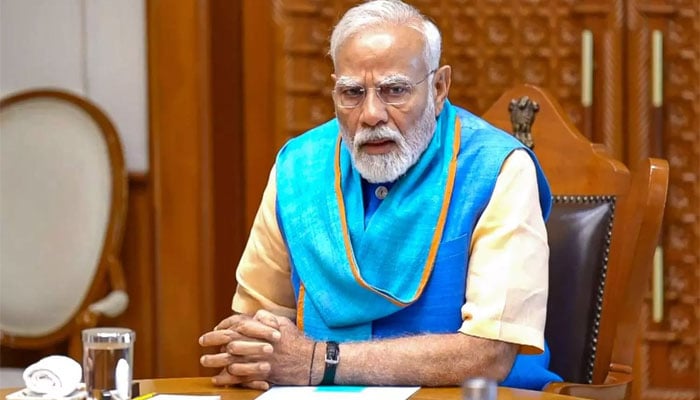
    Indian Prime Minister Narendra Modi has announced a high-powered task force to reform the country’s examination system following weeks of student-led protests over alleged irregularities in major entrance exams. The announcement came a day after Education Minister Dharmendra Pradhan resigned, as the government faced growing pressure from students and opposition groups demanding changes to the examination process. Modi said the new task force would be headed by Nandan Nilekani, co-founder of technology company Infosys. The panel will focus on improving the examination system and making it more transparent, reliable and technology-driven. In a video message posted on social media, Modi said the government wanted to restore confidence in upcoming examinations as quickly as possible. He stressed that the system must ensure greater transparency and make effective use of technology. The protests had been led in large part by supporters of the social media-driven Cockroach Janta Party (CJP). Thousands of students and young people gathered at New Delhi’s Jantar Mantar over several weeks, making the demonstrations among the most significant anti-government protests in India in recent years. The movement initially focused on alleged problems and irregularities in examinations, but its demands later expanded. Protesters also raised concerns about unemployment, limited opportunities for young people and what critics described as the government’s increasingly authoritarian approach. The protest site was largely cleared on Sunday. Municipal workers washed the surrounding roads and began repainting walls covered with slogans, posters and graffiti. Some protesters criticised the decision to remove the writings, saying the messages represented an important record of the movement. Rahul, a protester who had visited the site, said demonstrators had photographed and recorded the posters and slogans before they were removed. He said they wanted the material to remain documented and remembered. Some young people who travelled long distances to participate in the demonstrations arrived after the protest had already ended. One 19-year-old participant said he had travelled for around 20 hours after seeing videos of the demonstrations on Instagram. He said he wanted to witness the atmosphere and join other young protesters. Another visitor accused the government of worsening the situation by attempting to suppress the demonstrations. He argued that the crackdown had contributed to the protests becoming larger.

  • | |

    Iranian photojournalist Yalda Moayeri sentenced to…

    An Iranian court has reportedly sentenced prominent photojournalist Yalda Moayeri to 15 years in prison in absentia, in a case involving allegations of activities against Iran and working in the interests of Israel and the United States. According to reports, the case was brought under an Iranian espionage-related law introduced in 2025. The allegations reportedly include giving interviews to foreign media outlets and providing photographs to organizations allegedly connected with the United States and Israel. Authorities also accused Moayeri of using her journalistic work and material published online to advance what they described as the interests of Israel and the United States. However, Reuters reportedly noted that the contents of the court documents could not be independently verified. The court handed down the 15-year sentence while Moayeri was not present at the proceedings. She has reportedly been given 10 days to appeal the decision. In addition to the prison sentence, the court ordered the confiscation of her cameras, mobile phones and other electronic equipment. The ruling also reportedly restricts her from participating in cultural and media activities, holding public office and posting on social media. Moayeri has disputed the circumstances of the proceedings. She said she was unable to attend the trial because she had not received formal notification about the hearing. According to her account, when she went to Tehran’s Revolutionary Court, she was not given complete case documents, while a colleague had to copy details of the charges by hand. The photojournalist also said Iranian security forces raided her Tehran home in February and confiscated her mobile phone, laptop, cameras and other equipment. A press freedom organization reported that personnel affiliated with the Islamic Revolutionary Guard Corps searched her home on February 3 and seized electronic devices. Moayeri has previously faced legal action in Iran because of her journalistic work. She was arrested in September 2022 while covering nationwide protests that followed the death of Mahsa Amini in police custody. Her arrest occurred during the protests that became associated with the “Woman, Life, Freedom” movement. She was released on bail in December 2022. She has continued documenting political developments and protests in Iran. In early 2026, her photographs from protests were published by the French newspaper Le Monde, while reports indicated that authorities subsequently searched her home and continued legal proceedings against her. The latest sentence has drawn attention because of its potential implications for press freedom and the ability of journalists to document events in Iran. The case remains subject to appeal, while independent verification of the Iranian court’s allegations remains limited.

  • |

    Two more air India pilots fail initial drug tests

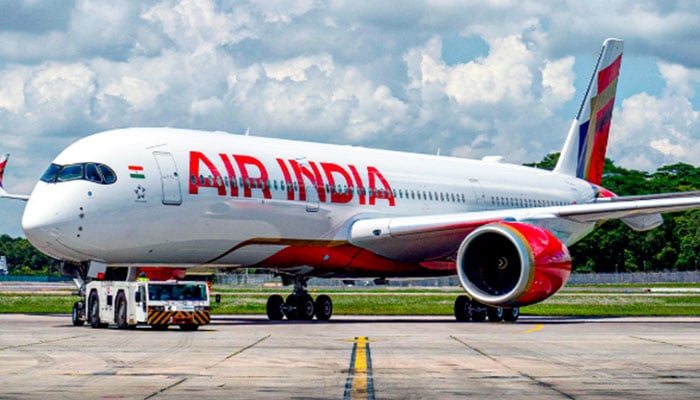
      Two more Air India pilots have failed preliminary drug screening following the incident involving an Air India flight from Phuket to Delhi. The airline has temporarily removed both pilots from flying duties while authorities await the results of their final tests. According to Indian media reports, Air India decided to conduct drug screening for all its pilots after the incident. More than 300 pilots have undergone testing so far, with final results generally taking between 24 and 48 hours. The captain of the Phuket-to-Delhi flight also failed two drug-related tests conducted after the aircraft landed. Subsequent testing reportedly detected cannabis in the pilot’s system. Indian media have also reported that a flight attendant complained that the captain had allegedly used cannabis before the flight. The development has raised further questions about safety procedures and pilot fitness at Air India. The airline is now reviewing the results of the wider testing campaign as it seeks to determine whether any other crew members may have violated aviation safety regulations. The Phuket-Delhi flight involved an Airbus A320neo that reportedly experienced a sudden loss of altitude during the journey. The aircraft dropped by around 300 feet before recovering, prompting concerns among passengers and crew. Officials initially described the incident as turbulence. However, detailed information from the aircraft’s systems later prompted closer scrutiny of what happened during the flight and raised questions about possible technical issues as well as the captain’s conduct. Air India has yet to receive the final laboratory results for the two newly identified pilots. Until those results arrive, the airline has kept both pilots off flight operations as a precautionary measure.

  • |

    Saudi Arabia unveils plans for Multinational Marit…

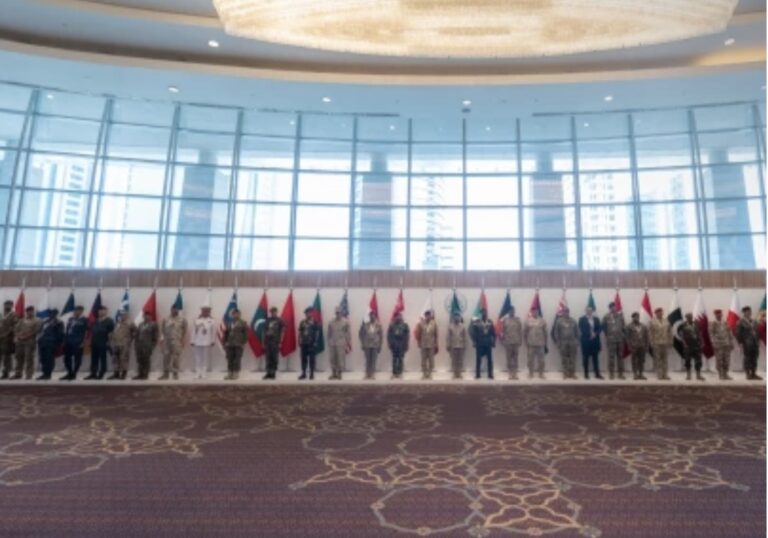
    Saudi Arabia and 13 other countries, including Pakistan, on Thursday announced the creation of a multinational maritime defence coalition aimed at safeguarding freedom of navigation, international trade and energy supply routes in the Bab al-Mandab Strait, the Red Sea and the Gulf of Aden. The Saudi defence ministry said representatives from 43 countries and the European Union attended an international meeting that discussed the proposed coalition, with Saudi Arabia serving as its founding and leading state and hosting its headquarters. The ministry said the coalition would strengthen maritime security, safeguard freedom of navigation, secure international trade routes and energy supply lines, and protect shared maritime interests in the strategic waterways. Fourteen countries, including Turkey, Pakistan, Egypt, Sudan and Djibouti, issued a joint statement supporting the proposed coalition. Among the six Gulf Arab states, Oman and the United Arab Emirates were not listed among the countries backing the statement. The founding states said participation in the coalition’s activities would remain a sovereign decision for each member state, stressing that the alliance is “purely defensive in nature, does not target any state, alliance or international organization, and will conduct all its activities in full compliance with international law while respecting state sovereignty and protecting freedom of navigation.” The joint statement said the coalition was established as a “framework for maritime defence cooperation” aimed at enhancing maritime security, protecting freedom of navigation, securing international trade and energy supply routes, and safeguarding interests in the Bab al-Mandab Strait, the Red Sea and the Gulf of Aden. The announcement comes amid heightened tensions in the Red Sea, where Yemen’s Houthi rebels have launched a series of attacks on Saudi-linked shipping. Saudi Arabia has responded with air strikes on what it said were Houthi military facilities in Yemen’s Hodeidah used to threaten commercial shipping. The Red Sea tensions mark the latest front in the wider Iran war, with attacks on shipping spreading beyond the Gulf and pushing oil prices higher. The Bab el-Mandeb Strait, linking the southern Red Sea with the Gulf of Aden and the Indian Ocean, is a key maritime chokepoint for global trade and energy shipments. The European Union launched a naval mission in the Red Sea in 2024 to help restore and safeguard freedom of navigation after the Houthis disrupted maritime traffic by attacking vessels in what they said was solidarity with Palestinians during the Gaza war. The new Saudi-led coalition represents a significant expansion of international efforts to secure the region’s vital waterways.

Leave a Reply

Your email address will not be published. Required fields are marked *