
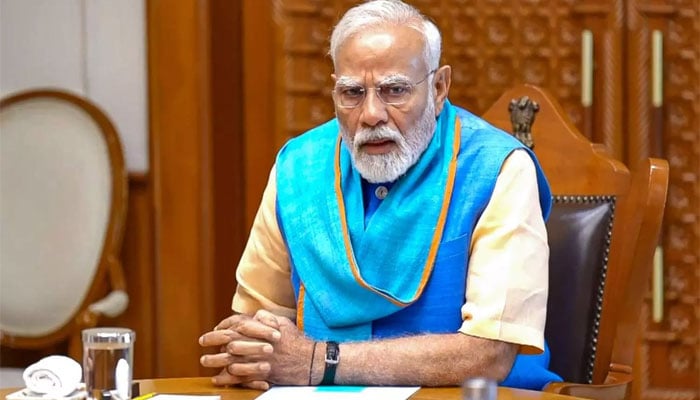
modi forms task
|

Modi forms task force to reform exam system

Indian Prime Minister Narendra Modi has announced a high-powered task force to reform the country’s examination system following weeks of student-led protests over alleged irregularities in major entrance exams.

The announcement came a day after Education Minister Dharmendra Pradhan resigned, as the government faced growing pressure from students and opposition groups demanding changes to the examination process.

Modi said the new task force would be headed by Nandan Nilekani, co-founder of technology company Infosys. The panel will focus on improving the examination system and making it more transparent, reliable and technology-driven.

In a video message posted on social media, Modi said the government wanted to restore confidence in upcoming examinations as quickly as possible. He stressed that the system must ensure greater transparency and make effective use of technology.

The protests had been led in large part by supporters of the social media-driven Cockroach Janta Party (CJP). Thousands of students and young people gathered at New Delhi’s Jantar Mantar over several weeks, making the demonstrations among the most significant anti-government protests in India in recent years.

The movement initially focused on alleged problems and irregularities in examinations, but its demands later expanded. Protesters also raised concerns about unemployment, limited opportunities for young people and what critics described as the government’s increasingly authoritarian approach.

The protest site was largely cleared on Sunday. Municipal workers washed the surrounding roads and began repainting walls covered with slogans, posters and graffiti.

Some protesters criticised the decision to remove the writings, saying the messages represented an important record of the movement.

Rahul, a protester who had visited the site, said demonstrators had photographed and recorded the posters and slogans before they were removed. He said they wanted the material to remain documented and remembered.

Some young people who travelled long distances to participate in the demonstrations arrived after the protest had already ended.

One 19-year-old participant said he had travelled for around 20 hours after seeing videos of the demonstrations on Instagram. He said he wanted to witness the atmosphere and join other young protesters.

Another visitor accused the government of worsening the situation by attempting to suppress the demonstrations. He argued that the crackdown had contributed to the protests becoming larger.


Similar Posts

  • |

    ‘Tamasha’ returns for season five, promises bigger drama

    Adnan Siddiqui has officially confirmed the return of Tamasha, announcing that its fifth season premieres today. He shared the news alongside photos with the show’s former winners, building instant buzz among fans. The actor posted images with past champions of the reality series to mark the occasion. In his caption, he promised the drama would be bigger and the arguments meaner than in previous seasons. Siddiqui kept his message short but effective, simply telling fans to expect the unexpected. The line was enough to stir fresh anticipation among the show’s loyal viewer base. Tamasha follows a group of celebrity contestants living together inside a house, completely cut off from the outside world. Throughout the season, they face daily tasks, public evictions and constant conflict among housemates. Siddiqui has now overseen four previous seasons of the show, each producing a new winner. Past champions include Umer Aalam, Aruba Mirza, Malik Aqeel and Saif Ali Khan, all of whom remain closely associated with the franchise. Just last week, a short teaser gave fans their first real look at the upcoming season. It showed new contestants covering their faces as they made their way toward the house, keeping their identities hidden for now. Several former winners also jumped in to share their own posts, adding to the reunion excitement. Season two winner Aruba Mirza wrote that every season creates new stories, but some victories become memories that last forever. Season four champion Saif Ali Khan shared his own photos from around the newly revamped mansion. He captioned the post by hinting at a bigger house and even bigger dreams this time around. Last season’s finale had already generated massive hype, with viewers hooked on the drama and viral clips flooding social media. Alongside that popularity, though, the show also faced criticism over incidents of alleged sexist behaviour inside the house. Those controversies, paired with the friendships and rivalries unfolding on screen, kept audiences deeply invested throughout the run. With a new batch of contestants, a redesigned house, and Siddiqui himself promising even bigger drama, season five looks primed to dominate conversations all over again.

  • | | |

    Rising chip costs may increase phone prices in Pak…

    The rising cost of semiconductor chips in the global market could lead to another increase in mobile phone prices in Pakistan, as smartphone manufacturers continue to face higher production expenses. Industry experts say the global technology sector is experiencing a sharp rise in the cost of key components used in smartphones. The increasing demand for advanced semiconductor chips, particularly those used in artificial intelligence (AI) data centres, has placed significant pressure on chip manufacturers and global supply chains. In addition to AI-related demand, the prices of memory chips, silicon wafers, chip packaging materials and other electronic components have also increased. These factors have raised the overall cost of manufacturing smartphones, forcing companies to review their pricing strategies. The impact is being felt across the international mobile industry. Manufacturers are facing higher production costs, while suppliers are adjusting prices to cope with increased manufacturing expenses. As a result, smartphone companies are expected to pass part of the additional cost on to consumers. Pakistan’s mobile phone market is closely linked to global supply chains because most smartphones and their components are imported. Any increase in international production costs is likely to affect the prices of devices sold in the local market. Industry analysts say consumers may have to pay more for both premium and mid-range smartphones if the trend continues. They added that the exact increase will depend on international market conditions, import costs and currency exchange rates in the coming months. The expected rise would come at a time when consumers are already dealing with higher prices for electronic goods due to inflation and increased import expenses. A further increase in smartphone prices could reduce purchasing power and slow demand in the local market.

  • |

    China proposes stringent cyberbullying legislation targeting AI abuse and platform accountability

    The Cyberspace Administration of China has released a draft law aimed at curbing cyberbullying, specifically addressing artificial intelligence-enabled harassment, deepfakes, and automated online abuse across the country’s digital platforms. The proposed legislation, which is open for public consultation until late August, introduces strict identity verification requirements for internet users before they can post content or access messaging services. Additionally, the measures place direct legal and operational responsibility on technology firms and artificial intelligence service providers, requiring them to actively trace, moderate, and remove harmful synthetic content or face severe administrative penalties, including fines reaching up to ten million yuan, platform suspensions, or license revocations. Under the proposed legal framework, judicial and law enforcement authorities will enforce criminal liability for individuals and entities using automated tools, coordinated troll networks, or synthetic media to conduct doxxing, defamation, or targeted harassment campaigns. The scope of the law extends to overseas organisations targeting individuals within China, whilst also mandating compulsory anti-cyberbullying education across schools and educational institutions. By targeting AI-driven psychological harm and emotional manipulation, regulators aim to establish robust emergency intervention mechanisms to protect minors and vulnerable demographics from emerging forms of digital harassment.

  • |

    Fifty UK police chiefs urge prime minister to halt early release of PC Harper’s killers

    Fifty police chiefs from across the United Kingdom have sent a joint letter to Prime Minister Andy Burnham, urging the government to exhaust every legal avenue to prevent the early release of the teenagers convicted in the 2019 death of PC Andrew Harper. PC Harper, a 28-year-old Thames Valley Police officer, died after being dragged behind a getaway car following a quad bike theft in Berkshire. Two of the men convicted of his manslaughter, Jessie Cole and Albert Bowers, were sentenced to 13 years in 2020. Under recent legislative changes to manage severe prison overcrowding, both men are due to become eligible for release in January after serving half their sentences. The intervention by police chiefs across England, Scotland, Wales, and Northern Ireland supports Burnham’s recent declaration that he is confident a legal resolution can be found to halt their discharge. In Downing Street, officials reiterated that the government intends to do everything within its power to block the early release. Beyond the specific case, the letter highlights broader concerns regarding public safety, victim impact, and officer morale. The police chiefs argued that reducing sentences for individuals involved in the deaths of emergency service personnel undermines the perceived sacrifice of officers who put themselves in harm’s way to protect the public. The police leaders called on the government to mandate explicit public protection reviews before amending release terms for offenders convicted of serious violence or causing death, while also ensuring bereaved families are formally consulted whenever significant sentencing changes are implemented.

  • |

    France approves social media ban for under-15s

    France has approved legislation that will restrict children under the age of 15 from using social media platforms, with the new rules expected to take effect in January 2027. Under the law, social media platforms will have to verify the age of every user before allowing access to their services. The government says the measure aims to protect children from the potential harmful effects of excessive social media use, particularly concerns surrounding mental health, online safety, and exposure to inappropriate content. The move would make France the first European country to introduce such a broad age-based restriction on social media access. Authorities believe stronger safeguards are necessary as concerns continue to grow over the impact of social media on young people’s emotional well-being and development. The new rules will require social media companies to introduce reliable age-verification systems to prevent children below the minimum age from creating or maintaining accounts. The government is expected to work with technology companies and regulators to ensure that platforms comply with the new requirements. The decision comes as several other countries consider similar measures. The United Kingdom and the European Union are also examining ways to strengthen protections for children online, including possible age restrictions and tighter controls on social media platforms. Supporters of the French legislation argue that children need greater protection from the risks associated with prolonged social media exposure. However, the policy may also face challenges over privacy, enforcement, and how platforms can verify users’ ages without collecting excessive personal information.

  • | |

    Australian court rejects Indian appeal in Basmati …

      An Australian court has dismissed an appeal filed by the Agricultural and Processed Food Products Export Development Authority (APEDA) in the Basmati word mark case, marking a significant legal development for Pakistan’s rice exporters. According to the Ministry of Commerce, the Australian court’s decision has reaffirmed Pakistan’s principled position that the term “Basmati” cannot be treated as the exclusive property of India. The ruling is being viewed by Pakistani authorities as an important legal success in protecting the rights of the country’s Basmati rice producers and exporters. The Australian court has also ordered the Indian institution APEDA to pay the legal costs associated with the proceedings. The decision follows a legal dispute over the use and registration of the word “Basmati” in Australia. APEDA had applied to register the word “Basmati” as a certification trademark. The application was challenged, leading to legal proceedings concerning whether the term could be claimed exclusively for Indian rice products. Pakistan has consistently maintained that Basmati rice is also produced in Pakistan and that Pakistani exporters should have equal rights to use the name. The Ministry of Commerce said Australian authorities had already acknowledged that Basmati rice is produced in Pakistan, strengthening Islamabad’s position in the dispute. The latest court decision has therefore been welcomed by Pakistani officials as confirmation of the country’s longstanding stance on the geographical and commercial identity of Basmati rice. The Ministry of Commerce stated that the ruling represents an important legal victory for Pakistan because it supports the principle that Pakistani exporters should not be deprived of the right to use the term Basmati for rice produced in the country. Federal Minister for Commerce Jam Kamal congratulated the Ministry of Commerce team on what he described as Pakistan’s legal success in the case. He appreciated the efforts of the officials and legal representatives involved in defending Pakistan’s position before the Australian authorities. The dispute is significant because Basmati rice is an important agricultural and export commodity for both Pakistan and India. The term has considerable commercial value in international markets because consumers associate Basmati with a distinctive variety of aromatic long-grain rice. Pakistan is among the countries known for producing and exporting Basmati rice, particularly from areas in Punjab. The country has sought greater recognition of its rights over the Basmati name in international markets, arguing that the rice is a shared agricultural heritage of the region and is produced on both sides of the border. APEDA’s attempt to register “Basmati” as a certification trademark had raised concerns in Pakistan because exclusive registration could potentially affect Pakistani exporters’ ability to market their products using the internationally recognized name. The Australian court’s rejection of APEDA’s appeal is consequently being seen by Pakistan as an important development in safeguarding its exporters’ commercial interests. The order requiring APEDA to pay legal costs also adds to the significance of the decision for Pakistan. The Ministry of Commerce has emphasized that the ruling strengthens Pakistan’s position in international legal and commercial forums. Pakistani authorities are expected to continue protecting the interests of local rice growers and exporters and ensuring that they retain the right to market their Basmati rice under its recognized name. The decision could also contribute to broader efforts to strengthen Pakistan’s agricultural exports and promote its Basmati rice in international markets.

Leave a Reply

Your email address will not be published. Required fields are marked *