iranian envoy hails
| |

Iranian envoy hails Pakistan on 79th Independence …

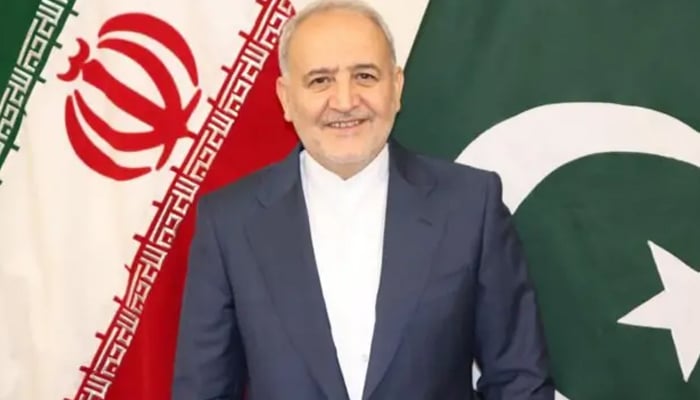
ISLAMABAD: Iranian Ambassador to Pakistan Reza Amiri Moghaddam has extended heartfelt greetings to the Pakistani government and people on the country’s 79th Independence Day.

In his message, the Iranian envoy described Pakistan as a great friend, neighbour and brotherly country. He praised the Pakistani people’s resilience, unity and achievements, saying Iran deeply valued their determination.

Amiri Moghaddam said Iran attached great importance to its longstanding ties with Pakistan, based on friendship, mutual respect and cooperation. He said the commitment demonstrated by the leadership of both countries had opened the way for a new phase in bilateral relations.

The ambassador said Iran-Pakistan relations were passing through an important turning point, with a new era of engagement and cooperation beginning between the two neighbouring countries.

He said Iran wished continued prosperity, peace, security, development and wellbeing for the people of Pakistan.

Amiri Moghaddam reaffirmed Iran’s desire to further strengthen the historic friendship between the two countries. He said Tehran remained committed to deepening bilateral relations in a manner that served the mutual interests of the Iranian and Pakistani peoples.

Similar Posts

  • | |

    Jaffar Express service suspended for one day

    The Jaffar Express operating from Quetta to Peshawar will remain suspended for one day due to railway track maintenance. Railway authorities in Quetta said the service would be suspended tomorrow to allow repair and maintenance work on the track. The authorities also said the Jaffar Express travelling from Peshawar towards Quetta would operate only up to Jacobabad instead of continuing to Quetta. Passengers have been advised to keep the temporary change in the train schedule in mind while planning their journeys. Railway officials said the suspension is a temporary measure linked to repair work. Normal train operations are expected to resume after the maintenance is completed.

  • |

    Commercial shipping through critical Middle Eastern corridors stays subdued amidst mixed diplomatic signals

    Commercial vessel traffic through key maritime chokepoints in the Middle East, specifically the Strait of Hormuz and the Bab el-Mandeb, remained virtually unchanged, as maritime operators maintained a cautious stance amid conflicting signals regarding diplomatic negotiations. Data tracked by maritime analytics firm Kpler showed that eight vessels transited the Strait of Hormuz, consisting of five tankers and three bulk carriers, matching the previous day’s tally. Six of the vessels were inbound toward the Persian Gulf, while two made the outbound journey. Prior to the escalation of hostilties in late February and subsequent Iranian restrictions across the waterway, the strait typically logged between 130 and 140 daily vessel movements. Concurrently, tracking data recorded an Abu Dhabi National Oil Company (ADNOC) liquefied natural gas (LNG) carrier, the Mubaraz, emerging outside the Strait of Hormuz bound for India’s Dahej terminal in Gujarat. The shipment represents the third successful LNG transit by the vessel carrying cargo loaded from Das Island since regional maritime disruptions intensified. At the Bab el-Mandeb strait, daily transits held steady with 20 vessels passing through the passage, evenly split between entries and exits. Industry analysts emphasized that published transit totals reflect only ships navigating with active Automatic Identification System (AIS) transponders, noting that a significant volume of commercial traffic continues to operate with disengaged transponders to mitigate security risks. The persistent stagnation in maritime trade follows conflicting geopolitical communications. While Qatari mediators indicated progress in preliminary discussions aimed at bringing an end to hostilties, official statements from Tehran denied direct bilateral talks with Washington, noting instead that discussions mediated through Oman remain focused on managing navigation and security protocols through the strait.

  • Typhoon Bavi Hits Eastern China After Nearly 2 Million People Evacuated

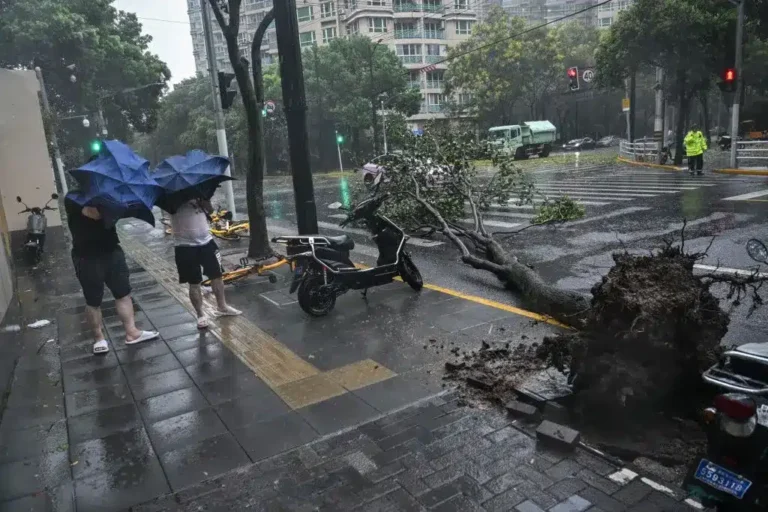
    BEIJING – Typhoon Bavi reached eastern China late Saturday, July 11, bringing powerful winds after authorities moved nearly two million residents to safer areas, state media reported. No immediate reports confirmed deaths, injuries, or property damage. Before striking China, Bavi brought heavy rain and strong winds to northern Taiwan and Japan’s remote southwestern islands. Trees fell, […]

  • | |

    Taylor Swift reveals the biggest stress of cheerin…

    Taylor Swift has become a familiar face at NFL stadiums while supporting Travis Kelce, but according to new reports, game days are far from relaxing for the global music superstar. Swift has attended numerous Kansas City Chiefs games since her relationship with Kelce became public, often drawing as much attention as the action on the field. While fans love spotting her in the stands, those close to the singer say watching her husband play is one of the most nerve-racking experiences she faces. According to reports, the hardest part for Swift is seeing Kelce put his body on the line every week. Football is one of the most physically demanding sports, and every tackle, collision and fall leaves her worried about his safety. Despite enjoying the excitement of the games, she reportedly spends much of the time hoping he walks off the field healthy.  The concern is understandable. Kelce has built a career as one of the NFL’s elite tight ends, a position that involves constant physical contact. While he has proven remarkably durable throughout his career, injuries are always a possibility in professional football. Swift’s presence at Chiefs games has also become a headline of its own. Television cameras frequently cut to her reactions, and every expression is analyzed by fans across social media. That level of public scrutiny adds another layer of pressure to an already emotional experience. Reports have suggested that she has intentionally kept a lower profile at some games to avoid becoming the center of attention and to keep the focus on Kelce and the team.  Despite the stress, Swift continues to show up whenever her schedule allows. Friends say supporting Kelce remains important to her, even if every game comes with anxious moments. The singer understands the demands of elite performance herself, while Kelce has previously spoken about admiring the dedication and physical endurance required during her record-breaking tours.  For Swift, the cheers, celebrations and victories are worth the nerves. But behind every smile from the VIP suite is the hope that the final whistle brings the same outcome she wants most—not just a Chiefs win, but seeing Kelce leave the field safe and healthy.

  • |

    India’s top court orders release of minors amid exam protests

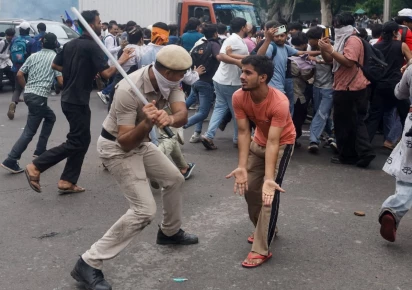
    NEW DELHI: India’s Supreme Court has ordered authorities to release minors detained during protests over examination paper leaks and directed officials to preserve evidence linked to allegations of excessive police force. Chief Justice Surya Kant reportedly issued the interim directions while hearing petitions filed by student protesters and activists. The petitions accuse police and paramilitary personnel of using excessive force, including baton charges and other crowd-control measures, against demonstrators. The court also directed authorities to preserve all available surveillance material from the protests. This includes CCTV recordings, drone footage and body-camera video. Officials were further told to protect the personal and digital information of protesters and ensure that it is not publicly disclosed. The court reportedly barred authorities from taking coercive action against protesters while the matter remains under consideration. Justice Kant stressed the importance of an independent investigation into allegations of mistreatment. He said accountability must be established if wrongdoing occurred. The government has defended the security forces’ response, describing the measures as necessary for crowd control. Solicitor General Tushar Mehta told the court that around 250 police officers were also injured during the unrest. He reportedly said the government had no objection to an investigation into allegations involving protesters. The protests erupted after question papers for a national medical college entrance examination were leaked. The controversy triggered demonstrations in New Delhi and several other parts of India. Protesters demanded reforms to the examination system, withdrawal of cases against demonstrators and compensation for families of students who died by suicide following the controversy. The demonstrations ended after the education minister resigned and the government agreed to several demands raised by the protesters. Meanwhile, the Indian government has proposed tougher penalties for examination paper leaks. Under the proposed amendments, the maximum prison sentence could be increased to 10 years, while fines could rise to more than $1 million. The government says the proposed changes are intended to strengthen the examination system, speed up legal proceedings and restore confidence among students and young people. The issue has also created political tension in parliament. Opposition lawmakers have repeatedly raised concerns about the police response to the protests and demanded accountability. In several cities, clashes between demonstrators and security personnel led to tear gas and baton charges. Authorities also suspended a police officer in an eastern state after he allegedly fired rounds into the air while attempting to disperse student protesters. Concerns have additionally emerged over the use of artificial intelligence-powered surveillance during demonstrations. Activists have questioned the deployment of police surveillance equipment capable of providing wide-area monitoring of protest gatherings. A protest group that helped lead the movement has claimed that hundreds of students were arrested in different states. However, the figure has not been independently verified.

  • |

    Iran sent IRGC commanders to aid Houthis: report

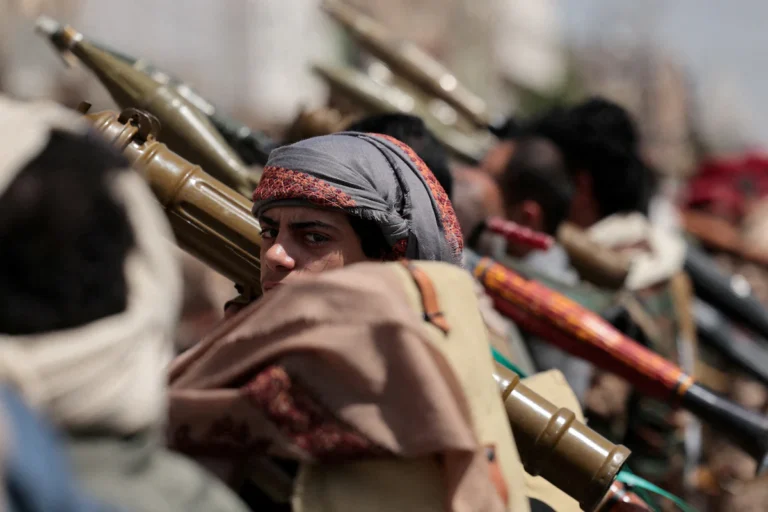
    Iran is alleged to have flown senior Islamic Revolutionary Guard Corps (IRGC) commanders, military advisers and missile- and drone-related equipment to Yemen earlier this month in a move that could significantly strengthen the military capabilities of the Houthi movement, according to multiple sources familiar with the matter. The reported transfer is believed to have taken place on July 13 aboard a Mahan Air flight that departed from Tehran. Sources said the aircraft was originally scheduled to land in the Houthi-controlled capital, Sanaa, but was forced to divert to the Red Sea port city of Hodeidah after military activity disrupted operations at Sanaa International Airport. According to the sources, between 10 and 21 IRGC personnel, including senior commanders, were on board the aircraft. They claimed the mission included military advisers tasked with providing operational support and training on advanced missile systems. The flight was also reportedly carrying missile components, drone-related equipment and gold, which the sources alleged was intended to finance Houthi military operations. The reported shipment has raised fresh concerns that Tehran may be expanding its military support for the group amid growing regional tensions. Officials from Yemen’s internationally recognised government said intelligence indicated that Iranian military experts had arrived to strengthen Houthi capabilities. They claimed the advisers were expected to improve the group’s ability to launch attacks against international shipping in the Red Sea and the strategic Bab al-Mandab Strait, one of the world’s busiest maritime trade routes. Regional security analysts also supported the claims, saying the shipment allegedly included components for short- and medium-range missiles as well as drone systems similar to those previously used in attacks across the Gulf region. The reported deployment came only days before the Houthis announced a naval blockade targeting Saudi Arabia. The group later claimed responsibility for attacks on Saudi oil tankers operating in the Red Sea, further escalating tensions and increasing fears over global energy supplies and maritime security. Despite the allegations, both Iran and the Houthi movement strongly denied the reports. A Houthi media official who said he was among the passengers on the flight insisted that everyone on board was a civilian and rejected claims that military personnel or weapons had been transported. Iran has also repeatedly denied supplying advanced weapons to the Houthis or directing their military operations. Iranian officials maintain that the Yemeni group independently develops its own military capabilities and makes its own operational decisions. According to Iranian officials, the July 13 flight was organised to return a Houthi delegation and Yemeni civilians who had travelled to Tehran earlier in the month. They said the passengers included people who had attended a funeral ceremony as well as Yemenis who had received medical treatment in Iran. The allegations have emerged at a time of heightened confrontation across the Middle East, where attacks involving the United States, Iran, Israel and Iran-backed groups have intensified. Growing instability has already disrupted commercial shipping through the Strait of Hormuz and the Red Sea, contributing to rising oil prices and increasing uncertainty in global financial markets.

Leave a Reply

Your email address will not be published. Required fields are marked *