typhoon bavi hits

Typhoon Bavi Hits Eastern China After Nearly 2 Million People Evacuated

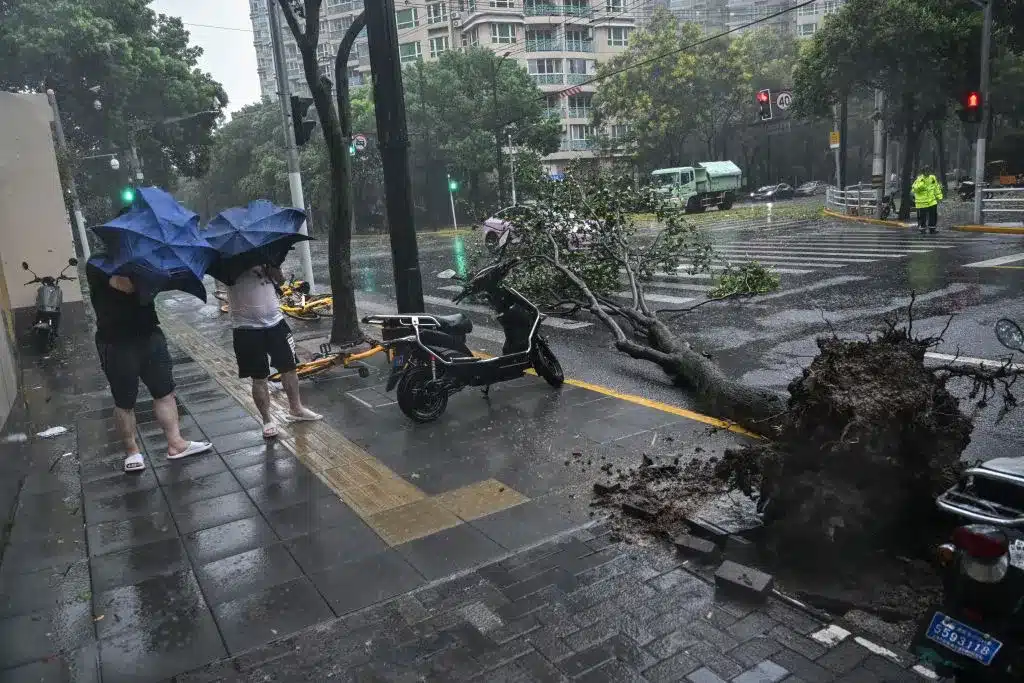
BEIJING – Typhoon Bavi reached eastern China late Saturday, July 11, bringing powerful winds after authorities moved nearly two million residents to safer areas, state media reported. No immediate reports confirmed deaths, injuries, or property damage.

Before striking China, Bavi brought heavy rain and strong winds to northern Taiwan and Japan’s remote southwestern islands. Trees fell, power lines were damaged, and tens of thousands of households lost electricity.

Key Takeaways

  • Typhoon Bavi made two landfalls in Zhejiang province, with winds reaching 144 kmh.
  • Authorities evacuated 1.72 million people in China and suspended flights, train services, classes, and outdoor activities.
  • The storm also caused deaths and widespread disruption in the Philippines, Taiwan, and Japan.

The typhoon arrived as southern and central China continued to deal with severe flooding. Storms during the week killed at least 39 people, caused rivers to overflow, and led to the collapse of a reservoir dam.

Xinhua news agency said Bavi first reached land in Zhejiang province at about 11:20 p.m. Saturday. The storm moved ashore near Yuhuan city with winds of up to 144 kmh, according to the provincial meteorological observatory.

About 20 minutes later, the system moved back over the water before making a second landfall near Yueqing City, Xinhua reported.

Flights and Train Services Cancelled

Zhejiang officials warned that coastal areas could receive torrential rain. They also raised the risk of flash floods, transport problems, overflowing rivers, and flooded farmland.

The storm was expected to travel northwest and weaken as it moved inland. At the time of the report, authorities had not released details about casualties or damage.

As of Saturday morning, officials had relocated 1.72 million people across the province. The government also suspended work, classes, transportation services, and outdoor activities. More than 400 flights and dozens of train services were canceled.

Officials in Wenzhou, a city of almost 10 million people, said the large evacuation effort was intended to prepare for the worst possible conditions.

Residents reinforced metal shutters with wooden boards and placed tape across windows. CCTV footage showed businesses preparing for the exceptionally heavy rain forecast for eastern Zhejiang and northeastern Fujian province.

For more regional weather and Asia news, readers can follow updates from chiangraitimes.com.

Flood preparations spread across China

Heavy rain also affected areas farther north. Beijing authorities evacuated more than 100,000 people as officials increased water releases from Miyun Reservoir. The reservoir was being managed to make room for possible floodwater from incoming storms.

State media reported that more than 130,000 residents left their homes in Fujian province. Around 34,000 people were also moved from coastal and high-risk areas in Shanghai.

Meanwhile, northern Taiwan remained largely quiet as strong winds and rain affected the island. Many businesses stayed closed for a second day, while residents remained indoors.

More than 14,000 people in Taiwan were evacuated. Hundreds of flights were canceled, and power outages affected over 170,000 households.

Taiwan’s Central Weather Administration warned of extremely heavy rain in the north. It also forecast dangerous coastal waves that could reach 10 meters as Bavi passed close to the island.

Bavi had weakened after reaching super typhoon strength earlier in the week. The storm struck Guam and the Northern Mariana Islands on Monday before moving toward Taiwan and China.

On Friday, the typhoon appeared likely to become the strongest storm to hit Taiwan in more than three decades. However, its area of strong winds later narrowed to about 350 kilometers, said CWA forecaster Jason Cheng.

Some residents in Taiwan criticized the government warnings because the storm produced less wind and rain than they expected in certain areas. A breakfast shop owner in Keelung, identified by the surname Li, said the warnings had led people to rush to stores and buy up groceries, even though local weather conditions remained relatively mild.

Deaths and Disruption Across the Region

In the Philippines, the number of people killed by landslides and other incidents linked to heavy rain from Bavi rose to 18. Most of the deaths occurred on Mindanao.

Nearly 11,000 people across the Philippines left their homes. Dozens of ports remained closed, while 313 vessels moved to sheltered locations.

Japan’s remote southwestern islands also suffered power outages after Bavi brought strong winds and heavy rain. The Miyako region recorded some of the worst effects, with thousands of households and public facilities losing electricity.

Japanese airlines canceled dozens of flights, disrupting the travel plans of more than 26,000 passengers.

The European Union’s Copernicus Marine Service said the world’s oceans recorded their hottest June on record. It also warned that ocean temperatures could reach new highs in the months that followed.

Warmer seas can strengthen tropical storms by supplying additional heat and moisture. That moisture can later fall as intense rainfall, increasing the risk of flooding when storms move over land.

The return of El Niño added another factor to the regional weather outlook. El Niño is a natural climate pattern that raises surface temperatures in parts of the Pacific Ocean and usually occurs every two to seven years.

As Bavi weakened, authorities across China, Taiwan, the Philippines, and Japan continued monitoring rainfall, river levels, coastal waves, and electricity networks. The immediate priority remained keeping residents away from flood-prone areas while emergency crews assessed the storm’s effects.

Trending News:

China Warns Russia: Do Not Use Nuclear Weapons in Ukraine

Central China Devastated by Rare Tornadoes, 11 Killed, Hundreds Injured

Similar Posts

  • |

    Senate Republicans launch battle to repeal Califor…

    A political battle over environmental regulation has intensified as a coalition of Republican senators introduced legislation. The battle will strip California of its authority to establish its own vehicle emissions standards. The proposal represents the latest push in a broader federal strategy to curb the state’s ability to impose environmental mandates that effectively shape national automotive and industrial markets. The effort is led by Senator Cynthia Lummis of Wyoming, alongside Senators Eric Schmitt of Missouri, Pete Ricketts of Nebraska, and Jon Husted of Ohio. The lawmakers argue that California’s regulatory body, the California Air Resources Board (CARB), has abused federal waivers. Auto manufacturers and equipment producers rarely manufacture separate product lines solely for one state. California’s strict rules often become the de facto national standard. These rules influence prices and options for consumers across the entire United States. The Congressional Review Act Strategy This legislative effort has a procedural mechanism: the Congressional Review Act (CRA). Under normal Senate procedures, major legislation requires a 60-vote to overcome a filibuster. However, resolutions brought under the CRA require only a simple majority to pass Congress. The stage for this Senate challenge was set earlier this summer. The timeline was set by the Environmental Protection Agency (EPA) that transmitted landmark California emissions waivers. The waivers were sent to the Republican-controlled Congress for potential repeal. Federal environmental officials asserted that these state waivers should have originally been submitted to lawmakers under the CRA framework. It opened a window for congressional review and nullification. Economic Concerns vs. Environmental Protections Proponents of the repeal contend that California’s stringent tailpipe regulations, mandates for zero-emission vehicles, and rules governing commercial and maritime equipment place an excessive financial burden on businesses and everyday Americans. Lawmakers pushing the repeal maintain that the state’s aggressive transition timelines artificially drive up vehicle costs, strain grid infrastructure, and disrupt critical supply chains, particularly at major Pacific shipping hubs where port electrification and commercial vessel requirements are enforced. Conversely, California officials and environmental advocates strongly defend the state’s right to set higher clean air benchmarks. Granted legal authority under the federal Clean Air Act due to its severe historical smog issues, California served as a primary catalyst for automotive innovation for decades. Supporters argue that strict state waivers successfully incentivized carmakers to develop cleaner internal combustion engines and expand electric vehicle offerings, resulting in measurable air quality improvements nationwide. Legal Showdown and Future Outlook The dispute overflowed from legislative halls into federal courtrooms. California state attorneys filed a lawsuit challenging the EPA’s decision to submit the waivers to Congress under the CRA, characterizing the maneuver as an illegal attempt to bypass statutory deadlines and overturn established regulatory frameworks.   The Senate prepares to consider the repeal resolutions. The fight underscores a fundamental dispute over authority and the future of transport decarbonization in America. Whether through congressional votes or judicial rulings, the outcome will likely dictate the regulatory landscape for automakers and consumers.

  • | |

    AJK rejects firing allegations against forces

    The Government of Azad Jammu and Kashmir (AJK) has strongly rejected allegations that security forces opened fire on protesters or were responsible for civilian deaths during the recent unrest in Rawalakot, describing the claims as false, unverified and part of an organised disinformation campaign. Responding to a report by the BBC on the recent incidents, the AJK government said armed members of the banned Joint Awami Action Committee opened fire on security personnel in Rawalakot, resulting in the deaths and injuries of several officers. It also alleged that the attackers set multiple vehicles on fire during the violence. According to the government, security forces acted only to maintain law and order and enforce the law, insisting that civilians were not deliberately targeted during the operation. The AJK government cited information from the police spokesperson, who said seven security personnel were killed and 143 others were injured in firing allegedly carried out by armed members of the banned Joint Awami Action Committee. It further claimed that the banned group has a history of violent activities. According to the statement, attacks carried out in 2024 and 2025 resulted in the deaths of four security personnel and left hundreds of others injured. The government also said two individuals arrested on July 28 and 29 were under investigation. It alleged that one of the suspects claimed a reward of Rs10 million had been offered for the killing of each Ranger, raising questions about the possible funding of the group. According to the statement, verified videos show armed individuals linked to the banned Joint Awami Action Committee using modern weapons and firing during the unrest. The AJK government maintained that law enforcement agencies carried out their constitutional responsibilities with restraint and professionalism. It insisted that no action was taken against peaceful civilians and that operations were conducted solely to restore public order. The government also categorically denied allegations of indiscriminate firing, the use of snipers or claims that bodies of victims were withheld from their families. It further alleged that the banned Joint Awami Action Committee had previously been involved in blocking roads, stopping or burning cargo vehicles and disrupting the supply of essential goods. According to the statement, law enforcement agencies made efforts to keep roads open and ensure the uninterrupted movement of essential supplies. The AJK government added that the Joint Awami Action Committee has been declared a banned organisation under the Anti-Terrorism Act and said all legal proceedings against the group are being carried out in accordance with the law.

  • | | |

    PM orders fast-track strategy for Discos privatisa…

    Prime Minister Shehbaz Sharif has directed the relevant authorities to adopt a comprehensive strategy to attract local and international investors for the privatisation of state-owned electricity distribution companies (Discos). He also ordered the restructuring of the Privatisation Commission within one month to strengthen its role in the reform process. Chairing a high-level meeting in Islamabad, the prime minister said the privatisation programme must move forward according to the approved timelines. He stressed that every stage should be completed transparently and in line with international standards and legal requirements. He added that the process should deliver positive financial results while protecting the interests of electricity consumers. The prime minister instructed officials to ensure that reputable investors participate in the bidding process. He said investor confidence should be increased through effective planning, transparency and a clear policy framework. At the same time, he emphasised that consumer rights should remain a top priority during the transfer of power distribution companies to the private sector. Officials informed the meeting that investor roadshows for the first phase of the privatisation programme had been completed successfully. These campaigns focused on Gujranwala Electric Power Company (Gepco), Faisalabad Electric Supply Company (Fesco) and Islamabad Electric Supply Company (Iesco). Similar investment outreach activities held in Türkiye, Saudi Arabia and China also received encouraging responses from potential investors. The meeting reviewed progress on institutional reforms within the Privatisation Commission. The prime minister directed the commission to recruit experienced professionals in finance, law and information technology. He said hiring qualified experts would improve the commission’s capacity to manage large-scale transactions and strengthen investor confidence. He also instructed officials to incorporate recommendations from professional consultants into the privatisation process. All legal, financial and regulatory requirements should be completed without delay to ensure smooth implementation, he added. The prime minister further ordered the establishment of an effective grievance redress mechanism to address complaints from consumers after the companies are privatised. He said public confidence would depend on uninterrupted services, transparency and accountability. The government is offering investors the opportunity to acquire majority or full ownership of Fesco, Gepco and Iesco, along with management control. These companies are considered among the strongest electricity distribution companies in the country and together provide power to more than 14 million consumers across Punjab, the Islamabad region and parts of Azad Jammu and Kashmir. The privatisation plan is part of the government’s broader economic reform programme. The initiative aims to improve operational efficiency, reduce financial losses, attract domestic and foreign investment, strengthen service delivery and modernise Pakistan’s power sector through greater private-sector participation.

  • Thai Military Destroys Cambodian Rocket Arsenal, Intensifies Naval Blockade

    BANGKOK – The Thai military has escalated its campaign against Cambodian forces, destroying a significant rocket arsenal near the Poipet border crossing and imposing a stringent naval blockade on oil and military supplies bound for Cambodia. The actions were detailed in a press briefing by defense officials on Thursday. Thai Marines Reclaim Border Zone in […]

  • | |

    Chris Evans shares good reason to prioritize his w…

    Chris Evans has opened up about the major shift in his perspective on acting, explaining why he has become far more selective about the projects he chooses to take on. The actor, best known for playing Captain America in the Marvel Cinematic Universe, has previously spoken about how fame and the demands of Hollywood affected his personal life. Over time, Evans said he learned that simply staying busy was not enough. The work itself needed to feel meaningful. In a recent discussion about his career, Evans explained that filmmaking requires an enormous level of commitment. From preparation and filming to post-production and promotion, a project can consume months of a person’s life. Because of that, he now believes a role needs to be something he genuinely cares about rather than an opportunity he accepts simply because it is available. (Vanity Fair⁠) That mindset represents a significant change from earlier in his career. Evans previously admitted that he became increasingly anxious in his late 20s as his career grew. He questioned whether Hollywood was bringing him closer to the person he wanted to become or pushing him further away from himself. Those concerns became particularly important when he was considering the role of Captain America. (GQ⁠) Although the role ultimately transformed his career, Evans has never treated acting as something he must do constantly. After completing his Marvel commitments, he took a step back from Hollywood and spent more time away from the intense pressure surrounding blockbuster filmmaking. His approach has also influenced the way he views new projects. Evans has said that directing taught him just how demanding the filmmaking process can be. After directing Before We Go, he realized that a project requires a strong emotional connection to remain fulfilling throughout the long production process. (Vanity Fair⁠) That lesson appears to have shaped his choices today. Evans recently returned to the Marvel universe for Avengers: Doomsday, but his comeback was not something he agreed to immediately. He revealed that Marvel presented him with numerous ideas over several years, but none felt right until the latest opportunity came together. He said he wanted to protect what Captain America meant to him rather than return simply because fans wanted it. (Geo News⁠) His decision highlights a broader change in the actor’s priorities. Evans no longer appears interested in filling his schedule simply to remain visible. Instead, he wants his time and energy to go toward stories that genuinely excite him. For the actor, prioritizing work does not necessarily mean working more. It means choosing better. After years of enormous success, Evans seems comfortable with saying no and waiting for the right opportunity. His career may now move at a slower pace, but his latest perspective suggests that he values purpose, personal happiness and meaningful creative work more than simply being everywhere at once.

  • |

    Petroleum Levy collection hits record Rs1.57 trill…

    Pakistan’s petroleum levy collection reached a record Rs1.567 trillion during the fiscal year 2025-26, exceeding both the government’s target and the International Monetary Fund’s (IMF) projection, according to sources. The government also collected an additional Rs50.16 billion as Climate Support Levy during the fiscal year, adding further revenue from petroleum products. Sources said petroleum levy collections increased by Rs347.24 billion compared with the previous fiscal year. The total collection stood nearly Rs100 billion above the government’s target of Rs1.468 trillion for FY2025-26. The collection also surpassed the IMF’s estimate. The global lender had projected petroleum levy revenues of around Rs1.546 trillion for the fiscal year, meaning the actual collection exceeded the projection by approximately Rs21 billion. Petroleum levy revenues have continued to rise sharply in recent years. The government collected Rs1.220 trillion in FY2024-25, compared with Rs1.019 trillion in FY2023-24. In FY2022-23, petroleum levy collection stood at around Rs580 billion. The latest figures reflect the government’s growing reliance on petroleum-related revenues to strengthen its fiscal position and meet revenue requirements under its economic programme. At present, the government charges a petroleum levy of Rs80 per litre on petrol, while high-speed diesel carries a levy of Rs77.28 per litre. In addition, the government imposes a separate Climate Support Levy of Rs5 per litre each on petrol and diesel. The record collection comes as the government continues to seek higher revenues while managing fiscal pressures and meeting commitments under its agreement with the IMF. The increased levy revenue provides additional funds for the federal budget but also adds to the overall cost burden on consumers through petroleum prices.

Leave a Reply

Your email address will not be published. Required fields are marked *