ajk polling underway
| | |

AJK polling underway at 23 atations in Bagh

BAGH: Voting is underway at 23 polling stations across two constituencies in Azad Jammu and Kashmir’s (AJK) Bagh district, in a closely watched exercise following disputes and allegations of irregularities during the region’s phased elections.

Polling began at 8am on Saturday and is scheduled to continue until 5pm, with authorities deploying additional security personnel to ensure voters can cast their ballots without fear or disruption.

The polling is being held in LA-15 (Bagh Central) and LA-16 (Eastern Bagh), where voting could not take place at several stations during the third phase of the elections earlier this week. The AJK Election Commission subsequently withheld the results of both constituencies and ordered polling at the remaining stations.

In LA-15, PPP candidate Sardar Ziaul Qamar had secured 16,637 votes in the stations where polling was held, followed by PML-N’s Mushtaq Ahmed Minhas with 15,015 votes. Jamaat-i-Islami candidate retired Brig Dr Muhammad Khan stood third with 12,259 votes.

Meanwhile, the withheld result in LA-16 involves 14 polling stations with 7,238 registered voters. Results from the remaining stations had placed PML-N’s Sardar Mir Akbar in front with 19,515 votes, giving him a lead of 3,225 votes over PPP’s Sardar Qamaruz Zaman.

The contest has remained tense, with candidates from all five parties accusing their rivals of large-scale rigging. Election authorities, however, have stressed that adequate security has been arranged.

AJK Chief Election Commissioner retired Justice Ghulam Mustafa Mughal said sufficient police and law-enforcement personnel had been deployed at polling stations to provide voters with a “fear-free environment”.

The latest polling is part of an election process conducted in phases amid unrest and law-and-order concerns across the region. The third phase was initially planned for all 11 constituencies of Poonch Division but was limited to Bagh and Haveli districts after security concerns emerged.

The Election Commission has already announced the result for LA-14 (Bagh-I), where Jammu Kashmir Awami Dast-o-Bazu Party candidate Sajid Iqbal Abbasi won by a substantial margin.

The election in neighbouring LA-17 (Haveli), however, has become the subject of a separate dispute after AJK Prime Minister Faisal Mumtaz Rathore was declared the winner. His PML-N rival, Engineer Mohsin Aziz, challenged the result, prompting the Election Commission to hear arguments from both sides.

With voting now underway at the remaining 23 stations, attention is focused on turnout, security and whether the fresh polling will finally settle the disputed contests in Bagh.

Similar Posts

  • Ufone service disruption, Senate questions PTA over telecom merger

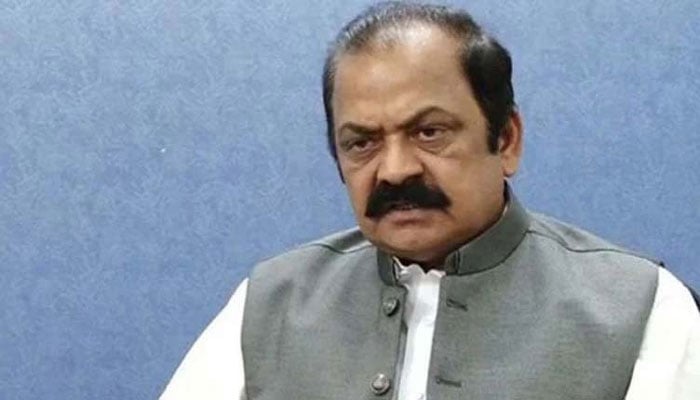
    Islamabad: Pakistan’s telecom sector came under serious scrutiny as the Senate Standing Committee on Cabinet Secretariat questioned the Pakistan Telecommunication Authority (PTA) over the recent disruption in Ufone services and demanded answers about the future of the country’s mobile communication system. During the meeting chaired by Senator Rana Mahmood ul Hassan, Chairman PTA was directly questioned about the reason behind the Ufone service failure. Senator Rana Mahmood ul Hassan asked, “Why has Ufone’s service collapsed?” while seeking an explanation from the telecom regulator. Responding to the concerns, Chairman PTA informed the committee that Ufone is a government-owned company and said the issues would be resolved after the completion of the ongoing merger process between Ufone and Telenor. The Chairman PTA further informed the committee that after the merger of Ufone and Telenor, a new telecommunications company would be established, marking a major change in Pakistan’s telecom sector. The committee was informed that Pakistan currently has 210 million active SIMs, showing continued expansion of mobile connectivity across the country. However, lawmakers raised questions about whether service quality is improving at the same pace as user growth. The meeting was attended by Senators Saadia Abbasi, Abdul Qadir, Dilawar Khan, Aimal Wali Khan and Saleem Mandviwalla, along with the Secretary Cabinet Division and Secretary Establishment Division. The Chairman PTA also briefed the committee about the restructuring of PTCL and Ufone, stating that both companies are being separated as part of the ongoing changes in the telecommunications sector. During the discussion on digital reforms, the PTA Chairman informed lawmakers that talks are underway with NADRA to introduce SIM issuance through the Pak ID platform. Under the proposed system, citizens may be able to obtain SIM cards from their homes through a digital process, reducing the need for physical visits. However, Senator Saleem Mandviwalla raised concerns over Pakistan’s position in modern telecom technology and questioned why the country has not moved faster towards eSIM technology, which is already being adopted globally. The committee stressed that Pakistan’s telecom sector needs stronger digital development, better customer services and modern solutions to meet international standards. The PTA Chairman informed the committee that the merger process between Ufone and Telenor is expected to bring improvements and create a stronger telecommunications company. The regulator said these changes aim to improve services and strengthen Pakistan’s telecom infrastructure. The meeting concluded with the committee emphasizing the importance of transparency, accountability, digital advancement and improved public service delivery in government institutions, especially in sectors directly connected with millions of citizens.

  • | | |

    Rana Sanaullah dismisses AJK rigging claims, calls…

    Prime Minister’s Adviser on Political Affairs Rana Sanaullah  has strongly rejected allegations of electoral rigging in Azad Jammu and Kashmir’s LA-27 constituency, calling the claims baseless and politically motivated. Speaking to reporters, Rana Sanaullah said a fake video was being circulated on social media to create the impression that irregularities had taken place during polling in the Muzaffarabad constituency. He alleged that the video was being used as part of a campaign to mislead the public and damage the credibility of the electoral process. He challenged the Pakistan Peoples Party (PPP) to produce credible evidence if it believed rigging had occurred. He said accusations alone were not enough and urged the party to present proof before making such serious claims. Rana Sanaullah said polling in LA-27 had been conducted peacefully since the morning. He added that no complaints had been received regarding polling staff or the administration of any polling station during the voting process. The adviser also questioned whether the PPP had filed any formal complaint with the Election Commission regarding the alleged irregularities. He said the appropriate legal and constitutional forum was available for any political party that wished to challenge the election process. According to Rana Sanaullah, the PPP had adopted a narrative of election rigging from the very beginning instead of waiting for the electoral process to conclude. He maintained that if the party had evidence, it should submit it to the Election Commission for investigation rather than relying on unverified videos and public statements.

  • | |

    President approves Nishan-i-Imtiaz for Strategic C…

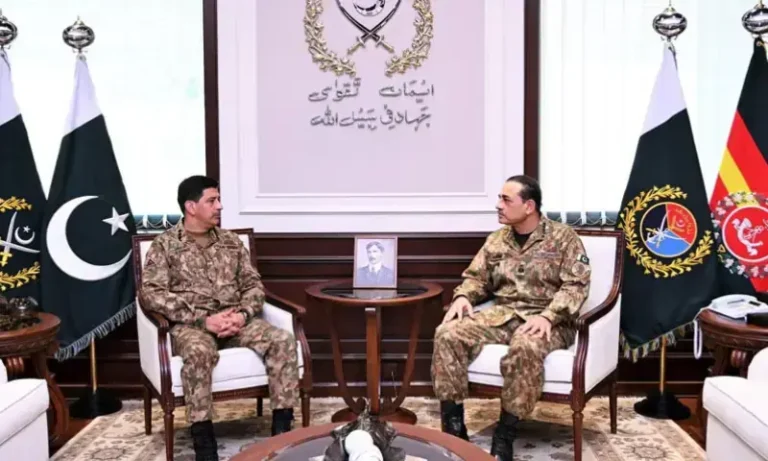
    President Asif Ali Zardari has approved the conferment of the Nishan-i-Imtiaz (Military) on General Syed Aamer Raza, the newly appointed Commander of the National Strategic Command (NSC). The announcement was made by the President’s Secretariat through a post on X, stating that the country’s highest civilian office had endorsed the prestigious military honour for General Raza in recognition of his distinguished service. General Raza has previously received the Hilal-i-Imtiaz (Military) and the Sitara-i-Basalat, reflecting a career marked by operational leadership and professional excellence. His latest recognition comes shortly after his promotion to the rank of four-star general and appointment as Pakistan’s first Commander of the National Strategic Command. The position was created as part of the sweeping reforms introduced under the 27th Constitutional Amendment, which reshaped the country’s higher defence structure. Under the new framework, the office of the Chairman Joint Chiefs of Staff Committee was abolished and replaced by the position of Chief of Defence Forces, a role currently held concurrently by Field Marshal Asim Munir as Chief of Army Staff. The National Strategic Command serves as the unified operational headquarters for Pakistan’s strategic forces, bringing together the strategic commands of the Army, Navy and Air Force under one command. Despite this restructuring, the National Command Authority, chaired by the prime minister, remains the country’s highest decision-making body on nuclear policy and strategic employment. General Raza was appointed to the post by Prime Minister Shehbaz Sharif on the recommendation of the Chief of Defence Forces. As provided under the amended Army Act, the appointment carries a three-year tenure. Before assuming his new responsibilities, General Raza served as Chief of General Staff, where he supervised key operational planning and played a central role in implementing military reforms introduced after the constitutional changes. He also oversaw organisational restructuring following last year’s conflict with India, including the establishment of the Army Rocket Force Command. Commissioned into the 6th Lancers in 1988 after graduating from the Officers Training School (OTS), General Raza has held several important command and staff appointments throughout his military career. These include commanding an armoured regiment, an armoured brigade, an infantry brigade in South Waziristan, an infantry division and Lahore’s IV Corps. He has also served as Chairman of Heavy Industries Taxila, Director General Weapons and Equipment, and Chief of Staff at II Corps.

  • |

    UN extends Volker Turk’s term as Rights Chief

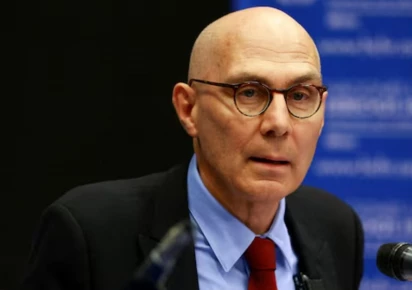
    The United Nations General Assembly has approved a second four-year term for UN High Commissioner for Human Rights Volker Turk. The decision was made despite strong opposition from the United States, Russia and Israel. The 193-member General Assembly voted overwhelmingly in favour of the extension. A total of 144 countries voted for the proposal. Ten opposed it, while 13 abstained. UN Secretary-General Antonio Guterres had proposed Turk for another full term. His current term is due to end in October. The vote came amid growing tensions between Washington and the United Nations. The US administration has reduced funding for several UN agencies. It has also withdrawn from a number of UN bodies. Washington had asked the General Assembly to delay the vote. US officials said more time was needed for consultations and review. The United States also warned that it could reconsider its relationship with the UN if the proposal was approved. US Representative for UN Management and Reform Jeff Bartos criticised the process before the vote. He said the decision did not allow enough time for discussion and oversight by member states. Bartos warned that the US could reassess its engagement, participation and funding of the United Nations. Despite the warning, most member states supported Turk. The European Union backed the extension. Several African and Latin American countries also voted in favour. China supported the proposal as well. Russia strongly opposed Turk’s reappointment. Russian Deputy Ambassador to the UN Dmitry Chumakov accused the rights chief of bias against Moscow. He also criticised Turk for making what Russia described as unfounded allegations against the country. Russia had proposed a shorter extension for Turk. Its plan would have kept him in the position only until the end of 2026. The General Assembly rejected that proposal by a large majority. Israel also opposed the decision. The Israeli Foreign Ministry criticised Guterres’ proposal and said the decision should have been left to the next UN secretary-general. Turk has faced criticism from several powerful countries because of his strong position on human rights issues. He has criticised Russia’s war in Ukraine. He has also raised concerns about Israel’s actions in Gaza. Turk has further called for investigations into deaths involving people held in US immigration custody. Human rights organisations have defended his position. They say the UN human rights chief must be able to challenge powerful countries when fundamental freedoms are threatened. The position has become increasingly important as conflicts and restrictions on civil liberties continue in different parts of the world. Turk is an Austrian lawyer. He has worked with the United Nations for decades. His UN career has included senior positions in Geneva. He has also served in field locations, including Kosovo. With the General Assembly’s latest decision, Turk will become the first UN human rights chief to serve two complete four-year terms. His reappointment is likely to keep human rights at the centre of international debate. It may also further test relations between the United Nations and countries that have opposed his approach.

  • |

    Fawad Blames PML-N, PPP for political deadlock

    Former federal minister Fawad Chaudhry said Pakistan cannot move forward politically or economically as long as the country’s two major ruling parties, the Pakistan Muslim League-Nawaz (PML-N) and the Pakistan Peoples Party (PPP), continue to dominate national politics. Speaking to reporters in Islamabad, Fawad criticized former president Asif Ali Zardari and former prime minister Nawaz Sharif, arguing that their continued influence has prevented the country from making meaningful progress. He said Pakistan would struggle to achieve stability and development unless it moved beyond what he described as the traditional political leadership. Fawad also took aim at Prime Minister Shehbaz Sharif’s economic record. He noted that Shehbaz has presented a total of 17 budgets during his political career, including 12 as chief minister of Punjab and five at the federal level. He questioned what new solutions the prime minister could still offer after overseeing so many budgets. Commenting on constitutional reforms, Fawad said he supports the transfer of administrative powers, adding that decentralization could strengthen governance if implemented effectively. Addressing the broader political situation, he stressed that any genuine national dialogue must include the founder of Pakistan Tehreek-e-Insaf (PTI), who remains in prison. Fawad said the PTI founder is the country’s most influential political leader and should be engaged in talks as a Pakistani citizen. He added that he shares a long political association with the PTI founder and believes meaningful negotiations cannot succeed without his participation. Former Sindh governor Imran Ismail, who was also present during the media interaction, said he has submitted a request to meet the PTI founder. According to Ismail, he intends to discuss proposals related to the creation of new provinces and seek his opinion on the issue before moving forward with any political discussions.

  • 32 dead as gas blast rips through Quetta coal mine

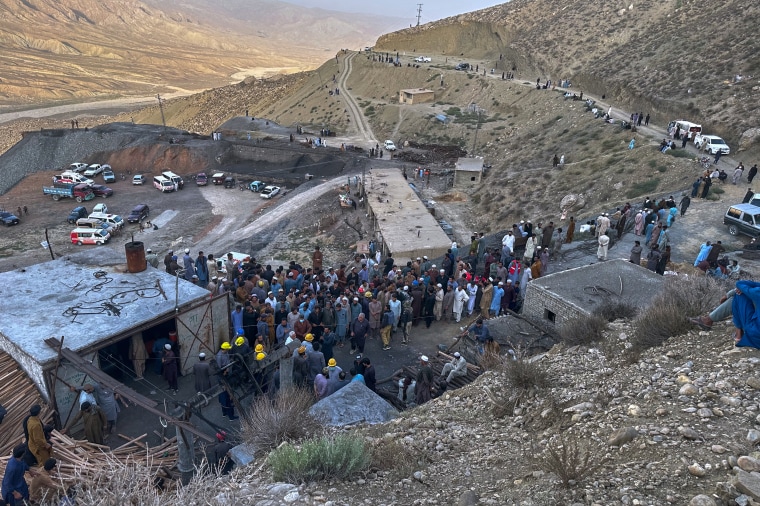
    At least 32 bodies were recovered overnight from two coal mines in the Sorange coalfield near Quetta after a methane gas explosion tore through the site. The search for two more miners continued on Friday, an official told Dawn. The explosion took place on Thursday at a private coal mine in the Sorange coalfield, about 30 kilometres northeast of Quetta. The methane gas blast set off a fire, caused the mine to collapse, and also affected a nearby mine. Chief Inspector of Mines Balochistan Muhammad Atif told Dawn that 34 miners were inside the two mines at the time of the explosion. He said that so far 32 bodies had been recovered from both mines, and that the operation to recover the remaining two miners was continuing in the mine where the explosion originally took place. Officials said the explosion happened on Thursday afternoon while 24 miners were working around 4,000 feet underground in the first mine. A fire broke out soon after the blast, causing parts of the mine structure to collapse. The sound of the explosion was heard across a wide area of Sorange. A second, nearby mine was also badly affected. Twelve miners were working inside this mine when the explosion occurred. Mining engineers and workers built alternative routes to reach both affected mines, but large amounts of methane gas along with the ongoing fire made it extremely difficult to reach the bodies and the miners still trapped deep underground. Provincial Minister for Mines and Minerals Mir Shoaib Nosherwani announced that the provincial government will pay Rs500,000 in compensation to the family of each miner who died, and Rs300,000 to every injured worker. He said an inquiry into the incident would also be carried out. This is not the first such tragedy in the region. In June, three people were injured when explosive material used in mining accidentally went off in Quetta division’s Khanuzai area. In April, at least five coal miners were killed in two separate accidents in the Bolan and Duki coalfield areas. Meanwhile, Khyber Pakhtunkhwa’s Shangla district is mourning the loss of 28 young coal miners who died in the blast, including 23 residents of a single village, Mian Kaly. The Shangla Coal Mine Workers Association said that almost every household in Mian Kaly is now grieving the loss of a family member. Abid Yaar, president of the association, said Mian Kaly has become the centre of repeated coal mine tragedies. He said that of the 28 deceased workers from Shangla district, 23 were from Mian Kaly, also known as Pir Abad, two were from Kana, and one each came from Bada and Gata Bely Baba. He said the victims were between 17 and 25 years old, and many belonged to the same families, being cousins or close relatives. He added that several of the dead were orphans whose fathers had also died in earlier coal mine accidents. Yaar alleged that the tragedy was caused by negligence on the part of the mine administration and a lack of basic safety measures. He claimed there was no proper ventilation system in the government run mine, which led to the deadly gas explosion. He said this was not just an accident but a lifelong trauma for the families, orphans, widows and mothers who lost their loved ones. He said these young men had gone to work in the mine only to earn a living and support their families back home. He also said that Shangla lacks factories and other skilled job opportunities, which forces young people to risk their lives in dangerous coal mines just to make ends meet. Family members of the victims criticised the government for failing to arrange ambulances to transport the bodies home. They said they had to bring the remains back in a van at their own expense. According to the Shangla administration, one body arrived on Friday evening, with the rest expected to arrive later that night and early Saturday morning. Three of the miners who died in the tragedy were brothers.

Leave a Reply

Your email address will not be published. Required fields are marked *