pmln leads second
| | |

PML-N leads as second phase of AJK elections concl…

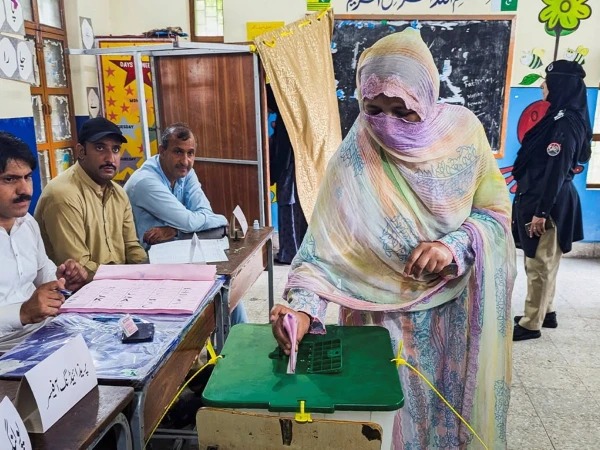
The second phase of the 2026 Azad Jammu and Kashmir (AJK) Assembly elections concluded with voters casting their ballots across multiple constituencies under heightened security. Preliminary and unofficial results indicated that the Pakistan Muslim League-Nawaz (PML-N) secured victories in several constituencies, while the Pakistan Peoples Party (PPP) also registered wins in selected seats. Election authorities continued the counting process as additional results were awaited.

More than one million registered voters were eligible to participate in the second phase of the elections. Polling stations were established across the region and in designated constituencies for Kashmiri refugees residing in different parts of Pakistan. In some areas, polling hours were extended to facilitate voters and improve participation.

According to preliminary results, PML-N emerged as the leading party in the declared constituencies, strengthening its position in the AJK Assembly. PPP candidates also secured victories in several constituencies, while independent candidates and representatives of other political parties remained competitive in a number of closely contested seats. Final official results are expected after the Election Commission completes the consolidation process.

Election day remained largely peaceful, although reports of isolated clashes were received from a few constituencies. Media reports stated that one political worker lost his life during an incident, while several others, including a member of Pakistan’s National Assembly, were reportedly injured in separate firing incidents. Authorities are expected to investigate these events, while political parties have urged supporters to remain calm.

Security arrangements remained a key feature of the electoral process, with thousands of police personnel deployed at polling stations. Sensitive locations received additional security to ensure the smooth conduct of voting. In one constituency, polling was postponed because of adverse weather conditions and landslides, with the Election Commission announcing a revised polling date.

The AJK elections are considered an important indicator of the political landscape in the region. As official results continue to emerge, attention will remain focused on the final distribution of seats and the formation of the next government. Political analysts believe the outcome could influence future policy discussions and shape the region’s governance in the coming years.

Similar Posts

  • |

    Government reviews splitting LESCO, MEPCO before privatisation

    The Ministry of Privatisation has established a high-level Technical Committee to examine the feasibility of dividing the Lahore Electric Supply Company (LESCO) and Multan Electric Power Company (MEPCO) into two or three smaller power distribution companies before their proposed privatisation, according to informed sources. The move is part of the government’s broader strategy to reform Pakistan’s power distribution sector and make state-owned electricity companies more attractive for private investment. LESCO and MEPCO currently serve the largest geographical areas and consumer bases among the country’s distribution companies (DISCOs), prompting officials to assess whether restructuring them into smaller entities could improve operational efficiency and facilitate the privatisation process. Technical Committee Constituted The committee is headed by Sajid Akram, Adviser (Power) at the Privatisation Commission. Other members include Ghulam Rasool, Joint Secretary at the Privatisation Commission; Imran Hafeez, Additional Director Tariff at the National Electric Power Regulatory Authority (NEPRA); and Abid Lodhi, Managing Director of the Power Planning and Monitoring Company (PPMC). The committee has been tasked with conducting a comprehensive review of the proposal and submitting recommendations to the government after evaluating its technical, operational and strategic implications. Weak Performance Raises Concerns Officials familiar with the matter said that both LESCO and MEPCO have consistently faced operational challenges, particularly in controlling electricity theft, reducing transmission and distribution losses, and improving bill recovery. These issues have affected their financial performance and have remained a major concern for policymakers pursuing reforms in the power sector. Recent audit reports for the fiscal year 2024-25 also highlighted unsatisfactory performance by both companies, reinforcing the need for structural reforms before moving ahead with the privatisation programme. MEPCO: Pakistan’s Largest Distribution Company MEPCO was incorporated in 1998 as a public sector company and operates under a permanent electricity distribution licence issued by NEPRA. The company is wholly owned by the Government of Pakistan through the Ministry of Energy. Serving nearly 8.76 million consumers across 13 districts of southern Punjab, MEPCO is the country’s largest electricity distribution company in terms of customer base. Its extensive network includes more than 82,000 kilometres of distribution lines and over 780 grid stations, supplying electricity across a vast region bordering three provinces. The company has initiated several modernisation projects, including the deployment of Advanced Metering Infrastructure (AMI), commonly known as smart metering, and digital billing systems aimed at improving transparency, reducing losses and enhancing customer services. LESCO Serving Over Seven Million Consumers LESCO also began operations in 1998 and supplies electricity to approximately 7.05 million consumers across Lahore, Kasur, Sheikhupura, Nankana Sahib and Okara. Its consumer base includes domestic, commercial, industrial, agricultural and bulk supply customers. The company’s operational network is divided into eight circles supervised by Superintending Engineers and 41 divisions managed by Executive Engineers to oversee field operations. In recent years, LESCO has accelerated efforts to modernise its infrastructure through the installation of smart meters, with plans to convert its entire consumer base to the Advanced Metering Infrastructure by 2029. However, the company continues to face significant operational hurdles, including shortages of transformers and electricity meters, resulting in delays in providing new connections and replacing faulty equipment. These issues have drawn criticism from regulators and consumers alike. Committee’s Terms of Reference According to the approved Terms of Reference (ToRs), the Technical Committee will: Assess the feasibility of splitting LESCO and MEPCO into two or three smaller distribution companies. Examine the potential advantages and disadvantages of such restructuring in line with the National Electricity Plan, the government’s Power Policy and the ongoing privatisation programme. Review whether similar committees were constituted in the past and analyse their findings, recommendations and implementation status. The committee’s recommendations are expected to play an important role in determining whether the government proceeds with restructuring the two major DISCOs before offering them for privatisation.

  • |

    Taiwan president joins wartime evacuation drill

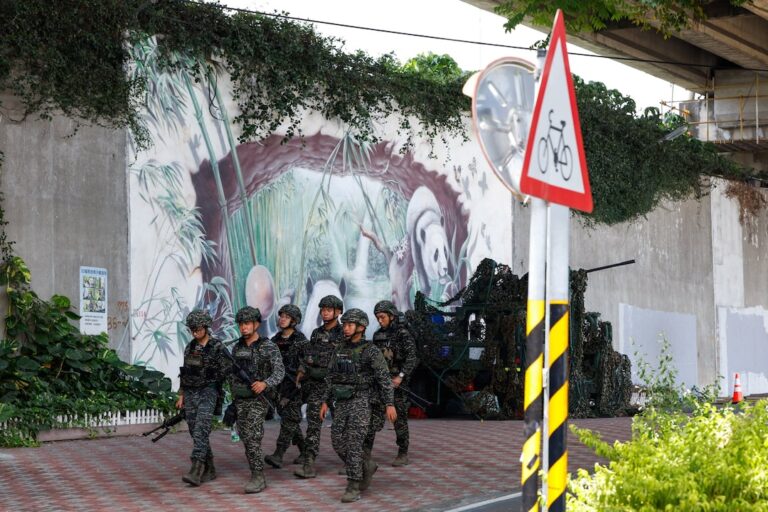
    Taiwan has intensified its annual military exercises by rehearsing the wartime evacuation of President Lai Ching-te, testing how the government would continue operating if the island came under attack. During the overnight exercise, President Lai, wearing body armour and a helmet, was transported in an armoured personnel carrier to a secure command centre. Senior government officials also participated in the drill, which focused on maintaining leadership, coordinating emergency responses and ensuring the continuity of government during a national crisis. The evacuation formed part of Taiwan’s 10-day Han Kuang military exercises, the country’s largest annual defence drill. The exercises are designed to strengthen military readiness amid growing tensions with China, which claims Taiwan as its territory and has repeatedly vowed to bring the self-governed island under its control, by force if necessary. The wartime evacuation plan has its roots in the Cold War era and was created to protect Taiwan’s leadership in the event of an invasion. Taiwanese authorities have long expressed concern that China could attempt a “decapitation strike” targeting the president and other senior officials during a conflict. As part of this year’s drills, President Lai also observed coast guard vessels being equipped with missile launchers, highlighting efforts to improve Taiwan’s coastal defence capabilities. Military units have deployed advanced air defence systems and other equipment across key locations as they practise responding to realistic combat scenarios. The exercises also include training for counter-blockade operations, coastal defence, protection of strategic infrastructure and broader civilian support during wartime. Next week, authorities will test emergency communication systems by deliberately reducing mobile internet speeds to evaluate how people would communicate if networks became disrupted during a crisis. Meanwhile, Taiwan’s defence ministry reported continued Chinese military activity near the island, saying multiple Chinese aircraft and naval vessels were detected operating around Taiwan during the exercises. Beijing has not officially commented on the ongoing drills but continues to increase military pressure on the island while rejecting President Lai’s calls for dialogue.

  • | | |

    Body fat new study reveals its crucial role in met…

    A new scientific study has highlighted that body fat is much more than a source of extra weight. Researchers say fat tissue functions as an essential organ that helps regulate metabolism, stores energy, and produces hormones needed for the body’s normal functioning. According to the researchers, while excessive body fat is widely associated with conditions such as diabetes and heart disease, having too little body fat can also pose serious health risks. The findings suggest that maintaining a healthy balance of body fat is important for overall metabolic health. The study focused on a rare inherited disorder known as Familial Partial Lipodystrophy Type 2 (FPLD2). People with this condition lose fat from specific parts of the body or experience abnormal fat distribution, increasing their risk of diabetes and other metabolic disorders. A research team led by American endocrinologist Dr. Elif Oral examined patients with the condition and found that affected fat cells develop significant structural and functional abnormalities. These changes can disrupt the body’s metabolism and contribute to a range of health complications. To better understand the disease, scientists created a mouse model in which the Lamin A/C gene was switched off only in fat cells. This is the same gene known to be affected in individuals with FPLD2. The model allowed researchers to closely examine how defects in fat tissue influence the body’s metabolic processes. Researchers believe the findings could improve understanding of rare fat disorders while also opening new avenues for the development of treatments for diabetes and other metabolic diseases. The study reinforces the idea that healthy fat tissue plays a vital role in maintaining the body’s balance and overall well-being.

  • | |

    South Asian games preparations take centre stage i…

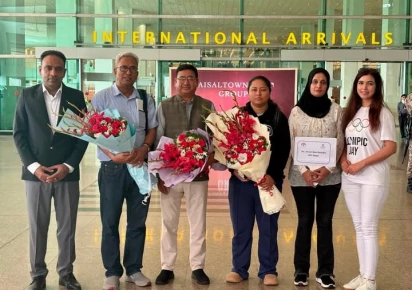
    ISLAMABAD: Preparations for the 14th South Asian Games are gaining momentum as senior Olympic officials from across the region gather in Islamabad ahead of a key meeting on the regional sporting event. The Executive Committee of the South Asian Olympic Council (SAOC) is scheduled to meet in the Pakistani capital on Sunday to review arrangements for the Games, which Pakistan is due to host early next year. Delegations from several participating countries have already arrived in Islamabad, while others are expected to reach the capital shortly. A delegation from Nepal, including National Sports Council President Jeevan Ram Shrestha, Vice-President Chaturananda Raj Vaidya and council member Sikka Suwal Shrestha, was among those welcomed by the Pakistan Olympic Association (POA). India’s representative is expected to join the executive committee meeting through video link. The visiting officials are also scheduled to inspect sports facilities in Islamabad as part of their assessment of preparations. Lahore, however, is not included in the venue inspection itinerary. Pakistan intends to hold the Games primarily in Islamabad and Lahore. Lahore will serve as the Games Secretariat and is expected to host most of the competitions, while Faisalabad will also be involved as a host city, with handball scheduled to be played there. The upcoming edition will be Pakistan’s third time hosting the South Asian Games. The country previously staged the regional competition in Islamabad in 1989 and again in 2004. The biennial Games bring together athletes from across South Asia in a wide range of sporting disciplines. Sunday’s meeting is expected to give regional officials an opportunity to assess preparations, examine venues and address remaining issues before the competition begins. With the Games approaching, the Islamabad gathering represents an important step in Pakistan’s efforts to finalise arrangements and deliver a successful regional sporting event.

  • |

    UN extends Volker Turk’s term as Rights Chief

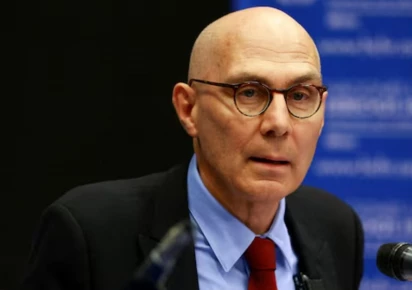
    The United Nations General Assembly has approved a second four-year term for UN High Commissioner for Human Rights Volker Turk. The decision was made despite strong opposition from the United States, Russia and Israel. The 193-member General Assembly voted overwhelmingly in favour of the extension. A total of 144 countries voted for the proposal. Ten opposed it, while 13 abstained. UN Secretary-General Antonio Guterres had proposed Turk for another full term. His current term is due to end in October. The vote came amid growing tensions between Washington and the United Nations. The US administration has reduced funding for several UN agencies. It has also withdrawn from a number of UN bodies. Washington had asked the General Assembly to delay the vote. US officials said more time was needed for consultations and review. The United States also warned that it could reconsider its relationship with the UN if the proposal was approved. US Representative for UN Management and Reform Jeff Bartos criticised the process before the vote. He said the decision did not allow enough time for discussion and oversight by member states. Bartos warned that the US could reassess its engagement, participation and funding of the United Nations. Despite the warning, most member states supported Turk. The European Union backed the extension. Several African and Latin American countries also voted in favour. China supported the proposal as well. Russia strongly opposed Turk’s reappointment. Russian Deputy Ambassador to the UN Dmitry Chumakov accused the rights chief of bias against Moscow. He also criticised Turk for making what Russia described as unfounded allegations against the country. Russia had proposed a shorter extension for Turk. Its plan would have kept him in the position only until the end of 2026. The General Assembly rejected that proposal by a large majority. Israel also opposed the decision. The Israeli Foreign Ministry criticised Guterres’ proposal and said the decision should have been left to the next UN secretary-general. Turk has faced criticism from several powerful countries because of his strong position on human rights issues. He has criticised Russia’s war in Ukraine. He has also raised concerns about Israel’s actions in Gaza. Turk has further called for investigations into deaths involving people held in US immigration custody. Human rights organisations have defended his position. They say the UN human rights chief must be able to challenge powerful countries when fundamental freedoms are threatened. The position has become increasingly important as conflicts and restrictions on civil liberties continue in different parts of the world. Turk is an Austrian lawyer. He has worked with the United Nations for decades. His UN career has included senior positions in Geneva. He has also served in field locations, including Kosovo. With the General Assembly’s latest decision, Turk will become the first UN human rights chief to serve two complete four-year terms. His reappointment is likely to keep human rights at the centre of international debate. It may also further test relations between the United Nations and countries that have opposed his approach.

  • | |

    Sindh faces prolonged nursing shortage, says healt…

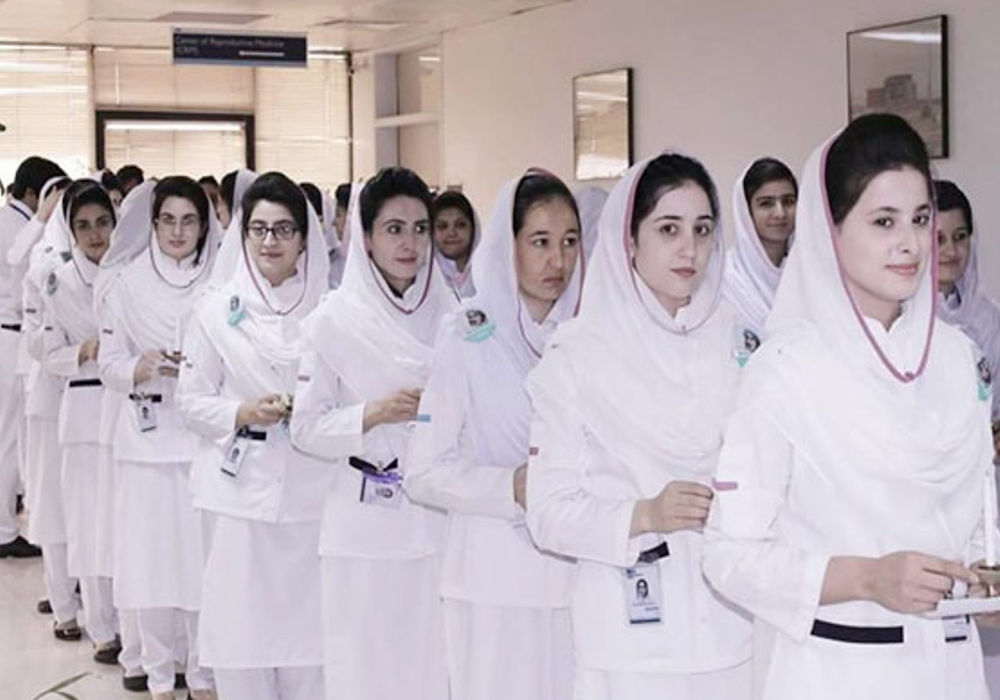
    Sindh Health Minister Dr Azra Fazal Pechuho has said the province has been facing a shortage of nurses for a long time, while many other countries are also struggling to meet the growing demand for nursing professionals. Speaking at a press briefing on the overall health situation in Sindh, Pechuho said the provincial government was taking steps to increase the number of nurses and improve nursing education and training. She said work on health policies and legislation was carried out last year, while several initiatives were continuing this year to strengthen different areas of the healthcare system. According to the minister, discussions are also under way with the Asian Development Bank to support efforts aimed at increasing the nursing workforce. Pechuho said a unified admission policy was being introduced for nursing colleges across Sindh. The policy is intended to improve the standard of nursing education and training and ensure greater consistency among institutions. She said around 5,000 nurses currently complete their education and enter the profession every year. The government aims to increase the number of nursing graduates to around 46,000 in the coming years. The health minister said many nurses come from financially disadvantaged families, which is one of the reasons a significant number seek employment opportunities abroad. She said two nursing centres were also being established under a pilot project to expand training and educational opportunities for aspiring nurses. Pechuho further announced that recruitment had been approved for staff at Jinnah Hospital and the National Institute of Cardiovascular Diseases (NICVD). She also highlighted several developments in Sindh’s healthcare infrastructure. According to the minister, the Sindh Institute of Urology and Transplantation (SIUT) has been expanded to provide additional healthcare services. A new block has also been established at NICVD, while vascular surgery services have started at the Trauma Centre. The minister said the government was continuing efforts to improve healthcare facilities and expand specialised medical services across the province. Pechuho also said that the rate of maternal deaths had increased in connection with surgical deliveries, highlighting the need for greater attention to maternal healthcare and safer childbirth practices.

Leave a Reply

Your email address will not be published. Required fields are marked *