chilling details nancy
| |

Chilling details of Nancy Guthrie’s first ra…

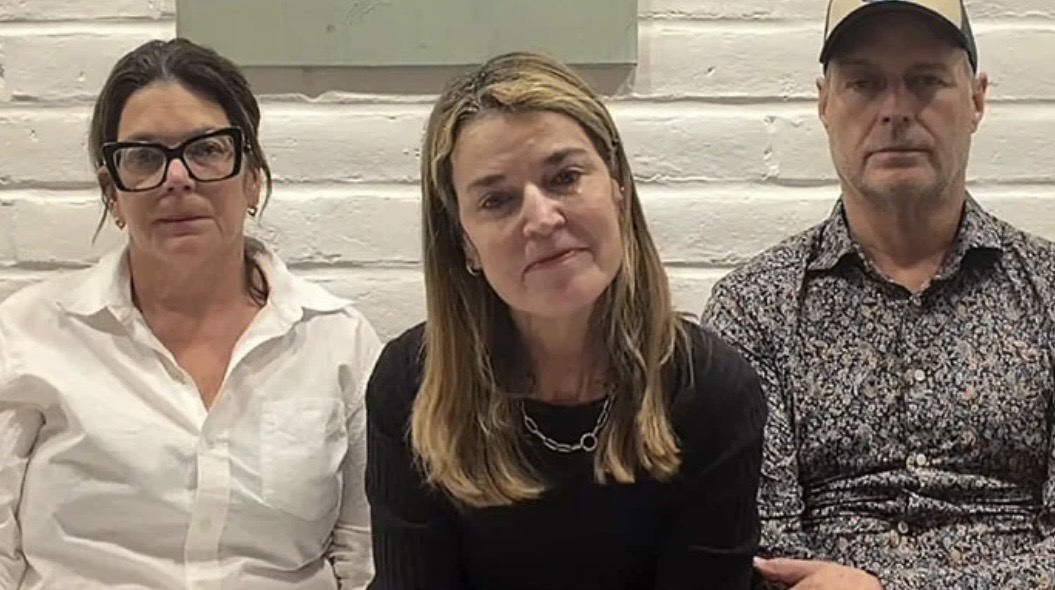
The investigation into the alleged kidnapping of Nancy Guthrie has taken a chilling turn as details of the first ransom note sent to her family have been revealed. The note, which authorities have described as both genuine and threatening, was addressed to Nancy’s daughter, Savannah, and contained warnings that have left investigators and the public on edge.

Crime journalist Briana Whitney, speaking on the Crime Junkie podcast, revealed the terrifying message allegedly sent to Savannah. The most chilling line in the note read: “It is in the best interest of everyone to have this completed as soon as possible.” Whitney, reading from the ransom message, further detailed the captors’ demands: “You will not be able to contact me from here on out. There will be no negotiation. Do not play games. Law enforcement will not be able to help you.”

The note, which was sent shortly after Nancy was last seen at home on January 31, has dominated the investigation. While some ransom notes were reportedly deemed to be hoaxes, authorities confirmed that others were genuine, adding to the complexity of the case. Investigators have yet to produce a suspect in the alleged kidnapping, leaving the family and the public seeking answers.

The ransom notes have been central to the case, with authorities reportedly keeping many details under wraps to avoid compromising the investigation. However, the release of these chilling details has shed new light on the threats faced by the Guthrie family. The note’s warning that law enforcement would not be able to help and that there would be no negotiation suggests a calculated effort by the captors to isolate Savannah and exert maximum pressure on the family.

Nancy Guthrie’s disappearance has sparked widespread concern, with her family making several public pleas for her safe return. The investigation remains ongoing, with authorities urging anyone with information to come forward. The release of the ransom note details has reignited public interest in the case, with many hoping that the new information will lead to a breakthrough.

As the investigation continues, the Guthrie family remains in the spotlight, their ordeal serving as a stark reminder of the terror faced by families of kidnapping victims. The chilling words of the ransom note have left an indelible mark on the case, underscoring the urgency of finding Nancy and bringing her captors to justice. The public awaits further developments, hoping for a resolution that will bring closure to the family and accountability for those responsible.

Similar Posts

  • |

    Mother, daughter killed in Lahore road crash

    A tragic road accident claimed the lives of a woman and her young daughter in Lahore’s suburban area of Manga Mandi after a passenger bus collided with their motorcycle. Another person riding the motorcycle sustained injuries in the crash. According to Rescue officials, emergency teams responded quickly to the scene and shifted the bodies of the deceased mother and daughter to the morgue for legal formalities. Rescuers also transported the injured victim to a nearby hospital, where doctors are providing medical treatment. Police said the bus driver fled the scene immediately after the accident, leaving the vehicle behind. Authorities have launched a search operation and are conducting raids to arrest the suspect. The incident has once again raised concerns about reckless driving and road safety in the city, as traffic accidents continue to claim lives on busy roads across Lahore. Police have started an investigation to determine the exact circumstances that led to the fatal collision.

  • Thai Air Force Strikes Poipet Arms Depot, Citing Defensive Action

    BANGKOK – The Royal Thai Air Force conducted air strikes on military targets outside the Cambodian city of Poipet on Thursday, escalating its response to ongoing border hostilities. Air Marshal Chakkrit Thammavichai, spokesman for the RTAF, stated the operation was a defensive and proportionate measure targeting an arms depot and logistics center used to store […]

  • | | | |

    Why Lahore sinks whenever it rains in the city? 

    The rain on July 22 almost sank most parts of Defence Housing Authority. Those low-lying areas of the city were also under water. And this happened as the city was lashed with 343 millimetres of rain for two days, according to the Provincial Disaster Management Authority (PDMA). That spell has gone and when you are reading these lines, the city is undergoing a second rain spell. Pakistan’s Meteorological Department has issued a fresh weather advisory, warning that another active monsoon spell is expected from July 29 to August 5 across much of the country. The department said rain, wind and thundershowers, along with scattered heavy to very heavy rainfall, may trigger urban flooding, flash floods and landslides in vulnerable areas. This will keep the residents of low-lying areas, mainly of Lahore’s south, and DHA on the toe. Reacting to this advisory, environmental activist Rafay Alam explained why cities like Lahore keep flooding every monsoon season, and what is really behind the crisis. He said the Met Department had already notified that rain would continue for two days and people were warned in advance that urban flooding would take place, not just in Lahore, but in several cities across Punjab, including Gujranwala and Sialkot. He then pointed to last year’s floods for comparison. “Those floods were caused by heavy rains in the northern areas of the country, which caused rivers to swell,” he said. On top of that, India had released water from the Pong Dam and Bhakra Dam. He said a gate at the Madhopur headworks also broke, causing water levels in the Ravi river to rise sharply. Alam said the situation today is different. The flooding happening now is not caused by river floods or dam releases. Instead, it is simply due to heavy rainfall occurring within Pakistan itself. He said that if people read the Met Department’s advisory carefully, the heaviest rain in the coming days is expected in the northern areas once again, not directly over Lahore. He advised people to check whether they live in low lying or high lying areas, since this makes a big difference during heavy rain. However, he said that the real issue lies in the sheer intensity of rainfall being recorded now. “Some areas have received around 150 millimetres of rain within just a few hours,” he said. He added that 20 or 30 years ago, when the drainage systems and infrastructure in these areas were built, climate change was never part of the planning. Nobody at that time imagined that such intense rainfall could happen within just a few hours. As a result, the old infrastructure simply cannot handle the kind of rain Pakistan is now experiencing. Dr Farid A Malik, a resident of Defence Phase 5, witnessed the entire flood attack first hand. He said that when he was growing up in the 1950s, 1960s and 1970s, rainwater never used to stand in Lahore. At that time, he said, the city was much smaller and the population was far lower, yet even then, the city did not face standing water after rainfall the way it does today. “Whenever the rain would stop, we children used to go out on our bicycles looking for standing water, just for fun. And there were really only two places where water would collect. One was near Shahdara, and another was near the Do Moriya Pul area close to the railway station. That area of Shahdara was a low lying area,” he said. He recalled that in the 1970s, when Zulfiqar Ali Bhutto’s government came into power, and the People’s Party had a lot of support from that area of Lahore at the time, the government promised that they would install pumps in Shahdara and set up a proper system to drain the water out. And they actually did this. Heavy duty pumps were installed in Shahdara, and they used to successfully drain the water out. Dr Farid said the sewerage system Lahore has today simply cannot handle rainwater, because the amount of water that comes with heavy rain is very large, and the system does not have the capacity to handle that much water. He explained there are two separate problems here. First, the underground sewerage system is not cleaned properly. The pipes, whether four feet wide or six feet wide, have become clogged with scaling inside them over time. So even though a pipe might be four or six feet in diameter, the actual open space left for water to pass through has shrunk down to just one or two feet, meaning the whole system does not flow properly. Second, even if the sewerage system was clean, it still cannot handle rainwater on top of regular sewage. For this reason, Lahore used to have separate storm drains, called nalas in Urdu, which carried rainwater away separately into the Ravi river. Because of this separate system, rainwater never used to accumulate in the city. He said this has changed because storm drains have been blocked, either through neglect or construction on top of them. “An entire market has been built on top of a storm drain along Hall Road,” he said, adding that similar encroachment has happened along the Ravi river itself. Last year, water that should have gone into the river ended up flowing into housing societies instead. Dr Farid also pointed out that when Lahore had open drains instead of an underground sewerage system, the drainage actually worked better. Since the city moved underground, cleaning has become irregular, flow has suffered, and pumping stations work only some of the time. He said Lahore’s expansion added to the problem, since new areas were given sewerage systems but no proper storm drain network for rainwater. DHA, he said, expanded in phases over the years without any master plan covering how sewage and rainwater would both be managed. Speaking about his own neighbourhood, Dr Farid said there is a pumping station near the Sui Gas Society area of Defence that pumps sewage water

  • |

    Indian law graduates oppose CJI Surya Kant as convocation chief guest

    Graduates of the National Academy of Legal Studies and Research in Hyderabad have urged the university administration to reconsider its decision to invite Chief Justice of India Surya Kant as the chief guest at its upcoming convocation. The students have submitted a written request to the vice chancellor, registrar and faculty members. They said the university should consider constitutional values, justice and respect for citizens’ grievances while deciding who should preside over such an important academic event. The students’ concerns are linked to the Supreme Court’s handling of a petition related to police action during a protest at Jantar Mantar in New Delhi on July 20. The protest was held under the banner of “Chalo Sansad”. The students have raised questions about the court’s decision not to list the petition for an urgent hearing at the time. In their representation, the graduates referred to reports about a hearing held on July 22. They claimed that the lawyer representing the protesters was told not to waste the court’s time. The students also cited reports that the lawyer offered to show videos of alleged police excesses during the protest. According to the petition, the chief justice reportedly declined to watch the footage, saying he did not have time. The graduates further alleged that the lawyer was not allowed to fully explain the reasons behind the protest. They said the matter deserved greater consideration because of the allegations surrounding the police action. The students also said a separate letter had previously been sent to the chief justice. The letter reportedly requested the Supreme Court to take suo motu notice of the alleged police action. According to the students’ petition, more than 170 protesters were injured during the incident. They claimed that women and children were also among those injured. The graduates said their concerns were based on the principles they had been taught during their time at the law university. They argued that constitutional rights and citizens’ freedoms were central to their legal education. They said receiving degrees from a chief guest whose recent conduct they believe raises questions about the handling of allegations of police violence would be a matter of concern. The students have therefore asked the university to reconsider the invitation. They have also sought consultation with graduating students before making a final decision. They further requested a meeting with the university administration to discuss the issue. The graduates also asked the administration to respond to their concerns without delay.

  • |

    Indonesia earthquake, 38 dead as rescue teams race…

    JAKARTA: At least 38 people have died after a powerful magnitude-7.7 earthquake struck eastern Indonesia on Saturday, sending residents fleeing from homes, damaging buildings and triggering a brief tsunami warning, officials said. The shallow offshore earthquake was followed by dozens of aftershocks, complicating rescue efforts across East Nusa Tenggara province. Authorities said tsunami waves measuring less than one metre were recorded in several areas before the warning was lifted about three hours after the main tremor. Suharyanto, head of Indonesia’s National Disaster Management Agency (BNPB), said 38 people had died, while two were seriously injured and 11 suffered minor injuries. About 2,000 residents were evacuated to safer areas as authorities assessed the damage. Maumere, the main town in Sikka Regency on Flores Island, was among the worst-hit locations. Rescue officials reported finding 20 bodies there, while several people were injured and others remained trapped beneath collapsed structures. The disaster also struck Nagekeo, the area closest to the earthquake’s epicentre. Rescue teams faced major difficulties reaching the region because landslides blocked roads and communication signals were disrupted. Authorities said around 2,000 residents in Nagekeo had moved to safer locations, while houses, warehouses and government facilities were damaged. Officials said power outages and traffic congestion were reported in parts of the affected region. In some locations, residents rushed outdoors as buildings shook violently. Hospitals also moved patients outside as a precaution against further tremors. A resident of Talibura described the shaking as extremely powerful, saying her family ran from their home after the earthquake struck. Her account reflected the panic felt across communities as the ground continued to shake. The Indonesian geophysics agency said the initial earthquake occurred at a depth of about 15 kilometres and was followed by multiple aftershocks. Rescue workers are continuing to search damaged buildings and isolated communities for survivors. Officials said emergency crews were using boats and other routes where roads remained blocked by landslides and debris. Indonesia is particularly vulnerable to earthquakes because it lies along the Pacific Ring of Fire, a highly active seismic zone where tectonic plates meet. The region has suffered devastating earthquakes before, including a magnitude-7.5 quake in 1992 that caused extensive destruction. Authorities warned that the situation remains fluid as rescue teams work to reach isolated areas, determine the full scale of damage and provide assistance to displaced residents. The death toll could rise as search operations continue.

  • | |

    AJK rejects firing allegations against forces

    The Government of Azad Jammu and Kashmir (AJK) has strongly rejected allegations that security forces opened fire on protesters or were responsible for civilian deaths during the recent unrest in Rawalakot, describing the claims as false, unverified and part of an organised disinformation campaign. Responding to a report by the BBC on the recent incidents, the AJK government said armed members of the banned Joint Awami Action Committee opened fire on security personnel in Rawalakot, resulting in the deaths and injuries of several officers. It also alleged that the attackers set multiple vehicles on fire during the violence. According to the government, security forces acted only to maintain law and order and enforce the law, insisting that civilians were not deliberately targeted during the operation. The AJK government cited information from the police spokesperson, who said seven security personnel were killed and 143 others were injured in firing allegedly carried out by armed members of the banned Joint Awami Action Committee. It further claimed that the banned group has a history of violent activities. According to the statement, attacks carried out in 2024 and 2025 resulted in the deaths of four security personnel and left hundreds of others injured. The government also said two individuals arrested on July 28 and 29 were under investigation. It alleged that one of the suspects claimed a reward of Rs10 million had been offered for the killing of each Ranger, raising questions about the possible funding of the group. According to the statement, verified videos show armed individuals linked to the banned Joint Awami Action Committee using modern weapons and firing during the unrest. The AJK government maintained that law enforcement agencies carried out their constitutional responsibilities with restraint and professionalism. It insisted that no action was taken against peaceful civilians and that operations were conducted solely to restore public order. The government also categorically denied allegations of indiscriminate firing, the use of snipers or claims that bodies of victims were withheld from their families. It further alleged that the banned Joint Awami Action Committee had previously been involved in blocking roads, stopping or burning cargo vehicles and disrupting the supply of essential goods. According to the statement, law enforcement agencies made efforts to keep roads open and ensure the uninterrupted movement of essential supplies. The AJK government added that the Joint Awami Action Committee has been declared a banned organisation under the Anti-Terrorism Act and said all legal proceedings against the group are being carried out in accordance with the law.

Leave a Reply

Your email address will not be published. Required fields are marked *