two more air
|

Two more air India pilots fail initial drug tests


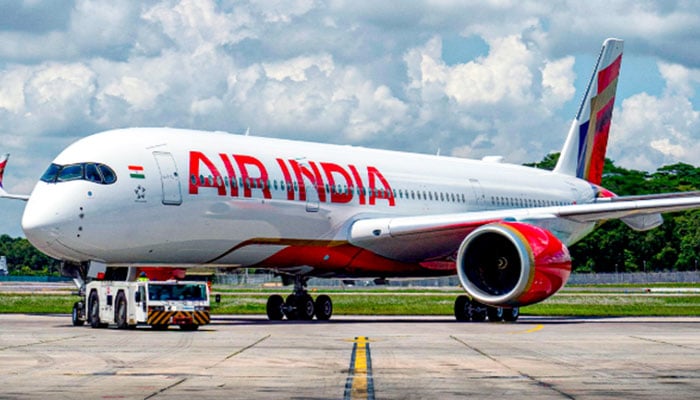
Two more Air India pilots have failed preliminary drug screening following the incident involving an Air India flight from Phuket to Delhi. The airline has temporarily removed both pilots from flying duties while authorities await the results of their final tests.

According to Indian media reports, Air India decided to conduct drug screening for all its pilots after the incident. More than 300 pilots have undergone testing so far, with final results generally taking between 24 and 48 hours.

The captain of the Phuket-to-Delhi flight also failed two drug-related tests conducted after the aircraft landed. Subsequent testing reportedly detected cannabis in the pilot’s system. Indian media have also reported that a flight attendant complained that the captain had allegedly used cannabis before the flight.

The development has raised further questions about safety procedures and pilot fitness at Air India. The airline is now reviewing the results of the wider testing campaign as it seeks to determine whether any other crew members may have violated aviation safety regulations.

The Phuket-Delhi flight involved an Airbus A320neo that reportedly experienced a sudden loss of altitude during the journey. The aircraft dropped by around 300 feet before recovering, prompting concerns among passengers and crew.

Officials initially described the incident as turbulence. However, detailed information from the aircraft’s systems later prompted closer scrutiny of what happened during the flight and raised questions about possible technical issues as well as the captain’s conduct.

Air India has yet to receive the final laboratory results for the two newly identified pilots. Until those results arrive, the airline has kept both pilots off flight operations as a precautionary measure.

Similar Posts

  • |

    Indian activists challenge AI-powered police surveillance following student demonstrations

    Indian digital rights activists and student leaders are challenging Prime Minister Narendra Modi’s government in the Delhi High Court over the deployment of artificial intelligence-powered mass surveillance during recent youth protests in New Delhi. Student activist Aishe Ghosh filed a petition with the Delhi High Court seeking to declare the police’s mass surveillance of demonstrators unconstitutional. The lawsuit requests the immediate destruction of all personal and biometric data collected during the demonstrations and asks the court to establish clear binding guidelines governing the use of surveillance technologies at public gatherings. The controversy intensified after photographs circulated showing a mobile police surveillance unit, branded “Ikshana” and developed alongside security firm CP Plus, deployed at the main protest site. The vehicle featured telescopic masts providing 360-degree coverage, AI-powered cameras, and real-time facial recognition capabilities that displayed face accuracy metrics to match attendees against law enforcement databases. Furthermore, police officers were documented recording the social media handles of arriving participants. Digital rights organisations, including the Internet Freedom Foundation, have formally requested the Delhi Police Commissioner to delete all biometric data gathered during the events. Advocates emphasise that India currently lacks a dedicated legal framework governing police deployment of facial recognition systems, making such intrusive measures disproportionate and illegal. During court proceedings, Solicitor General Tushar Mehta defended law enforcement actions, arguing that expectations of privacy at a public gathering were misplaced and asserting that the security measures were absolutely necessary in the interest of public order. Delhi Police maintained that the technology was used solely to identify individuals with criminal histories and count crowd size without restricting freedoms. The court challenge continues despite the end of the student demonstrations, which were triggered by widespread examination paper leaks in national competitive tests. The protests culminated in the resignation of Union Education Minister Dharmendra Pradhan and the announcement of a government panel tasked with overhauling the national examination system.

  • | |

    Saudi-US talks focus on easing regional tensions, …

    Saudi Crown Prince Mohammed bin Salman and US Central Command chief Admiral Brad Cooper have held talks on regional security and efforts to ease tensions, as the conflict involving Iran continues to threaten stability and global energy supplies. According to Saudi state media, the two officials discussed defence cooperation between Riyadh and Washington, developments across the region and diplomatic efforts aimed at reducing tensions and strengthening security. The meeting came as concerns surrounding the Strait of Hormuz intensified. The strategic waterway remains a major route for global oil and liquefied natural gas shipments, and disruptions caused by the conflict have raised fears of further pressure on international energy markets. Saudi Arabia also announced the launch of a multinational defensive maritime alliance, with 13 countries joining the initiative. Representatives from 39 countries attended a planning meeting held at the Western Fleet Command in Jeddah, which Saudi authorities described as an important step towards putting the alliance into operation. Meanwhile, Washington has signalled that its economic and military pressure on Tehran could intensify. US Treasury Secretary Scott Bessent said the United States was preparing measures against Iran on a scale not previously seen in efforts to economically isolate a country. Bessent said the strategy would combine tougher economic restrictions with continued pressure surrounding the Strait of Hormuz. He indicated that further announcements could come next week as Washington seeks to increase pressure on Tehran. US Defence Secretary Pete Hegseth also said the US Navy could maintain a blockade of Iranian ports and shipping routes for an indefinite period, arguing that American forces had sufficient capacity to rotate vessels and sustain the operation. The standoff has already severely affected shipping through the Strait of Hormuz. Traffic has fallen sharply compared with levels recorded before the conflict, when roughly 130 to 140 vessels passed through the waterway each day. The decline has raised concerns about disruptions to international energy supplies. Tensions escalated further after two vessels operated by Abu Dhabi National Oil Company were reportedly attacked while travelling through the strait. The UAE condemned the incident and blamed Iran for the attacks. Iran has rejected US claims over control of the waterway and has indicated that normal shipping will not resume until its demands are addressed. Tehran has called for the removal of economic sanctions and the release of frozen Iranian assets. The conflict is also putting increasing pressure on global oil markets. The International Energy Agency has revised its estimate for the decline in global oil supply, projecting a reduction of about 4.3 million barrels per day this year, equivalent to around 4% of global supply. Although oil prices fell by more than 2% on Thursday amid concerns over weaker demand and rising US crude inventories, renewed reports of attacks linked to Iran-backed forces have continued to fuel uncertainty in energy markets. The economic consequences are spreading beyond the region, with economists warning that a prolonged conflict could significantly weaken global growth and increase the risk of recession in some economies. US President Donald Trump has faced growing domestic pressure to bring the conflict to an end as higher fuel prices weigh on American consumers and threaten his political standing ahead of November’s midterm elections. While Trump has repeatedly warned that military action against Iran could escalate, he has so far avoided deploying ground troops or launching attacks against some of the region’s most sensitive strategic targets. More recently, he has indicated a greater reliance on economic pressure. Hegseth, meanwhile, said Washington’s priority remained preventing Iran from acquiring a nuclear weapon and declined to comment on whether previous ceasefire decisions had been mistakes. With diplomatic efforts struggling and tensions around the Strait of Hormuz continuing, Saudi-US security coordination is emerging as a key factor in attempts to contain the wider regional crisis and protect vital international shipping routes.

  • | | | |

    Iran accuses EU of hypocrisy as war tensions rise

    Iran has accused the European Union of hypocrisy over its criticism of Iran’s human rights record. Iranian Foreign Ministry spokesman Esmaeil Baghaei made the remarks in response to comments by EU foreign policy chief Kaja Kallas. Baghaei said the EU could not claim to defend human rights while, in Iran’s view, supporting military actions against the country. He accused European governments of providing logistical and technical assistance that Iran says has helped attacks against civilians and critical infrastructure. Baghaei also criticised the EU for what he described as its failure to condemn attacks on Iran. He said European officials had not shown enough concern over Iranian civilians, including children, killed during the conflict. He said the EU’s position had damaged its credibility and called its approach hypocritical. The accusations come as the conflict between Iran and the United States enters another dangerous phase. US President Donald Trump said Israeli Prime Minister Benjamin Netanyahu will visit Washington next Tuesday. The meeting is expected to focus heavily on the ongoing conflict with Iran. The announcement comes after another wave of US military strikes against targets in Iran. Trump has continued to threaten stronger military action while also keeping the possibility of negotiations open. He said Washington is currently talking with Tehran and suggested that Iranian officials appear more serious about negotiations than before. At the same time, Trump warned that the US military remains prepared for further action. He said Washington faces two possible paths. One is to continue expanding military operations. The other is to reach a diplomatic agreement. The Strait of Hormuz remains at the centre of the crisis. The strategic waterway is a major route for global energy supplies. The conflict has already disrupted shipping and pushed oil prices higher. It has also raised concerns about inflation and a wider global economic slowdown. The situation has become more complicated with Houthi attacks in the Red Sea. The group has declared a naval blockade targeting Saudi Arabia and has threatened commercial shipping. A Saudi vessel suffered minor damage in a Red Sea attack on Friday, according to Saudi state media. The Saudi-led coalition later said it had carried out strikes against Houthi military positions in Yemen. The reports could not be independently verified. Iran has also issued increasingly strong warnings to US forces in the region. The US military has carried out air strikes against Iran for several consecutive nights. Iran’s Health Ministry said dozens of people had been killed and hundreds wounded since fighting resumed in late June. Iranian military officials have also threatened retaliation against US personnel for Iranian casualties. The conflict has already resulted in US military deaths and injuries, according to American officials. Meanwhile, Pakistan is exploring possible diplomatic channels to help revive stalled talks between Washington and Tehran. Pakistani officials have reportedly held exploratory discussions as international efforts increase to find a way out of the conflict. China has also been pushing for renewed negotiations. The fighting is also affecting global energy markets and shipping routes. Oil prices surged after attacks on Saudi-linked shipping in the Red Sea. Brent crude later fell but remained close to $100 a barrel. Several tankers have reportedly changed their routes because of security concerns around the Red Sea. Some vessels are taking longer routes through the Suez Canal and around Africa. Shipping through the Strait of Hormuz has also fallen sharply. Iran has meanwhile claimed attacks on US military positions in Kuwait and other parts of the Gulf. Kuwait said its air defence systems were responding to hostile targets launched from Iran. Iran’s Revolutionary Guards also claimed to have damaged a surveillance facility associated with the US Fifth Fleet in Bahrain

  • |

    U.S. Crude oil reserves fall to 45-year low amid rising tensions with Iran

      The United States’ crude oil reserves have declined sharply since tensions with Iran began escalating, reaching their lowest level in approximately 45 years, according to recent data. The significant reduction in oil stockpiles has raised concerns among energy experts and policymakers about the country’s energy security and its ability to respond to potential supply disruptions in the future. According to a chart released by Bank of America, the United States currently has enough crude oil supplies to meet approximately 43 days of demand. This marks the lowest level since July 1983, highlighting a substantial decline in available reserves. Analysts consider this an important indicator of the country’s energy preparedness, particularly at a time of heightened geopolitical uncertainty in the Middle East. The decline in reserves comes amid ongoing tensions involving Iran, a key player in global energy markets. Any instability in the region has the potential to affect international oil supplies and prices, making reserve levels an important measure of a country’s ability to withstand disruptions. As geopolitical risks continue to rise, the shrinking U.S. oil inventory has drawn increased attention from financial institutions and energy analysts. Recent figures released by the U.S. Energy Information Administration (EIA) confirm that both commercial and strategic crude oil reserves have remained under sustained pressure. As of July 10, the country’s commercial crude oil inventories stood at approximately 409.7 million barrels. This represents a level that is nearly 6 percent below the five-year average, indicating that inventories remain significantly lower than what is typically considered normal for this time of year. Commercial oil inventories play a vital role in meeting the daily energy demands of industries, transportation, and consumers. Lower-than-average stockpiles may leave the market more vulnerable to unexpected supply disruptions, refinery outages, or sharp increases in demand, particularly during periods of economic growth or geopolitical instability. In addition to commercial reserves, the Strategic Petroleum Reserve (SPR)—the United States’ emergency oil stockpile maintained for national security purposes—has also declined substantially. According to the latest data, the SPR fell to approximately 316.5 million barrels as of July 18, marking its lowest level since April 1983. The Strategic Petroleum Reserve is designed to provide emergency supplies during severe energy crises, natural disasters, or major disruptions in global oil markets. The continued reduction in the SPR has prompted discussions among energy experts regarding the need to replenish the reserve and strengthen the country’s emergency preparedness. While portions of the reserve have been released in recent years to help stabilize fuel prices and address supply concerns, rebuilding these stockpiles has become an increasingly important policy consideration. When commercial inventories and the Strategic Petroleum Reserve are combined, the United States’ total crude oil reserves currently stand at approximately 730.8 million barrels. This places overall U.S. oil stockpiles among their lowest levels in more than four decades, underscoring the long-term decline in available reserves. Energy analysts note that reserve levels alone do not necessarily indicate an immediate shortage, as the United States remains one of the world’s largest oil producers. However, lower inventories reduce the country’s flexibility in responding to unexpected supply shocks or prolonged geopolitical crises. The sharp decline in U.S. oil reserves serves as a significant reminder of the challenges facing global energy markets. With geopolitical tensions, fluctuating production levels, and evolving energy policies continuing to shape the industry, maintaining adequate strategic and commercial reserves remains a key priority for ensuring long-term energy security and economic stability in the United States.

  • |

    West Bank village mourns lost harvest as violence halts annual fig festival

    The Palestinian village of Tel in the northern occupied West Bank should have been celebrating one of its busiest and most cherished times of the year. Residents had spent weeks preparing for the annual fig harvest and a festival expected to attract visitors from across the region. Instead, the village has been left grieving after a deadly confrontation forced organizers to cancel the event and replaced the festive atmosphere with mourning. The violence erupted after an attack involving Israeli settlers last week. The clashes that followed resulted in the deaths of four Palestinians and two Israeli settlers, leaving the community in shock. Black flags now hang where festival decorations were meant to be displayed, while many orchards remain out of reach because of an increased Israeli military presence and ongoing restrictions in the area. Tel village council head Walid Zaidan said the tragedy has deeply affected the community of around 7,000 people. According to him, the village has lost its usual energy and sense of joy after the deaths of four young residents in a single day. He said the emotional impact is visible throughout the village, where families continue to cope with grief and uncertainty. Zaidan said residents had not been seeking confrontation but were trying to protect their homes after repeated attacks by Israeli settlers. He recalled an earlier incident in which the home of a local resident, Sohaib Ramadan, was set on fire. The family managed to escape only moments before the house was completely destroyed. He said many villagers feared another similar attack and went out to defend their neighborhood when violence broke out again. The damage has extended beyond the loss of life. Zaidan said Israeli bulldozers entered farmland and cleared large sections of agricultural land. Initial estimates suggest that around 2,000 dunams, or roughly 500 acres, have been affected. Local officials have been unable to inspect the full extent of the destruction because access to the area remains restricted by Israeli forces and settlers. Residents also claim that a new settlement outpost is being established on the land. At the same time, Israeli forces have carried out arrests and questioned dozens of Palestinians in the village, adding to growing tensions. For the people of Tel, farming is more than an economic activity. Fig trees, olive groves and prickly pear plants have long been central to the village’s identity and way of life. Tel is known throughout the occupied West Bank for producing several varieties of figs, drawing visitors each harvest season to buy fresh fruit and locally made products. Plans for a three day festival featuring figs, dairy products, cheeses and other local goods were abandoned after the violence. Farmers who own nearby livestock and poultry farms have also struggled to reach their animals because roads remain blocked, raising concerns about the welfare of their livestock. Local resident Omar Ishtayeh said the village has depended on agriculture for generations, but increasing restrictions and repeated settler attacks have made farming more difficult. He said orchards that once represented prosperity now reflect the hardships facing local families. With the fig season already underway, many farmers fear the fruit will spoil before they are able to safely return to their land. Palestinian officials argue that the events in Tel are part of a wider rise in settler violence across the occupied West Bank. According to the Palestinian Colonisation and Wall Resistance Commission, thousands of attacks targeting Palestinians and their property were recorded during the first half of 2026. These incidents included assaults on civilians, arson attacks, damage to farmland, restrictions on access to agricultural areas and the expansion of settlement outposts. The United Nations considers Israeli settlements in the occupied Palestinian territories illegal under international law. Palestinians say the continued expansion of settlements is reducing hopes for the creation of an independent Palestinian state and making everyday life increasingly difficult for communities that rely on their land for survival.

  • Trump’s wildfire blame game with Canada draws scientist backlash

    President Trump’s claim that Canada is “poisoning” American air with wildfire smoke is facing strong pushback from climate scientists, who say he is blaming a country for a crisis it did not create. Trump raised the issue with Canadian Prime Minister Mark Carney and later told reporters at Joint Base Andrews that the fires need to stop. The exchange happened during the World Cup final. Trump confronted Carney at the match, telling him directly that American air was being poisoned and that the fires had to be brought under control. Afterward, he floated financial consequences. He suggested Canada should either pay damages or face new tariffs over the smoke. Trump has framed the fires in unusually aggressive terms. On Truth Social, he wrote that the United States was being “unnecessarily invaded” by polluted air from Canada’s poorly maintained forests, calling it willful negligence that costs America billions every year. Some allies in Congress have echoed that tone, with talk of legislation targeting Canada’s forestry practices. Meanwhile, the smoke itself has been widespread. Fires that began in mid-June spread further in July, affecting roughly 100 million Americans across 14 states. Canadian officials note that this year’s boreal forest losses are running well above the historical average. Scientists reject the idea that Canada is at fault. Climate researcher Michael Mann has compared Trump’s stance to someone causing a car crash through reckless driving, then sending the other driver the repair bill. He went on arguing that the administration’s own fossil fuel expansion is worsening the very problem it’s blaming on Canada. Stanford’s Marshall Burke points out that most of the burning Canadian forest is remote and largely unmanaged, unlike forests in the US. That rising global temperatures, not any lack of Canadian action, are driving the surge in extreme fire conditions. Wildfire ecologist Lori Daniels of the University of British Columbia called the attacks on Canada uninformed, saying they ignore both the human toll and the firefighters risking their lives on the front lines. She noted that targeted forest thinning, inspired by Indigenous land practices, could help in some North American forests, but wouldn’t make much difference across Canada’s vast, sparse boreal landscape. Carney has pushed back too, telling reporters that fighting climate change is “the responsibility of all countries, including the United States”, noting that some U.S. energy policies work against clean energy goals even as Canada pursues its own climate efforts globally.

Leave a Reply

Your email address will not be published. Required fields are marked *