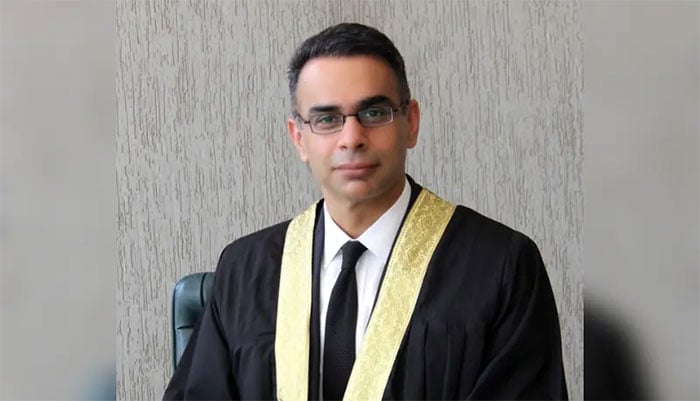
rajab butts emotional
|

Rajab Butt’s emotional fan encounter triggers online trolling

Rajab Butt is among Pakistan’s most popular and widely discussed YouTubers, with a massive fan base that closely follows his personal and professional life. Known for sharing updates about his family, lifestyle and daily activities, Rajab has built a strong connection with his viewers over the years.

His followers are often referred to as the “Rajab Family,” and the YouTuber has previously spoken about how emotionally attached many of his fans are to him.

However, a recent video involving one of his female fans has taken social media by storm and sparked a wave of mixed reactions online.

The video shows a female fan meeting Rajab Butt in person. According to the footage circulating on social media, the moment she saw the YouTuber, she became overwhelmed with emotion and suddenly burst into tears. She appeared visibly emotional while standing in front of Rajab, who remained there as she struggled to contain her feelings.

The unexpected reaction quickly attracted attention after the video began spreading across social media platforms. While some viewers appeared surprised by the intensity of the fan’s emotions, others turned the incident into a subject of criticism and trolling.

Several social media users questioned why the fan became so emotional after meeting Rajab. Some found the scene uncomfortable to watch, while others accused the entire interaction of being staged for attention and views. A few commenters also suggested that the reaction appeared exaggerated and described the video as scripted.

One social media user expressed embarrassment over the scene, while another criticized the fan’s reaction and claimed that the moment seemed deliberately created for the camera. Another commenter simply dismissed the incident as unnecessary, reflecting the growing criticism surrounding the viral clip.

The reactions have highlighted the complicated relationship between online personalities and their followers. For influencers with millions of viewers, fan encounters can sometimes become highly emotional moments, particularly when followers have spent years watching their content and developing a personal connection with the creator.

At the same time, viral moments involving public figures often attract criticism, especially when viewers believe that a reaction may have been exaggerated or staged. In Rajab’s case, the fan’s emotional response has quickly become a topic of discussion, with social media users divided over whether it was a genuine display of admiration or simply another viral moment.

Rajab Butt has not publicly clarified whether the interaction was spontaneous or planned. For now, the video continues to circulate online, while users remain divided between those who understand the fan’s emotional reaction and those who believe the entire scene was unnecessary or scripted.

The incident once again demonstrates how closely Rajab’s fans follow him and how even a brief interaction can quickly become a major talking point across social media.
Similar Posts

  • |

    Bangladesh MP defends controversial second marriage

    A controversy has erupted in Bangladesh after a member of parliament from Jamaat-e-Islami, Ghazi Nazrul Islam, became the center of public debate over his alleged second marriage following the circulation of a viral video on social media. According to Bangladeshi media reports, the video showed Ghazi Nazrul Islam with a young woman whom he later identified as his second wife. The footage quickly spread online, prompting widespread discussion and speculation. A fact-checking organization examined the video and stated that it found no evidence suggesting it had been generated using artificial intelligence or digitally manipulated. Following that assessment, public attention shifted from the authenticity of the video to the identity of the woman and the nature of her relationship with the lawmaker. In a statement, Ghazi Nazrul Islam confirmed that the woman is his second wife. He said the marriage took place on June 17 with the consent of both families and the approval of his first wife. The lawmaker alleged that the viral video had been secretly recorded and later released as part of an extortion attempt and a politically motivated campaign to damage his reputation. His first wife also released a video supporting his account. She confirmed that her husband had married Maryam Begum as his second wife and said the marriage had taken place with her knowledge and consent. Maryam Begum also appeared in a separate video, identifying herself as Ghazi Nazrul Islam’s wife. She said the marriage ceremony was held on June 17 in the presence of both families and the lawmaker’s first wife. Despite these public statements, Bangladeshi media reported that documents related to Maryam Begum later surfaced on social media. The authenticity of those documents has not been independently verified, and neither the lawmaker nor Maryam Begum or her family has publicly addressed the apparent inconsistencies contained in them. According to the documents, Maryam Begum’s marital status was listed as “unmarried.” The papers also reportedly included a recommendation signed by Ghazi Nazrul Islam on June 22—five days after the claimed marriage—in support of her application for a government job. Reports said Maryam Begum had applied for public sector employment and that the MP had endorsed her application. Ghazi Nazrul Islam rejected all allegations arising from the documents. He claimed that on July 13 he visited an office in Dhaka’s Moghbazar area, where both of his wives were present. He alleged that his driver, his second wife’s uncle and several unidentified individuals held him captive, extorted 100,000 taka, demanded additional money and secretly recorded a private video, which was later circulated on social media. Meanwhile, Jamaat-e-Islami Bangladesh said it is gathering information about the incident and will decide on any organizational action once all facts have been established. Assistant Secretary General Ehsanul Haque Mahbub Zubair said the party is reviewing media reports as well as statements from the member of parliament, his two wives and the woman’s father before reaching any conclusion.

  • | |

    How Gen Z turned India’s NEET protests into a vi…

    NEW DELHI: What began as a protest over alleged exam paper leaks in India has evolved into something far bigger—and far more digital. Instead of relying solely on slogans and marches, Generation Z is using memes, Instagram Reels, viral trends, and pop culture references to transform street demonstrations into a social media movement. The demonstrations, centered around alleged irregularities in the NEET medical entrance examination and concerns over transparency in recruitment and education, have continued for weeks at New Delhi’s Jantar Mantar, where students are demanding accountability and reforms. At the heart of the campaign is the Cockroach Janata Party (CJP), a youth-led movement that initially emerged after a sarcastic remark reportedly linked to India’s Chief Justice. What started as an online response quickly expanded into a broader campaign highlighting alleged examination leaks, recruitment irregularities, and calls for reforms in India’s education system. Protesters are demanding the resignation of Education Minister Dharmendra Pradhan and a comprehensive overhaul of the country’s examination process, arguing that repeated controversies have undermined students’ trust in competitive exams. Memes Become a Powerful Protest Tool Unlike traditional demonstrations, Gen Z participants are blending activism with internet culture. Viral memes, trending audio clips, and humorous videos have become powerful tools for spreading their message beyond protest sites. Rather than using conventional political messaging, young creators are adapting popular online formats to explain their frustrations in a way that resonates with millions of social media users. The strategy has helped the movement gain significant attention on platforms such as Instagram, where short-form videos often reach audiences much larger than traditional news coverage. ‘Get Ready With Me’—For a Protest One of the movement’s most recognizable trends is the adaptation of the viral “Get Ready With Me” (GRWM) format. Normally associated with makeup tutorials or fashion content, the videos now begin with captions such as, “Get ready with me to join the NEET paper leak protest.” Instead of cosmetics, creators show themselves preparing protest placards, packing water bottles, carrying first-aid kits, and heading to demonstration sites with friends. The creative twist has struck a chord with young viewers, turning ordinary protest preparations into relatable and widely shared content. Romance Trend Gets a Political Twist Another viral internet format, “Who Said I Love You First?”, has also been reimagined. Typically featuring playful romantic questions between couples, protesters have replaced the dialogue with sarcastic exchanges about exam leaks, government policies, and student frustrations. The humorous approach allows serious concerns to be communicated through entertaining content, making the videos highly shareable while keeping attention focused on the movement’s demands. Real Life Meets ‘Subway Surfers’ Perhaps the most eye-catching trend compares protesters running from police with the popular mobile game Subway Surfers. Several Instagram Reels feature demonstrators moving through streets while the game’s iconic background music plays, creating a humorous parallel between the game’s endless chase sequences and real-life protest scenes. For many young Indians who grew up playing the game, the comparison instantly resonated, helping the videos spread rapidly across social media. Digital Activism Enters a New Era Analysts say the movement highlights a broader shift in youth activism, where online engagement is becoming as influential as demonstrations on the ground. Memes, viral challenges, and short videos are no longer just entertainment—they have become tools for mobilizing support, shaping public conversations, and amplifying calls for change. Whether these creative online campaigns translate into policy reforms remains uncertain. But one thing is clear: Gen Z has rewritten the rules of modern protest, proving that in the age of social media, a viral meme can sometimes carry as much impact as a protest banner.

  • | |

    Pakistan invites foreign investors as UK peer prai…

    Interior Minister Mohsin Naqvi has assured foreign investors of full government support, saying Pakistan is ready to facilitate investment and provide opportunities across different sectors. Naqvi made the remarks during a meeting with British House of Lords member Lord Zamir Choudrey in Islamabad on Saturday. The interior minister said Pakistan has significant investment potential and that the government wants to create an environment where foreign investors can operate with greater confidence. He assured investors that all possible facilities would be provided to support their business activities in the country. The discussion also covered regional peace and stability. Naqvi said Pakistan was continuing its efforts to promote lasting peace in the region. He expressed optimism that the country’s diplomatic and peace initiatives would produce positive results. Lord Zamir Choudrey appreciated Pakistan’s efforts to contribute to regional stability. He also praised Prime Minister Shehbaz Sharif and Chief of Defence Forces and Chief of Army Staff Field Marshal Asim Munir for their efforts to promote peace. Choudrey said the government’s policies were helping create new opportunities for investment in Pakistan. The meeting comes as Islamabad seeks to strengthen economic ties with international partners while promoting Pakistan as an attractive destination for foreign investment. Pakistan has also been increasing cooperation with China on security and counterterrorism matters. Earlier this month, Naqvi met Chinese Minister of State for Public Security and Special Service Bureau chief Ling Zhifeng at the United Nations headquarters in New York. The two sides agreed to strengthen cooperation in internal security. Their discussions included border management, illegal immigration and efforts against drug trafficking. Meanwhile, security concerns surrounding Chinese nationals working in Pakistan remain a major issue. The CPEC Secretariat has decided to purchase a new bulletproof vehicle costing Rs95 million to strengthen security arrangements for Chinese citizens. The vehicle will reportedly be a 3,500cc Toyota Land Cruiser. It will be added to the existing fleet of security vehicles used for the protection of Chinese nationals. Government departments have also acquired or are seeking additional bulletproof vehicles and helicopters for security purposes. Officials have said Chinese citizens face significant security risks in Pakistan. As a result, they are generally restricted from travelling in ordinary, non-bulletproof vehicles. Planning Minister Ahsan Iqbal said the protection of Chinese nationals is a key responsibility of the Pakistani government. The purchase also highlights the security challenges linked to major China-Pakistan economic projects. The government is balancing efforts to attract more foreign investment with measures aimed at improving the security of international investors and workers.

  • | |

    Dr Summaiya flags 14 flaws in Mir Raza Ali post-mo…

    KARACHI: Police Surgeon Dr Summaiya Syed has identified 14 serious deficiencies in the post-mortem examination of Mir Raza Ali and formally raised concerns with the police, calling for a thorough review of the forensic findings. In a letter addressed to the Senior Superintendent of Police (SSP) District East, Dr Summaiya questioned the quality and completeness of the autopsy report prepared by Dr Osama Sheikh. She highlighted several procedural and forensic shortcomings that, according to her, could affect the accuracy and credibility of the investigation. According to the letter, no X-rays were conducted on the body before or during the post-mortem examination. Dr Summaiya stated that such imaging is a standard forensic requirement and can help identify bullet trajectories, fractures and other internal injuries that may not be visible during a routine examination. She further pointed out that no chemical analysis was carried out to determine the presence of gunpowder residue around the entry wound. The absence of such testing, she noted, limits the ability to determine the firing distance and other important forensic details. The police surgeon also stated that the internal examination of the skull and neck was not performed. She said these examinations are essential in cases involving firearm injuries, particularly when determining the exact cause of death and the path of the bullet. Dr Samia’s letter also criticised the documentation process followed during the autopsy. She said no measurement scale was used while recording the injuries, making it difficult to accurately assess the size of the wounds. She added that photographs of the injuries were not taken in accordance with accepted forensic standards. She further observed that the report did not adequately explain the bone characteristics associated with the entry and exit wounds, making the injury assessment incomplete. The letter also highlighted that the nature and stage of decomposition of the body had not been clearly described in the report. According to Dr Summaiya, documenting decomposition is important in estimating the time of death and assessing the condition of the body. Another major concern raised was the reported size of the wounds. The post-mortem report recorded the entry wound as significantly larger than the exit wound, a finding Dr Summaiya described as unusual and requiring immediate re-examination and verification. She also questioned the identification process, stating that although the face of the deceased was reportedly unrecognisable, no DNA sample was collected to scientifically confirm the identity of the body. Dr Summaiya urged the investigating authorities to carefully review the post-mortem findings and address the identified shortcomings to ensure that the forensic investigation meets professional standards and supports a fair and transparent legal process.

  • |

    Pakistan’s Commonwealth campaign ends with one medal

    Pakistan concluded its campaign at the 2026 Commonwealth Games in Glasgow with just one medal, marking the country’s poorest performance at the event in more than three decades. Pakistan sent a contingent of 21 athletes to compete across various disciplines but returned with only a single medal. The country’s sole podium finish came in women’s boxing, where Fatima Zahra secured a medal for Pakistan. The result marks the first time since the 1998 Commonwealth Games that Pakistan has finished the event with only one medal. In 1998, the country won a lone silver medal. It was also Pakistan’s weakest Commonwealth Games performance in the last 36 years. The only poorer result came in 1990, when the national contingent failed to win any medal. Pakistan’s hopes of improving its medal tally on the final day were dashed when judoka Shah Hussain Shah was eliminated in his opening bout, ending the country’s campaign without any further success. Shah Hussain Shah and Olympic javelin thrower Arshad Nadeem had been widely regarded as Pakistan’s strongest medal prospects heading into the Games. However, both athletes fell short of expectations and were unable to secure podium finishes. The disappointing campaign stands in sharp contrast to Pakistan’s performance at the previous Commonwealth Games held in Birmingham four years ago, where the country won a total of seven medals, including two gold medals. The latest results have raised concerns over Pakistan’s overall performance in international multi-sport events, with the country finishing the Glasgow Games with only one medal despite sending athletes in several disciplines.

  • | |

    Ducky Bhai urges parents to monitor children’s online content

    ISLAMABAD: Pakistani YouTuber Saadur Rehman, popularly known as Ducky Bhai, has urged parents to take greater responsibility for monitoring their children’s online activities. Speaking during a recent podcast, the content creator responded to criticism directed at YouTubers when children develop what parents consider inappropriate habits. Ducky Bhai said parents should decide what their children watch online. He argued that children are not required to watch any particular YouTuber and that parents have the ability to restrict or monitor their access to digital content. He recalled the restrictions placed on him by his own parents during his childhood. According to the YouTuber, his father closely monitored his computer use and used parental-control software to track the websites and content he accessed. Ducky Bhai said his parents also linked access to games and other forms of entertainment with his academic performance. He used the example to argue that parents today can similarly establish rules for their children’s use of phones, tablets and computers. He also stressed that YouTube should not be treated like a school or an educational requirement. He said viewers have the choice to watch his content or avoid it. The YouTuber also discussed his experience of spending around three months in jail in connection with allegations involving an online gambling application. Ducky Bhai was granted bail in November 2025 after spending approximately 100 days at Camp Jail in Lahore. Reflecting on the experience, he described his time in custody as extremely difficult. He said the limited space and isolation made the period particularly challenging. He recalled being unable to move freely or access recreational facilities available in other parts of the prison. According to Ducky Bhai, prisoners in other areas could spend time outdoors, play sports and use recreational facilities. He said he was not permitted to visit the prison library but requested books during his detention. He also revealed that he began reading newspapers for the first time during his imprisonment. The YouTuber said his time in custody also separated him from the public reaction to his case. He explained that social media feeds generally show recent content, making it difficult to find older posts and determine who had supported or criticised him during his imprisonment. Ducky Bhai also commented on controversies involving fellow content creator Rajab Butt. He suggested that personal disputes should be addressed quickly and privately before they become larger public controversies. He said family elders could play an important role in resolving such disputes. Drawing from his own experience, he said his time in jail made him realise how deeply a public controversy can affect a creator’s family.

Leave a Reply

Your email address will not be published. Required fields are marked *