trump jokes about
|

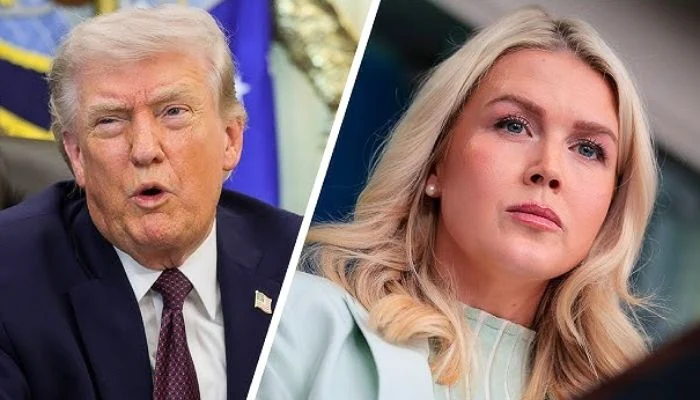
Trump jokes about Leavitt choosing her children over him as she Prepares to leave White House role

US President Donald Trump has reacted to White House Press Secretary Karoline Leavitt’s decision to leave her position with a light-hearted remark about her choice to spend more time with her young children.

During an interview correspondent Alexis McAdams, Trump was asked about the possibility of finding a replacement for Leavitt. The president spoke positively about her work and described her performance as highly successful.

Trump praised Leavitt for doing a “great job” as press secretary but then made a joke about her priorities. He said he was “very concerned” after learning that Leavitt apparently liked spending time with her children more than being around him.

The comment was made in a humorous tone, but it quickly attracted attention because Leavitt’s decision to leave the White House is closely connected to her family responsibilities.

Leavitt announced last week that she planned to step down from the position at the end of August. She explained that her decision was motivated by a desire to dedicate more time to her young family.

Her departure marks a significant change for the White House communications team. As press secretary, Leavitt has been one of the administration’s most visible representatives, regularly appearing before reporters and defending the president’s policies.

Trump has repeatedly praised Leavitt and described her as one of the strongest press secretaries he has worked with. Although she is leaving her official position, Trump has indicated that he wants her to remain connected to his administration.

According to the president, Leavitt will continue to contribute as an outside adviser after stepping down. This would allow her to maintain a relationship with the administration while giving her greater flexibility to focus on her family.

During the same interview, Trump also appeared to raise the possibility of Alexis McAdams becoming Leavitt’s successor. Addressing the Fox News correspondent directly, he asked whether she would be interested in taking over the White House briefing room podium.

McAdams has experience covering the Trump administration and frequently reports on political developments.

Trump’s question therefore prompted speculation about whether she could be considered for the position, although it was not clear whether his comments represented a serious proposal or another informal remark during the interview.

The exchange quickly spread across social media and generated mixed reactions. Some viewers interpreted Trump’s comments about Leavitt as typical of his joking and informal style. Supporters viewed the remark as a humorous way of acknowledging the importance of family in Leavitt’s decision.

Others, however, were critical of the joke. They argued that Leavitt’s choice to step away from one of the most demanding political communications jobs in Washington in order to spend more time with her children should be treated seriously rather than used as the subject of a public punchline.

Leavitt’s departure also highlights the challenges faced by high-profile officials who attempt to balance demanding political careers with family life. The White House press secretary position requires frequent public appearances, media briefings, travel and long working hours, making it particularly demanding for anyone with young children.

Despite the joking tone of Trump’s comments, his praise for Leavitt made clear that he considers her contribution to the administration valuable. His decision to retain her as an outside adviser suggests that he wants to continue benefiting from her experience and communication skills.

The White House is now expected to determine who will take over the daily briefing role once Leavitt leaves at the end of August. Until then, attention will remain focused on her final weeks as press secretary and on who may eventually step behind the White House briefing room podium.


Similar Posts

  • | | |

    Prolonged Iran mission puts US sailors under pressure

    The prolonged deployment of the US aircraft carrier USS Abraham Lincoln in connection with the Iran conflict has raised concerns over the mental health and wellbeing of personnel serving aboard the vessel. US media reports say several sailors allegedly attempted to jump overboard during the carrier’s extended deployment in the region. According to reports, the carrier has remained at sea for more than 250 days, with around 5,000 sailors and Marines reportedly deployed aboard the vessel. The long period without a regular port visit has reportedly placed additional pressure on crew members. A sailor’s wife was quoted as saying that her husband attempted to jump from the carrier after struggling with the impact of prolonged and continuous duty. Reports also claim that crew members intervened in several incidents and prevented personnel from going overboard. The reports have raised wider concerns about the conditions faced by sailors during the extended deployment. Some US media outlets have also reported shortages of food and other basic supplies aboard the carrier. The situation has prompted US lawmakers to call for an investigation into the reported incidents and the overall conditions aboard the ship. Senators have sought information about the deployment, including the mental health of personnel, crew fatigue, living conditions and the impact of the prolonged mission on operational readiness. The US Navy, however, has rejected claims of a rise in suicide attempts or mental health problems among personnel aboard the carrier. The Navy has maintained that it continues to monitor the wellbeing of sailors and provide appropriate support during the deployment. The USS Abraham Lincoln’s extended mission comes amid continuing US military operations and heightened tensions involving Iran and the wider Middle East. The carrier’s unusually long deployment has also sparked questions about how long the US Navy can maintain such an operational tempo without affecting crew welfare, equipment maintenance and future readiness. The reported incidents have intensified scrutiny of the human cost of prolonged military deployments, particularly for personnel spending months at sea without regular opportunities for rest and recovery

  • |

    Ugandan diplomat Olara Otunnu joins race to become next UN secretary-general

    Ugandan diplomat Olara Otunnu has entered the contest to become the next secretary-general of the United Nations. Nominated formally by the Ugandan government, the 75-year-old former UN under-secretary-general and special representative for children and armed conflict becomes the seventh official candidate seeking to succeed António Guterres when his second term concludes at the end of the year. Otunnu’s vision statement emphasises the urgent need for institutional reforms across the UN, proposing a dedicated body to oversee work on artificial intelligence, prioritising resolution efforts for major international conflicts, and supporting climate action that aligns with economic development. He enters a diverse field of candidates including Rafael Grossi of Argentina, former Chilean President Michelle Bachelet, Rebeca Grynspan of Costa Rica, María Fernanda Espinosa of Ecuador, Carolyn Rodrigues-Birkett of Guyana, and former Senegalese President Macky Sall. The UN Security Council is set to begin its preliminary straw polls this week to narrow down contenders ahead of the final selection.

  • |

    Tourist plane crash in Peru kills 13

    LIMA: A tourist aircraft crashed in southern Peru on Saturday, killing all 13 people on board during a sightseeing flight over the world-famous Nazca Lines, authorities confirmed. The aircraft, identified as a Cessna Caravan C-208, was carrying 11 foreign tourists and two pilots when it went down near the Nazca archaeological site shortly after taking off from Pisco Airport. According to officials, the passengers included seven Italian nationals, two Germans and two Spaniards. Emergency responders rushed to the crash site, but there were no survivors. Police and rescue teams launched recovery operations immediately after the accident. Authorities said the impact completely destroyed the aircraft, making rescue efforts impossible. Investigators have begun examining the wreckage to determine what caused the crash. The Nazca Lines, a UNESCO World Heritage Site, attract thousands of visitors every year. The enormous ancient geoglyphs, etched into the desert more than 1,500 years ago, are best viewed from the air, making sightseeing flights a popular tourist activity. Local authorities expressed deep sorrow over the tragedy and extended condolences to the victims’ families. The airline operating the flight said it would cooperate fully with investigators and review its flight operations in line with directives from aviation authorities. The accident is the latest in a series of aviation incidents involving sightseeing flights over the Nazca Lines. Similar crashes in previous years have raised concerns about the safety of tourist flights in the region. Officials said a full investigation is underway to establish the exact circumstances behind the fatal crash.

  • | |

    Russia blasts Japan over Putin’s Kuril visit

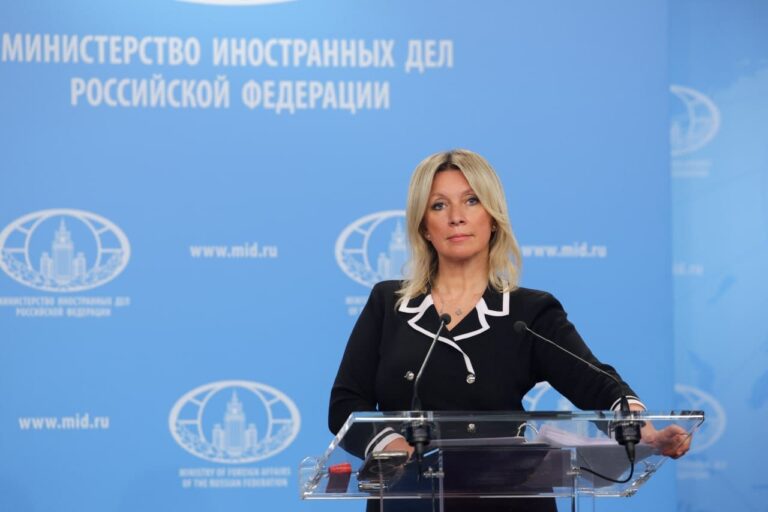
    MOSCOW: Russia has strongly condemned recent remarks by Japanese Prime Minister Sanae Takaichi and Foreign Minister Toshimitsu Motegi concerning President Vladimir Putin’s visit to Iturup Island. Russian Foreign Ministry spokeswoman Maria Zakharova described Tokyo’s criticism as unacceptable and rejected Japan’s objections to Putin visiting the island, which Moscow considers part of Russian territory. Zakharova accused senior Japanese officials of attempting to dictate where the Russian president could travel within his own country. She said Moscow regarded the Japanese statements as politically motivated and legally invalid, arguing that Russia’s sovereignty over the southern Kuril Islands was not open to question. The dispute over the islands remains one of the most sensitive issues in Russia-Japan relations. Japan refers to the southern islands as the Northern Territories and maintains its own claim over them. Zakharova said Tokyo’s current approach reflected what she called an increasingly hostile policy towards Russia. She criticised Japan for joining Western sanctions against Moscow and for providing political, military and technical support to Ukraine. According to the Russian spokeswoman, these policies have seriously damaged bilateral relations that had been developed over decades. She also accused Japan of undermining international legal principles while attempting to lecture Moscow on international law and the future of bilateral relations. Zakharova further argued that Japan’s policies did not serve the interests of its own population or contribute to regional stability. Moscow maintains that the southern Kuril Islands became part of the Soviet Union following the Second World War and argues that their status was established through post-war agreements. The Russian official also accused Tokyo of reviving what she described as revisionist and revanchist narratives. She warned that such rhetoric could have wider consequences for peace and security across the Asia-Pacific region. Russia said the latest Japanese statements risked further damaging already strained relations between the two countries and ran counter to broader regional efforts to promote stability, cooperation and peace.

  • | |

    China stands firm on economic strategy ahead of ke…

    BEIJING: China has intensified its defence of its state-led economic model as it prepares for crucial trade discussions with the European Union and the United States, signalling that it is unlikely to make major policy concessions despite mounting international criticism. Beijing has repeatedly argued that its development strategy, which prioritises investment in advanced manufacturing and technology, remains essential for long-term economic growth. Chinese leaders maintain that the country’s industrial policies have helped strengthen innovation and global competitiveness, rejecting accusations that they distort international trade. The latest policy statements from China’s leadership indicate a commitment to maintaining its current economic direction. While officials acknowledge challenges such as weak domestic demand and excess production capacity, they continue to favour targeted policy support instead of broad consumer-focused stimulus measures. Chinese authorities have also dismissed Western claims of industrial overcapacity, describing such criticism as politically motivated. They argue that China’s manufacturing success reflects its stage of economic development and benefits global consumers through affordable, high-quality products. Ahead of expected meetings between President Xi Jinping and US President Donald Trump later this year, as well as upcoming negotiations with the European Union, Beijing has adopted a more confident tone in defending its economic policies. Analysts believe the messaging is intended to establish clear limits on what China is willing to negotiate while encouraging greater understanding of its development model. China has also sought to counter warnings of a new “China shock” by portraying its industrial expansion as an opportunity for global economic growth. However, many Western economists argue that China’s reliance on exports, combined with subdued domestic consumption, continues to create imbalances that affect international markets. Although Beijing has slowed public investment by tightening oversight of local government spending, officials acknowledge that supply and demand remain uneven. Authorities have pledged to reduce destructive price competition among manufacturers and have reiterated their intention to strengthen consumer demand, though without announcing sweeping structural reforms. Chinese policymakers have also recognised that the country’s traditionally low household consumption cannot remain a permanent feature of its economy. While official publications describe the existing model as historically appropriate, they also suggest gradual adjustments will be necessary to ensure sustainable long-term growth. Despite these acknowledgements, Beijing remains cautious about implementing rapid reforms, fearing that abrupt policy changes could undermine economic stability. International studies continue to raise concerns over China’s economic practices. Recent research suggests that government subsidies have played a significant role in boosting the global market share of many Chinese companies, while other reports attribute much of China’s export growth to weak domestic consumption and industrial overcapacity. Analysts also note that China continues to invest in productive assets at a much faster pace than Europe and the United States, even though returns on those investments have declined. Many experts believe Beijing’s increasingly assertive defence of its economic model reflects growing confidence that it can manage trade tensions with Western partners without fundamentally changing its industrial strategy.

  • |

    Epstein survivor says abuse continued during his prison sentence

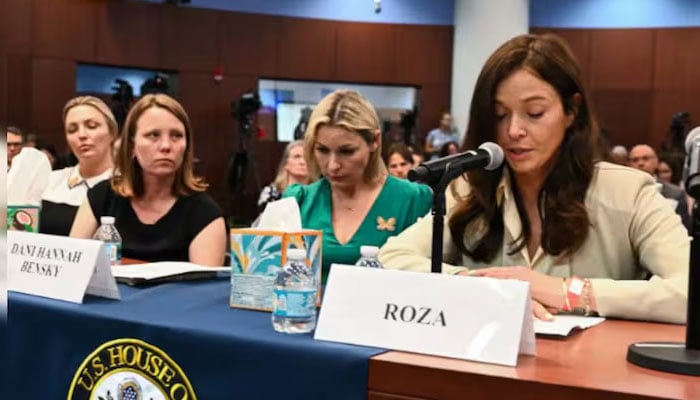
    A woman who says she was sexually exploited by convicted American financier Jeffrey Epstein has alleged that he continued to abuse her even while serving a sentence for soliciting prostitution from a minor. Rosa Jiles, an alleged survivor of Epstein’s abuse, said she faced sexual exploitation by him in 2009, when he was serving his sentence following a conviction related to prostitution involving an underage girl. According to Jiles, Epstein showed no remorse for his crimes and continued to prey on young women despite his criminal conviction. Jiles said her ordeal began when she was 18 and living in Uzbekistan. She claimed that a modeling agent offered her an opportunity to travel to the United States, but after she arrived, the agency placed her under financial pressure by charging her for expenses including rent, visa costs and other fees. To earn additional money, Jiles said she eventually took a receptionist job at one of Epstein’s offices. She recalled meeting Epstein for the first time in Palm Beach, Florida, where she alleged that he forced her to undress and sexually assaulted her on the same day. Jiles further claimed that the abuse continued regularly, particularly during weekends at a property in West Palm Beach. She said the alleged sexual exploitation did not end after Epstein’s release from house arrest in 2010 and continued in New York as well. According to Jiles, the experience left her convinced that authorities would never stop Epstein. She said she eventually managed to escape his control after becoming financially independent and gaining the ability to support herself. Jiles also alleged that Epstein never demonstrated genuine regret for his actions. In her account, his criminal conviction did not stop him from continuing to exploit vulnerable young women. Her allegations add to the accounts of women who have publicly described abuse and exploitation connected to Epstein, whose crimes and relationships with powerful figures drew international attention. Epstein died in a New York jail in 2019 while awaiting trial on federal sex-trafficking charges.

Leave a Reply

Your email address will not be published. Required fields are marked *