state department report
| |

State Department report calls for greater civilian…

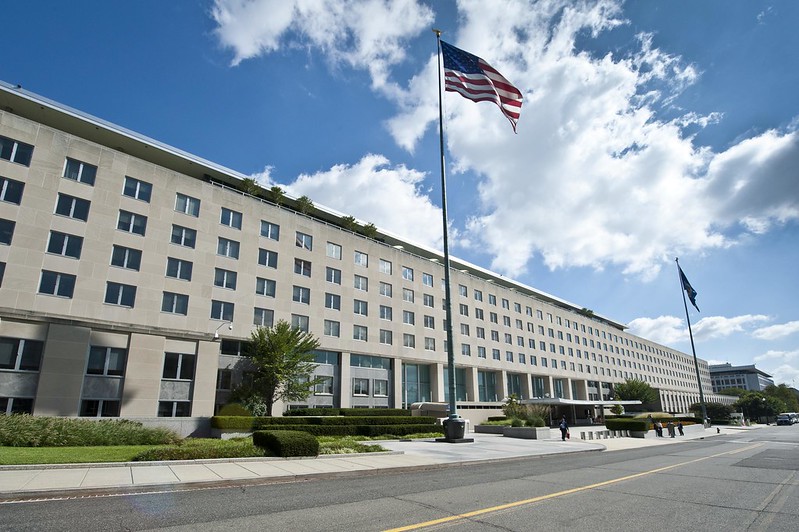
The US State Department said Wednesday that Pakistan needs to strengthen civilian oversight of public finances to improve fiscal transparency, releasing findings that highlighted persistent gaps in how the country discloses key financial information.

The department’s assessment described fiscal transparency as a core component of effective public financial management, noting that it allows citizens to understand how government revenues and tax dollars are spent. That visibility into budgets, the report said, gives citizens the tools they need to hold their governments accountable.

The findings arrive weeks after Pakistan’s National Assembly passed an 18.8 trillion rupee Finance Bill for 2026 to 2027 in June, which included a defence budget of 3 trillion rupees, with at least 335 billion rupees coming from provincial contributions.

In its 2026 Fiscal Transparency Report on Pakistan, the State Department said the country continues to fall short in disclosing important financial data, particularly around debt obligations and the budgets of military and intelligence agencies. The report found that Pakistan’s government did not publish its executive budget proposal within a reasonable timeframe and made only limited information available on debt obligations, including debt held by major state owned enterprises. It further noted that military and intelligence budgets remain outside the scope of adequate parliamentary or civilian oversight.

The assessment also pointed to areas of progress. During the review period, the report said, Pakistan’s government made its enacted budget and end of year financial reports widely and easily accessible to the public, including through online platforms. It found that publicly available budget documents offered a substantially complete picture of most planned government expenditures and revenues, including revenue generated from natural resources.

The report described the information contained in the budget as generally reliable and subject to audit by the country’s supreme audit institution, which it said meets international standards of independence. Audit reports, the department noted, are published within a reasonable period and contain substantive findings. It also found that the government has specified, and largely followed in practice, clear legal criteria and procedures for awarding natural resource extraction contracts and licenses, while making basic information about such awards publicly available. The report added that Pakistan’s sovereign wealth fund operates under a sound legal framework and that the government publishes accessible information on public procurement contracts.

Among its recommendations, the State Department urged Pakistan to make its executive budget proposal available to the public within a reasonable timeframe, disclose more detailed information on government debt, including debt tied to state owned enterprises, and bring military and intelligence agency budgets under parliamentary or civilian oversight.

Responding to questions about the report during a weekly press briefing, Foreign Office spokesperson Tahir Andrabi acknowledged that the report had been released the previous day. He said Pakistan adheres to internationally recognized best practices around fiscal transparency, budgeting and financial disclosure, while also operating within its own constitutional, legislative and regulatory frameworks.

Andrabi noted that Pakistan remains engaged in an ongoing International Monetary Fund program centered on structural reform and improved fiscal management. He said the country has completed three IMF reviews so far, adding that the reform measures taken under the program have drawn broad recognition, including credit rating upgrades from three international rating agencies as well as positive assessments from the IMF itself.

Similar Posts

  • | |

    PM “Apna Ghar” housing scheme sees 52%…

    The number of applicants for Pakistan’s Prime Minister Apna Ghar Housing Scheme has increased by 52%, according to the Ministry of Finance, reflecting growing demand for housing finance across the country. The development was discussed during a meeting of the Steering Committee on Access to Finance chaired by Federal Finance Minister Muhammad Aurangzeb on Tuesday. The meeting reviewed progress in several priority sectors, including housing, agriculture, small and medium-sized enterprises (SMEs), exports, information technology and renewable energy. According to officials housing finance increased from Rs294 billion at the end of June to Rs307 billion by mid-August. Applications under the Prime Minister Apna Ghar programme have risen by 52% since June, reaching approximately 139,000 applications. The number of approved applications also increased by 84%, exceeding 46,000. Officials said approved financing under the programme has nearly doubled rising from Rs144 billion to Rs279 billion. The number of loans disbursed through the Apna Ghar programme increased by 59% to more than 7,600 loans, with the total amount disbursed exceeding Rs38 billion. The meeting also reviewed regulatory and legal measures aimed at expanding access to housing finance. These include revised prudential regulations introduced by the State Bank of Pakistan. Under the updated framework housing finance includes a 90:10 loan-to-value ratio a 65% debt-burden ratio and new procedures for assessing informal income. Officials also discussed measures to simplify property valuation and documentation, expand digital processing and make long-term housing finance more accessible. The approval of the Financial Institutions (Recovery of Finances) Amendment Act 2026 was described as an important legal reform for improving the recovery and enforcement framework for mortgage-based lending. The government has also set ambitious targets for agriculture and SME financing. It aims to increase financing in these sectors to Rs1.5 trillion by June 2027 and Rs2 trillion by June 2028. Finance Minister Muhammad Aurangzeb stressed the need to direct the financial sector toward productive investment, business expansion, home ownership, agricultural productivity and export-led economic growth.The number of applicants for Pakistan’s Prime Minister Apna Ghar Housing Scheme has increased by 52%, according to the Ministry of Finance, reflecting growing demand for housing finance across the country.

  • | |

    PTI social media faces internal differences, group…

    ISLAMABAD: Pakistan Tehreek-e-Insaf (PTI) Secretary General Salman Akram Raja has acknowledged that the party is facing internal differences and grouping, saying that the lack of contact with party founder Imran Khan for the past nine months has made decision-making much more difficult. In a post on X, Salman Akram Raja said that, for the first time in the party’s history, there has been no contact with Imran Khan for nine months. He said that issues and disputes that were previously resolved within minutes through the party founder’s guidance now become the subject of long discussions. His remarks suggest that the absence of the jailed PTI founder has created a leadership gap, allowing disagreements within the party to become more visible. Raja also admitted that PTI had faced what he described as a “planned campaign” to weaken the party during this period. According to him, efforts were made from within the party to create problems, but senior leaders remained united and resisted those attempts. “I am grateful to Imran Khan’s senior colleagues who stood firm against these failed attempts,” he said. The PTI secretary general also claimed that another challenge comes from social media, where he said three different groups are active against the party’s interests. According to Raja, the first group consists of people who are formally linked to the media teams of PTI’s political opponents. The second group, he said, includes people within PTI who are seeking party positions and view certain leaders as obstacles to their ambitions. His statement is being seen as a rare public acknowledgment that internal rivalries and competition for positions exist within the party. Raja said the third group includes sincere PTI supporters who genuinely want Imran Khan’s release and the party’s success. He described them as passionate young people and older supporters who may not be fully aware of all developments. He argued that while emotional slogans are easy to raise, developing and following an effective political strategy requires patience, understanding and careful planning. Referring to calls for immediate action, Raja said that a political revolution cannot be achieved simply by gathering “one truck and 20,000 to 30,000 people.” He stressed that successful movements require well-thought-out strategies rather than emotional decisions. He added that every PTI worker wants Imran Khan to be released as soon as possible, but said the party must adopt practical and successful methods instead of relying on slogans alone. Raja’s comments come at a time when PTI has faced repeated speculation about internal divisions, disagreements over strategy and criticism exchanged on social media by supporters of different leaders. While he blamed external forces for trying to weaken the party, his remarks also indicate that internal competition, differences over leadership and disagreements about political strategy have become significant challenges for PTI during the prolonged absence of direct communication with its founder. His statement is likely to fuel further debate about unity within the party as it continues to navigate political and organisational challenges.

  • Nakhon Si Thammarat’s Phra Mahathat Temple Earns UNESCO Status

    BUSAN, South Korea / BANGKOK, Thailand — The Phra Mahathat Woramahawihan Temple in Nakhon Si Thammarat has been officially inscribed on the UNESCO World Heritage List, marking a historic milestone as Thailand’s ninth World Heritage site and the very first to be located in the southern region of the country. Wat Arun Pagoda Added to […]

  • | |

    Mufti Muneeb-ur-Rehman criticizes Pakistan’s…

      Renowned Islamic scholar Mufti Muneeb-ur-Rehman has strongly criticized Pakistan’s judicial and economic systems, stating that a justice system that fails to deliver justice even after forty years cannot be considered a true system of justice but rather a system of oppression. He made these remarks while addressing a public ceremony in Karachi, where he spoke about the country’s pressing legal and economic challenges. During his speech, Mufti Muneeb-ur-Rehman expressed concern over the prolonged delays in the judicial process. He argued that when people have to wait decades for justice, the very purpose of the legal system is defeated. According to him, justice delayed for such an extended period effectively becomes justice denied, leaving citizens frustrated and deprived of their fundamental rights. He emphasized that a judicial system should provide timely and fair decisions so that public confidence in the rule of law remains intact. The scholar also urged those in positions of authority to focus on resolving Pakistan’s domestic problems instead of concentrating solely on international issues. He remarked that while government leaders often discuss and engage with global affairs, the country’s internal challenges require immediate attention. He specifically called upon policymakers and those holding power to prioritize the welfare of the people by addressing the nation’s economic difficulties. One of the major issues highlighted by Mufti Muneeb-ur-Rehman was the problem of Independent Power Producers (IPPs). He appealed to the government to find a practical and sustainable solution to the IPP issue, which has been widely debated due to its impact on electricity prices and the country’s financial stability. According to him, resolving this matter would help reduce the economic burden on both the government and ordinary citizens. Speaking about the national economy, Mufti Muneeb-ur-Rehman painted a concerning picture of Pakistan’s financial condition. He stated that after distributing the constitutionally allocated shares to the provinces and making payments on interest obligations, the federal government is left with very limited financial resources. This situation, he suggested, reflects the severity of the country’s fiscal challenges and highlights the urgent need for comprehensive economic reforms. He stressed that policymakers should adopt measures that promote financial stability, reduce unnecessary expenditures, and improve revenue generation without placing excessive burdens on the public. The event also featured an address by Maulana Bashir Farooqi, who criticized the government’s approach toward eliminating the interest-based financial system. He argued that the authorities are not demonstrating sufficient seriousness in transitioning toward an Islamic banking framework. According to him, meaningful reforms require not only policy changes but also practical steps to prepare financial institutions for such a transformation. Maulana Bashir Farooqi announced that his organization is willing to provide training for approximately 100,000 employees working in conventional banks. He explained that this initiative aims to equip banking professionals with the knowledge and skills necessary to operate within an interest-free Islamic banking system if the government decides to pursue such reforms. He maintained that the availability of trained professionals would facilitate a smoother transition and strengthen the implementation of Islamic financial principles in the country’s banking sector. The speeches delivered at the Karachi ceremony underscored concerns regarding Pakistan’s judicial efficiency, economic management, and financial policies. Both religious leaders called on the government to prioritize domestic reforms, strengthen public institutions, address long-standing economic challenges, and work toward a system that better serves the interests of the people.

  • | |

    Gun attack on Police van kills two officers in DI …

    DERA ISMAIL KHAN: Two police personnel, including an Assistant Sub-Inspector (ASI), were martyred after unidentified gunmen opened fire on a police van in the Daraban area of Dera Ismail Khan on Friday, authorities said. According to officials from the Counter Terrorism Department (CTD), the attack occurred near Shah Alam Mor, where the police team was travelling to conduct an operation after receiving intelligence about the presence of suspected militants in the area. As the police van reached the location, armed assailants launched a sudden attack, firing multiple rounds at the vehicle. The officers immediately returned fire, triggering a brief exchange of gunfire. Despite the retaliation, two police officials, including an ASI, sustained critical injuries and were martyred in the line of duty. Officials said the attackers managed to flee the scene under the cover of the exchange of fire. Security forces quickly cordoned off the area and launched a search operation to trace the attackers. Investigators are collecting evidence from the scene while intelligence agencies are assisting in identifying those responsible for the assault. No group immediately claimed responsibility for the attack, but authorities are treating it as an act of terrorism. The latest incident highlights the persistent security challenges in southern Khyber Pakhtunkhwa, where law enforcement personnel have increasingly come under attack during counterterrorism operations. Police officials vowed that those behind the ambush would be brought to justice, reaffirming their commitment to continuing operations against militant groups despite the growing threats. The sacrifice of the fallen officers, they said, reflects the courage and dedication of Pakistan’s security forces in maintaining peace and protecting citizens.

Leave a Reply

Your email address will not be published. Required fields are marked *