rescuers japan haul
|

Rescuers in Japan haul survivors from collapsed mall as earthquake toll rises to 13

KUMAMOTO, Japan – Rescuers were frantically searching on Wednesday, July 29, for survivors of a magnitude 7.1 earthquake that shook southern Japan, killing at least 13 people, knocking out power to thousands of homes and rupturing roads across the region.

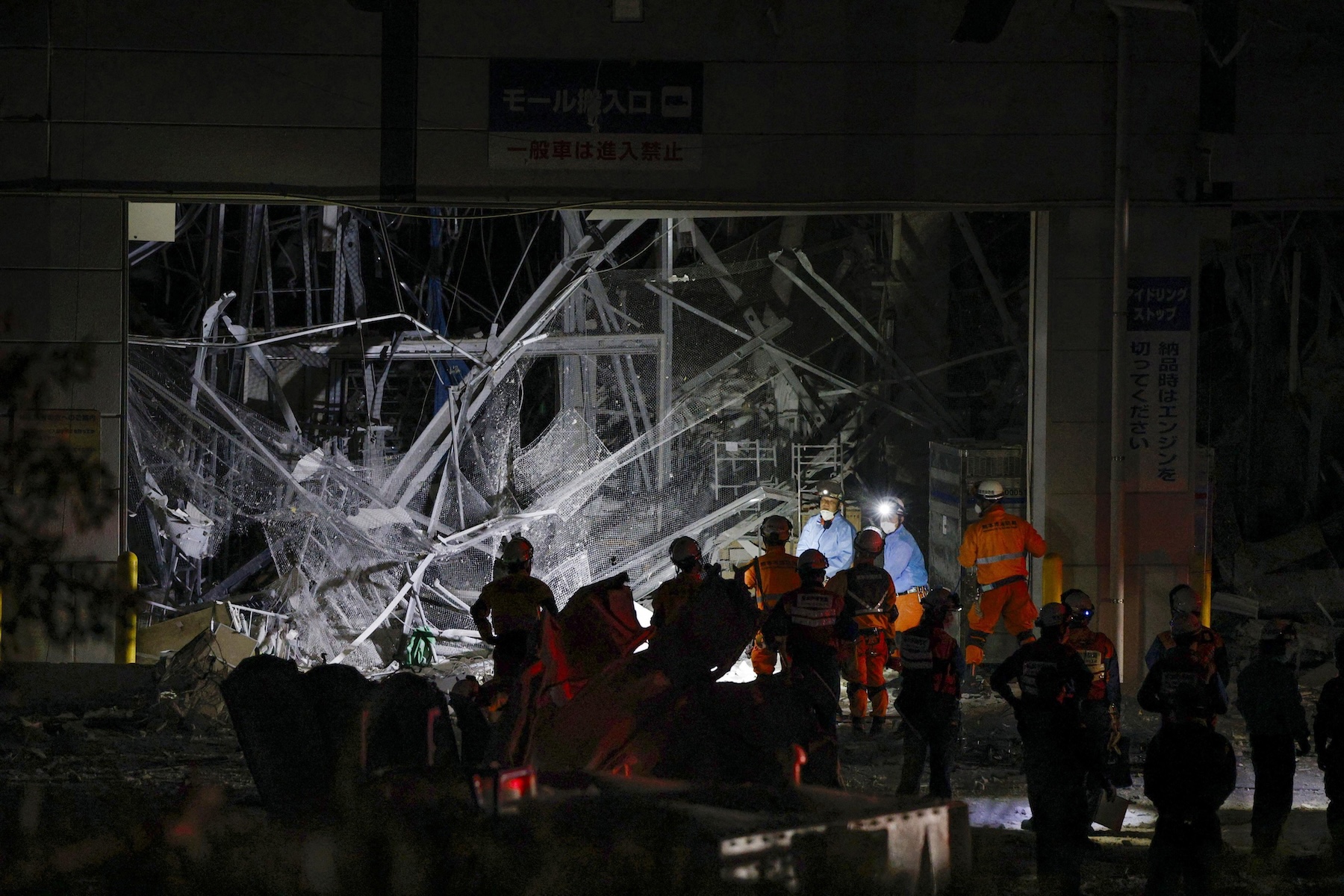
Eight people were pulled from the rubble of a partially collapsed shopping mall near the city of Kumamoto that was torn apart by an apparent explosion about an hour after Tuesday’s earthquake, among them two dead women in their 20s.

Mall operator Aeon said four workers at the Kumamoto shopping center remained unaccounted for after checks of the roughly 2,700 staff. Customers had been evacuated right after the initial quake.

“Even now, there are people waiting to be rescued, and this is a race against time. We will marshal all available resources on the ground to save and rescue as many people as possible,” Prime Minister Sanae Takaichi told reporters in Tokyo.

Authorities are investigating a possible gas explosion at the Aeon mall, media reported. Rescuers reported smelling gas inside the building but the cause of the incident was still under investigation, Japan’s top government spokesperson Minoru Kihara said.

Emergency fire rescue teams, police and around 170 army personnel were focusing on areas of the building where calls for help had been received. More than 4,500 soldiers have been deployed to help with recovery efforts across the quake zone.

Seven people are also missing after a chimney collapsed at a Nippon Paper Industries 3836.T factory, while four others are seriously injured, a local government official said. Hospitals were reported to be treating dozens of patients.

Across the prefecture, which also suffered a deadly earthquake a decade ago, around 260,000 people were instructed to go to evacuation centers, authorities said. Police said they received 386 emergency calls after the quake hit, including reports of collapsed buildings and people seeking rescue.

The quake’s epicenter was about 20 km (12 miles) south of Kumamoto City, central Kyushu’s largest city with a population of around 700,000.

In nearby Yatsushiro city — among the hardest-hit areas — many homes had damaged roofs and a handful of collapsed buildings lay scattered. Roads leading to this coastal town were cracked and buckled in places, and many businesses remained shuttered.

Part of a bridge had collapsed into the Kumagawa River, drawing a steady trickle of curious residents to the site.

Authorities have warned residents in the areas that felt the biggest tremors to be on alert for further strong quakes for about a week, as well as for the risk of landslides.

With more than 36,000 homes still without power as temperatures soar to around 34 degrees Celsius (93 degrees Fahrenheit) on Wednesday, authorities also warned about the risk of heat stroke.

Some hospitals overstretched

One hospital in Uki city, near the epicenter, said a power outage caused by the earthquake meant it was unable to function.

“It’s become like a field hospital,” the head of the administrative department told NHK. Another hospital in the city said it had suspended admissions as it could no longer handle additional emergency cases after accepting 86 injured people following the quake, including three with serious injuries.

Several passengers aboard high-speed trains at the time of the quake were also injured, said operators, who immediately suspended all services after the jolt.

Public attention was focused on the collapse of the Aeon mall, the largest in the prefecture.

One side of the mall, which houses around 200 stores, was torn away, exposing steel beams and strewing debris across a parking lot, footage showed.

A spokesperson for mall operator Aeon said customers and employees were evacuated right after the initial quake and that the exact cause of the ensuing explosion was unclear.

Aeon shares fell nearly 2% in early trading in Tokyo. The benchmark index was up 0.8%.

Some major companies with plants in the area including Sony, Tokyo Electron and Honda said they would suspend operations at their plants through Wednesday.

TSMC, the world’s largest contract chipmaker, evacuated workers from its local plant as a precaution after the quake but said it had begun resuming operations late on Tuesday.

Some roads were also badly damaged, with large cracks splintering major highways and snarling traffic on Tuesday evening.

Located on the “Ring of Fire” of volcanoes and oceanic trenches partly encircling the Pacific Basin, Japan accounts for about 20% of the world’s earthquakes of magnitude 6.0 or more.

A massive earthquake in Kumamoto 10 years ago killed 275 people and injured a further 2,739, according to an official count, and damaged thousands of buildings including the walls of the city’s castle, a top tourist site.

The castle was also among several historic buildings damaged in Tuesday’s quakes alongside shrines with heavy tiled roofs that partially collapsed and a 17th century tea house. – Rappler.com
Similar Posts

  • | |

    Iran signals readiness to end war with US

    Iranian President Masoud Pezeshkian has indicated that Tehran may be ready to end its months-long conflict with the United States, saying Iran now stands in a position of strength and dignity. According to Arab media, Pezeshkian made the remarks during a meeting with doctors in Tehran. He claimed that the international community was recognising Iran’s “victory” and condemning US strikes on schools, hospitals and critical infrastructure. Pezeshkian also defended the understanding reached with Washington in June, rejecting claims from hardline lawmakers that Iran had surrendered or made major concessions. He said the agreement contained no provision requiring Iran to surrender or give up its interests. Meanwhile, Iran’s Chief of Staff of the Armed Forces, Major General Ali Abdollahi, warned that the country remains fully prepared to respond to any new threat. He said Iran’s ground, naval, air defence and cyber forces are on full alert. In a separate development, the foreign ministers of Iran and Oman held a phone call to discuss efforts to create conditions for the resumption of negotiations. They also reviewed the situation surrounding maritime traffic in the Strait of Hormuz. Iran has partially restricted traffic through the strategic waterway, while the United States continues its naval blockade. US media reports say American naval forces are escorting covert convoys of oil tankers through the southern part of the strait, allowing between 5 million and 10 million barrels of oil to be exported each day. US President Donald Trump has expressed doubts about Iran’s willingness to negotiate. He claimed that the United States has full control over the Strait of Hormuz and surrounding areas, adding that Iran wants a deal but is not yet ready to reach the “right” agreement. Trump has also threatened economic action against countries that provide any form of assistance to Iran. US Treasury Secretary Scott Bessent announced further sanctions aimed at weakening the Iranian government. Iran condemned the US sanctions plan as “economic terrorism,” while China said pressure and sanctions would not help resolve the crisis. Beijing urged all sides to seek a solution through political and diplomatic channels.

  • | |

    Iran prepares 40th-day mourning events for Ayatollah Ali Khamenei

    Iran has begun preparations for 40th-day mourning and commemorative ceremonies for former Supreme Leader Ayatollah Ali Khamenei following his burial. Special events will take place in Tehran, Qom, Mashhad and other Iranian cities to mark the occasion. Iran’s current Supreme Leader and Ali Khamenei’s son, Mojtaba Khamenei, will oversee the ceremonies. According to reports, Ali Khamenei’s funeral and mourning ceremonies began on July 4 and continued across several Iranian cities. Officials also held commemorative gatherings in five major cities across Iran and Iraq — Tehran, Qom, Najaf, Karbala and Mashhad. Authorities later buried the former supreme leader in Mashhad. Millions of mourners from Iran and other parts of the world reportedly attended the funeral ceremonies. Senior delegations from several countries, including Saudi Arabia, Pakistan, Russia, China and Türkiye, also travelled to Iran to attend the events and convey condolences. Iranian authorities said Ali Khamenei died on February 28, the first day of US and Israeli air strikes on Iran. His death marked a major political transition for the country. Following his death, his son Mojtaba Khamenei assumed the position of Iran’s Supreme Leader. The upcoming 40th-day ceremonies are expected to draw large crowds and provide another major occasion for supporters to pay tribute to the former leader. The events in Tehran, Qom and Mashhad are also expected to carry considerable political and religious significance as Iran continues to adjust to its new leadership under Mojtaba Khamenei.

  • | | | |

    Egypt weighs joining Pakistan-Saudi-Türkiye defen…

    CAIRO: Egypt has started a serious review of the possibility of joining the Makkah Joint Defence Agreement between Pakistan, Saudi Arabia and Türkiye. Egyptian Foreign Minister Badr Abdelatty said Cairo has close and strategic relations with all three countries. He said Egypt’s ties with Pakistan, Saudi Arabia and Türkiye extend beyond political cooperation. Abdelatty was asked about Egypt’s possible inclusion in the defence agreement. He said Egypt has been aware of the pact since the beginning. He confirmed that Egyptian state institutions are currently conducting a comprehensive assessment of the agreement. The minister said no final decision has been taken yet. He added that the relevant Egyptian authorities are examining the agreement and its possible implications. Abdelatty stressed that defence agreements involve important commitments. Therefore, Egypt must carefully assess all legal and constitutional aspects before making a decision. He said any possible Egyptian participation would have to comply with the country’s Constitution and existing legal requirements. The review will also consider the responsibilities that could arise from joining the agreement. The development comes days after Pakistan, Saudi Arabia and Türkiye signed the Makkah Joint Defence Agreement. The pact seeks to strengthen defence cooperation among the three countries and enhance their collective security. Under the agreement, an attack against any one of the three countries would be considered an attack against all three. The arrangement has been described as a major step towards closer defence and strategic cooperation.

  • | |

    Iran names battle-tested commanders

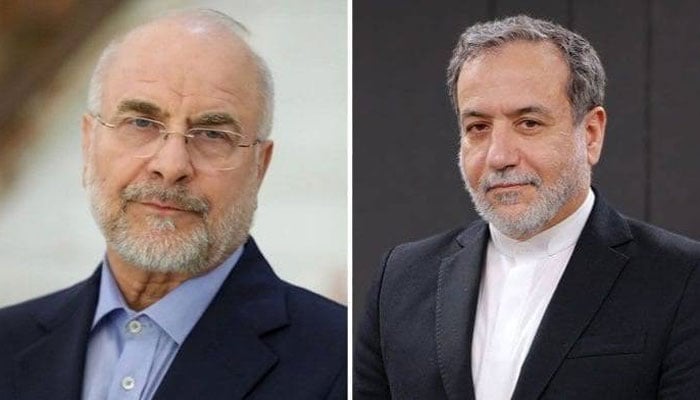
      Iranian Foreign Minister Abbas Araghchi and Parliament Speaker and senior negotiator Mohammad Bagher Ghalibaf have defended the country’s latest military appointments, saying the newly selected commanders bring extensive battlefield experience to their new positions. Their comments came after Supreme Leader Mojtaba Khamenei approved the appointment of six senior military commanders to key positions within Iran’s armed forces and the Islamic Revolutionary Guard Corps (IRGC). In a post on his Telegram channel, Araghchi said the six commanders had demonstrated their capabilities during the two recent wars imposed on Iran. He described their combat experience as an important factor behind their selection for senior military roles. Ghalibaf also welcomed the appointments, according to a statement carried by Iranian state media. He specifically highlighted General Ahmad Vahidi, saying Vahidi led the IRGC during the recent 40-day war and gained significant operational experience during the conflict. Ghalibaf said the IRGC should continue its mission while drawing on the guidance and direction of Supreme Leader Mojtaba Khamenei. He also stressed the importance of maintaining the force’s capabilities and experience as Iran faces continued regional security challenges. The latest appointments cover some of Iran’s most influential military positions. They include the chief and deputy chief of staff of the Armed Forces, the commander and deputy commander of the IRGC, the commander of the IRGC Navy, and the commander of the Basij paramilitary force. Iranian officials have presented the appointments as part of an effort to place experienced military figures in strategic command positions. The emphasis on commanders with recent battlefield experience also reflects the security pressures Iran has faced during the latest period of regional conflict. The appointments are expected to shape Iran’s military leadership and operational strategy in the period ahead, particularly as Tehran continues to deal with heightened tensions and evolving security challenges across the region.

  • | | |

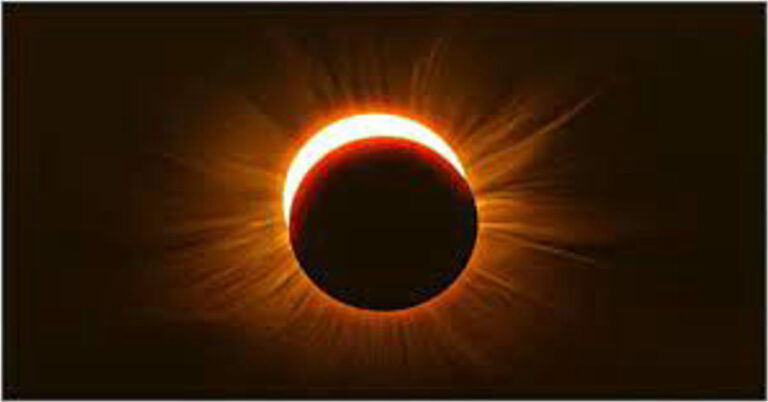
    Europe to witness rare total solar eclipse today

    A total solar eclipse is set to occur today, offering skywatchers across parts of Europe an opportunity to witness a rare astronomical phenomenon, according to Arab media reports. The eclipse is being described as the first total solar eclipse visible from Europe since 1999. The event will be particularly prominent in western Spain and Iceland, where observers will have the chance to see the Moon completely cover the Sun for a brief period. The total phase is expected to begin at around 6:27pm local time in the areas where the eclipse will be visible. Near Iceland, the period of totality is expected to last approximately two minutes and 18 seconds, making it one of the key locations for viewing the phenomenon. However, the eclipse will not be limited to areas experiencing totality. Several major European cities are expected to witness a significant partial eclipse. In Madrid and Barcelona, around 99% of the Sun’s disc will be obscured, while Paris is expected to experience approximately 92% coverage. London will see about 91% of the Sun covered, while Berlin is expected to experience an eclipse of around 85%. The exact appearance and timing of the eclipse will vary depending on the location of observers. Parts of Africa, Canada and the United States are also expected to witness the eclipse in its partial form, although the degree of visibility will differ from one region to another. Eclipse not visible in Pakistan Pakistanis will not be able to observe the solar eclipse, as the astronomical event will take place outside the country’s visible path. The Pakistan Meteorological Department (PMD) has said that the eclipse will begin at approximately 8:34pm Pakistan Standard Time. It is expected to reach its maximum phase at around 10:46pm before ending at approximately 12:58am. Since the entire event will occur during nighttime in Pakistan, the eclipse will remain below the horizon and therefore cannot be seen from the country. The Meteorological Department has also indicated that another major astronomical event is expected later this month. A partial lunar eclipse is scheduled for August 28, but this event, too, will not be visible from Pakistan. Solar eclipses occur when the Moon passes between the Earth and the Sun and temporarily blocks some or all of the Sun’s light from reaching certain parts of the Earth. A total solar eclipse occurs when the Moon completely covers the visible disc of the Sun for observers located within the narrow path of totality.

  • | | |

    Iran warns tankers over Strait of Hormuz passage

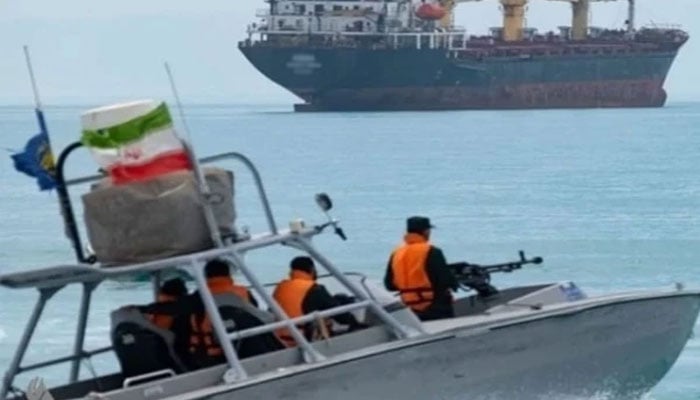
    Iran’s Islamic Revolutionary Guard Corps (IRGC) has claimed that one of three oil tankers caught fire after an explosion while attempting to navigate a route reportedly surrounded by naval mines south of the Strait of Hormuz. According to the IRGC, the other two tankers turned back and abandoned their attempt to continue through the area. The Iranian force said the incident occurred amid heightened tensions in the strategically important waterway, which serves as a major route for global energy shipments. The IRGC maintains that Iran controls the Strait of Hormuz and has closed the passage completely in response to what it describes as increased US military activity in the region. The IRGC also issued a warning to commercial vessels, saying that no tanker would receive permission to enter or pass through the strait without Iran’s approval. The statement signals a further escalation in tensions surrounding one of the world’s most important oil transit routes. The Strait of Hormuz connects the Persian Gulf with the Gulf of Oman and remains a crucial corridor for international energy supplies. Any disruption to shipping through the waterway could affect global oil markets and raise concerns over the security of maritime trade. The reported tanker incident and Iran’s warning come as regional tensions remain high, increasing uncertainty for shipping companies and energy markets operating in and around the Gulf.

Leave a Reply

Your email address will not be published. Required fields are marked *