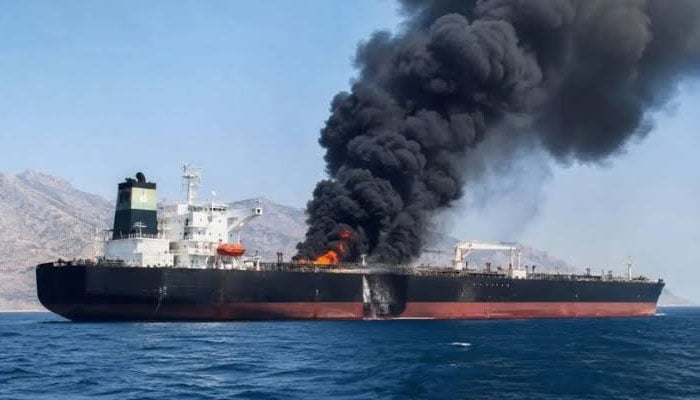
iran signals readiness
| |

Iran signals readiness to end war with US

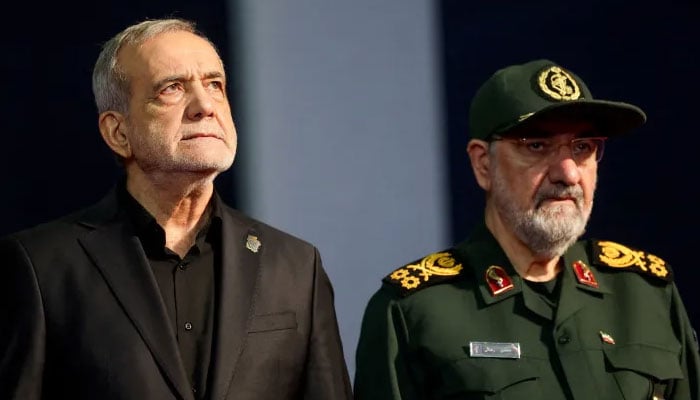
Iranian President Masoud Pezeshkian has indicated that Tehran may be ready to end its months-long conflict with the United States, saying Iran now stands in a position of strength and dignity.

According to Arab media, Pezeshkian made the remarks during a meeting with doctors in Tehran. He claimed that the international community was recognising Iran’s “victory” and condemning US strikes on schools, hospitals and critical infrastructure.

Pezeshkian also defended the understanding reached with Washington in June, rejecting claims from hardline lawmakers that Iran had surrendered or made major concessions. He said the agreement contained no provision requiring Iran to surrender or give up its interests.

Meanwhile, Iran’s Chief of Staff of the Armed Forces, Major General Ali Abdollahi, warned that the country remains fully prepared to respond to any new threat. He said Iran’s ground, naval, air defence and cyber forces are on full alert.

In a separate development, the foreign ministers of Iran and Oman held a phone call to discuss efforts to create conditions for the resumption of negotiations. They also reviewed the situation surrounding maritime traffic in the Strait of Hormuz.

Iran has partially restricted traffic through the strategic waterway, while the United States continues its naval blockade. US media reports say American naval forces are escorting covert convoys of oil tankers through the southern part of the strait, allowing between 5 million and 10 million barrels of oil to be exported each day.

US President Donald Trump has expressed doubts about Iran’s willingness to negotiate. He claimed that the United States has full control over the Strait of Hormuz and surrounding areas, adding that Iran wants a deal but is not yet ready to reach the “right” agreement.

Trump has also threatened economic action against countries that provide any form of assistance to Iran. US Treasury Secretary Scott Bessent announced further sanctions aimed at weakening the Iranian government.

Iran condemned the US sanctions plan as “economic terrorism,” while China said pressure and sanctions would not help resolve the crisis. Beijing urged all sides to seek a solution through political and diplomatic channels.

Similar Posts

  • |

    North Korea battles heatwave with dog soup

    North Korea is highlighting traditional foods, health advice and leisure activities as an intense heatwave sweeps across the Korean Peninsula. State media reported that temperatures in the country reached 36.7°C, the highest recorded since modern weather observations began. The extreme heat has also brought a series of unusually warm nights. With the hottest period of summer underway, North Korean media has focused heavily on ways for people to stay cool and maintain their health. One of the recommendations receiving particular attention is dog-meat soup. State media described the dish as a traditional summer food and promoted a long-standing belief that it can help people cope with extreme heat. Other foods recommended by state media include watermelon, cucumbers, mung beans, fish porridge and red-bean porridge. Chicken soup prepared with ginseng, sticky rice and dates has also been promoted as a popular summer meal. Health programmes on North Korean television have urged people to remain hydrated and take precautions while swimming or exercising outdoors. The country has not released figures on deaths linked to the current heatwave. South Korea, meanwhile, has reported more than 20 heat-related deaths. North Korean state media has also used the extreme weather to highlight leader Kim Jong Un’s image as a leader who shares difficult conditions with ordinary citizens. A recent report recalled a 2013 visit by Kim to a construction site during hot weather. The report said his clothes became soaked with sweat during the inspection. According to the account, Kim insisted that important work for the people should continue despite the heat. State media also highlighted other past inspections in difficult weather conditions. These included a trip through mountainous terrain during heavy rain and a visit to a seafood factory where temperatures were reportedly around 39°C. There has been no detailed report on Kim’s activities during the current heatwave. Meanwhile, state television has shown large crowds visiting beaches, swimming pools and water parks to escape the extreme temperatures. Thousands of people have reportedly visited the Wonsan Kalma Coastal Tourist Zone, one of Kim’s major tourism projects on the country’s eastern coast.

  • |

    Indian actress brutally murdered; body found in pieces, head still missing

    CHENNAI, August 7, 2026: A shocking murder case in the Indian city of Chennai has led police to identify the victim as Sindhya, an emerging Tamil actress, after her dismembered remains were recovered from different locations. According to Indian media reports, residents alerted police after noticing human fingers protruding from a plastic bag near a garbage dump in Chennai. When police opened the bag, they found a severed hand and legs inside. More plastic bags were later discovered in different parts of the city. The bags contained human bones, body parts and other remains. A post-mortem examination determined that the remains belonged to the same woman. Police said the victim had been killed and her body was allegedly cut into pieces using a sharp weapon. However, her head and left hand remained missing, making identification difficult. During the investigation, police noticed two distinctive tattoos on the victim’s right hand. One tattoo depicted the Hindu deities Shiva and Parvati, while the other featured a dragon. Meanwhile, a woman approached a police station to report her daughter missing. She told investigators that her 37-year-old daughter, Sindhya, was an aspiring Tamil actress who lived in Chennai with her husband and two children. Sindhya’s mother reportedly told police that her son-in-law had claimed Sindhya had gone out of the house but had not returned. Police later showed the recovered remains and identifying marks to Sindhya’s family. Her mother identified her daughter based on the tattoos and other features. A subsequent DNA test also confirmed that the recovered remains belonged to Sindhya. Following the identification, police questioned Sindhya’s husband, Balakrishnan. He initially claimed that his wife had left home and never returned. However, investigators reportedly found inconsistencies in his statements. Police later claimed that Balakrishnan confessed to the killing during questioning. According to investigators, Sindhya and Balakrishnan had an argument before the incident. Police alleged that Balakrishnan attacked Sindhya with an axe, killing her before dismembering her body and placing the remains in plastic bags, which he allegedly dumped at different locations.

  • | |

    Modi unveils free coaching and AI training plan to…

    NEW DELHI: Indian Prime Minister Narendra Modi has announced a major education and skills initiative aimed at addressing growing concerns among young people over employment, competitive exams and the rising cost of education. Speaking at India’s Independence Day ceremony at the Red Fort, Modi said the government would offer free online coaching for a range of competitive examinations. He said the programme would help reduce the financial pressure on families whose children spend years preparing for highly competitive entrance and recruitment tests. The announcement follows nationwide youth protests sparked by allegations of examination paper leaks and recruitment irregularities. The demonstrations intensified pressure on the government and contributed to the resignation of Education Minister Dharmendra Pradhan last month. Modi also announced an ambitious artificial intelligence skills programme, saying 10 million young Indians would receive AI-related training over the next year. The government hopes the initiative will equip young people with skills needed in a rapidly changing job market. India’s competitive education system has created a large private coaching industry, with many families spending heavily on preparation courses. Modi said free digital coaching would allow students to remain with their families while reducing the financial burden associated with preparation. During his speech, Modi also outlined a broader seven-point development and reform agenda covering manufacturing, agriculture, technology, defence and sectors linked to India’s cultural influence. He reiterated his goal of transforming India into a developed economy within the next two decades. The prime minister also announced plans for additional semiconductor facilities and nuclear reactors, with the government seeking to expand domestic manufacturing and energy capacity. Modi said India’s young population would be central to achieving the country’s development ambitions, describing youth as the biggest potential beneficiaries of a more prosperous and developed India.

  • | | | |

    Pezeshkian says ‘now is the best time’ for Ira…

    TEHRAN: Iranian President Masoud Pezeshkian has described the current moment as the “best time” for reaching an agreement with the United States, while making clear that Tehran’s broader policy toward Washington has not changed. Speaking to media representatives in Tehran on Sunday, Pezeshkian said the United States had been pushed toward negotiations and reconciliation with Iran, describing the development as a success for Tehran’s diplomacy. His comments come amid heightened tensions between Iran and the United States and growing international efforts to find a diplomatic way out of the crisis. Pezeshkian suggested that the present circumstances could provide an opportunity to move toward an agreement if Washington was prepared to meet its commitments. The Iranian president accused the United States of failing to implement understandings reflected in an Islamabad memorandum and points jointly prepared by Iran and Oman. According to Pezeshkian, Washington’s failure to follow through on those commitments forced Tehran to respond. He said Iran had established a special team to deal with the crisis and that the group was continuing its work. “We are hopeful that Iran will move forward with dignity, determination and pride,” Pezeshkian said, stressing that Tehran would continue to protect what it considers its national interests. Despite signaling openness to negotiations, Pezeshkian adopted a tough tone toward Washington. He described the United States as a “criminal” and “colonial” power and insisted that Iran’s policy toward Washington remained unchanged. The president also warned against what he portrayed as attempts by the United States and Israel to weaken Iran from within. According to Pezeshkian, military pressure and war had failed to force Tehran into submission. He argued that Washington and Israel could now seek to exploit divisions within Iranian society by encouraging internal disputes. Pezeshkian urged Iranians to remain alert to what he described as such efforts, emphasizing that national unity was particularly important at the current stage. He called on the Iranian public to stand together to safeguard the country’s security and defence capabilities. The remarks underline the delicate balance in Tehran’s position: Iran appears willing to explore diplomacy while simultaneously maintaining its longstanding opposition to Washington’s policies. Pezeshkian’s comments could therefore signal a possible opening for renewed diplomatic engagement, but any breakthrough is likely to depend on whether Iran and the United States can overcome deep mistrust and resolve disagreements over previous commitments. For now, Tehran’s message is clear: the door to negotiations may be open, but Iran says it will enter those talks from a position of dignity, national unity and strength.

  • |

    7 in 10 Afghan women report poor mental health

    Restrictions imposed on women and girls in Afghanistan have sharply reduced their participation in public life, with more than half of surveyed women saying they now leave their homes only once or twice a month, according to a new UN Women assessment. The findings were released as Afghanistan approaches the fifth anniversary of the Taliban’s return to power in August 2021. UN Women said Afghanistan remains the only country where girls are barred from secondary education and women are prohibited from attending universities. The agency said the restrictions have increasingly affected women’s freedom of movement, education, employment and access to public life. More than half of the women surveyed reported leaving home no more than twice a month. Nearly three-quarters said they did not feel safe going outside without a male guardian, commonly referred to as a mahram. UN Women said the restrictions have also contributed to growing concerns about women’s mental health. Around seven out of 10 women surveyed described their mental health as either “bad” or “very bad”. Respondents cited social isolation, reduced opportunities and limited access to support networks among the factors affecting their wellbeing. The UN agency said Taliban authorities have introduced more than 100 decrees affecting women and girls since returning to power. It described the measures as creating a system of discrimination and said Afghanistan had become an extreme global example of restrictions on women’s rights. The Taliban maintain that their policies respect women’s rights under their interpretation of Islamic law and Afghan culture. Education remains heavily restricted The restrictions on education have affected millions of Afghan girls. UNESCO estimated that about 2.4 million girls have been prevented from attending secondary school since the Taliban returned to power. Women and girls have also been excluded from university education, limiting their opportunities to pursue professional careers and higher education. UN Women said recent measures had further weakened legal protections available to women. According to the agency, rules introduced this year reduced legal equality between men and women, strengthened the authority of men within marriage and created additional difficulties for women seeking divorce. Women largely excluded from workforce Economic participation remains another major challenge. UN Women reported that only about 7% of Afghan women are employed, compared with approximately 84% of men. The agency said the restrictions on education and employment were limiting women’s ability to earn income, develop careers and contribute to the country’s economy. The findings were based on a door-to-door survey involving 2,190 people conducted between February and March 2025. The agency also conducted telephone interviews with 2,811 people between April and May 2025. UN Women warned that continued restrictions could further isolate women and deepen the social and economic consequences of excluding half of Afghanistan’s population from public life. The Taliban government has not immediately responded to requests for comment on the latest findings.

  • | | |

    US-Iran strikes pause as diplomacy gains ground

    The United States and Iran have temporarily halted their latest military strikes, creating a fresh opportunity for diplomatic efforts to end the growing conflict. The pause followed nearly two weeks of repeated US airstrikes and Iranian retaliatory attacks. US President Donald Trump ordered a halt to further bombing, while Tehran also suspended its military response for the time being. The development has raised hopes that Washington and Tehran could return to negotiations. However, officials on both sides have warned that the situation remains fragile and could deteriorate quickly if military action resumes. US Ambassador to the United Nations Mike Waltz said the decision was intended to provide more space for diplomacy. He indicated that Washington wanted negotiations to have a chance before considering further military escalation. Reports from US media also suggested that concerns about the availability of missile-defence systems played a role in the decision. American officials have reportedly been assessing supplies of Patriot interceptors and other defensive weapons amid fears that a prolonged conflict could put additional pressure on US military resources. The pause has also encouraged regional mediation. Pakistan and Qatar have reportedly increased communication between Washington and Tehran as they seek to help both sides reach an understanding. Sources familiar with the diplomatic efforts said a joint proposal calls on the United States and Iran to return to positions held before July 9. The move could create conditions for the resumption of direct or indirect negotiations. Iranian officials confirmed that messages were still being exchanged with Washington through intermediaries. Tehran has also continued discussions with Oman regarding the Strait of Hormuz. Despite the diplomatic activity, the conflict remains highly volatile. Fighting has spread beyond direct US-Iran confrontations, affecting regional shipping, military bases and Gulf states. Iranian military officials have warned that the conflict could expand if American strikes restart. At the same time, Yemen’s Houthi movement claimed attacks on Saudi energy facilities following Saudi strikes against Houthi positions. Saudi air defences reportedly intercepted ballistic missiles and a drone over Yanbu. Another incident was reported in the Strait of Hormuz, where an oil tanker was said to have exploded after hitting a naval mine outside an Iranian-designated shipping route. Iranian authorities had not immediately confirmed the incident. Iranian Foreign Minister Abbas Araghchi rejected claims that Tehran was responsible for the latest escalation between Yemen and Saudi Arabia. He also offered Iran’s assistance in facilitating dialogue between the Houthis and Saudi Arabia.

Leave a Reply

Your email address will not be published. Required fields are marked *