cancels military training
|

UK cancels military training exercise in Kenya amid legal jurisdiction and funding dispute

The British Ministry of Defence (MoD) has been forced to cancel a major military training exercise in Kenya after the Kenyan government refused to ratify a renewed bilateral defence agreement.

The decision follows a stalemate between London and Nairobi regarding the framework governing the British Army Training Unit Kenya (BATUK).

Kenyan lawmakers have demanded key structural revisions to the pact, including greater local authority and primary jurisdiction to prosecute British soldiers who commit criminal offences on Kenyan soil.

Disagreements over the financial compensation Britain pays to host its training operations in Laikipia have also stalled negotiations.

As a direct consequence of the expired permits, a scheduled exercise involving the 1st Battalion, the Duke of Lancaster’s Regiment, set to begin in September, has been called off, with the MoD relocating the drills to an alternative site outside Kenya.

The diplomatic standoff comes amid escalating domestic pressure in Kenya over alleged human rights violations, environmental damage, and misconduct associated with BATUK operations.

Scrutiny has particularly intensified around the high-profile 2012 murder of Agnes Wanjiru. A former British soldier, Robert Purkiss, faces a single charge of murder in the case, with Kenya retaining jurisdiction and an extradition hearing scheduled for November.

While both governments maintain that they are actively engaging to resolve the outstanding legal and financial issues, the training suspension deals a immediate blow to local businesses in Laikipia that depend on the economic activity generated by visiting British troops.

Similar Posts

  • | |

    Spider-Man producer’s dating warning to Tom Holl…

    Tom Holland and Zendaya have become one of Hollywood’s most admired couples, but their romance almost came with a warning from someone who knew them best. Spider-Man producer Amy Pascal previously revealed that she advised both actors not to pursue a relationship when they were first cast together—a piece of advice that ultimately proved impossible for the pair to follow. (nytimes.com⁠) Pascal recently looked back on the now-famous conversation, acknowledging that her warning had clearly backfired. Speaking about the couple, she admitted that despite her best intentions, Holland and Zendaya forged a genuine relationship that has continued to grow stronger over the years. Their romance has become one of Hollywood’s most successful love stories, earning admiration from fans around the world. (people.com⁠) In a 2021 interview with The New York Times, Pascal explained that she had spoken to the actors separately when they joined the Spider-Man franchise. “I took Tom and Zendaya aside separately when we first cast them and gave them a lecture,” she recalled. “Don’t go there. Just don’t. Try not to.” Pascal said she had learned from previous experiences that romances between co-stars could sometimes complicate a film’s production if the relationship later ended. (nytimes.com⁠) However, life had different plans. After years of friendship and working closely together on the Spider-Man films, Holland and Zendaya confirmed their relationship in 2021 when they were photographed sharing a kiss in Los Angeles. Since then, the couple has remained remarkably private while continuing to support one another at movie premieres, award ceremonies and public events. (people.com⁠) Pascal has since embraced the relationship, often speaking warmly about the pair. She has praised both actors for maintaining professionalism on set while building a healthy relationship away from the cameras. According to the producer, Holland and Zendaya have managed to balance their personal and professional lives in a way that few celebrity couples achieve. (people.com⁠) The couple’s bond has continued to flourish, with engagement reports earlier this year adding to excitement among fans, although neither star has publicly shared extensive details about their future plans. What remains clear is that their relationship has endured despite the intense public attention that often surrounds celebrity romances. (people.com⁠) Looking back, Pascal’s caution came from experience rather than doubt. Yet Tom Holland and Zendaya ultimately proved that workplace romances do not always end in heartbreak. Instead, they transformed a friendship that began on a superhero set into one of Hollywood’s strongest and most enduring relationships—showing that sometimes the best love stories begin when people ignore well-meaning advice.

  • |

    Snapchat, LinkedIn step up fight against low-quality AI-generated content

    Snapchat and LinkedIn have announced new measures to reduce the spread of low-quality artificial intelligence (AI)-generated content, commonly known as “AI slop,” as major technology companies work to improve the quality of online content and strengthen user confidence in their platforms. The latest initiatives highlight the growing efforts by social media companies to encourage authentic content while limiting the visibility of mass-produced AI material that often offers little value to users. Snapchat has introduced a major update to its Spotlight recommendation system, changing how AI-generated videos are promoted. Under the new policy, videos created entirely using artificial intelligence will no longer be eligible for recommendations in Spotlight. While users can still upload AI-generated content, Snapchat said its recommendation algorithm will now give priority to videos created primarily by real people. The company added that content enhanced using Snapchat’s own advanced AI tools can still qualify for recommendations, provided creators clearly disclose the use of AI through appropriate labels. By requiring transparency, Snapchat aims to ensure users can easily identify AI-assisted content while continuing to reward originality and creativity. Snap CEO Evan Spiegel said the changes are designed to keep Spotlight focused on genuine creativity rather than automated content. According to the company, the number of unique Spotlight contributors has increased by 120% over the past year, reflecting growing participation from creators producing original videos. Snapchat believes the latest update will further encourage authentic storytelling and meaningful engagement across the platform. Meanwhile, professional networking platform LinkedIn has introduced a new reporting option that allows users to flag posts they believe resemble “AI slop.” The feature enables members to report low-quality AI-generated posts directly, helping the platform identify content that may not meet its quality standards. LinkedIn said posts reported under this category will automatically be removed from the reporting user’s feed. The reports will also help train the platform’s detection systems to better identify repetitive, spam-like AI content in the future. In addition, posts that receive repeated reports from multiple users may experience reduced visibility beyond the creator’s immediate professional network, limiting their overall reach. The Microsoft-owned platform has also decided to retire its AI-powered “Enhance Your Post” writing tool. In its place, LinkedIn is introducing a proofreading feature designed to help users correct grammar and improve clarity without significantly altering their personal writing style. The company said the change reflects its commitment to supporting authentic communication rather than encouraging AI-written posts. These updates are part of a wider movement across the technology industry to address concerns surrounding the rapid growth of AI-generated content. Several major platforms, including YouTube and Substack, have recently introduced stricter moderation policies and AI-detection tools to reduce the spread of repetitive, misleading, or low-quality material. The latest actions come as artificial intelligence becomes increasingly integrated into digital platforms and everyday online experiences. While millions of people now rely on AI tools for writing, creativity, and productivity, concerns continue to grow about the overwhelming amount of AI-generated content appearing across the internet. By introducing stricter content policies and new moderation tools, Snapchat and LinkedIn hope to strike a balance between embracing AI innovation and protecting the authenticity, quality, and trust that users expect from their platforms.

  • | |

    Pakistan moves to establish strategic petroleum re…

    ISLAMABAD: Pakistan has taken a major step towards strengthening its energy security by initiating a feasibility study for the establishment of strategic petroleum reserves, with international energy consultancy Wood Mackenzie selected to undertake the project. Federal Minister for Petroleum Ali Pervaiz Malik chaired a meeting to formally launch the initiative, stressing that energy security is closely tied to the country’s national security. During the meeting, officials discussed the scope of the feasibility study, its expected completion timeline and the proposed framework for developing strategic petroleum reserves in Pakistan. Wood Mackenzie was chosen through a competitive bidding process after four firms submitted proposals for the project. The consultancy will assess key aspects of the proposed reserves and provide recommendations on their structure and development. The initiative is expected to help Pakistan improve its preparedness against potential disruptions in global oil supplies and strengthen the country’s overall energy resilience.

  • | |

    Punjab University employees intensify protest over…

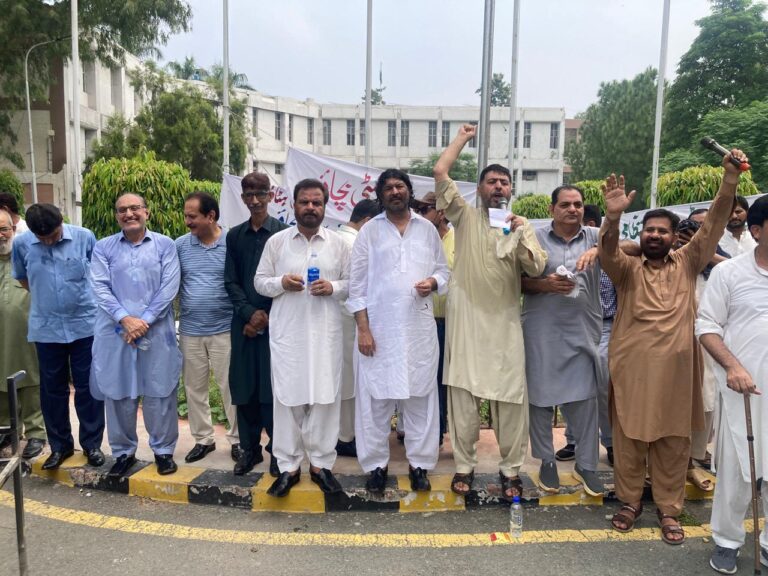
    LAHORE: Thousands of teachers and employees of the University of the Punjab took to the streets on Wednesday in a major protest organized by the Joint Action Committee, demanding the resolution of their longstanding grievances and payment of outstanding dues. The demonstration was attended by office-bearers of the Punjab University Academic Staff Association and the Punjab University Administrative & Technical Staff Association, along with a large number of faculty members and university employees. Addressing the protesters, Joint Action Committee Chairman Prof. Dr. Sardar Asghar Iqbal accused the university administration of favouring a particular group, alleging that the practice had adversely affected the institution’s financial and administrative affairs. Other faculty members, including Prof. Dr. Abdul Rehman Khan Niazi, Prof. Dr. Muqeet Javed, Dr. Abrar Zafar and Prof. Dr. Kamran Mirza, also participated in the protest. Joint Action Committee President and President of the Punjab University Administrative & Technical Staff Association Chaudhry Basharat Mahmood said employees had been protesting peacefully for around one and a half years, but the administration had failed to address their concerns. He said the employees were now compelled to intensify their protest. According to the announced plan, university offices will observe a two-hour work suspension every day, with employees wearing black armbands as a sign of protest. A protest rally will also be organized every Wednesday. Mahmood warned that the protesters could block the Campus Bridge if the administration failed to take their demands seriously. He also announced plans for demonstrations outside the Punjab chief minister’s office and on the GT Road near the university’s Gujranwala and Jhelum campuses. The protesters called for the immediate resolution of teachers’ and employees’ issues and payment of all outstanding dues. They also demanded the removal of DG Rehan Sadiq Sheikh, alleging that his conduct toward employees and role in administrative matters had contributed to the university’s deteriorating financial and administrative situation. The Joint Action Committee further called on the Punjab government to conduct a forensic audit of the university’s financial and administrative affairs to ensure transparency and accountability. Tayyab Ijaz Khan Swati, Tanveer Awan, Hammad Butt, Azhar Iqbal Baloch and former association president Nasir Rehmat were among the other speakers who addressed the gathering. The Joint Action Committee said its protest campaign would continue until the administration accepts and addresses the protesters’ demands.

  • | |

    Rs. 38 trillion in Bank deposits raise alarm as Go…

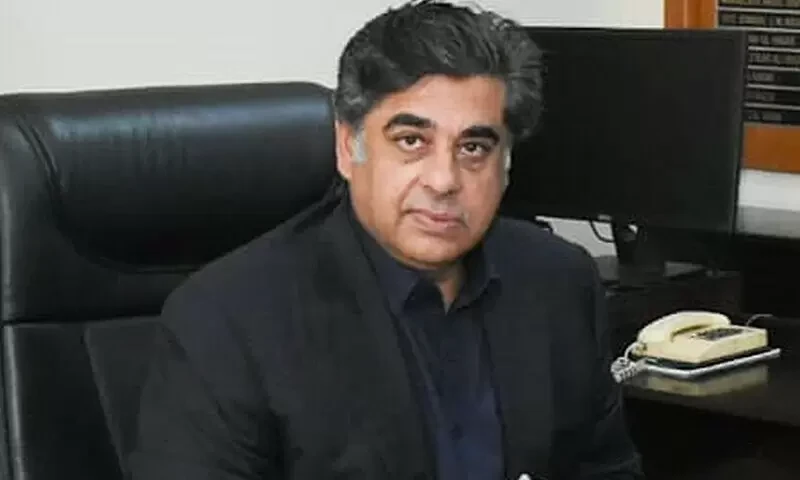
      LAHORE: Former caretaker federal minister and prominent industrialist Dr. Gohar Ijaz has raised serious concerns over Pakistan’s economic direction, warning that growing bank deposits alongside declining industrial activity indicate that capital is moving away from productive sectors.   Speaking to *Minute Mirror*, Ijaz said bank deposits had increased from around Rs. 21 trillion three years ago to Rs. 38 trillion, describing the trend as evidence that people were increasingly choosing to keep their money in banks rather than invest in businesses. He argued that excessive taxation was making industrial activity increasingly difficult. According to Ijaz, an effective tax burden of around 45 percent has discouraged investors and forced several businesses to reduce operations or shut down. “Three years ago, Rs. 21 trillion was lying in banks. Today, it has increased to Rs. 38 trillion,” Ijaz said, arguing that the country needed to encourage investment in manufacturing, exports and employment instead of allowing capital to remain parked in financial institutions. He also claimed that Pakistan could address a significant portion of its external debt if the textile industry received appropriate policy support. Ijaz said the All Pakistan Textile Mills Association (APTMA) had been offering for years to help generate enough foreign exchange for Pakistan to repay $10 billion in debt within one year. According to him, the proposal would require measures such as competitive energy prices, rational taxation, export incentives and a stable policy environment. He maintained that Pakistan’s industrial sector had the capacity to significantly strengthen the country’s foreign exchange position if its competitiveness was restored. Ijaz also criticised what he described as policy distortions in the sugar sector. He alleged that sugar mill-owning families had benefited from additional profits of approximately Rs. 30 billion per month due to pricing mechanisms, subsidies and regulatory decisions. He did not present documentary evidence for the figure during the interview but argued that government policies should prioritize consumers, industrial growth and the national economy rather than benefiting a limited number of influential groups. The former minister further commented on the current political and civil-military leadership, saying the Army and Prime Minister were receiving unprecedented recognition. He expressed optimism that stronger economic policies could enable Pakistan to overcome its financial challenges. Economists and business leaders have similarly pointed to high interest rates, expensive energy, inflation, taxation and policy uncertainty as major factors behind weak private investment. When bank returns appear more attractive and less risky than establishing or expanding businesses, capital can increasingly shift toward financial assets. Industry leaders have therefore called for lower and more predictable taxes, competitive electricity and gas tariffs, faster refunds, fewer ad-hoc duties and incentives for export-oriented manufacturing. Ijaz’s remarks highlight a broader challenge facing Pakistan: having substantial liquidity does not necessarily translate into economic productivity. For the country to generate employment, increase exports and strengthen its ability to repay external debt, more capital needs to flow into productive businesses. The central question, therefore, is whether future economic policies will encourage investment, manufacturing and exports or continue to make bank deposits more attractive than business expansion.

Leave a Reply

Your email address will not be published. Required fields are marked *