punjab university employees
| |

Punjab University employees intensify protest over…

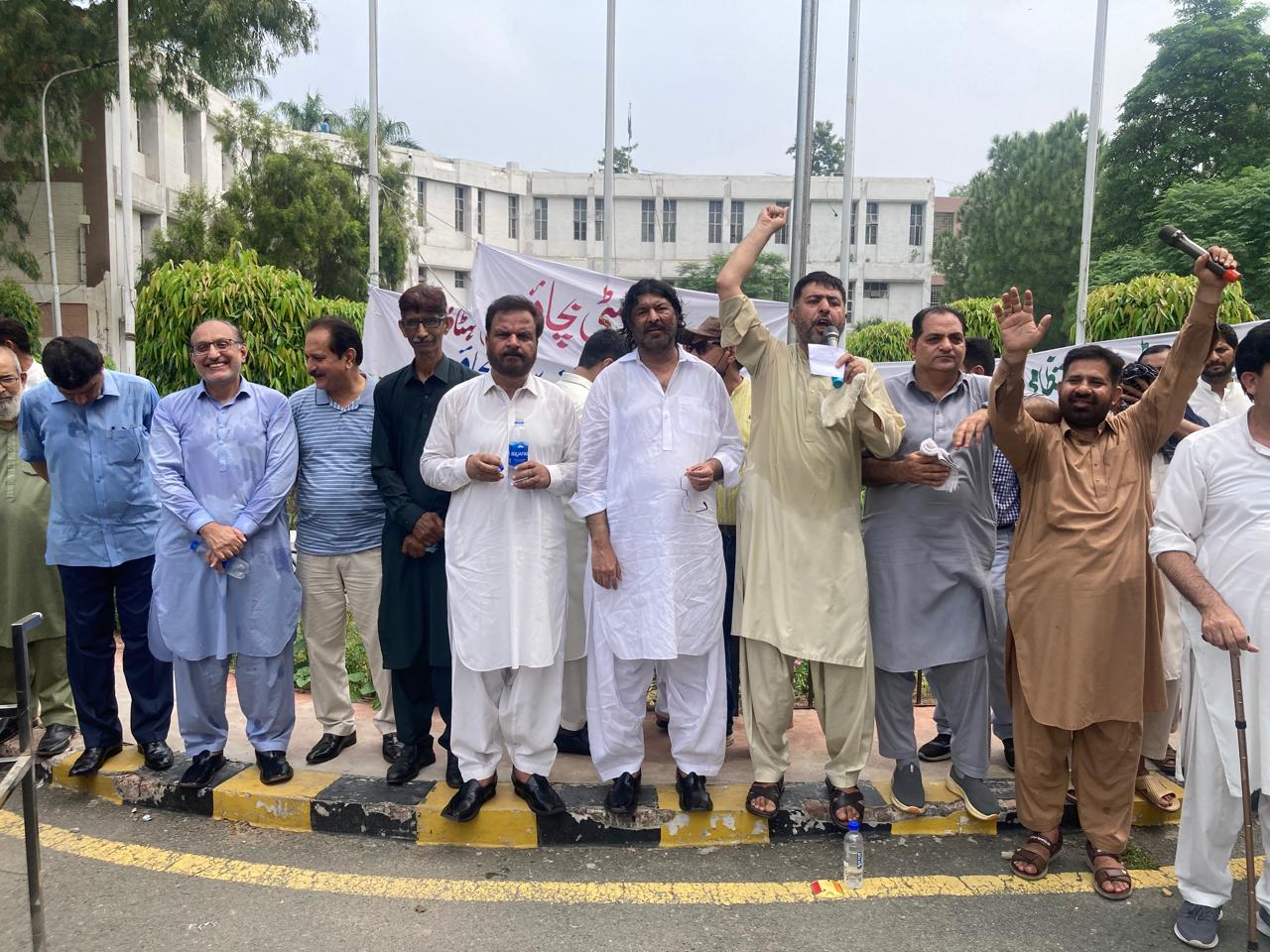
LAHORE: Thousands of teachers and employees of the University of the Punjab took to the streets on Wednesday in a major protest organized by the Joint Action Committee, demanding the resolution of their longstanding grievances and payment of outstanding dues.

The demonstration was attended by office-bearers of the Punjab University Academic Staff Association and the Punjab University Administrative & Technical Staff Association, along with a large number of faculty members and university employees.

Addressing the protesters, Joint Action Committee Chairman Prof. Dr. Sardar Asghar Iqbal accused the university administration of favouring a particular group, alleging that the practice had adversely affected the institution’s financial and administrative affairs. Other faculty members, including Prof. Dr. Abdul Rehman Khan Niazi, Prof. Dr. Muqeet Javed, Dr. Abrar Zafar and Prof. Dr. Kamran Mirza, also participated in the protest.

Joint Action Committee President and President of the Punjab University Administrative & Technical Staff Association Chaudhry Basharat Mahmood said employees had been protesting peacefully for around one and a half years, but the administration had failed to address their concerns. He said the employees were now compelled to intensify their protest.

According to the announced plan, university offices will observe a two-hour work suspension every day, with employees wearing black armbands as a sign of protest. A protest rally will also be organized every Wednesday.

Mahmood warned that the protesters could block the Campus Bridge if the administration failed to take their demands seriously. He also announced plans for demonstrations outside the Punjab chief minister’s office and on the GT Road near the university’s Gujranwala and Jhelum campuses.

The protesters called for the immediate resolution of teachers’ and employees’ issues and payment of all outstanding dues. They also demanded the removal of DG Rehan Sadiq Sheikh, alleging that his conduct toward employees and role in administrative matters had contributed to the university’s deteriorating financial and administrative situation.

The Joint Action Committee further called on the Punjab government to conduct a forensic audit of the university’s financial and administrative affairs to ensure transparency and accountability.

Tayyab Ijaz Khan Swati, Tanveer Awan, Hammad Butt, Azhar Iqbal Baloch and former association president Nasir Rehmat were among the other speakers who addressed the gathering.

The Joint Action Committee said its protest campaign would continue until the administration accepts and addresses the protesters’ demands.

Similar Posts

  • | |

    Ameesha Patel explains why she avoids marriage

    Bollywood actress Ameesha Patel has opened up about her decision not to get married. The actress recently interacted with her fans during a question-and-answer session on social media platform X. During the session, a fan asked Patel when she planned to get married. The actress responded in a humorous and straightforward manner, saying that she had no plans to marry and was very happy living her life independently. Patel said she already has a large circle of people who love and support her. She explained that around 100 people, including close family members and friends, are already part of her life and provide her with companionship. The actress further joked that she could not tolerate someone entering her life and changing everything. Her response reflected her independent approach to marriage and relationships. Patel’s candid comments attracted attention from her followers. Many fans appreciated her humorous response and her confidence in choosing a lifestyle that makes her happy. The actress has remained active in the entertainment industry and regularly interacts with her followers on social media. Her latest comments have once again sparked interest in her personal views on marriage and relationships.

  • | |

    Trees today, healthier Pakistan tomorrow: Presiden…

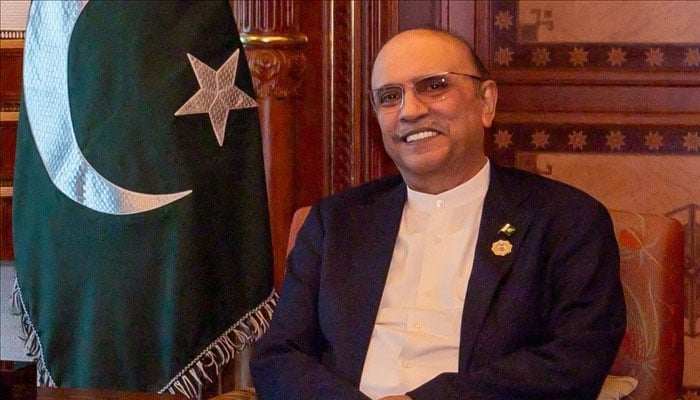
    President Asif Ali Zardari has stressed the need to protect trees and promote plantation across Pakistan. He said tree plantation is not only an environmental priority but also a national responsibility. In a message issued at the launch of the Monsoon Tree Plantation Campaign 2026, the president said the campaign aims to plant 20 million saplings across the country. He urged people and relevant institutions to actively participate in the plantation drive. He said increasing the country’s tree cover is essential for protecting the environment and improving the quality of life. President Zardari said forests play an important role in preserving biodiversity, water resources and the natural environment. Forests also help reduce the harmful effects of climate change. He stressed that Pakistan needs greater efforts to protect existing forests and increase the number of trees across the country. According to him, a stronger and healthier forest cover can help the country deal with rising environmental challenges. The president called for collective efforts to build a green, clean and climate-resilient Pakistan. He said government institutions, communities and citizens all have a role to play in protecting the environment. He also highlighted the importance of planting trees for future generations. He said the trees planted today will help provide a healthier and better environment for coming generations. The president’s message comes as Pakistan continues to face environmental challenges linked to climate change, changing weather patterns and pressure on natural resources. He said tree plantation should not be limited to seasonal campaigns. Continuous efforts are needed to protect trees, expand forests and ensure the survival of newly planted saplings. President Zardari said protecting the environment is a shared responsibility. He called for greater public awareness and participation in plantation activities to make Pakistan greener and more sustainable.

  • |

    Saudi Arabia introduces major education reforms under new school law

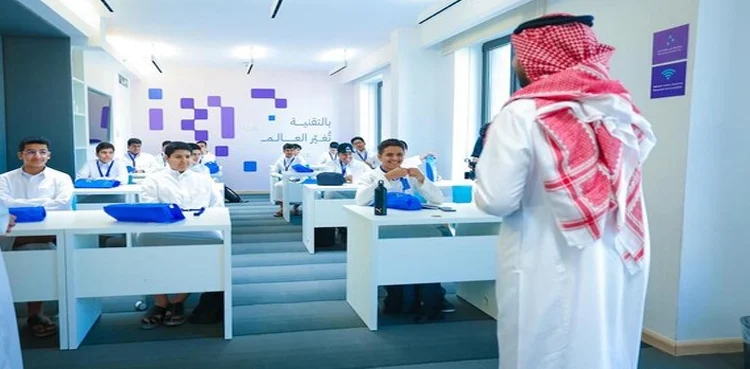
    Saudi Arabia has approved the executive regulations for its new General Education Law, introducing wide ranging reforms that will reshape the country’s education system from nursery through Grade 12. The new legislation creates a comprehensive legal framework for public and private education and is designed to support the goals of Saudi Arabia’s Vision 2030 by improving educational quality, expanding opportunities and strengthening oversight across the sector. One of the most notable changes allows private schools to decide whether boys and girls can study together, while public schools will continue to separate male and female students after the early childhood stage. The move marks a significant shift in education policy for the Kingdom and gives private institutions greater flexibility in organizing their academic programmes. The law also establishes a new General Education Affairs Council that will oversee key education policies. The council will be chaired by the Minister of Education and include representatives from several government ministries, the Education and Training Evaluation Commission and the private sector. Officials say the body will help coordinate education reforms and ensure that policies are aligned with national development goals. Compulsory education will continue for children between the ages of six and 15. The Ministry of Education will have the authority to take legal action against parents or guardians who prevent children from attending school or who contribute to students leaving education before completing the compulsory stage. Officials say the measure is intended to improve school attendance and reduce dropout rates. Arabic will remain the main language of instruction throughout the general education system. However, schools will be allowed to teach in another language when appropriate, giving educational institutions greater flexibility while preserving the country’s cultural and linguistic identity. The legislation also confirms that classroom teaching will remain the primary method of education across all grade levels. At the same time, the Ministry of Education plans to expand digital learning by developing programmes that include live online classes, self paced learning and other flexible educational options. Regulations will also be introduced for lifelong learning certificates to encourage continuous education beyond traditional schooling. Students will have access to more diverse educational pathways under the new framework. The ministry will be able to introduce specialized academic and vocational tracks designed to better prepare students for future careers and meet the changing demands of the labor market. The law places greater emphasis on supporting students with disabilities by requiring schools to provide suitable educational services, assistive technology and assessment methods that match individual learning needs. It also strengthens programmes for gifted students through specialized schools, enrichment centers, improved identification systems, teacher training and partnerships with universities and research institutions. Private schools will face stricter quality standards under the reforms. Educational institutions must obtain accreditation from the Education and Training Evaluation Commission or another internationally recognized accreditation body approved by Saudi authorities. The Ministry of Education will oversee licensing procedures, ownership transfers, school operations and the introduction of international curricula while ensuring that subjects related to national identity remain part of every approved curriculum. The new rules also introduce a clearer process for education licences. Applications must receive a written decision within 30 days, and institutions whose applications are rejected will have the right to appeal. The government says these measures are intended to improve transparency and encourage investment in the education sector. Private and nonprofit education providers will also benefit from a more defined regulatory framework. Under certain conditions, the ministry may provide financial assistance, staffing support or other resources to eligible institutions as part of efforts to expand educational services under Vision 2030. Teachers will have broader professional responsibilities under the new law. They will be expected to follow approved curricula, meet the learning needs of individual students, encourage creativity and innovation, identify gifted learners, uphold national values and participate in continuous professional development programmes. The legislation also introduces stricter disciplinary procedures for teachers, administrators and private schools that violate regulations. Authorities will have the power to temporarily remove staff from duty while investigations are carried out. Serious violations could result in dismissal and permanent disqualification from working in the education sector. Private schools that fail to comply with the law may receive warnings, face financial penalties, lose the right to admit new students or have their operating licences revoked. If a licence is cancelled, the school must ensure that enrolled students are able to complete the academic year without disruption at the owner’s expense.

  • | |

    Kylie Kelce shuts down pregnancy rumors with blunt…

    Kylie Kelce shuts down pregnancy rumors with blunt message: ‘Stop it’ By Amna Malik Kylie Kelce has made one thing crystal clear—she is not expecting baby number five. The 34-year-old podcast host and wife of former NFL star Jason Kelce addressed the growing speculation during the latest episode of her Not Gonna Lie podcast after online rumors claimed she was pregnant again. Kylie, who shares four daughters with Jason, did not hold back as she responded to the claims with her trademark honesty and humor.  “We have four kids,” Kylie said before delivering a direct message to those fueling the rumors. “Stop trying to get me to have more. Stop it. That’s between me and my husband and my motherf—ing uterus.”  The rumors reportedly gained traction after photos from the family’s recent vacation in Paris showed Kylie wearing a loose-fitting dress. Some social media users quickly began speculating that the outfit was hiding a baby bump. Kylie, however, rejected those assumptions and explained why people should stop commenting on women’s bodies.  During the podcast, Kylie stressed that wearing comfortable or oversized clothing should never be viewed as proof that someone is pregnant. She argued that people need to stop making assumptions based solely on appearance, adding that such comments can be hurtful and intrusive.  Kylie and Jason Kelce are parents to four daughters: Wyatt, Elliotte, Bennett and Finnley. The couple has often shared funny and heartfelt parenting moments with fans, but Kylie made it clear that decisions about expanding their family remain private.  This is not the first time Kylie has spoken out against pregnancy speculation. In the past, she revealed that she had experienced a miscarriage before welcoming her children, making false pregnancy rumors especially painful. Her previous comments encouraged people to think twice before asking women whether they are expecting, as they never know what someone may be going through behind the scenes.  Fans praised Kylie for addressing the rumors so openly, with many applauding her for speaking about body image and personal boundaries. Her candid remarks also sparked a wider conversation online about respecting women’s privacy and avoiding unnecessary speculation about pregnancy. For now, Kylie says her family is complete with four children, and she hopes people will stop turning every outfit or vacation photo into another round of baby rumors. Her message was simple, firm and impossible to misunderstand: decisions about having children belong to her and Jason alone—not the internet. 

  • | | |

    Oil prices surges avove $91 as Iran war fuels Horm…

    Oil prices climbed on Tuesday, with Brent crude moving above $91 a barrel as stalled diplomacy over the Iran conflict raised fresh concerns about global energy supplies. Brent futures gained 27 cents, or 0.3%, to $91.14 a barrel, while US West Texas Intermediate rose 42 cents to $85.04. WTI had earlier reached $85.37, its highest level since July 31. Markets remained tense after Iran signalled a shift toward a more offensive military posture, while Washington ruled out extending a temporary ceasefire. Progress toward reopening the Strait of Hormuz to normal tanker traffic has also slowed, adding to fears of prolonged supply disruptions. Only a handful of commodity vessels crossed the strategic waterway over the weekend, sharply below normal traffic levels. Concerns were further heightened by attacks in the Red Sea, reinforcing fears over disruptions at both the Strait of Hormuz and Bab el-Mandeb. Despite the growing tensions, reports of possible back-channel contacts between the US and Iran offered a limited sign of hope for renewed diplomacy. Meanwhile, markets are also watching US crude inventories, which are expected to have declined last week. Earlier, Oil prices climbed on Monday as uncertainty over a possible diplomatic breakthrough between the United States and Iran increased, while a sharp slowdown in tanker movements through the Strait of Hormuz heightened concerns about disruptions to global crude supplies. Brent crude futures gained as much as 1% during early trading to reach $89.40 per barrel. The benchmark was later up 72 cents, or about 0.8%, at $89.20 a barrel by 0229 GMT. US West Texas Intermediate (WTI) crude also moved higher, rising 44 cents to $82.83 per barrel. Both international benchmarks posted gains of more than 5% last week after a series of attacks involving energy and shipping assets in and around the strategically important Strait of Hormuz. The incidents have intensified fears that further escalation could affect one of the world’s most important oil transit routes. Market sentiment was further affected by developments over the weekend, when Iranian Foreign Minister Abbas Araqchi said Tehran had yet to decide whether it would resume negotiations with Washington. US President Donald Trump, meanwhile, told Americans to prepare for somewhat higher gasoline prices as the conflict continues. Analysts said the renewed uncertainty had brought geopolitical risk back into crude markets after oil prices had previously come under pressure on expectations that diplomatic efforts could ease tensions. “Oil prices have now rebounded almost completely from the lows seen in early August, as hopes for a more permanent resolution between the US and Iran have faded and geopolitical risk premiums have returned to the market,” said Priyanka Sachdeva, head of market insights at Phillip Nova in Singapore. Sachdeva cautioned, however, that the rally could lose momentum unless there is evidence of a further deterioration in the situation. She said the market would need to see renewed aggression in the Strait of Hormuz, particularly significant damage to oil tankers or energy infrastructure, before prices were likely to move substantially higher. Hormuz shipping activity slows Concerns over physical supply disruptions increased after ship-tracking data showed a marked decline in vessel traffic through the Strait of Hormuz over the weekend. According to data from Kpler, only five commodity vessels crossed the strategic waterway on Saturday, while no such transits were recorded on Sunday. This compared with 31 commodity vessel crossings during the previous weekend. The slowdown is significant because the Strait of Hormuz is a critical route for international energy shipments. Any prolonged disruption could increase transportation risks, raise insurance costs and place additional upward pressure on crude prices. The United Arab Emirates also accused Iran of attacking another vessel operated by Abu Dhabi National Oil Company (ADNOC) while it was passing through the strait on Friday, according to the Emirati state news agency WAM. The UAE had earlier blamed Iran for two separate incidents involving ADNOC-operated vessels on Thursday evening. The latest incidents have added to concerns among traders that the conflict could increasingly affect commercial shipping and energy infrastructure, rather than remaining confined to military and diplomatic confrontation. The Strait of Hormuz remains particularly important to global oil markets because a substantial volume of crude and petroleum products moves through the waterway. Any sustained interruption could therefore have consequences well beyond the region. For now, traders are closely monitoring developments involving US-Iran diplomatic contacts, attacks on shipping and the movement of tankers through the strait. While the latest price gains reflect a higher geopolitical risk premium, analysts remain cautious about predicting a prolonged rally. If shipping activity resumes and diplomatic channels reopen, some of the premium built into crude prices could quickly unwind. Conversely, additional attacks on tankers, oil facilities or other critical infrastructure could trigger a stronger market reaction and push prices higher as traders reassess the security of regional supplies.

  • | |

    Police constable martyred, another wounded in Lakk…

    A police constable was martyred and another sustained injuries after unidentified gunmen opened fire on a police patrol in Khyber Pakhtunkhwa’s Lakki Marwat district on Sunday. The attack took place near the old police lines within the jurisdiction of Lakki City police station, where the officers were performing patrol duties as part of the City Rider Squad. Police officials said Constable Sajidullah received critical injuries during the firing. He later succumbed to his wounds. Constable Muhammad Waqas was also injured and was taken to a hospital, where he is receiving medical treatment. Following the incident, police teams immediately sealed off the area and launched a search operation to locate those responsible for the attack. Security personnel are also examining the crime scene and collecting evidence that could help investigators identify the attackers. Lakki Marwat District Police Officer Shehbaz Elahi visited the site and reviewed the situation with senior officers. He was briefed about the circumstances surrounding the attack and the steps taken by police following the incident. The DPO directed investigators to use modern forensic and investigative methods and mobilise all available resources to track down the suspects. He also ordered authorities to strengthen security arrangements to protect both law-enforcement personnel and civilians. Officials said attacks against police officers would not be tolerated and that every effort would be made to bring those behind the assault to justice. The latest incident comes amid a series of attacks against security personnel in Khyber Pakhtunkhwa. The province has witnessed a rise in militant violence in recent weeks, prompting security forces and police to intensify operations against armed groups. Earlier this month, several police personnel were killed in a suicide attack outside a police station in Swat. In separate incidents in Hangu and Dera Ismail Khan, police officers were also targeted in attacks. The continuing violence has increased concerns over the security situation across parts of the province, particularly areas close to the former tribal districts and the Afghan border. Security officials have maintained that intensified intelligence-based operations are being conducted to prevent militant attacks and dismantle networks involved in violence against law-enforcement agencies.

Leave a Reply

Your email address will not be published. Required fields are marked *