nepal china resume
| |

Nepal and China resume flood rescue after lake threat eases, death toll tops 500

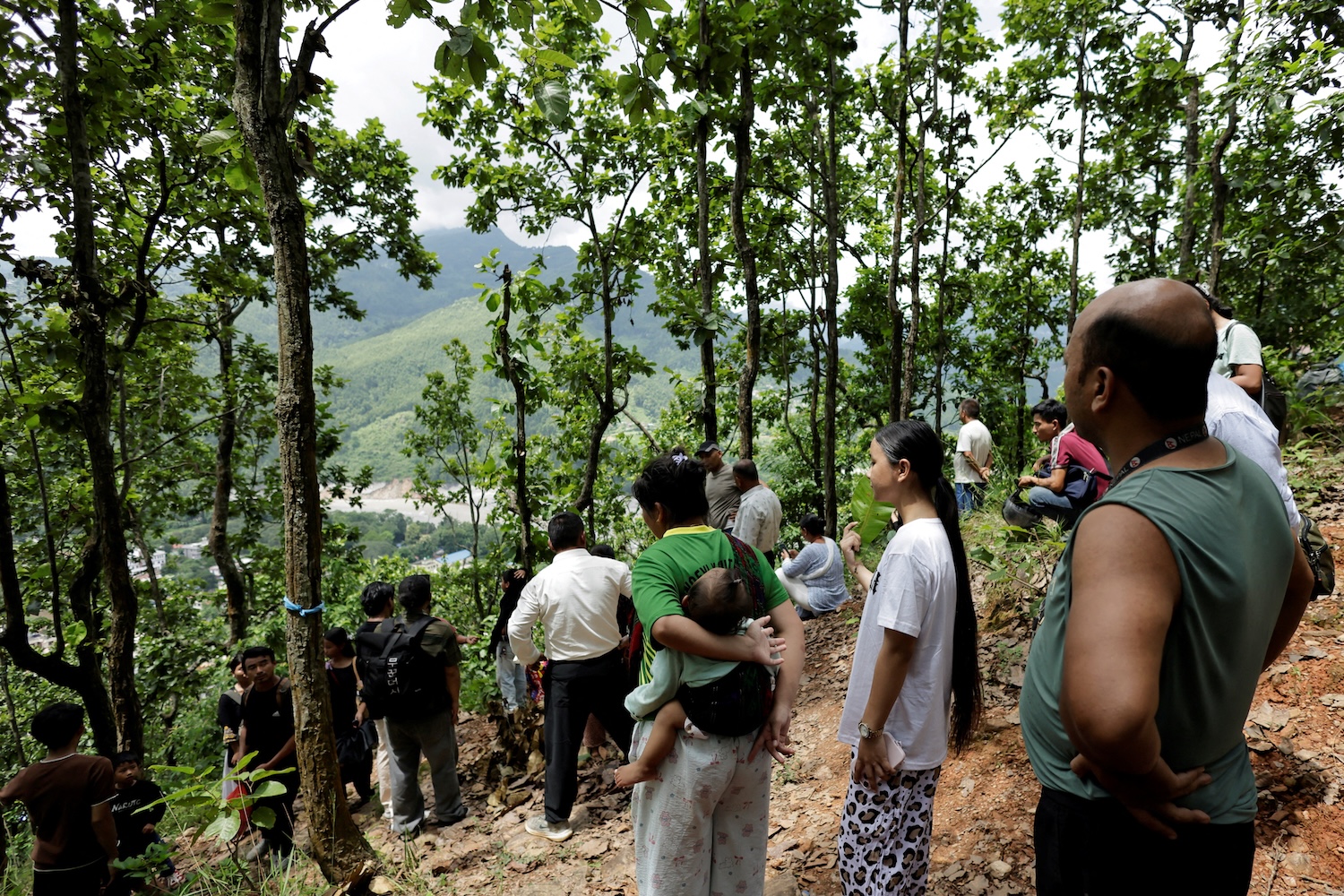
NUWAKOT, Nepal – Nepal and China resumed rescue operations that had been suspended briefly in the flood-hit Himalayas on Friday, August 28, after risks from an overflowing lake were found to be manageable, easing fears of fresh devastation.

The catastrophic flood on Wednesday, August 26, caused by a glacier collapse killed 547 people in Nepal and five in China’s Tibet, with almost 1,000 more missing in the two countries.
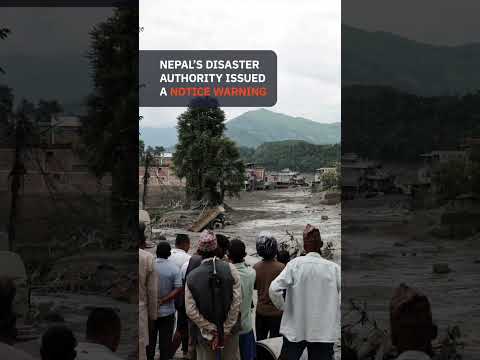

Nepal and China resume flood rescue after lake threat eases, death toll tops 500

A huge torrent of rock, ice, mud and debris cascaded through Himalayan mountain river systems after the collapse, and also led to the formation of a lake where water continued to collect and rise.

Overflow sparks fresh panic

On Friday, the lake’s reservoir had topped 2.5 million cubic meters (90 million cubic feet) of water, up from the estimated 1.5-2 million cubic meters (50-70 million cubic feet) recorded a day earlier, before overflowing into the Lhende Khola river and then into the Trishuli, authorities and witnesses in Nepal said.

The overflow sparked panic and warnings from authorities in Nepal, leading to rescue operations being suspended for about three hours. The risk of the lake bursting had prompted all Chinese rescue personnel and vehicles to withdraw on the Chinese side as well and stand by in a safe area, state broadcaster CCTV said.

Both resumed rescue operations after the threat eased.

“By noon, as the risk posed by the upstream dammed lake was deemed manageable, rescue operations for the Gyirong mudslide disaster quickly resumed and were stepped up,” Chinese state broadcaster CCTV said.

Nepal’s army spokesperson Raja Ram Basnet told Reuters that rescue operations had been temporarily halted after the flood alert, but it was found that the rise in the water level was only by about 2 feet (0.6 m).

Wednesday’s flood ripped through villages and valleys, destroying power stations, roads and bridges along a route that links Kathmandu with Lhasa in Tibet and is popular with trekkers and pilgrims. Of those missing, at least 540 are foreigners, many of them Hindu pilgrims from India headed to the holy Mount Kailash and Lake Mansarovar in Tibet.

More than 90,000 people are estimated to be affected, the Red Cross said, adding that trucks with relief supplies were blocked after the barrier lake broke its banks.

China calls for stronger monitoring of glacier lakes

In Beijing, China’s Politburo met on Friday to direct rescue work, state media reported.

Authorities must “scientifically formulate search-and-rescue plans, make every effort to search for missing people from China and abroad,” the meeting chaired by President Xi Jinping said, according to state news agency Xinhua.

The meeting called for stronger monitoring of glacier lakes, landslide risks and barrier lakes, emergency aid to affected areas in Nepal, and closer international disaster cooperation.

China’s Premier Li Qiang, the country’s No. 2 official, arrived in the disaster-stricken area of Gyirong on Thursday afternoon, August 27, state-run Xinhua news agency said. The visit suggested Beijing was treating the disaster as a matter of the highest national priority.

Chinese rescuers had yet to reach the worst-hit site on the Chinese side of the border, the Gyirong border crossing, by Thursday evening, state media reports indicated, as crews worked to clear debris from the key access road leading to the area.

Dramatic footage on Wednesday showed enormous torrents of muddy water and debris tearing through structures in the border crossing area within seconds and engulfing people trying to flee.

The tally of missing in Tibet’s Gyirong County was 558, Chinese state broadcaster CCTV said on Thursday, including 260 foreign nationals. So far, just five people have been confirmed dead on the Chinese side.

‘All of our people are gone’

Earlier, Nepalese rescue teams used helicopters to search for survivors and drop emergency supplies to thousands cut off in towns and valleys, while emergency services – some using sniffer dogs – recovered dozens of bodies swept down into the plains.

Dibga Tamang was among the last people rescued from Rasuwa on Thursday, airlifted along with three others to an army camp in Nuwakot.

“All of our people have gone. They are dead,” Tamang said. “I have no one left waiting for me. Everything and everyone is gone. The end.”

A large number of people arrived at an army base in the area seeking information about missing and dead family members. Bodies were brought into the barracks and lists of rescued people were posted outside to help families find information.

Buildings ‘wiped out like toothpicks’

Around the world, relatives of those missing were desperate for information about their whereabouts.

Sneha Sudhir was one of 10 women whose husbands had set out from Nepal on a trek to Tibet’s Mount Kailash when the region was struck by disaster.

The men, all from northern Virginia, are among dozens of Americans missing.

“Where are they?” Sudhir said tearfully from her home in Chantilly, Virginia, on Thursday.

Sudhir said the women were supporting each other and reaching out to officials, politicians and friends and family in the United States and India, hoping for word.

“Everybody is taking turns in shedding their tears, wiping it off and getting back to work,” she said.

President Donald Trump said the US had offered support to Nepal.

“Nobody’s ever seen anything quite like that, where very powerful, strong, well-built buildings were wiped out like they were toothpicks. It’s a terrible thing. We are sending aid, and we’ve spoken to the leadership, and we let them know anything they want, they’ll have.”

Nepal declines foreign rescue help

While offers of assistance are pouring in, Nepal said it does not need help from other nations in search and rescue missions.

A South Korean rapid response team is already in Kathmandu but has not been deployed because the Nepali government does not have a plan to accept foreign rescue yet, according to the foreign ministry in Seoul.

The Kathmandu Post reported that India, China, the United States, Britain, Japan, South Korea, Sri Lanka and Bangladesh had asked the government to allow their search-and-rescue teams to assist in the operation. – Rappler.com

Similar Posts

  • | |

    Ukraine targets mid-2027 for prototype of new Euro…

    Ukraine is pushing to have a working prototype of a European anti-ballistic missile system, codenamed Freyja, ready by the middle of next year, as Kyiv presses its allies to accelerate development of a weapon capable of intercepting Russian ballistic missiles. Davyd Aloian, deputy secretary of Ukraine’s National Security and Defence Council and the official overseeing the Freyja project, said an international steering committee responsible for estimating research and development costs is set to meet for the first time soon. The project was formally launched two weeks ago at a summit in Paris, where leaders from ten European nations, including Ukrainian President Volodymyr Zelenskiy, joined roughly a dozen defense manufacturers to establish the anti-ballistic coalition. Aloian said the tight timeline reflects an ambitious target. He described the goal as producing a minimum viable product within the first half of next year, meaning a prototype capable of demonstrating early practical results. Ukraine currently relies heavily on American made Patriot systems, which remain the only weapon in its arsenal able to reliably shoot down Russia’s ballistic missiles, capable of traveling at multiple times the speed of sound. Deliveries of Patriot systems have been hampered by shifting political circumstances, limited stockpiles and lengthy manufacturing timelines. Russia has intensified ballistic missile strikes this month on Kyiv and the southern port city of Odesa, launching dozens of missiles that Ukraine was largely unable to intercept due to a shortage of interceptor missiles. Ukraine has offered to contribute a launcher and an interceptor missile to the Freyja project, which Zelenskiy said this month essentially needs testing at this stage. He has said he hopes to see the system operational within a year. Kyiv is counting on its allies to supply key technology, including modern radar systems, sensors and expertise in missile guidance and control electronics. Defense companies that have joined the initiative so far include Eurosam, maker of the SAMP-T interceptor, along with Leonardo, Thales and Saab. Ukrainian missile and drone manufacturer Fire Point, known for developing the Flamingo cruise missile, has said it will serve as the lead industrial partner on the project and recently struck a deal with German firm Hensoldt to supply radar technology. The Freyja system is designed as a lower cost alternative to the Patriot, a system many European nations also depend on. Other existing air defense platforms, including the Franco Italian SAMP/T and Germany’s IRIS-T, have not yet demonstrated the ability to down ballistic missiles. Zelenskiy has compared the Freyja coalition to a Lego set, describing it as a system built by combining components supplied by different defense industry leaders. Aloian said manufacturers have been asked to build a framework that allows interchangeable parts from different countries. He explained that the system’s open architecture means individual nations can select their preferred components, whether that means Denmark opting for a Danish made Weibel radar or Sweden choosing Saab’s technology. Organizers are also considering setting up a dedicated body, potentially structured as a fund, to manage contributions and ensure the project receives stable financing over time. Aloian said involving private companies directly alongside governments should help cut through bureaucratic delays, adding that the coalition is meant to function as a practical effort rather than a political one. The push for a homegrown European missile defense capability reflects a broader shift underway across the continent, as governments reassess their reliance on American weapons systems amid growing pressure to build independent defense industrial capacity in the face of a prolonged war on Europe’s eastern border.

  • |

    Iran warns US: Any aggression will be met with a strong and decisive response

    Iranian Foreign Minister Abbas Araghchi has warned that any aggression against Iran or its vital infrastructure will trigger a “strong and decisive response”, emphasising that Tehran’s defense doctrine remains grounded in an “eye for an eye” policy. Writing on social media platform X, Araghchi made it clear that Iran will hit back against any strikes on its territory and cautioned that any third parties providing support to such actions will also be viewed as legitimate targets. The warning follows aggressive directives from US President Donald Trump, who ordered US Central Command (CENTCOM) to intensify strikes on Iranian positions and threatened that Iran would pay a steep price as military actions continue. An official from Iran’s Tasnim News Agency reinforced Araghchi’s statement, warning that if US forces target Iranian power plants or bridges, Iran will respond by targeting infrastructure, bridges, and energy assets associated with American interests throughout the region.

  • |

    Saudi airstrikes on Hodeidah trigger Houthi warning, raising regional tensions

    Saudi Arabia’s airstrikes on the Houthi-controlled Yemeni city of Hodeidah have triggered a strong response from the group, with the Houthis warning that the attacks could have serious consequences and further escalate tensions in the region. According to Arab media reports, Houthi officials said Saudi-led forces targeted telecommunications facilities in Hodeidah as well as Kamaran Island. A woman was reportedly injured in the strike on Kamaran Island. Witnesses also reported hearing explosions near Hodeidah port. However, the Saudi-led military coalition denied targeting the port itself. The coalition said its operations were aimed at Houthi military positions in Hodeidah. Hodeidah port is a major commercial and humanitarian gateway for northern Yemen. The port plays an important role in bringing essential goods and humanitarian supplies into areas controlled by the Houthis. The latest strikes followed growing tensions in the Red Sea. Saudi-led coalition spokesman Turki al-Malki had described recent Houthi activities in the area as irresponsible and provocative. He warned that the coalition would take further military action if Houthi attacks continued. The Houthis recently claimed responsibility for attacks on Saudi oil tankers in the Red Sea. The group said the vessels had violated a naval blockade it had announced against Saudi Arabia. The Houthis declared the blockade on July 20. They described it as a response to an attack on Sanaa International Airport a week earlier. The internationally recognised Yemeni government, which is backed by Saudi Arabia, claimed responsibility for the airport attack. It said the strike was carried out after an Iranian aircraft allegedly arrived at the airport without authorisation. Following the latest escalation, concerns are growing over the impact on commercial shipping and global trade. Two Chinese oil tankers carrying Saudi crude reportedly crossed the Bab el-Mandeb Strait safely despite the heightened tensions. The Red Sea is a crucial international shipping route. It handles a significant share of global container trade and connects major markets between Asia, Europe and the Middle East. Any prolonged disruption to shipping in the Red Sea could increase transportation costs and put further pressure on global supply chains. The situation is particularly sensitive because the Strait of Hormuz is also facing serious disruption amid the wider regional conflict. Houthi spokesman Mohammed Abdulsalam said the group’s naval blockade does not amount to a complete closure of the Bab el-Mandeb Strait. He said the measure is specifically focused on maritime activity linked to Saudi Arabia. According to the Houthi position, the blockade is intended as a response to what the group describes as the continued blockade of Yemen. The latest exchange of airstrikes, threats and attacks on shipping has increased fears that the conflict could spread further across the region.

  • | | | | |

    UN urges evacuation of 6,000 sailors stranded in S…

    GENEVA: The United Nations has called for the immediate evacuation and repatriation of nearly 6,000 sailors stranded in the Strait of Hormuz, warning that the escalating conflict in the Middle East is placing thousands of civilian seafarers in increasing danger. Speaking in Geneva, UN High Commissioner for Human Rights Volker Türk, through his spokesperson Shabia Mantoo, urged all parties involved in the conflict to prioritize the safety of commercial shipping crews caught in the crisis. “Parties to the conflict should urgently work to facilitate safe passage for stranded seafarers to safely evacuate and disembark, as well as ensure the delivery of critical supplies,” Mantoo told reporters, highlighting the growing humanitarian concerns in one of the world’s most strategically important waterways. The Strait of Hormuz serves as a vital global shipping route, handling a significant portion of the world’s oil exports. However, escalating military tensions have disrupted maritime traffic, leaving thousands of sailors aboard commercial vessels unable to safely continue their journeys or return home. The UN warned that many crews have remained at sea for extended periods, facing uncertainty over security conditions while access to food, medical assistance, and other essential supplies becomes increasingly challenging. Human rights officials stressed that civilian seafarers should not become casualties of geopolitical conflicts and called on all sides to respect international humanitarian and maritime law by ensuring safe navigation and humanitarian access. Maritime experts say prolonged disruptions in the Strait of Hormuz could have far-reaching consequences beyond the humanitarian crisis, affecting global energy supplies, international trade, and shipping costs. The UN’s appeal comes as diplomatic efforts continue to prevent further escalation in the region. While governments work to ease tensions, the world body has urged immediate action to protect the thousands of sailors still stranded at sea, emphasizing that humanitarian needs must remain a priority regardless of the ongoing conflict.

Leave a Reply

Your email address will not be published. Required fields are marked *