south korea enshrine
|

South Korea to enshrine nuclear pledge in law

SEOUL: South Korea is preparing legislation that would legally reaffirm its commitment to nuclear non-proliferation while it moves ahead with plans to develop nuclear-powered submarines.

The proposed bill is expected to be released for public consultation by the Defence Ministry. It will set out five key principles governing the country’s nuclear-powered submarine programme.

If approved, the legislation would formally establish in domestic law Seoul’s pledge not to develop, produce, possess or use nuclear weapons.

The proposed law would also prevent the government from using nuclear materials specifically for weapons-related purposes. It would prohibit activities that could weaken the international nuclear non-proliferation system.

The move is aimed at addressing concerns that South Korea’s submarine programme could eventually lead to a domestic nuclear weapons capability.

The legislation would reaffirm Seoul’s commitments under the Nuclear Non-Proliferation Treaty. It would also require cooperation with international organisations during the development of the submarines.

The proposed framework would include safeguards for public safety and environmental protection against radioactive materials.

The government also wants to speed up the submarine programme. The proposed law would reportedly allow the project to bypass a preliminary feasibility study.

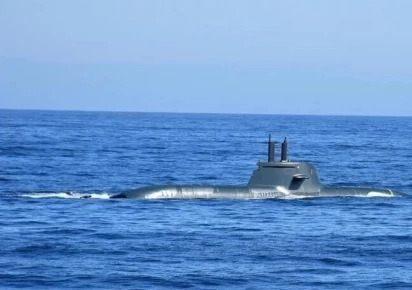
South Korea’s nuclear-powered submarine project, known as Jang Bogo N, involves plans for attack submarines powered by low-enriched uranium.

The programme is being developed with US approval. The two countries reached an agreement on the project during a leaders’ summit last October.

Seoul plans to launch its first nuclear-powered submarine in the mid-2030s. The vessel is expected to enter operational service later in the decade.

Defence authorities are reportedly considering three submarines weighing about 8,000 tonnes each. However, official technical details have not yet been released.

South Korean Defence Minister Ahn Gyu-back has previously stressed that the country will continue to follow its international non-proliferation commitments.

Seoul also plans to work closely with the International Atomic Energy Agency throughout the programme.


Similar Posts

  • | |

    BLACKPINK’s Jennie breaks the internet yet again…

    BLACKPINK’s Jennie has once again captured the internet’s attention, proving why she remains one of K-pop’s biggest global stars. The singer and rapper is making headlines following the release of her latest music project, which has sparked an overwhelming response from fans across social media. Within hours of its debut, clips from the release spread rapidly online, with supporters praising Jennie’s powerful vocals, confident performance, and striking visual style. (rollingstone.com⁠) The latest release marks another milestone in Jennie’s flourishing solo career. After a string of successful singles and collaborations, the BLACKPINK member continues to expand her artistic identity while balancing group activities and individual projects. Fans have described the new track as bold, energetic, and refreshingly different, with many saying it showcases another side of Jennie’s musical abilities. Social media platforms were flooded with reactions shortly after the song dropped. Hashtags related to Jennie quickly began trending worldwide as fans shared music videos, performance clips, and their favorite lyrics. Many praised the production quality, stylish visuals, and the singer’s charismatic stage presence, while others predicted that the track would become one of the biggest K-pop releases of the year. (billboard.com⁠) Jennie’s influence extends far beyond music. Over the years, she has become a global fashion icon, regularly collaborating with luxury brands and appearing at major fashion events around the world. Every new project she releases attracts attention not only for the music itself but also for her signature style, which often inspires fashion trends among fans. Her latest comeback is no exception, with viewers already discussing her outfits, makeup, and overall concept. The success of the release also highlights Jennie’s growing presence as a solo artist. While BLACKPINK remains one of the world’s most successful girl groups, each member has increasingly explored individual creative projects. Jennie has consistently demonstrated her versatility by experimenting with different musical styles while maintaining the confidence and charisma that first made her famous. Industry analysts note that Jennie’s solo achievements continue to strengthen her international profile. Her music regularly attracts millions of streams within hours, while her videos generate enormous engagement across digital platforms. This latest release appears to be following the same path, earning widespread praise from both fans and critics for its polished production and memorable performance. (NME.com⁠) As excitement continues to grow, many fans are eagerly awaiting live performances and additional promotions for the new song. The release has also fueled speculation about future solo activities and potential BLACKPINK projects, keeping the global fanbase buzzing with anticipation. With yet another successful music drop, Jennie has reaffirmed her status as one of the most influential figures in modern pop music. Her ability to dominate conversations online, set trends, and deliver memorable performances continues to demonstrate why she remains a standout star in the ever-evolving world of K-pop.

  • | |

    Nolan’s Odyssey explores the cost of flawed choices

    Christopher Nolan’s The Odyssey explores a character who is far from a conventional hero. Odysseus is brave, intelligent and determined. He is also deeply flawed. That complexity appears to be at the centre of Nolan’s interest in the ancient Greek epic. The nearly 3,000-year-old story follows Odysseus as he attempts to return to Ithaca after the Trojan War. His journey is filled with violence, loss, temptation and encounters with powerful gods and mythical creatures. Yet the film is not simply about a warrior trying to find his way home. It is also about the consequences of his decisions. Odysseus repeatedly makes choices that produce consequences he struggles to control. His actions often begin with understandable motives. Revenge, anger, pride and a desire to protect his men push him into increasingly dangerous situations. His treatment of the Trojans is one example. Odysseus considers himself a man who respects the rules of combat. However, the Trojan War forces him into tactics that contradict his personal principles. The wooden horse becomes the most striking example of this conflict. His deception helps the Greeks defeat Troy, but it also establishes a chain of events that follows him long after the war ends. His encounter with the Cyclops Polyphemus further exposes his weaknesses. Odysseus and his crew manage to escape the Cyclops’ cave. But instead of leaving quietly, Odysseus attacks again. His decision is driven by anger and revenge. The consequences are devastating. Polyphemus calls upon his father, Poseidon, to punish Odysseus. The resulting curse turns the journey home into an extended ordeal. Odysseus continues trying to save his men. However, his efforts repeatedly end in tragedy. One decision leads to another, and the consequences gradually become impossible to contain. His crew members begin to lose faith in their commander. The man determined to bring them home becomes the leader whose decisions ultimately contribute to their deaths. This moral conflict is familiar territory for Nolan. The director has repeatedly built stories around protagonists whose choices carry enormous consequences. Bruce Wayne, for example, attempts to protect Gotham by allowing a dangerous lie surrounding Harvey Dent to survive. The consequences eventually force him to confront the price of that decision. In Oppenheimer, the central character develops the atomic bomb in an attempt to help defeat Nazi Germany. Yet his success leaves him haunted by the destructive power he helped unleash. Dunkirk presents another interpretation of home. For the soldiers trapped on the beaches of France, home represents survival, safety and the possibility of returning with their dignity intact. For Oppenheimer, however, home becomes something more complicated. It represents the peace of mind he can no longer recover after witnessing the consequences of his work. For Odysseus, home is deeply personal. Ithaca represents his family, his kingdom and the identity he lost during two decades away. Returning home is therefore more than reaching a physical destination. His journey changes him. He leaves as a king and eventually returns disguised as a beggar. Along the way, he encounters monsters, hostile forces and divine punishment. He also watches his companions disappear one by one. By the time Odysseus reaches the end of his journey, the question is no longer simply whether he can return home. The bigger question is whether a man who has experienced so much violence can ever truly return as the person he once was. That question sits comfortably within Nolan’s broader storytelling style. His characters often achieve their goals but pay an enormous personal price. Their victories rarely come without consequences. The Odyssey brings that recurring theme to one of its most ancient and powerful forms. Odysseus survives the journey, but survival does not erase what happened along the way. His homecoming becomes a reckoning with the violence, losses and choices that shaped him. Nolan’s interpretation therefore turns the epic into more than an adventure story. It becomes a meditation on guilt, responsibility, identity and the lasting cost of extraordinary choices. At its heart, The Odyssey asks what happens when a man spends years fighting to return home, only to discover that the journey has changed the meaning of home itself.

  • |

    CPEC 2.0: Pakistan, China shift focus to B2B investment

    ISLAMABAD: Pakistan and China are moving toward a more business-driven model of cooperation under the second phase of the China-Pakistan Economic Corridor (CPEC), with greater emphasis on Business-to-Business (B2B) partnerships, industrial development, exports and productivity rather than large-scale Government-to-Government (G2G) financing. The development emerged during a high-level Chinese delegation’s visit to the CPEC Secretariat, where discussions focused on strengthening industrial and commercial ties between the two countries. According to an official statement issued by the Ministry of Planning on Tuesday, the Chinese delegation was headed by Sun Dongsheng, Senior Advisor, Economic Affairs Press. The delegation met Federal Minister for Planning, Development and Special Initiatives Ahsan Iqbal, along with senior policymakers and development experts. The talks centred on ways to advance B2B and industrial cooperation under CPEC 2.0, reflecting a broader shift in the corridor’s priorities from infrastructure-led development toward industrialisation, exports, technology and private-sector participation. From infrastructure to industrialisation During the meeting, Ahsan Iqbal briefed the Chinese delegation on the government’s Uraan Pakistan economic transformation programme and outlined Islamabad’s priorities for the next phase of CPEC. The minister proposed closer cooperation with Chinese institutions, including counterparts of the National Centre of New Manufacturing, to benefit from China’s experience in advanced manufacturing, innovation, automation and robotics. He said Pakistan needed to strengthen its productive capacity and adopt modern technologies to remain competitive in the era of Industrial Revolution 4.0 and prepare for the emerging Industrial Revolution 5.0. Ahsan Iqbal identified Pakistan’s limited export base as one of the country’s major economic challenges. According to the minister, repeated attempts to accelerate economic growth have struggled to generate sustainable momentum because productive sectors have not been sufficiently integrated with export markets. He stressed that the government’s priority was therefore to turn agriculture, manufacturing and other productive sectors into stronger sources of exports and foreign exchange. Pakistan seeks greater access to Chinese market The minister also called for greater facilitation of Pakistani exports to China, highlighting the considerable gap between the two countries’ trade potential. He noted that China imports goods worth around $2.6 trillion annually, whereas Pakistan’s exports to the Chinese market remain close to $3 billion. Ahsan said Pakistan needed to increase its presence in the Chinese market by improving production standards, competitiveness and the ability of domestic businesses to meet international demand. He expressed the expectation that CPEC 2.0 could help Pakistan address what he described as its “export deficit”, just as the first phase of the corridor contributed to addressing the country’s energy shortfall. CPEC enters a new phase Under CPEC’s first phase, China committed substantial financing to infrastructure, energy and other development projects in Pakistan. Nearly $30 billion was invested in infrastructure and power-sector projects, including independent power producers. However, the focus is now increasingly shifting toward private-sector-led cooperation. Islamabad continues to pursue financing for selected road and motorway projects, but China has yet to demonstrate readiness to finance the long-delayed Main Line-1 (ML-1) railway upgrade, which had previously been regarded as one of CPEC’s flagship projects. The latest consultations indicate that CPEC 2.0 is expected to rely more heavily on commercial partnerships between Pakistani and Chinese companies. The government has already been encouraging enterprises from both countries to explore joint ventures and investment opportunities in sectors including manufacturing, agriculture and mining. Ahsan Iqbal said recent agreements between Pakistani and Chinese companies showed that B2B cooperation was beginning to gain momentum. He expressed confidence that stronger business-to-business engagement would support the modernisation of Pakistan’s industrial and agricultural sectors while creating opportunities for investment, employment and exports. China stresses productive capacity Sun Dongsheng reaffirmed the importance China attaches to its longstanding relationship with Pakistan and highlighted the achievements of CPEC’s first phase. He called for further cooperation in industrial and agricultural development, particularly in strengthening Pakistan’s productive capacity. The Chinese delegation also stressed the importance of involving small and medium-sized manufacturing enterprises in bilateral economic cooperation. Greater enterprise-to-enterprise engagement, according to the delegation, could help create commercially sustainable partnerships and expand opportunities for businesses in both countries. The discussions also focused on technology transfer, innovation, skills development and the creation of stronger industrial linkages. Five Corridors aligned with Uraan Pakistan Officials also discussed the strategic relationship between the Five Corridors of CPEC 2.0 and Pakistan’s 5Es framework under Uraan Pakistan. The government’s 5Es framework focuses on exports, e-Pakistan, environment and climate change, energy and infrastructure, and equity and empowerment. The participants stressed that alignment between the two initiatives needed to translate into concrete economic outcomes, including new enterprises, technology adoption, innovation, employment opportunities, skills development, increased exports and higher investment. The delegation was also briefed on the progress achieved during CPEC Phase I and Pakistan’s priorities for the second phase. The consultations suggest that the next stage of CPEC will increasingly be measured not only by the volume of infrastructure investment but also by its ability to improve Pakistan’s industrial competitiveness, expand exports, attract private investment and create sustainable employment.

  • | |

    Iran issues fresh warnings as regional tensions es…

    Tensions across the Middle East intensified on Saturday as senior Iranian military and political officials issued strong warnings to the United States and its regional partners, while Kuwait reported intercepting drones it said were launched from Iran. Major General Abdollahi, commander of Iran’s Khatam al-Anbiya Central Headquarters, accused Washington of deliberately widening the regional conflict. In a statement shared on X and reported by Iranian state media, he alleged that the United States was pursuing a strategy aimed at expanding the war and increasing its influence across the Middle East. According to Abdollahi, the recent confrontation with Iran demonstrated that Washington was prepared to target the interests and resources of Muslim nations to achieve its objectives. He further claimed that the US was relying on the wealth, infrastructure, and strategic assets of regional countries to protect its military presence while reinforcing Israel’s security. The Iranian commander argued that the balance of power in the region had shifted in Iran’s favor, asserting that the United States and Israel failed to achieve their goals during the latest conflict. He also claimed they were now attempting to continue the confrontation through the territory of neighboring Muslim countries. Abdollahi urged regional governments to reconsider their cooperation with Washington, warning that nations acting as a “defensive shield” for the United States could eventually face the consequences of war. Separately, Iranian lawmaker Ebrahim Rezaei, a member of the parliament’s National Security Commission, warned that any future attack on Iran would have devastating consequences for the region. He claimed that such a conflict could reduce regional infrastructure to the “Stone Age” and cautioned against further military action. Meanwhile, Kuwait strongly condemned what it described as Iranian aggression after reporting drone attacks on key facilities. Kuwaiti authorities said their air defense systems detected and destroyed multiple hostile drones that entered the country’s airspace early Saturday. Officials stated that a government installation in northern Kuwait and civilian vehicles on Bubiyan Island sustained material damage from falling debris, although no casualties were reported. Kuwait’s Foreign Ministry described the attacks as a serious violation of the country’s sovereignty and said it reserved the right to take all necessary measures to protect its national security, interests, and critical infrastructure. Iran also warned that continued US maritime pressure could trigger broader consequences. Mohammad Bagher Zolghadr, secretary of Iran’s Supreme National Security Council, said ongoing American actions could ultimately lead to restrictions on the Strait of Hormuz and other strategic waterways, warning that such developments would have significant consequences for global energy markets and the wider economy. At the same time, Iranian Parliament Speaker Mohammad Bagher Ghalibaf declared that Iran had emerged victorious from the recent conflict but stressed that the country must strengthen its long-term stability and national resilience. He emphasized expanding the authority of Iran’s supreme leadership as a key step toward securing the country’s future. Elsewhere, maritime security concerns remained high. The UK Maritime Trade Operations (UKMTO) reported that a commercial tanker was struck by an unidentified projectile off the coast of Oman, damaging its engine room and leaving it temporarily unable to maneuver. Authorities are investigating the incident. In Yemen, the Houthi movement denied reports that it planned to charge commercial vessels for passage through the Bab al-Mandab Strait, insisting that its maritime transit services remain free. However, the group claimed that its blockade had already forced several Saudi oil tankers to reroute around Africa via the Cape of Good Hope, underscoring the continuing disruption to regional shipping routes.

  • | |

    Four Antonello da Messina masterpieces stolen from…

    Four prized works by renowned 15th-century Italian painter Antonello da Messina have been stolen from a museum in Messina, Sicily, in what officials have described as a devastating cultural loss. The theft reportedly took place on Saturday evening at the Regional Museum of Messina, with the criminals exploiting the large crowds and security challenges surrounding Italy’s Ferragosto national holiday and the city’s La Vara religious celebrations. According to reports, the thieves managed to bypass the museum’s security system before breaking into a protected display case and removing four wooden panels painted by Antonello da Messina, one of the most influential artists of the Italian Renaissance. Among the stolen pieces are three of the five surviving panels from the celebrated Polyptych of St Gregory, regarded as one of Antonello’s most significant works. The paintings are considered exceptionally valuable because of their rarity and historical importance. Museum director Marisa Mercuri described the incident as a “very serious and significant loss”, stressing that the works hold immeasurable cultural, artistic and symbolic value not only for Messina but for Sicily as a whole. Authorities are investigating the theft and efforts are underway to locate the missing masterpieces and recover them as quickly as possible. The disappearance has raised fresh concerns over the protection of priceless cultural heritage and security at museums housing historic works of art.

Leave a Reply

Your email address will not be published. Required fields are marked *