ajk voters rally
| |

AJK voters rally behind PML-N ahead of August 2 po…

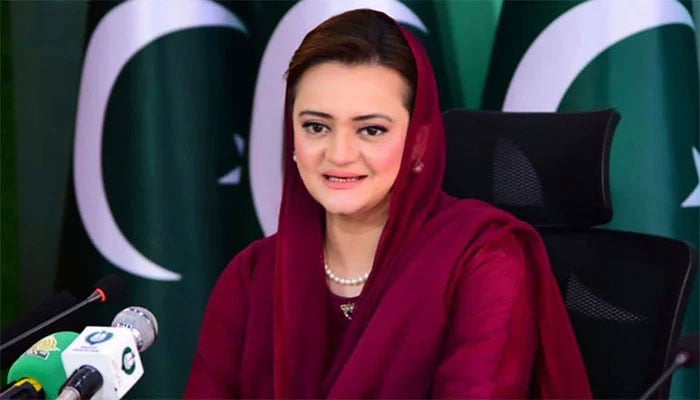
ISLAMABAD: Senior Punjab Minister Maryam Aurangzeb has expressed confidence that the people of Azad Jammu and Kashmir (AJK) are firmly backing the Pakistan Muslim League-Nawaz (PML-N), saying recent public gatherings reflect growing support for the party ahead of the August 2 elections.

In a statement issued on Tuesday, Aurangzeb said the people of Mirpur had demonstrated their trust in the PML-N during the visit of former prime minister Nawaz Sharif and Punjab Chief Minister Maryam Nawaz on July 24. She described the enthusiastic public response as a clear indication of the party’s popularity in the region.

She further stated that voters would reinforce this support through the ballot box by electing PML-N candidates under the party’s election symbol, the lion. According to Aurangzeb, the people believe that the progress and prosperity of Azad Jammu and Kashmir are closely tied to the PML-N’s development agenda.

Referring to earlier political activity, she said Muzaffarabad had already conveyed its support for the party on July 21. Aurangzeb added that the people of Kashmir would make their final decision on polling day, August 2, by voting in favour of the PML-N.


Similar Posts

  • |

    Turkish parliament passes landmark law to advance PKK peace process

    Turkey’s parliament passed a law on Monday establishing a legal framework for the disbandment of the outlawed Kurdistan Workers’ Party (PKK), marking a major step toward ending a decades-old conflict that has killed tens of thousands. The legislation provides legal protections for many former militants who have not committed specific crimes and facilitates the suspension of prison sentences for some people convicted of PKK membership, paving the way for their reintegration into society. The law was approved by a 468-vote majority in the 600-seat parliament after securing support from President Tayyip Erdogan’s ruling AK Party, its nationalist MHP allies, and the pro-Kurdish DEM Party. This measure represents the most concrete step taken by Ankara in the peace process since jailed PKK leader Abdullah Ocalan called on the group in February 2025 to disarm and disband. Following Ocalan’s call, the PKK announced in May 2025 that it would end its armed struggle, leading to a symbolic ceremony in northern Iraq two months later where a group of militants burned their weapons. The PKK launched its insurgency in 1984, leading to a conflict that has killed over 40,000 people, placed a heavy economic burden on southeast Turkey, and fuelled decades of political and social division. This new legislation specifically addresses the long-standing question of how to manage thousands of PKK members as the organisation dismantles its military and organizational structures. The current public peace initiative began in October 2024 when MHP leader Devlet Bahceli unexpectedly suggested that Ocalan could address parliament to announce the PKK’s dissolution. A parliamentary commission established in August 2025 subsequently heard testimony from politicians, officials, and civil society groups before recommending legislation to oversee disarmament and reintegration. While the law addresses reintegration, it does not by itself resolve broader Kurdish demands regarding expanded political and cultural rights, anti-terrorism amendments, or the detention status of Ocalan. The Turkish government frames the initiative as a pathway toward creating a “terror-free Turkey,” whereas Kurdish politicians emphasize that achieving lasting peace requires broader democratic and legal reforms.

  • | | | |

    Iran warns Oman deal does not mean Hormuz is fully…

    TEHRAN: Iran has cautioned that its emerging understanding with Oman over the management of the Strait of Hormuz should not be interpreted as a guarantee that the strategic waterway will immediately reopen to normal international shipping. The clarification came after Iran and Oman agreed on a temporary maritime corridor intended to facilitate navigation through the strait. Iranian officials stressed that the arrangement remains limited and does not amount to a full restoration of commercial traffic. Mukhtar Haddad, editor-in-chief of Iran’s Al-Wefaq newspaper, told Arab media that Tehran and Muscat had been discussing the management of the waterway for some time. He said the talks could lead first to a temporary agreement and eventually to a permanent arrangement, but neither step should automatically be seen as a decision to fully restore shipping. Iranian Deputy Foreign Minister Kazem Gharibabadi also sought to temper expectations, saying Tehran and Muscat had agreed on a new temporary route but that the understanding did not mean the strait would be completely and immediately reopened. Gharibabadi said Iran remained in a state of war and had made clear to mediators that conditions during an armed conflict could not be treated in the same way as normal circumstances. He added that the United States would need to fulfil its obligations under an earlier memorandum of understanding before Iran considers fully reopening the waterway. Under the joint Iranian-Omani framework, the proposed maritime corridor would be temporary. Russian media reported that vessels entering the Persian Gulf would pass through Iranian waters, while ships returning from the Gulf would use Omani waters. The reported corridor would operate like a two-way maritime route and have a width of about 11.25 kilometres. Iran and Oman are expected to hold further negotiations over the next 30 to 60 days to discuss the possibility of establishing a permanent navigation arrangement. The developments come as the Strait of Hormuz remains at the centre of a wider regional security crisis. The waterway is one of the world’s most important energy routes, connecting the Persian Gulf with the Gulf of Oman and the Arabian Sea. US President Donald Trump, meanwhile, claimed that the US Navy had removed or neutralised all mines in international waters of the Strait of Hormuz. He warned that any vessel that attempted to lay new mines would be destroyed. Despite the temporary corridor agreement, Iran’s latest statements underline that a complete reopening of Hormuz remains a separate and politically sensitive issue. For shipping companies and global energy markets, the distinction could prove crucial: a limited navigation arrangement may ease some pressure, but it does not yet signal a return to normal maritime traffic.

  • |

    Maj Gen (R) Dr. Rajih Al-Baqami needs to go beyond defence diplomacy

    ISLAMABAD: For the second consecutive time, the Kingdom of Saudi Arabia has appointed a career military veteran as its ambassador to Islamabad, inaugurating a compelling new chapter in Pakistan-Saudi defense diplomacy. The recent designation of Major General (R) Dr. Rajih bin Tami Al-Baqami as the Saudi envoy comes at a pivotal geopolitical juncture. Smaller Gulf states like Qatar, Bahrain, and particularly Kuwait are increasingly turning their strategic gaze toward Riyadh for defense assurances. In response, Saudi Arabia has conspicuously integrated Pakistan into the its defensive calculus, both specifically within the Gulf and more broadly across the Middle East. This deepening collaboration signifies the beginning of the end of an era characterized by blind, unilateral reliance on the United States for regional security. Whether through multinational maritime security coalitions or trilateral defense pacts, Riyadh has unequivocally positioned Islamabad as a trusted strategic partner. Crucially, while Washington has not been entirely excluded from the new arrangements, the table that once seated only the US now accommodates Pakistan and Turkey’s president states that more seats will soon be filled. His hint is for Egypt. Turkey is playing a big game and Egypt is part of his plans for Sahel and Middle East. Moreover, Saudi Arabia has extended its supportive hand to facilitate Pakistan’s major defense agreements with Somalia, further expanding Islamabad’s footprint in Riyadh’s sphere of influence. This rapidly evolving landscape demands an exceptionally shrewd Saudi diplomat in Islamabad, given that intellectual powerhouses like the United States are unlikely to passively observe these seismic shifts in the affluent Gulf region. One could argue that defense diplomacy has cycled back to the fervor of the 1970s but the stark difference is that the towering strategic minds of that era, such as Zulfikar Ali Bhutto, Ardeshir Zahedi, and Henry Kissinger, are no longer among us and on the other hand China of today is 100 times more important than China of 1970s. However, Crown Prince Mohammed bin Salman has proven himself uniquely adept at this high-stakes game. Without jeopardizing ties with Washington, he has fortified relations with Beijing to an unprecedented degree; in fact, Riyadh is now expanding its commercial and strategic footprint with China more aggressively than with the US. According to the Saudi Foreign Ministry, Dr. Al-Baqami is among eight newly appointed ambassadors who recently took their oath before the Crown Prince in Jeddah. Despite this formal announcement, frequent winner of government awards for his services in journalism, Saleh Zaafir, curiously attributed the news to his “sources.” Meanwhile, leading AI chatbots and search engines like ChatGPT, DeepSeek, and Gemini draw a blank regarding the nature of Dr. Al-Baqami’s specific postings in Saudi diplomatic missions London and Jordan, which strongly suggests a classified, defense-oriented portfolio. Dr. Al-Baqami hails from the warrior Al-Baqami tribe, a lineage renowned for its formidable resilience and esprit de corps. Yet, a note of caution is urgently warranted. Misleading and unrealistic commentary regarding Saudi-Pakistan defense pacts has become rife. These agreements will not automatically neutralize Pakistan’s internal existential threats, specifically, the escalating bureaucratic corruption and spiraling crime rates. The historical precedent is sobering: the practice of deploying military officers to diplomatic roles is ancient, tracing back to the Roman and Byzantine empires, yet it has no inherent correlation with a nation’s prosperity or moral standing. Napoleon formalized this tradition in the pre-WWI era, but French military envoys failed to stave off famine and destitution in France. Subsequently, professional foreign ministries emerged, and bureaucrats, much like termites, consumed diplomacy from the inside, burying interstate relations beneath classified files. When opacity became the norm, civil society rebelled, giving rise to digital media and public diplomacy, a trend recently taken to extremes by former US President Donald Trump. For the new Saudi ambassador, public diplomacy will prove a formidable challenge. Although several Saudi-funded media outlets operate in Pakistan, they have largely been hijacked by populist scribes who have reduced them to ashes of sensationalism. Reclaiming these platforms from the clutches of journalistic mediocrity must be an immediate priority. Dr. Al-Baqami’s predecessor, Nawaf bin Malik Al-Maliki, a retired Saudi Navy officer, remained in Islamabad for nearly twelve years. Pakistan’s navy has historically played a pivotal role in the formation and training of the Saudi Naval Forces. Al-Maliki initially arrived as defense attaché in 2014, the very year MBS ascended to a high office before being appointed Defense Minister in 2015. When MBS became Crown Prince in 2017, Al-Maliki assumed the ambassadorship. He retained this position for a decade indicating that he was a trusted confidant of the Crown Prince. Intriguingly, Al-Maliki’s next posting is Algeria—a nation where military dominance permeates business and governance, ensnaring the country in poverty and bloodshed. As Algeria remains a Saudi ally, it is premature to forecast the trajectory of his new mission. To conclude, one can only hope that Major General (Retd) Dr. Rajih Al-Baqami’s tenure in Pakistan transcends the narrow confines of defense diplomacy. The true test of his legacy will lie in revitalizing public diplomacy, fostering people-to-people connections, and navigating the intricate socio-political fabric of Pakistan with the same dexterity he brings to the strategic chessboard.

  • |

    Students protest Cambridge exam leaks

    ISLAMABAD: Accountability4Cambridge has called for a student protest against Cambridge Assessment International Education (CAIE) over alleged examination paper leaks during the 2026 examination cycle, saying the incidents have raised serious concerns about fairness and the credibility of Cambridge examinations. The student group said reports of leaked papers emerged in 2024 and increased in 2025, but Cambridge failed to provide sufficient public explanations or demonstrate that it had effectively strengthened its examination security system. According to Accountability4Cambridge, leaked material from several major papers circulated before scheduled examination times in 2026. The group compiled evidence from 17 alleged cases, including screen recordings showing time-zone information that it says established that the material was available before the relevant examinations. Cambridge recognised four cases and took action, but the students say the remaining evidence was not adequately addressed. The group raised the issue before the Senate Standing Committee on Federal Education and Professional Training on May 18 and again on June 16. Following the meetings, a sub-committee comprising IBCC, Cambridge, Accountability4Cambridge, the British Council, the Ministry of Education and NCCIA was formed. During a July 13 meeting, the students presented the 17 recordings and asked Cambridge to respond. After Cambridge questioned the reliability of the videos, Accountability4Cambridge sought forensic verification from the National Cyber Crime Investigation Agency (NCCIA). The group said NCCIA’s report, received on July 29, found no evidence of tampering in the submitted recordings. Accountability4Cambridge subsequently requested another sub-committee meeting to present the forensic findings. The meeting was initially scheduled for August 7 but was postponed to August 12 after Cambridge said it was unavailable. The students have also criticised Cambridge’s decision to use S1 paper marks instead of assessed marks. They argue that using compromised papers for grading could unfairly benefit students who accessed leaked material while disadvantaging those who did not. Accountability4Cambridge is demanding reversal of the S1 marking decision, lower grade thresholds for Computer Science and Mathematics, recognition of additional leaks supported by forensic evidence, publication of a detailed investigation report and a transparent mechanism for handling compromised examinations. The group has also urged schools to demand greater accountability from Cambridge. Founder Samaak Iqbal Malik said the dispute concerns the integrity of the entire examination system rather than a few individual papers. The organisation has announced a student demonstration outside the IBCC office in G-10, Islamabad, at 1pm on Wednesday, August 12, calling for immediate action before the controversy further affects students’ academic futures.

  • | | | |

    Trump says Hormuz reopening near, warns Iran of consequences

    US President Donald Trump has said the Strait of Hormuz could reopen “very soon” as diplomatic efforts with Iran continue, while warning that Tehran would face a strong military response if negotiations fail. Speaking during an interview with Fox News, Trump expressed optimism about the ongoing talks, saying discussions had made significant progress. He claimed Iranian representatives had requested negotiations at a time when the United States was preparing for a large-scale military operation. According to Trump, Washington agreed to engage in dialogue after receiving signals from Tehran that it was willing to negotiate. He stressed that the United States remains committed to preventing Iran from acquiring nuclear weapons and said abandoning the talks would have serious consequences. The US president said negotiators spent the entire day in discussions and described the atmosphere as positive. He added that a successful agreement could help restore normal shipping through the Strait of Hormuz, one of the world’s most important energy routes. Trump also suggested that reopening the strategic waterway would ease pressure on global energy markets. He said lower oil prices could eventually translate into cheaper fuel costs for consumers and urged energy companies to reduce gasoline prices if market conditions improve. Speaking later to reporters in California, Trump said developments with Iran were moving in the right direction and indicated that greater clarity on the negotiations could emerge within the next 48 hours. Diplomatic efforts are reportedly being supported by regional mediators, including Oman and Qatar. Discussions are focused on restoring safe maritime navigation through the Strait of Hormuz while reducing tensions between Washington and Tehran. However, Iranian officials have maintained that progress depends on an end to US threats and continued respect for Iran’s sovereignty. The Strait of Hormuz is a vital global shipping lane through which a significant share of the world’s oil and liquefied natural gas exports passes. Any disruption to traffic through the waterway has immediate consequences for international energy markets and global trade. Financial markets reacted positively to reports of progress in the negotiations. Oil prices declined while Asian stock markets advanced on expectations that a diplomatic breakthrough could reduce regional tensions and restore uninterrupted shipping. Meanwhile, reports from Israel indicated growing concern over Washington’s diplomatic approach. Some Israeli officials reportedly believe the United States is prioritising a negotiated settlement with Iran, although no official Israeli government statement has confirmed those claims.

  • | | |

    PM orders digital overhaul of oil sector

    Prime Minister Shehbaz Sharif on Friday directed the Oil and Gas Regulatory Authority (Ogra) to implement a modern digital monitoring system across Pakistan’s oil and gas sector to improve transparency, eliminate hoarding and curb profiteering. The directive was issued during a high-level meeting chaired by the prime minister to review Ogra’s institutional reforms and measures aimed at strengthening the regulator’s performance. The prime minister said the government was committed to protecting public money and would not allow anyone to exploit consumers or manipulate the country’s energy system for personal gain. He instructed authorities to accelerate Ogra’s reform process and ensure that the government’s institutional reform agenda was implemented effectively across the organisation. Shehbaz Sharif also directed officials to develop a comprehensive digital tracking mechanism for fuel movement, using the Federal Board of Revenue’s modern tracking system as a model. He said the system should closely monitor the transportation of petroleum products from ports and refineries to fuel stations across the country. The prime minister stressed that digital oversight of the entire fuel supply chain would help improve transparency, reduce irregularities and strengthen regulatory enforcement. To improve Ogra’s institutional capacity, he called for the induction of qualified professionals from the private sector with strong reputations and relevant expertise. He also ordered the restructuring of the authority, saying appointments to all positions should be made through a transparent and merit-based process. Shehbaz Sharif assured officials that the federal government would provide all necessary professional and technical support to ensure the successful implementation of Ogra’s reform and restructuring programme. During the meeting, the Ogra chairman briefed participants on the regulator’s current performance, key challenges and the progress of its reform agenda. The meeting was attended by Deputy Prime Minister Ishaq Dar, Law Minister Azam Nazeer Tarar, Petroleum Minister Musadik Malik, Planning Minister Ahsan Iqbal’s representative Ahad Cheema, Information Minister Attaullah Tarar, IT Minister Shaza Fatima Khawaja, Minister Ali Pervaiz Malik, Special Assistant to the Prime Minister Tariq Bajwa and other senior government officials.

Leave a Reply

Your email address will not be published. Required fields are marked *