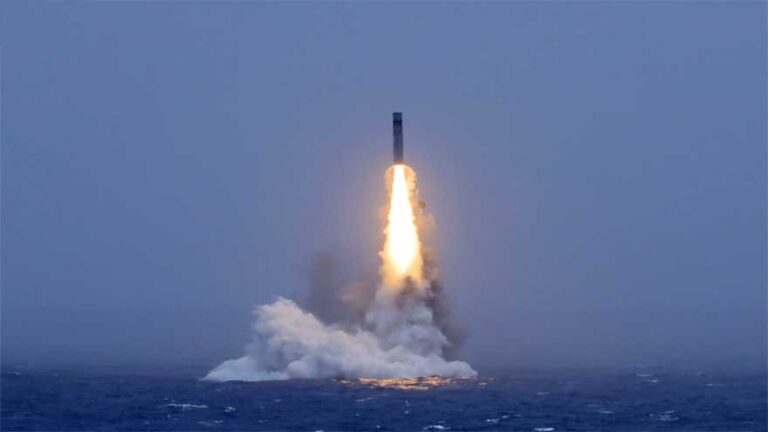
drone attack near
|

Drone attack near Moscow kills 5, injures 6

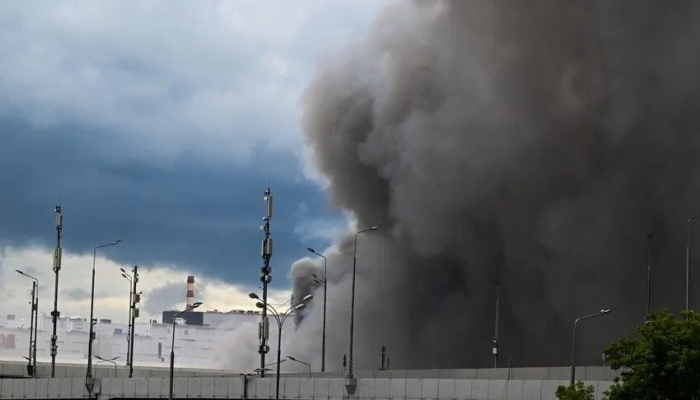
A drone attack in the Moscow region has killed at least five people and left six others critically injured, according to Russian news agencies.

The attack reportedly struck an area near the Russian capital, causing a fire inside a warehouse. The blaze added to the damage caused by the drone strike and prompted emergency responders to move quickly to the scene.

Rescue workers and medical teams are assisting those affected by the incident, while the injured victims have been taken for medical treatment. Officials have described the condition of six injured people as critical, raising concerns that the death toll could increase in the coming hours.

Authorities are assessing the extent of the damage and continuing emergency operations at the site. The exact circumstances surrounding the drone attack, including the origin of the drones and the intended target, have not yet been fully established.

The incident comes amid heightened security concerns in and around Moscow, where drone attacks have periodically targeted the Russian capital and surrounding areas. Such incidents have prompted authorities to strengthen air-defence measures and increase security around key infrastructure and industrial facilities.

Russian officials are expected to provide further details as emergency teams complete their work and investigators examine the scene. The latest attack has once again highlighted the growing security challenges posed by drone warfare and its potential impact on civilian areas and critical facilities.

Similar Posts

  • |

    Arab and Palestinian groups urge global action to protect Jerusalem and Al Aqsa Mosque

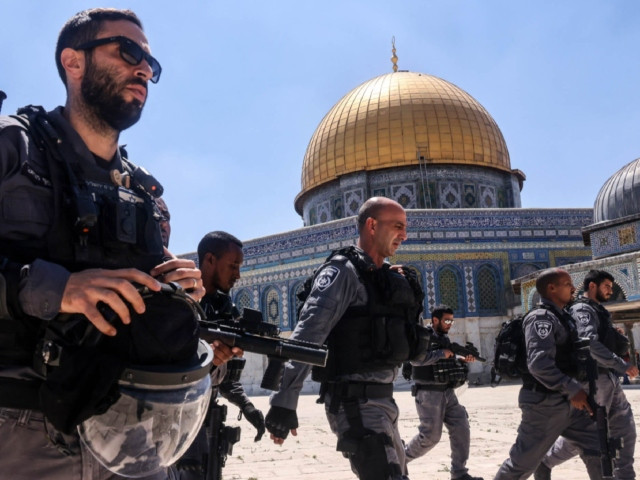
    Fourteen Arab and Palestinian organisations have issued an urgent appeal calling for immediate international action to protect occupied East Jerusalem and the Al Aqsa Mosque, warning that recent Israeli measures are threatening the city’s religious heritage and historic identity. The groups said the situation has reached a critical stage and argued that stronger global intervention is needed to prevent further escalation. In a joint statement released on Wednesday, the organisations expressed concern over what they described as increasing Israeli actions aimed at changing the existing status of Jerusalem and its holy sites. They said recent developments have targeted not only Al Aqsa Mosque but also the Palestinian residents of Jerusalem and the city’s Arab, Islamic, and Christian character. Al Aqsa Mosque is considered Islam’s third holiest site. The same area is also revered by Jews as the Temple Mount, believed to be the location of two ancient Jewish temples. Israel captured East Jerusalem during the 1967 Arab Israeli war and later declared the entire city its capital in 1980, a move that has not been recognised by most of the international community. According to the appeal, Israeli authorities have allowed an increase in visits to the Al Aqsa compound by Jewish groups under police protection. The organisations claimed these actions, along with restrictions placed on Muslim worshippers, are attempts to alter the long standing arrangements governing access to the holy site. The statement also raised concerns about attacks on worshippers, restrictions placed on religious leaders, and measures targeting guards responsible for protecting the mosque. The groups argued that these actions undermine freedom of worship and threaten the historical and legal status of one of Islam’s most important religious landmarks. Beyond the mosque itself, the organisations accused Israel of expanding settlements, demolishing Palestinian homes, revoking residency rights, carrying out excavations around the Old City, and increasing pressure on both Islamic and Christian religious sites. They warned that these policies are changing the city’s demographic and cultural landscape while placing Jerusalem’s diverse religious heritage at risk. The appeal also highlighted concerns over the city’s Christian community. It said restrictions affecting churches, religious institutions, and Christian leaders threaten the long established Christian presence in Jerusalem and weaken the city’s multicultural identity. The organisations argued that international statements of concern are no longer enough to address the situation. They called for coordinated political, legal, and human rights efforts to stop actions they consider violations of international law. They also urged governments and international institutions to ensure accountability and prevent further changes to the city’s status. The statement specifically called on Jordan, which holds custodial responsibilities for Jerusalem’s Islamic and Christian holy sites, to intensify diplomatic efforts and encourage stronger international engagement. The groups said Jordan’s role remains essential in defending the religious and historical significance of the city’s sacred places. Describing Jerusalem as a shared historical, cultural, and religious responsibility, the organisations stressed that protecting the city requires practical measures rather than symbolic declarations. They said preserving the rights of its residents and safeguarding its holy sites should remain an international priority. The appeal was signed by several organisations, including the Popular Conference for Palestinians Abroad, the Al Quds International Institution, the Arab National Congress, the European Palestinian Conference, and the Islamic National Conference. The statement comes as tensions continue to rise across the occupied West Bank, where Israeli military raids and settler related violence have increased since the start of the Gaza conflict in October 2023. Palestinian officials say thousands of people have been injured or arrested during this period, while violence has intensified further following recent deadly clashes near Nablus involving Palestinians, Israeli settlers, and Israeli forces.

  • | |

    Bessent tells allies to pick a side as US ramps up…

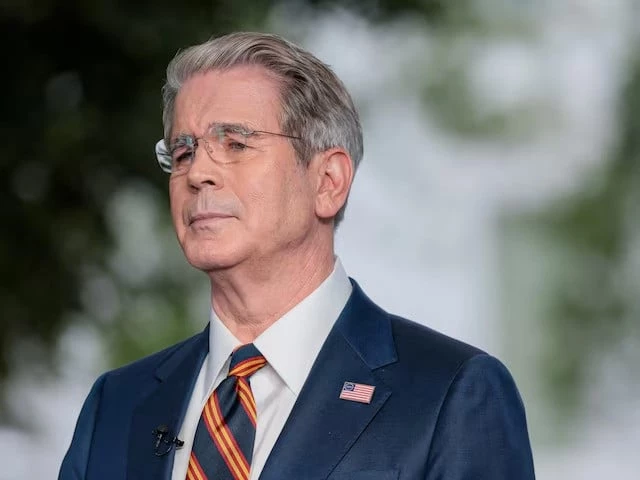
    US Treasury Secretary Scott Bessent has told Washington’s allies they must choose between backing or opposing the United States’ push to economically isolate Iran, as President Donald Trump moves to intensify pressure on Tehran. Bessent told a US broadcaster that the campaign would amount to the largest coordinated economic isolation effort in history, framing the choice facing allied nations as a binary one. Asked whether Washington intends to pressure China into joining the effort, Bessent said certain conversations are best conducted privately, while urging Beijing to align itself with the campaign. He said the administration’s plan to sharply escalate sanctions and economic pressure on Iran is ultimately designed to bring down the Iranian government, predicting the strategy would work and lead to the regime’s collapse. Bessent added that expanded economic pressure could actually lower the odds of the United States resuming large scale military action against Iran, arguing that a maximum pressure economic approach makes a return to major combat operations less likely. He said he plans to hold a press conference Monday to detail the administration’s next steps regarding Iran. Iran’s foreign ministry condemned the latest round of US sanctions, calling them a violation of international law and an attempt to undermine the country’s sovereignty. In a statement, the ministry said Washington had unveiled comprehensive economic sanctions despite previously claiming its measures targeted the government rather than ordinary Iranians. Tehran argued there is no legal or economic justification for the sanctions and described them as part of a broader US policy that threatens the international system and undermines rules governing relations between states. The ministry said the sanctions explicitly target Iranian citizens and institutions and represent a continuation of hostile American policy, adding that economic pressure functions as the flip side of military aggression. Iranian officials called the new measures a repeat of a strategy that has already failed and said the country would not bow to the pressure, vowing to defend its sovereignty and respond to what it characterized as hostile US actions. Separately, Egypt and Qatar emphasized the need for continued coordination toward a final, sustainable agreement to end the broader Middle East war while addressing the concerns of Gulf states, according to a statement from Qatar’s foreign ministry. The two countries discussed regional developments and diplomatic efforts aimed at reducing tensions and strengthening stability, and both underscored the importance of reopening the Strait of Hormuz and protecting the security and freedom of maritime navigation, calling uninterrupted trade through the waterway essential to both regional and global economic stability. Qatari Foreign Minister Sheikh Mohammed bin Abdulrahman bin Jassim Al Thani said traffic through the Strait of Hormuz needs to return to pre war conditions, adding that no party to the conflict should attempt to pressure or blackmail the other. Speaking at a press conference following talks in El Alamein, Egypt, he said the war’s consequences have been severe both within the Gulf region and beyond, and called for a return to how things stood before the conflict began, condemning any threats or obstacles standing in the way. Iran’s Revolutionary Guards warned separately that Saudi Arabia will be unable to contain Yemen’s Houthi movement as the group escalates attacks on the kingdom. A Guards spokesman said Saudi Arabia cannot stay safe from Houthi attacks, arguing that recent days have shown that the more the kingdom strikes, the more it gets hit in return. Iranian Foreign Minister Abbas Araghchi dismissed Trump’s economic threats as an attempt to distract American public attention from domestic financial troubles, including record debt levels and rising interest costs. He said Washington’s continued reliance on what he called failed policies would only produce further failures and further alienate the Iranian public, describing US economic pressure as a threat to the global economy and to national sovereignty more broadly. Deputy Foreign Minister Kazem Gharibabadi added that the US has shifted to what he called an economic war after failing to achieve results militarily, arguing that Washington’s need to compensate for miscalculations is driving it toward a bigger failure. Iranian Parliament Speaker Mohammad Bagher Ghalibaf, during a visit to Baghdad, met with Faiq Zaidan, president of Iraq’s Supreme Judicial Council, and blamed the United States for recent regional conflicts and disruptions to Gulf energy routes, while highlighting opportunities for deeper cooperation between Iran and Iraq. Separately, Iranian state media reported that authorities executed a man identified as Qaem Hosseini, a foreign national, over charges tied to his alleged role in nationwide protests in January, including accusations that he participated in events that led to the deaths of security force members. Trump underscored the stakes of the broader campaign in a social media post Wednesday evening, warning that any country allowing its financial institutions, businesses, airports or government entities to provide Iran with any kind of lifeline would face tremendous economic consequences. He promised what he called economic warfare and isolation on an unprecedented scale, though he offered few specific details. The war between the US and Iran, now in its sixth month, has killed thousands of people and drawn in countries across the Gulf, rattling global markets as Iran demonstrated its ability to disrupt shipping through the Strait of Hormuz, a waterway that carried roughly a fifth of the world’s traded oil before the conflict began. Two previous ceasefire agreements between Washington and Tehran, announced in April and June, both collapsed shortly after being reached, even as Israel has largely pulled back from direct fighting with Iran to focus its attacks on civilian infrastructure in Lebanon.

  • | |

    Vance pledges military, diplomatic pressure on Iran

    The United States will use military, economic and diplomatic measures to bring the conflict with Iran to an end, Vice President JD Vance has said, stressing that Washington remains committed to preventing Tehran from acquiring nuclear weapons. In a television interview, Vance said negotiations with Iran remain difficult due to internal divisions within the country’s leadership. He claimed that while some factions in Iran want to end the conflict through diplomacy, others continue to support confrontation, making negotiations more complicated. Despite the challenges, Vance expressed confidence that a settlement could eventually be reached, although he acknowledged the process would take time. He said the US hopes regional stability will improve and global oil prices will ease once tensions decline. The vice president reiterated that the United States would continue using every available tool, including military strength, economic sanctions and diplomatic engagement, to achieve what he described as a lasting resolution. Meanwhile, President Donald Trump said he still prefers diplomacy over military action. Speaking at a public event, Trump said he would rather reach an agreement with Iran than resort to war, but warned that military action remains an option if negotiations fail. Trump also dismissed reports suggesting the United States is facing shortages of key military ammunition. He insisted that the country has substantial stockpiles of weapons and said defence manufacturers are rapidly expanding production to meet future requirements. The president further warned that individuals responsible for leaking classified information about US military capabilities would face legal action, saying authorities were actively pursuing those involved. The developments come as tensions remain high around the Strait of Hormuz, one of the world’s most important shipping routes for oil exports. At the same time, eight leading international shipping organisations have urged the United Nations to oppose any proposal to impose mandatory transit fees on vessels passing through the Strait of Hormuz. In a joint letter addressed to the UN and the International Maritime Organization (IMO), the organisations warned that introducing tolls would undermine the internationally recognised principle of free navigation and could increase shipping costs, fuel prices and inflation worldwide. The maritime groups also cautioned that allowing such charges could create a dangerous precedent for other international waterways and disrupt global trade. The appeal follows recent discussions between Iran and Oman on future arrangements for the Strait of Hormuz. Iranian officials said the two countries have reached preliminary understandings on several issues related to maritime traffic, although they clarified that the agreement does not mean the waterway will be fully reopened under a new system. Separately, reports in US media claimed President Trump had questioned senior defence officials over alleged shortages of military munitions during a recent Cabinet meeting. According to the reports, concerns over weapon supplies had influenced military planning regarding Iran.

  • |

    China’s Chang’e-7 Moon mission to launch on August 24

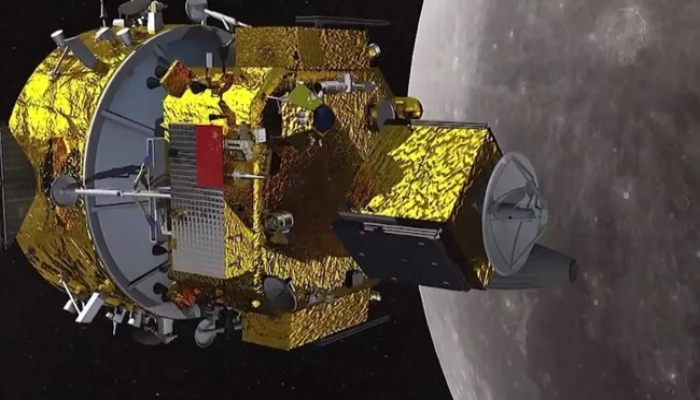
    China is preparing to launch a complex, multi-spacecraft mission to the Moon. The mission will land near the Moon’s south pole and search for evidence of water and ice. The mission is scheduled to launch on August 24 from the Wenchang Satellite Launch Center on China’s Hainan Island. According to a statement issued by the China Manned Space Agency, the Chang’e-7 mission will be launched aboard a Long March 5 rocket. The mission will focus on the Moon’s south pole and attempt to determine whether water and ice are present inside the craters as well as their quantity and other related details. Water vapour has previously been detected in this region of the Moon through remote sensing but scientists have not yet been able to measure it directly or obtain samples. Chang’e-7 will also help lay the technological groundwork for China’s crewed lunar mission planned for 2030. The mission will consist of an orbiter, lander, rover and hopper spacecraft. Five days after launch, the spacecraft is expected to enter lunar orbit. The orbiter will then identify and determine the target landing area. Chinese authorities have not yet announced the exact landing date and the landing is expected to take place several months after launch. The hopper spacecraft will make multiple flights over the permanently dark craters near the Moon’s south pole. It will also be equipped with landing legs to allow it to land and analyze the surface of the selected locations. The mission will also carry scientific payloads from several countries. China’s Chang’e-5 mission in 2020 and Chang’e-6 mission in 2024 successfully collected lunar samples and returned them to Earth.

  • |

    Houthi Red Sea blockade threat raises fears of wider global energy disruption

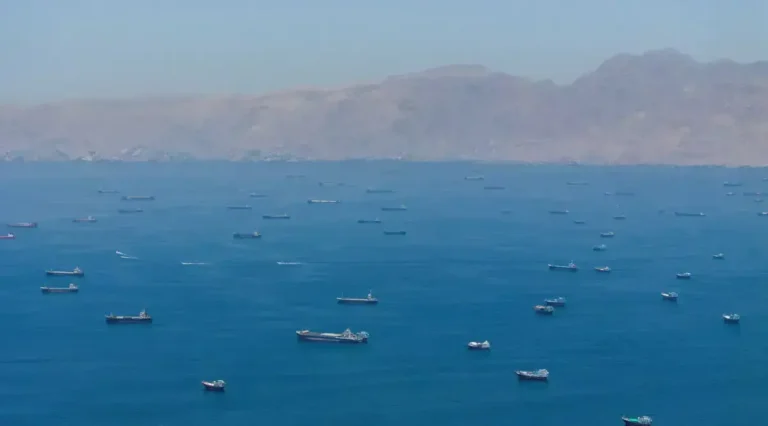
    A new threat by Yemen’s Houthi movement to impose a maritime blockade on Saudi Arabia has raised concerns about global energy supplies as tensions across the Middle East continue to escalate. The announcement comes at a time when shipping through the Strait of Hormuz has already been disrupted, increasing fears that two of the region’s most important oil routes could be affected at the same time. The Iran aligned Houthi group said it plans to target Saudi Arabia through a blockade in the Red Sea. While the group has not explained how it intends to enforce the measure, the warning has intensified concerns over the security of international shipping and energy exports. The Bab el Mandeb Strait at the southern entrance to the Red Sea is one of the world’s most important maritime routes. It connects the Red Sea with the Gulf of Aden and serves as a key passage for oil shipments travelling between the Middle East, Europe and Asia. Since disruptions in the Strait of Hormuz, Saudi Arabia has redirected much of its crude oil exports to its Red Sea port of Yanbu. From there, shipments bound for Europe pass through the Suez Canal, while cargo heading to Asian markets travels south through the Bab el Mandeb Strait. Industry data shows that oil exports from Yanbu have increased sharply over the past year, making the Red Sea an increasingly vital route for global energy markets. Millions of barrels of petroleum now pass through the Bab el Mandeb every day, helping to stabilise international oil supplies despite ongoing tensions elsewhere in the region. Analysts warn that any serious disruption in the Red Sea could significantly affect global energy prices by restricting another major export route from the Gulf. Saudi Arabia is reportedly considering expanding its pipeline network to the Red Sea coast to reduce dependence on vulnerable sea lanes. The Houthis have been involved in conflict with Yemen’s internationally recognised government for more than a decade and have previously launched missile and drone attacks against Saudi Arabia. Although a truce reached in 2022 reduced fighting, tensions have risen again following recent military strikes around Sanaa. The latest escalation began after Yemen’s recognised government said it had targeted Sanaa airport to prevent an Iranian aircraft from landing. The Houthis blamed Saudi Arabia for the attack and responded by firing missiles towards Abha airport in southern Saudi Arabia. A senior Houthi official later warned that continued escalation could lead to the closure of the Bab el Mandeb Strait. Although the Houthis maintain that they make their own military decisions, the United States has long accused Iran of supplying the group with weapons, funding and training. The Houthis reject claims that they act as an Iranian proxy. The movement previously disrupted international shipping after the outbreak of the Gaza war in late 2023. It launched attacks on commercial vessels in the Red Sea, saying the operations were intended to support Palestinians. Those attacks forced many major shipping companies to reroute vessels around southern Africa, increasing transport costs and delaying deliveries worldwide. Although Red Sea traffic had begun recovering after attacks eased, shipping through the Suez Canal remains well below previous levels. The latest Houthi threat has renewed fears that instability could once again disrupt one of the world’s busiest trade routes. During the recent conflict involving Iran, the Houthis played a more limited military role than other armed groups aligned with Tehran. However, their latest announcement suggests they may now be prepared to increase pressure on regional rivals, raising fresh concerns over the security of global energy supplies and international trade.

  • |

    Qatar and Pakistan advance mediation efforts as US and Iran pause direct military strikes

    Regional mediators led by Qatar and Pakistan have achieved significant progress in restoring negotiations between the United States and Iran following a three-day pause in direct military strikes, according to regional officials. The temporary lull comes after nearly two weeks of heavy bombardment triggered by Iranian actions in the Strait of Hormuz. While US President Donald Trump and Tehran have temporarily halted direct strikes against one another, scattered attacks by regional armed groups persist, including drone attacks targetting Saudi petroleum facilities by Iran-backed militias and Houthis, alongside drone interceptions over Jordan and Iraq. Talks facilitated alongside Oman are focusing on establishing a maritime management mechanism for the Strait of Hormuz to restore an interim ceasefire deal, although Iranian Foreign Ministry spokesperson Esmail Baghaei stated that no direct negotiations with Washington are taking place and that the waterway currently remains closed. Concurrently, US naval blockades against Iran persist, and global shipping through both the Strait of Hormuz and the Bab el-Mandeb strait remains constrained. Amid ongoing mediation, Israeli Prime Minister Benjamin Netanyahu is scheduled to meet US President Donald Trump in Washington to discuss the wider conflict, while Iranian officials have condemned a recent Ukrainian strike on an Iranian vessel in the Caspian Sea.

Leave a Reply

Your email address will not be published. Required fields are marked *