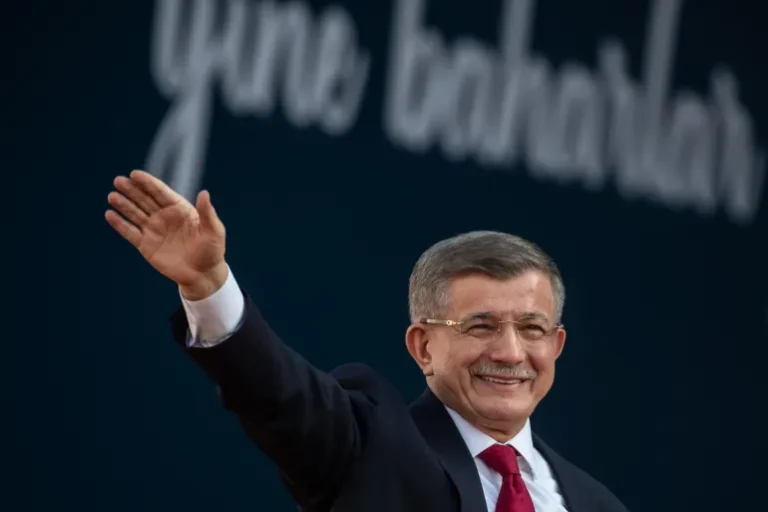
vance pledges military
| |

Vance pledges military, diplomatic pressure on Iran

The United States will use military, economic and diplomatic measures to bring the conflict with Iran to an end, Vice President JD Vance has said, stressing that Washington remains committed to preventing Tehran from acquiring nuclear weapons.

In a television interview, Vance said negotiations with Iran remain difficult due to internal divisions within the country’s leadership. He claimed that while some factions in Iran want to end the conflict through diplomacy, others continue to support confrontation, making negotiations more complicated.

Despite the challenges, Vance expressed confidence that a settlement could eventually be reached, although he acknowledged the process would take time. He said the US hopes regional stability will improve and global oil prices will ease once tensions decline.

The vice president reiterated that the United States would continue using every available tool, including military strength, economic sanctions and diplomatic engagement, to achieve what he described as a lasting resolution.

Meanwhile, President Donald Trump said he still prefers diplomacy over military action. Speaking at a public event, Trump said he would rather reach an agreement with Iran than resort to war, but warned that military action remains an option if negotiations fail.

Trump also dismissed reports suggesting the United States is facing shortages of key military ammunition. He insisted that the country has substantial stockpiles of weapons and said defence manufacturers are rapidly expanding production to meet future requirements.

The president further warned that individuals responsible for leaking classified information about US military capabilities would face legal action, saying authorities were actively pursuing those involved.

The developments come as tensions remain high around the Strait of Hormuz, one of the world’s most important shipping routes for oil exports.

At the same time, eight leading international shipping organisations have urged the United Nations to oppose any proposal to impose mandatory transit fees on vessels passing through the Strait of Hormuz.

In a joint letter addressed to the UN and the International Maritime Organization (IMO), the organisations warned that introducing tolls would undermine the internationally recognised principle of free navigation and could increase shipping costs, fuel prices and inflation worldwide.

The maritime groups also cautioned that allowing such charges could create a dangerous precedent for other international waterways and disrupt global trade.

The appeal follows recent discussions between Iran and Oman on future arrangements for the Strait of Hormuz. Iranian officials said the two countries have reached preliminary understandings on several issues related to maritime traffic, although they clarified that the agreement does not mean the waterway will be fully reopened under a new system.

Separately, reports in US media claimed President Trump had questioned senior defence officials over alleged shortages of military munitions during a recent Cabinet meeting. According to the reports, concerns over weapon supplies had influenced military planning regarding Iran.

Similar Posts

  • | | |

    Ceuta migrant crisis: death toll rises to 72 durin…

    The migrant crisis in Ceuta, a Spanish-controlled territory in North Africa, has drawn international attention after reports that dozens of migrants died while attempting to enter the region from Morocco. Local authorities reportedly stated that the death toll reached 72, with fatalities linked to boat accidents and deadly crowd situations near border areas. Ceuta, along with Melilla, is one of the few European-controlled territories located on the African continent. The area has long been considered an important route for migrants and asylum seekers attempting to reach European territory. Due to its strategic location, the region has strict border controls, security fencing, and surveillance systems. According to local reports, thousands of migrants attempted to cross into Ceuta through land and sea routes. Authorities said that many people later returned voluntarily to Morocco after entering the territory. The large movement of migrants created significant pressure on border facilities and emergency services. Officials reported that some migrants lost their lives after boats carrying people encountered difficulties at sea, while others reportedly died during chaotic scenes near border barriers. Rescue and security teams have been involved in managing the situation and responding to emergencies. The latest incident has renewed discussions about migration challenges facing Europe. Human rights organizations and international observers have repeatedly highlighted the dangers faced by migrants who attempt dangerous journeys due to conflict, poverty, and limited economic opportunities in their home countries. European governments continue to debate policies regarding border security, asylum procedures, and cooperation with neighboring countries. While authorities emphasize the need to control illegal crossings, humanitarian groups call for safer migration pathways and stronger protections for vulnerable migrants. Ceuta has experienced previous migration crises, including a major influx in 2021 when thousands of people attempted to enter the territory from Morocco within a short period. The latest developments once again demonstrate the complex challenges surrounding migration at Europe’s external borders. As investigations continue, officials and international organizations are expected to assess the causes behind the deaths and examine measures to prevent similar tragedies in the future.

  • |

    Two presiding officers arrested in Kotli over rigging claims as Rana Sanaullah demands election halt

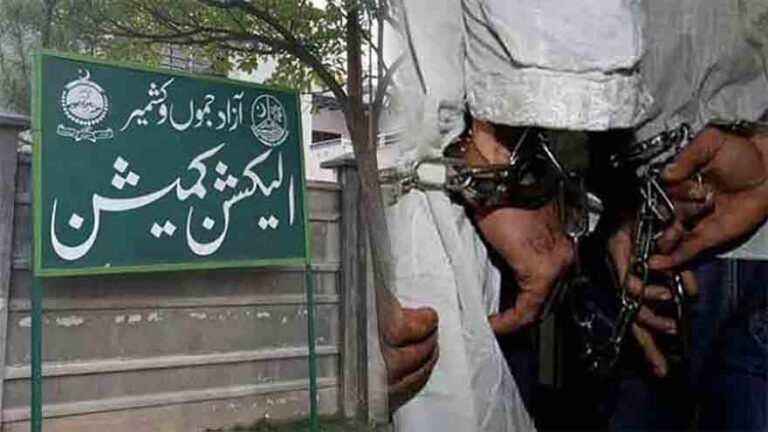
    The Azad Jammu and Kashmir (AJK) Election Commission has suspended and arrested two presiding officers in Kotli after they were caught transporting polling materials to a private residence instead of their assigned polling station. According to an election commission spokesperson, a returning officer intercepted the officers, seized the two polling bags, and appointed replacement presiding officers to ensure the voting process could continue at the station. The commission confirmed that formal legal proceedings are underway against the arrested officials, emphasising that negligence or irregularities will not be tolerated and that strict measures remain in place to guarantee transparent elections. Following the incident, Pakistan Muslim League-Nawaz (PML-N) senior leader Rana Sanaullah demanded the immediate suspension of voting in the Kotli LA-10 constituency. Sanaullah urged the Prime Minister of Azad Kashmir and the Chief Election Commissioner to launch an inquiry into the accused officials, named as Saqlain and Qaiser Patwari. Calling for polls in LA-10 to be halted until the investigation concludes, Sanaullah insisted on determining where the polling bags were being taken, noting that AJK Peoples Party President Chaudhry Yasin is contesting the constituency.

  • |

    UK Parliament hears fresh concerns over human rights in Indian-Occupied Jammu & Kashmir

    The human rights situation in Indian-occupied Jammu and Kashmir (IIOJK) came under renewed scrutiny in the House of Lords on Thursday after Lord Qurban Hussain urged the British Government to clarify its position in light of a Genocide Watch report published earlier this year. During the debate, Lord Qurban Hussain said the report warned that the situation in Indian-occupied Jammu and Kashmir had reached a critical stage and alleged that eight of the ten recognised stages associated with genocide had already been reached. He asked how seriously the British Government viewed the report and what action it was taking to help prevent further deterioration. The British peer, who said members of his family live on both sides of the Line of Control, urged the Government to explain its assessment of the report and its approach towards the human rights situation in Indian-occupied Jammu and Kashmir. Responding for the Government, Lord Collins of Highbury, Parliamentary Under-Secretary of State at the Foreign, Commonwealth and Development Office (FCDO), reiterated the UK’s longstanding position on human rights. He said the UK continues to express concern over violence and loss of life and supports full, transparent and impartial investigations into allegations of abuse by Indian police and security forces. He added that the British Government continues to raise human rights issues with India through diplomatic channels. Lord Qurban Hussain’s intervention highlights continuing concern among a number of British parliamentarians over the human rights situation in Indian-occupied Jammu and Kashmir, with renewed calls for accountability, respect for fundamental rights and a peaceful resolution of the longstanding dispute.

  • |

    Former Turkish PM Davutoglu quits politics

    ISTANBUL: Former Turkish prime minister Ahmet Davutoglu has announced his decision to step away from politics and dissolve his Future Party, ending a decades-long political career that saw him rise as one of President Recep Tayyip Erdogan’s closest allies before becoming a vocal critic. Davutoglu announced the decision this week, saying he wanted to distance himself from what he described as a “dirty political climate” in Turkiye. He said the move was not a surrender but a step taken on moral grounds and a call for a broader rethink of politics. The former premier criticized issues including corruption, favouritism and weak accountability, saying these challenges had damaged public trust. He also raised concerns over the country’s presidential system introduced in 2018, arguing that it weakened checks and balances. Davutoglu began his career as an academic before entering politics. Born in Konya in 1959, he studied political science and international relations at Bosphorus University and later earned a doctorate in the same field. Before joining government, he worked as a professor and wrote several books on foreign policy. His academic reputation helped him become a key figure in shaping Turkiye’s international strategy. After the Justice and Development Party (AKP) came to power in 2002, Davutoglu joined the party and became a close adviser to Erdogan. He played an influential role in developing the “zero problems with neighbours” foreign policy approach, which aimed to improve relations with regional countries. He served as Turkiye’s foreign minister from 2009 to 2014 and became prime minister after Erdogan moved to the presidency in 2014. However, relations between the two leaders gradually weakened due to differences over governance, foreign policy and the distribution of political power. In 2016, Davutoglu resigned as prime minister and was replaced by Binali Yildirim. Three years later, Davutoglu left the AKP and launched the Future Party, presenting it as a conservative alternative focused on democracy and reforms. However, the party struggled to gain major public support and received a small share of votes in the 2024 elections.

Leave a Reply

Your email address will not be published. Required fields are marked *