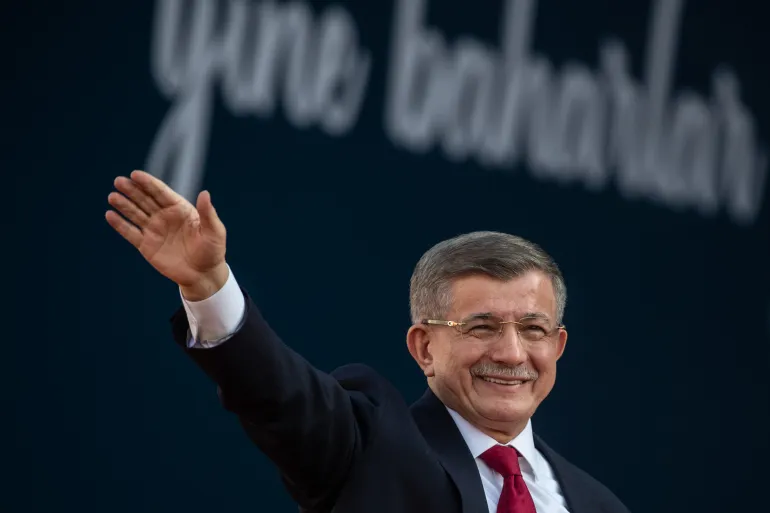
former turkish davutoglu
|

Former Turkish PM Davutoglu quits politics

ISTANBUL: Former Turkish prime minister Ahmet Davutoglu has announced his decision to step away from politics and dissolve his Future Party, ending a decades-long political career that saw him rise as one of President Recep Tayyip Erdogan’s closest allies before becoming a vocal critic.

Davutoglu announced the decision this week, saying he wanted to distance himself from what he described as a “dirty political climate” in Turkiye. He said the move was not a surrender but a step taken on moral grounds and a call for a broader rethink of politics.

The former premier criticized issues including corruption, favouritism and weak accountability, saying these challenges had damaged public trust. He also raised concerns over the country’s presidential system introduced in 2018, arguing that it weakened checks and balances.

Davutoglu began his career as an academic before entering politics. Born in Konya in 1959, he studied political science and international relations at Bosphorus University and later earned a doctorate in the same field.

Before joining government, he worked as a professor and wrote several books on foreign policy. His academic reputation helped him become a key figure in shaping Turkiye’s international strategy.

After the Justice and Development Party (AKP) came to power in 2002, Davutoglu joined the party and became a close adviser to Erdogan. He played an influential role in developing the “zero problems with neighbours” foreign policy approach, which aimed to improve relations with regional countries.

He served as Turkiye’s foreign minister from 2009 to 2014 and became prime minister after Erdogan moved to the presidency in 2014.

However, relations between the two leaders gradually weakened due to differences over governance, foreign policy and the distribution of political power. In 2016, Davutoglu resigned as prime minister and was replaced by Binali Yildirim.

Three years later, Davutoglu left the AKP and launched the Future Party, presenting it as a conservative alternative focused on democracy and reforms. However, the party struggled to gain major public support and received a small share of votes in the 2024 elections.

Similar Posts

  • | |

    New provinces debate gains momentum as coalition p…

    A renewed debate over the creation of new provinces in Pakistan has gathered political momentum after two major coalition partners publicly endorsed Interior Minister Mohsin Naqvi’s proposal to restructure the country’s administrative system. However, the ruling Pakistan Muslim League-Nawaz (PML-N) has yet to officially comment, fueling speculation over its stance on the sensitive issue. The discussion began after Naqvi argued that Pakistan’s existing administrative framework had become ineffective and called for a national consensus on establishing smaller provinces to improve governance and public service delivery. His remarks quickly drew support from coalition allies, including the Muttahida Qaumi Movement-Pakistan (MQM-P) and the Istehkam-e-Pakistan Party (IPP). Federal Health Minister Mustafa Kamal described the proposal as an urgent national necessity rather than a political choice, stressing that decentralizing administrative powers was essential for effective governance. The MQM-P has long advocated the creation of an additional province in Sindh, making the party one of the strongest supporters of the initiative. Privatization Minister Abdul Aleem Khan of the IPP also endorsed the proposal, suggesting that each of Pakistan’s four existing provinces could eventually be divided into three administrative regions. He argued that smaller provinces would bring government closer to the people and reduce the hardships faced by citizens traveling long distances to provincial capitals. Despite growing support from coalition partners, the proposal faces significant constitutional and political challenges. Any change to provincial boundaries requires a two-thirds majority in the affected provincial assembly, making consensus difficult to achieve. The Pakistan Peoples Party (PPP), which governs Sindh and is also part of the federal coalition, has expressed strong reservations, warning that such a move could create more problems than solutions. Opposition leaders have also criticized the proposal, arguing that the government lacks the political mandate for such a major constitutional change. They insist that strengthening democratic institutions and improving governance should take priority over redrawing provincial boundaries. Political analysts have offered differing views on the initiative. Some believe creating new provinces could deepen ethnic and regional divisions, while others see the debate as an attempt to shift public attention away from pressing national issues, including recent unrest in Azad Jammu and Kashmir and ongoing security challenges in Balochistan. Many experts argue that empowering local governments under the 18th Constitutional Amendment would be a more practical and effective way to improve governance without altering provincial boundaries. Mustafa Kamal also acknowledged that stronger local governments are essential regardless of whether new provinces are eventually created. With the PML-N maintaining silence and key coalition partners taking opposing positions, the proposal has opened a fresh political debate that is likely to remain at the center of Pakistan’s national discourse in the coming months.

  • | | | |

    Iran says US strikes kill 55, injure 645 as confli…

    TEHRAN: Iran’s Ministry of Health has claimed that at least 55 people were killed and 645 others injured in the latest wave of US military strikes across the country, as hostilities between Tehran and Washington continue to escalate. According to Iranian officials, the heaviest casualties were reported in the country’s southern and southwestern provinces, where several sites were allegedly targeted during the attacks. Iran’s state-affiliated Fars News Agency quoted a Health Ministry spokesperson as saying that the death toll had reached 55, while the number of injured had climbed to 645. The ministry described the strikes as among the deadliest incidents since the recent escalation in military tensions. Officials said Khuzestan Province suffered the highest number of casualties, followed by Hormozgan and Sistan and Baluchestan, where hospitals reportedly received dozens of wounded civilians following the attacks. The Health Ministry added that 586 of the injured have already been discharged after receiving treatment, while several others were treated for minor injuries and allowed to return home shortly afterward. According to the ministry, eight people remain hospitalized, with some expected to undergo additional surgeries due to the severity of their injuries. Iranian authorities condemned the attacks as an act of “American aggression” and called on the international community to respond to what they described as violations of international law. Officials urged global organizations to investigate the reported strikes and their humanitarian consequences. As of the time of publication, the United States had not issued an official response to the casualty figures released by Iran’s Health Ministry. The reported death toll and injury count have also not been independently verified, and international monitoring organizations have yet to confirm the claims. The latest figures come as military tensions between Iran and the United States continue to rise, fueling concerns about the humanitarian impact of the conflict and the risk of further regional instability. Security analysts warn that continued military exchanges could deepen the crisis across the Middle East, with civilians increasingly caught in the crossfire. They say the absence of verified information from independent sources makes it difficult to assess the full scale of the damage, but the competing claims from both sides underscore the rapidly evolving nature of the conflict. With diplomatic efforts showing little sign of progress, observers fear that further escalation could lead to additional civilian casualties and heightened security risks across the region, while the international community continues to monitor developments closely.

  • | | |

    Acid traces found in Mir Raza Ali’s body, police…

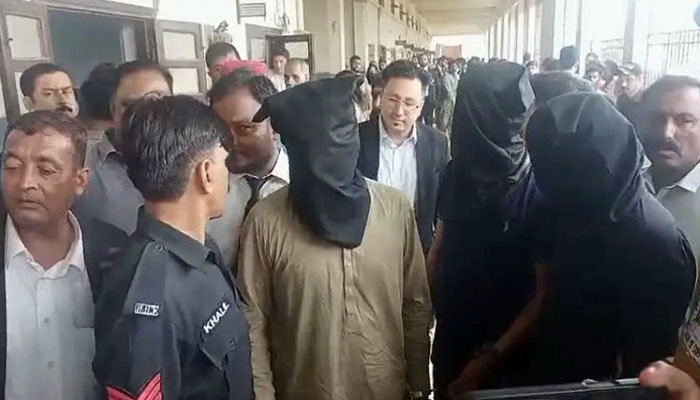
    KARACHI: Fresh forensic findings in the death of businessman Mir Raza Ali have raised further questions over the circumstances surrounding his death, with sources saying acid traces were detected in his stomach, lungs and on parts of his body. According to sources familiar with the investigation, severe acid-related damage was found in Ali’s lungs, while traces were also detected on his hands and feet. His clothing reportedly contained acid traces as well as sweat believed to belong to another person. The investigation took another turn after police sealed a guesthouse near the location where Ali’s body was discovered. Six people working at the guesthouse were taken into custody for questioning, bringing the total number of detained individuals in the case to 21. Their statements have also been recorded as investigators attempt to establish what happened before Ali’s death. The latest developments came a day after Ali’s body was exhumed and examined by a medical board before being reburied. The second post-mortem reportedly found a gunshot wound entering from the back, along with multiple signs of physical violence. The medical examination also revealed fractured ribs and several injuries to Ali’s head and face, adding to concerns surrounding the circumstances of his death. Ali, an IBA graduate and businessman, was found dead in Karachi’s Gulistan-e-Jauhar area last month after he went missing on July 28. His father rejected suggestions that his son had died by suicide and maintained that he had been murdered. Meanwhile, Ali’s parents have opposed the proposed formation of a judicial commission, saying the police should be allowed to continue their investigation. Family lawyer Jibran Nasir said the parents had conveyed their decision in writing to the Karachi mayor, Sindh interior minister and additional inspector general. Nasir said the family currently saw no need for a judicial commission and wanted the police investigation to proceed according to law. The Sindh government had earlier announced plans to establish a judicial commission headed by high court judges. Sindh Home Minister Zia Lanjar said the decision was taken following consultations with Chief Minister Murad Ali Shah, describing the commission as necessary to investigate the case. Separately, Sindh Senior Minister Sharjeel Inam Memon has approached the National Cyber Crime Investigation Agency over social media allegations linking him and his son, Rawal Memon, to Ali’s death. Through his lawyer, Memon submitted a complaint to the NCCIA Karachi Zone, accusing certain social media accounts of spreading what he termed false, fabricated and malicious claims. The complaint alleges that social media posts linked a guesthouse near the crime scene to Memon and claimed that his son travelled to London shortly after the incident. Rawal Memon, who is currently in London, rejected the allegations and described them as an organised smear campaign. The complaint further alleged that online posts questioned the medical investigation and accused Memon and his political party of shielding individuals allegedly connected to Ali’s death. With forensic findings, multiple detentions and competing calls for a judicial inquiry now surrounding the case, investigators face mounting pressure to determine how Mir Raza Ali died and identify those responsible.

  • | |

    Musadik Malik calls for smarter water management

    Climate Minister Musadik Malik has called for a major shift in Pakistan’s water management strategy, saying the country must focus not only on storing water but also on regulating its supply throughout the year. Speaking at a briefing at the National Disaster Management Authority (NDMA), Malik said effective water management was essential for protecting food supplies, supporting agriculture and reducing the impact of climate-related disasters. His remarks came as Pakistan faces another difficult monsoon season. At least 107 people have died and 297 others have been injured since the current rainy season began on June 26, according to disaster management authorities. The Pakistan Meteorological Department has forecast another strong spell of monsoon rains from July 29. Heavy rainfall could trigger urban flooding, flash floods and landslides in several parts of the country. Malik said Pakistan needed different climate strategies for different regions instead of relying on a single nationwide approach. Plans are being developed for cities facing extreme heat, northern areas vulnerable to floods and landslides, and agricultural regions where changing weather patterns are threatening food production. He stressed that water must be available when farmers need it during the Rabi and Kharif seasons. According to the minister, simply allowing large quantities of floodwater to escape without regulating or storing it creates serious risks for agriculture and food security. Malik described water infrastructure as a national security issue. He said the government would focus on improving water regulation, telemetry and storage systems. It would also work with provincial governments to improve zoning and construction standards in disaster-prone areas. National Food Security Minister Rana Tanveer Hussain said Pakistan would require greater water storage capacity in the coming years. He said the country faced two linked challenges: controlling floods and dealing with water shortages. Tanveer said climate change was already changing crop cultivation and sowing patterns. He stressed that agriculture would need to adapt to shifting weather conditions to protect food supplies. The minister said Pakistan was among the countries most vulnerable to climate change, with agriculture facing some of the strongest impacts. He recalled the huge economic losses caused by the 2022 floods but said the country’s disaster response capabilities had improved since then. He said the government had started modifying crop cycles and cultivation patterns in response to changing climatic conditions. Authorities are also working on a broader strategy to strengthen agricultural resilience. Tanveer highlighted several major water projects. He said the Diamer-Bhasha Dam would provide around 6.4 million acre-feet of additional storage capacity, while the Mohmand Dam would add nearly one million acre-feet. He also mentioned progress on the Dasu project and expressed hope that the K-IV water supply project for Karachi would be completed by the end of this year or early next year. Finance Minister Muhammad Aurangzeb described climate change and population growth as major long-term challenges for Pakistan. He called for a coordinated response involving all parts of the government. Aurangzeb said the country was now better prepared financially to respond to natural disasters. He said the government had decided to use domestic resources for rescue and relief operations instead of relying primarily on international assistance. He said Pakistan had launched a $2 billion programme aimed at strengthening climate resilience and reducing environmental risks. Around $700 million annually has also been allocated for disaster management, vulnerability reduction and protection of lives and infrastructure. The finance minister said Pakistan’s disaster financing approach had changed significantly since the 2022 floods. The country had previously relied heavily on international commitments, but authorities are now increasing domestic funding for climate adaptation and emergency response. Information Minister Attaullah Tarar said preparations for the current monsoon season had started before the rains arrived. He credited NDMA’s National Emergencies Operation Centre (NEOC) with improving forecasting and early warning capabilities. Tarar said the system had helped authorities issue timely alerts about dangerous weather events. He urged citizens to follow official warnings and take precautions during periods of heavy rainfall. Meanwhile, flooding continues in parts of Punjab and other regions. The Provincial Disaster Management Authority said water levels in the Chenab River had shown some improvement, while low-level flooding persisted at several locations along the Indus.

  • | |

    Joe Root likely to return as England test captain 

      England’s star batter Joe Root is reportedly set to make a return as captain of the England men’s Test cricket team. According to reports, the England and Wales Cricket Board (ECB) is considering handing Root the leadership role once again following the expected retirement of current Test captain Ben Stokes. The reports suggest that Root could officially take charge of the team ahead of England’s upcoming Test series against Pakistan. If appointed, he would lead the side during a crucial period as England prepares for a demanding international schedule, including the highly anticipated Ashes series next year. Joe Root is one of England’s most accomplished cricketers and previously served as the team’s Test captain from 2017 to 2022. During his tenure, he led England in a record number of Test matches and played a significant role in guiding the team through several memorable victories. Although his captaincy ended after a difficult run of results, Root continued to be one of the team’s most consistent performers with the bat and remains a key figure in England’s Test setup. Reports indicate that the England management views Root as the ideal candidate to provide stability and experience during this transitional phase. His extensive leadership background, calm temperament, and outstanding batting record make him a strong choice to guide the team until at least the Ashes series scheduled for next year. The reports add that he is expected to remain captain through that prestigious contest before the ECB considers a long-term leadership plan. Meanwhile, another significant change is also expected within England’s coaching staff. Former England opener Marcus Trescothick is likely to be appointed as the interim head coach of the Test team. According to the reports, Trescothick could assume coaching responsibilities during the upcoming Test series against Pakistan. Trescothick has already gained valuable coaching experience with the England national side and is regarded as a respected figure within English cricket. His appointment as interim head coach would ensure continuity and familiarity for the players during a period of transition. Working alongside an experienced leader such as Joe Root could help England maintain stability both on and off the field.   The potential appointments of Root and Trescothick come at a time when England is preparing for an important phase in the international cricket calendar. The Pakistan Test series is expected to provide an early opportunity for the new leadership group to establish its approach before attention turns to the Ashes, one of cricket’s most celebrated rivalries.   Neither the England and Wales Cricket Board nor the team management has officially confirmed these appointments. However, British media reports suggest that an announcement could be made in the near future if discussions proceed as expected. If confirmed, Joe Root’s return as Test captain would mark the beginning of a new chapter for England’s red-ball team. His experience, leadership qualities, and exceptional batting ability are expected to play a vital role in helping England navigate a period of change while aiming for success against Pakistan and in the Ashes series.

  • | |

    Karachi to remain hot, humid as rain chances emerg…

    Karachi is expected to remain hot and humid over the next three days. The weather is likely to stay partly cloudy. Light drizzle is also possible in some parts of the city. According to the Pakistan Meteorological Department, Karachi’s maximum temperature is expected to remain between 34°C and 36°C during the next three days. The weather department said most parts of Sindh will experience hot and humid conditions today. However, some areas could receive rainfall. Tharparkar district may receive light rain accompanied by thunderstorms. Residents have been advised to remain cautious during periods of strong winds and thunderstorms. August could bring more rain A private weather forecasting organisation has also issued a longer-range outlook for August. It said low-pressure systems could develop over the Bay of Bengal during the first 10 days of August. These weather systems could increase the chances of rain across several parts of Pakistan. Northern areas of the country may experience a strong spell of rainfall. Sindh and Balochistan could also receive one or two rain spells during the period. Karachi may see rainfall during the first week of August if favourable weather systems develop. The forecast comes as Pakistan continues to experience monsoon weather. Rainfall in different regions has already affected temperatures and local weather conditions. However, meteorologists have stressed that the August forecast is based on long-range weather models. Such forecasts can change as new weather data becomes available.

Leave a Reply

Your email address will not be published. Required fields are marked *