
pakistan8217s blasphemy cases
| | | |

Pakistan’s blasphemy cases hit record low

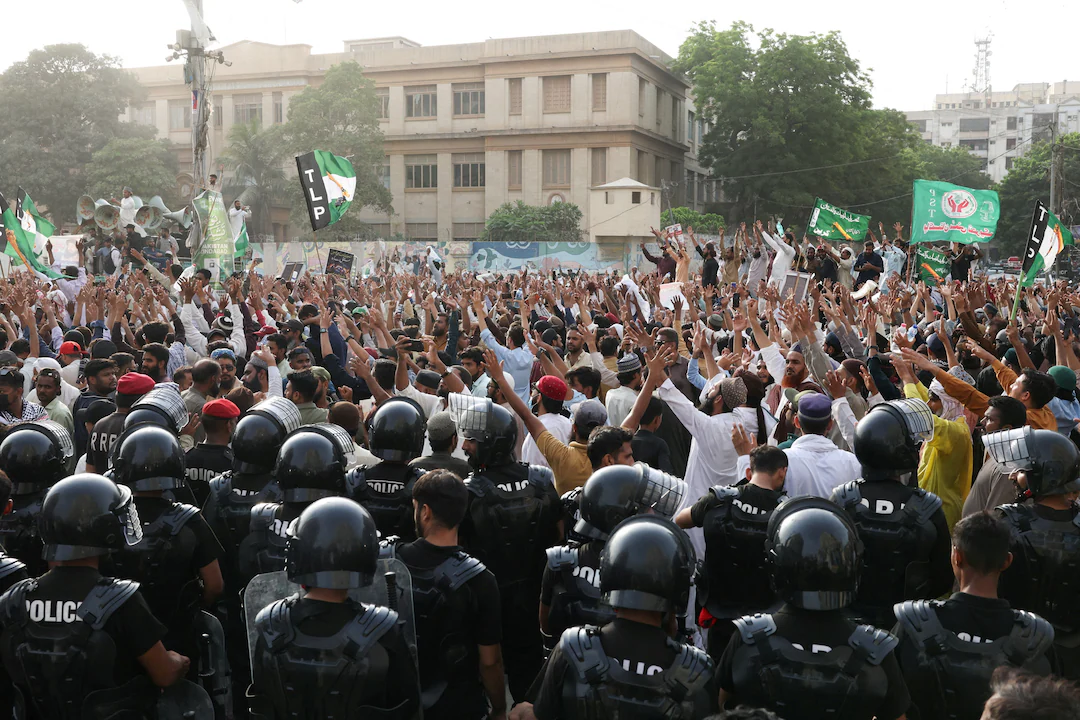
Pakistan has witnessed a significant decline in registered blasphemy cases this year following a crackdown on hardline religious groups, signalling what analysts describe as a major shift in the country’s security policy.

According to figures cited by the Human Rights Commission of Pakistan (HRCP), only 13 blasphemy cases have been registered so far in 2026, marking a fall of nearly two-thirds compared with the same period in recent years. Data from conflict monitoring organisation ACLED also indicates that only one blasphemy-related riot or attack has occurred over the past year, compared with an annual average of more than seven incidents between 2021 and 2024.

The decline comes after security agencies intensified action against several extremist organisations accused of exploiting blasphemy allegations to incite violence. Officials familiar with the matter said the campaign has included arrests of key figures, restrictions on organisational activities, freezing of financial assets and tighter monitoring of religious gatherings.

The change was evident during an incident in Karachi last month, where allegations of blasphemy against a Christian family drew a large crowd. Police officers intervened before the situation turned violent and persuaded protesters to disperse peacefully. Authorities later determined that the accusations against the family were baseless, allowing them to be moved to safety without further harm.

Analysts believe the reduced presence of organised extremist groups has played a key role in preventing mob violence that has historically followed blasphemy accusations. Pakistan has witnessed around 90 blasphemy-related lynchings since 1990, with many incidents beginning after rumours spread through local communities.

Security experts say the military leadership has adopted a tougher stance against groups previously accused of using religious sentiments to mobilise supporters and pressure governments. They argue the policy shift is linked to broader efforts to strengthen Pakistan’s international image, attract foreign investment and improve relations with Western countries while tackling growing security threats at home.

Officials also believe that curbing religious extremism is necessary to address worsening militancy in Balochistan and Khyber Pakhtunkhwa, where insurgent violence continues to challenge the state’s authority. Some analysts say extremist organisations and militant groups have historically drawn support from similar networks of radicalised youth.

The country’s largest hardline religious party, Tehreek-e-Labbaik Pakistan (TLP), was banned last year after authorities concluded that its activities posed a threat to public order and Pakistan’s international reputation. Government measures reportedly included detaining senior leaders, sealing offices and restricting financial operations. The party has rejected the ban, calling it unconstitutional.

Despite the decline in violence, observers caution that extremist ideology remains deeply rooted in parts of society. Human rights advocates say minority communities, including Christians, Ahmadis and Shia Muslims, continue to live under the fear of false accusations, as Pakistan’s blasphemy laws remain in force and carry the death penalty.

Security analysts also warn that sustained enforcement will be necessary to prevent banned organisations from regrouping or resurfacing under new identities. They argue that long-term success will depend on consistent policies rather than temporary crackdowns.

Similar Posts

  • |

    Sunrisers Leeds rewrite The Hundred record books with explosive batting masterclass

    Sunrisers Leeds produced one of the most breathtaking batting displays in the history of The Hundred, smashing multiple tournament records in a dominant 37-run victory over London Spirit at Headingley to keep their playoff hopes alive. The home side unleashed an extraordinary batting performance, piling up 241-2, the highest team total ever recorded in The Hundred. Their relentless assault left London Spirit’s bowlers with no answers and thrilled the Headingley crowd with a spectacular display of power-hitting. The foundation for the record-breaking total was laid by openers Ryan Rickelton and Mitchell Marsh, who stitched together a stunning 148-run opening partnership—the highest first-wicket stand in the tournament’s history. Rickelton anchored the innings with a magnificent unbeaten 94 off 42 balls, combining elegant stroke play with aggressive intent. Marsh provided the perfect support, blasting 76 from just 37 deliveries as the pair dominated from the outset and set the tone for an unforgettable innings. If the opening partnership put Sunrisers Leeds in command, Harry Brook ensured the match entered the record books. The England star produced a breathtaking cameo, racing to the fastest half-century in The Hundred history. Brook reached his fifty in only 15 balls before finishing with a blistering 55 from 18 deliveries, an innings decorated with five fours and five towering sixes. His fearless stroke play electrified the crowd and pushed Sunrisers Leeds beyond the 240-run mark, establishing a new benchmark for batting excellence in the competition. Faced with a daunting target, London Spirit fought hard but never seriously threatened to chase down the mammoth total. Sunrisers Leeds maintained control throughout the contest to secure a convincing 37-run victory, earning two crucial points in the race for the knockout stage. The result keeps Sunrisers Leeds firmly in playoff contention, while London Spirit remain seventh in the standings with their qualification hopes becoming increasingly difficult. The match will be remembered as one of the greatest batting performances in The Hundred’s short history. Between Rickelton’s classy unbeaten knock, Marsh’s explosive support and Brook’s record-shattering fireworks, Sunrisers Leeds delivered a performance that showcased the entertainment and attacking spirit of the competition. With the business end of the tournament approaching, the record-breaking victory could prove to be the momentum boost Sunrisers Leeds need in their pursuit of the championship.

  • | |

    Fakhar Zaman urges patience over PSL performers

    Pakistan opener Fakhar Zaman has urged selectors and fans not to judge players solely on one or two impressive Pakistan Super League (PSL) performances, stressing that franchise cricket is very different from the demands of international cricket. Speaking during a media interaction in Lahore, the experienced batter said consistency should remain the key criterion for national team selection. The 35-year-old noted that several young cricketers earn Pakistan call-ups after performing in only a handful of PSL matches. While he welcomed healthy competition for places in the national side, he insisted that players must prove themselves over a longer period before being considered ready for international cricket. Fakhar said: “Many youngsters break into the national side after performing in just one or two Pakistan Super League matches. If a young player is good enough to take my place in the white-ball team, they are welcome to do so tomorrow. However, they must prove their quality, consistency, and form.” The left-handed opener explained that domestic and franchise cricket cannot be compared directly with the international game. According to him, many players realise the difference only after representing Pakistan, where the level of competition and pressure is much higher. He added: “When domestic performers step into international cricket, they realize the difference is significant. Development camps like these should be held regularly. A player should not be labeled extraordinary after just one or two good PSL matches because league cricket and international cricket are very different.” Fakhar also spoke about Pakistan’s batting order, revealing that discussions had taken place with the team management. However, he made it clear that certain decisions remain internal and cannot be discussed publicly. He said: “We have discussed the batting order with the management, but some matters cannot be shared publicly. I always think about what the team needs, and that remains my priority. Every player has personal preferences, but not everything can be discussed in the media. The important thing is that we are all on the same page.” The opener emphasised that team success always comes before individual preferences. While every batter has a preferred position in the lineup, he said professional players must be willing to adapt according to the team’s requirements. Looking ahead, Fakhar also expressed confidence about Pakistan’s future assignments in South Africa. He recalled enjoying success on South African pitches in the past and believes the conditions complement his style of batting. He concluded by saying: “I have many good memories of playing in South Africa. The bouncy pitches suit my technique, and I am preparing with the 2027 World Cup firmly in mind.” Fakhar’s remarks come as Pakistan continues to evaluate its white-ball squad ahead of major international tournaments. His comments highlight the importance of balancing opportunities for emerging players with the need for consistency and experience at the highest level. While welcoming competition, the veteran opener believes sustained performances—not just a brief run of form in the PSL—should determine who earns the honour of representing Pakistan on the international stage. 

  • | |

    Shahid Khaqan Abbasi criticizes government over ec…

    The head of the Awam Pakistan Party, Shahid Khaqan Abbasi, has criticized the government over the country’s worsening economic and political situation, saying that even government representatives have now started raising concerns about the state of affairs in Pakistan. Speaking at a press conference in Islamabad, Abbasi said that the interior minister had realized after four to five years that the country was facing serious governance challenges, while ordinary Pakistanis had been expressing similar concerns for years. “The people of Pakistan have been saying the same thing for the past four to five years,” Abbasi stated, adding that government ministers should raise such issues directly during cabinet meetings instead of discussing them publicly. The former prime minister stressed that Pakistan urgently requires meaningful reforms and warned that temporary or superficial measures would not solve the country’s deep-rooted problems. He argued that the country has repeatedly experimented with short-term solutions every year, but what is needed is a fundamental change in the system. “We need to change the system and establish the rule of law,” Abbasi said, emphasizing that strong institutions and equal application of laws are necessary for long-term stability. Abbasi also criticized political divisions and the practice of using accountability cases against opponents. He called for an end to the cycle of imprisoning political rivals, questioning how the country could progress if every politician was accused of corruption. “If all politicians are corrupt, then who will run the country?” he asked. The Awam Pakistan Party leader claimed that two major stakeholders currently play a dominant role in running the country, but instead of working together, both sides continue to blame each other for national problems. Discussing the economic situation, Abbasi said that the income of Pakistani citizens has declined significantly over the past six years. He claimed that household purchasing power has fallen by approximately 14 percent, leaving many families struggling financially. “Every household in Pakistan has become poorer,” he said, adding that unemployment has reached its highest level in 21 years. Abbasi also highlighted the increasing tax burden on citizens, stating that the average Pakistani now pays around Rs60,000 in taxes annually. He said that taxes that were previously around Rs30,000 have doubled in recent years, while poverty continues to rise across the country. The former prime minister argued that Pakistan is struggling to attract investment because of inconsistent policies and uncertainty. He accused the government of relying heavily on taxation rather than creating conditions that encourage economic growth. “There is no certainty about when new taxes will be imposed,” Abbasi said, claiming that unpredictable policies discourage businesses and investors from operating in Pakistan. He also raised concerns about public health and food security, stating that thousands of children in Pakistan are affected by HIV and that the government has started importing wheat despite the country being an agricultural economy. “A country known for agriculture is now purchasing wheat from abroad,” he remarked. Abbasi further criticized rising costs of essential services, including electricity, gas, petrol, and diesel. He said that ordinary citizens are facing increasing financial pressure because of continuous price increases. According to Abbasi, Pakistan’s current situation reflects a broader governance failure, and without major reforms, improvements in economic conditions will remain difficult. He called for political cooperation, institutional reform, and policies focused on economic stability rather than short-term measures.

  • | |

    Karachi roads blocked as JI protests fuel levy

    Traffic was disrupted across several major parts of Karachi on Friday as Jamaat-i-Islami (JI) workers staged sit-ins against the federal petroleum levy. The protests were part of a nationwide campaign announced by the party. JI had said it would hold demonstrations at hundreds of locations across the country by blocking major roads. Karachi traffic police issued an advisory warning motorists about congestion, temporary diversions and partial road closures in several areas. Major routes affected included areas around Mazar-i-Quaid, Numaish Chowrangi, Saddar, Sharea Faisal, Shahrah-i-Pakistan, UP Mor, Power House Chowrangi, Defence Housing Authority, Sea View, Shahrah-i-Orangi, Hub River Road, Super Highway and National Highway. The traffic police advised citizens to avoid the protest-hit areas where possible and use alternative routes. Commuters were also asked to allow additional time for their journeys. According to updates shared by JI Karachi, protesters blocked the road connecting Sharea Faisal with Natha Khan. The Super Highway and Hub River Road were also affected. Another road connecting the Sharea Faisal Nursery Bus Stop with the airport was reportedly blocked as protesters gathered at the designated locations. The demonstrations prompted criticism from the Sindh government. Provincial government spokesperson Sadia Javed said the petroleum levy was a federal issue and questioned why Karachi’s residents were facing difficulties because of the protest. She accused the JI of using the demonstrations for political gains instead of addressing public issues through relevant constitutional forums. Javed said road blockades were affecting the daily lives of millions of Karachi residents and raised concerns about the movement of ambulances and patients during the disruptions. She urged the party to raise its objections in Parliament and other relevant forums rather than blocking roads. The government spokesperson also warned protesters against damaging public property or taking the law into their own hands. The demonstrations were not limited to Karachi. JI workers also gathered in Lahore, Islamabad, Quetta and Peshawar as part of the nationwide campaign. In Islamabad, protesters reportedly blocked Srinagar Highway near Golra Mor while attempting to march towards Chungi 26. Several locations across Sindh also witnessed demonstrations, including Thatta, Matiari, Tando Allahyar and Shikarpur.

  • | |

    Pakistan takes helm of UN disarmament conference, …

    GENEVA: Pakistan is set to assume the presidency of the United Nations Conference on Disarmament on Monday, taking on a key diplomatic role in international efforts to advance arms control and global security. Tahir Andrabi, Pakistan’s representative, has arrived in Geneva to take charge of the presidency and will chair important sessions of the Conference during his tenure. He will continue performing his responsibilities as spokesperson for Pakistan’s Ministry of Foreign Affairs alongside his new assignment. As president, Andrabi will be responsible for steering the Conference’s proceedings in an organised, balanced and consensus-driven manner. Pakistan is expected to focus on facilitating dialogue among member states and helping move discussions forward on key disarmament issues. During his tenure, Andrabi will also oversee the preparation of the Conference’s annual report, which will be presented to member states for consideration and approval. Diplomatic sources said Pakistan will subsequently engage in negotiations aimed at securing agreement on a resolution based on the annual report. The resolution is expected to be taken up by the UN General Assembly for approval in November. Pakistan’s presidency provides Islamabad with an opportunity to play a prominent role in international discussions on disarmament while promoting dialogue, consensus and multilateral cooperation on global security challenges.

  • |

    South Korea to enshrine nuclear pledge in law

    SEOUL: South Korea is preparing legislation that would legally reaffirm its commitment to nuclear non-proliferation while it moves ahead with plans to develop nuclear-powered submarines. The proposed bill is expected to be released for public consultation by the Defence Ministry. It will set out five key principles governing the country’s nuclear-powered submarine programme. If approved, the legislation would formally establish in domestic law Seoul’s pledge not to develop, produce, possess or use nuclear weapons. The proposed law would also prevent the government from using nuclear materials specifically for weapons-related purposes. It would prohibit activities that could weaken the international nuclear non-proliferation system. The move is aimed at addressing concerns that South Korea’s submarine programme could eventually lead to a domestic nuclear weapons capability. The legislation would reaffirm Seoul’s commitments under the Nuclear Non-Proliferation Treaty. It would also require cooperation with international organisations during the development of the submarines. The proposed framework would include safeguards for public safety and environmental protection against radioactive materials. The government also wants to speed up the submarine programme. The proposed law would reportedly allow the project to bypass a preliminary feasibility study. South Korea’s nuclear-powered submarine project, known as Jang Bogo N, involves plans for attack submarines powered by low-enriched uranium. The programme is being developed with US approval. The two countries reached an agreement on the project during a leaders’ summit last October. Seoul plans to launch its first nuclear-powered submarine in the mid-2030s. The vessel is expected to enter operational service later in the decade. Defence authorities are reportedly considering three submarines weighing about 8,000 tonnes each. However, official technical details have not yet been released. South Korean Defence Minister Ahn Gyu-back has previously stressed that the country will continue to follow its international non-proliferation commitments. Seoul also plans to work closely with the International Atomic Energy Agency throughout the programme.

Leave a Reply

Your email address will not be published. Required fields are marked *