googles 15bn india
|

Google’s $15bn India data centre faces green bac…

VISAKHAPATNAM: Google’s ambitious $15 billion data centre investment in India is facing mounting resistance from environmental groups, residents and legal activists, turning what was expected to be a landmark technology project into one of the country’s most closely watched development disputes.

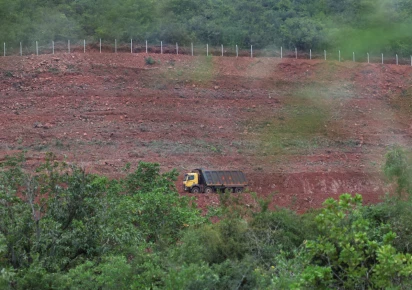
The massive project, being developed in partnership with Indian billionaire Gautam Adani’s group, is under construction in Tarluvada near the coastal city of Visakhapatnam in Andhra Pradesh. Touted as Google’s largest-ever investment in India, the facility is expected to strengthen the company’s cloud computing and artificial intelligence infrastructure while generating an estimated 188,000 jobs.

However, critics argue that the economic benefits could come at a significant environmental cost.

Water concerns spark protests

In recent weeks, environmental activists have intensified protests against the project, warning that the data centre could worsen water shortages in a city already struggling to meet daily demand.

Demonstrators, including schoolchildren, have marched through Visakhapatnam carrying banners reading “We Cannot Drink DATA”, while others painted handcuffs over Google’s logo to symbolise what they describe as the environmental consequences of unchecked technological expansion.

At a public awareness gathering attended by local campaigners, members of the environmental organisation Green Visakha outlined plans for neighbourhood campaigns and beach demonstrations aimed at increasing public awareness.

Raja Rama Mohan Roy, founder of Green Visakha, argued that development should never come at the expense of local communities.

“Development should not be at the cost of the livelihood of the people,” Roy said, pointing to government figures showing that Visakhapatnam currently receives around 410 million litres of water daily, despite requiring approximately 480 million litres. Water rationing has become a regular feature of life for the city’s 2.5 million residents, raising concerns about future demand.

Legal battle gains momentum

Opposition to the project has now reached the courts.

India’s Andhra Pradesh High Court this week directed the state government to respond to allegations raised by environmental group Jal Biradari (Water Community), which claims the project could place additional pressure on regional water resources.

The court is scheduled to hear the public interest litigation again on August 24.

Meanwhile, three additional petitions have been filed before India’s National Green Tribunal by the Human Rights Forum. The petitioners argue that authorities approved the project without conducting sufficient environmental assessments regarding water usage and ecological impacts.

Environmental groups are questioning the government’s reported commitment to provide guaranteed water supplies for the project over the next two decades while many residents continue experiencing periodic shortages.

Wildlife under threat?

Another major concern centres on the project’s location.

According to campaigners, the construction site lies only about 860 metres from the Kambalakonda Wildlife Sanctuary, a protected forest known for its biodiversity and home to species including leopards, pangolins, spotted deer and numerous bird species.

Activists fear continuous construction, heavy machinery and increased industrial activity could disturb wildlife through noise, habitat disruption and increased human presence.

The Andhra Pradesh government, however, insists the development complies with all legal requirements and maintains that the sanctuary is located at a safe distance under existing regulations.

Google also said it intends to minimise environmental impacts by installing sound-dampening technologies designed to reduce noise pollution around the facility.

Government and Google defend project

Despite growing criticism, Andhra Pradesh authorities continue to describe the project as transformational for the state’s economy.

Officials rejected accusations that environmental clearances were rushed or that local drinking water resources would be diverted for industrial use.

In a statement, the state government acknowledged citizens’ right to protest but said many claims circulating about the project were “incorrect and misleading.” It added that authorities remain willing to examine legitimate concerns and provide clarification where necessary.

Google has similarly defended the project, stating that construction will comply fully with Indian environmental regulations.

The company said it plans to use advanced air-cooling technology, significantly reducing dependence on water compared with conventional cooling systems used by many data centres.

Google also stressed that sustainability remains a key part of its global operations and that the Visakhapatnam facility would be designed to protect local water resources while supporting India’s rapidly expanding digital economy.

Global debate over data centres

The controversy reflects a broader international debate over the environmental footprint of modern data centres.

As demand for artificial intelligence, cloud computing and digital services continues to surge, technology companies worldwide are investing billions in new infrastructure. Yet these facilities often require enormous amounts of electricity and cooling, placing additional pressure on local water and power supplies.

Similar concerns have emerged across the United States and Europe, where communities have challenged large-scale data centre developments over resource consumption, environmental sustainability and their impact on nearby residents.

For Google, the Andhra Pradesh project represents a major strategic investment in one of its fastest-growing markets. But with legal challenges pending and public protests gathering momentum, the future of the project may depend not only on engineering and investment, but also on the company’s ability to convince local communities that technological progress can coexist with environmental protection.

Similar Posts

  • Thailand’s Gas Prices Surge Amid Ongoing US-Iran Conflict

    BANGKOK – Thailand faces rising gas prices as the conflict between the United States and Iran continues to impact global oil markets. Drivers across the nation are feeling the pinch at the pump as global supply chains face extreme pressure. The ongoing war has disrupted major oil shipping routes, pushing crude oil costs higher worldwide. […]

  • | |

    Hangu drone attack, FIR registered against TTP mil…

    HANGU: Pakistani authorities have registered a terrorism case following a deadly drone attack on the Khazina Banda police checkpost in Hangu, where officials say militants carried out a coordinated assault that left several police personnel dead and dozens injured. According to police, the case has been lodged at the Counter Terrorism Department (CTD) police station in Kohat on the complaint of the station house officer (SHO). The First Information Report (FIR) names members of the banned Tehreek-e-Taliban Pakistan (TTP) and includes 16 charges, including terrorism, murder, attempted murder and kidnapping. The FIR states that the attackers used a drone as part of the assault before engaging security personnel in an intense exchange of fire. According to the police report, DSP Diyar Khan was among 10 police officials martyred during the attack, while 33 other personnel sustained injuries in the fierce confrontation. Authorities said security forces responded immediately, leading to a prolonged gun battle with the militants. The FIR claims that 15 militants were killed during the retaliatory operation carried out by police. The attack also caused significant damage to government property. Police said the militants destroyed or damaged three armoured vehicles, along with other official vehicles and infrastructure at the checkpost. Investigators have launched a detailed probe to identify all individuals involved in planning and executing the assault. Officials said evidence is being collected from the attack site, while intelligence agencies are assisting in tracing the network behind the operation. The incident underscores the continuing security challenges facing law enforcement personnel in Khyber Pakhtunkhwa, where militant attacks have increased in recent years. Authorities have vowed to bring all those responsible to justice, reaffirming that counterterrorism operations will continue against militant groups threatening public safety and national security. Officials also paid tribute to the police officers who lost their lives, describing their sacrifice as a testament to the force’s commitment to protecting citizens and maintaining peace in the region.

  • | | |

    Iran warns Ukraine of response after reported Casp…

    Tensions between Iran and Ukraine have increased after Tehran accused Kyiv of carrying out an attack on a vessel in the Caspian Sea and warned that the incident would not go unanswered. According to Iranian state media reports, Iran’s Parliament Deputy Speaker Ali Nikzad said the country would respond to what he described as an irresponsible action by Ukraine. He stated that Iran reserves the right to defend its territorial sovereignty and considers any attack on its territory or interests a matter requiring a response. The controversy emerged after Ukrainian President Volodymyr Zelenskyy reportedly claimed that Ukrainian forces had targeted a Russian military vessel and also struck an Iranian vessel in the Caspian Sea. Iran’s Foreign Ministry later confirmed that an Iranian ship had been affected by the incident. Following the report, Iran summoned Ukraine’s chargé d’affaires and lodged a formal protest, describing the action as hostile and unacceptable. Tehran said the incident could increase regional tensions and accused Ukraine of violating international principles. Iran’s Foreign Ministry stated that the country would take measures to protect its security and interests within the framework of international law. Iranian Foreign Minister Abbas Araghchi also condemned the reported attack and called on the United Nations, the European Union, and the international community to take action. During a phone conversation with EU foreign policy chief Kaja Kallas, Araghchi urged international bodies to hold those responsible for the incident accountable. The reported confrontation has added another layer of complexity to ongoing international tensions, with both sides facing calls to clarify the circumstances surrounding the incident.

  • Thailand’s Transport Minister Orders Halt to All Elevated Road and Rail Projects

    SAMUT SAKHON – Transport Minister Phiphat Ratchakitprakarn has ordered an immediate suspension of all elevated road and rail construction projects nationwide pending a comprehensive review of safety standards. The announcement came during a television interview on Friday, following the second fatal crane collapse in 24 hours. Crane Collapse on Rama II Road in Bangkok, Kills […]

  • |

    CNN report says Pentagon delayed reporting US troop injuries during Iran conflict

    The Pentagon has been criticised for delaying the public release of information about US military casualties during the ongoing conflict with Iran, with a CNN report claiming that injury figures have often been disclosed days or even weeks after incidents occurred. According to the report, US Central Command initially provided regular updates on troop injuries during the early stages of the conflict but has since stopped routinely announcing non fatal casualties. As a result, the Defence Casualty Analysis System has become the main official source for casualty information, although its updates have reportedly lagged behind events. A Pentagon official told CNN that documenting military injuries can take several days or even weeks because cases must go through medical evaluations and administrative reviews before being entered into official records. The official maintained that the casualty database is updated regularly despite the delays. The report said that since the United States and Iran signed a memorandum of understanding in mid June, the database initially recorded one new military death and 14 wounded personnel. The fatality was identified as Navy Commander Gabriel Edwards, a helicopter pilot who was lost at sea in the Arabian Sea on July 1. CNN reported that casualty figures appeared to be added in batches rather than immediately after incidents. One injured Air Force member was reportedly listed in a July 13 update, while another update on July 17 included 10 wounded soldiers and three injured sailors. After CNN published its report, the casualty database was updated again on July 20 with four additional military deaths and 20 more wounded service members. Despite those updates, Pentagon spokesperson Sean Parnell said the official database still did not fully reflect the total number of injuries. In a statement posted on social media, he said nearly 100 US service members had been injured since July 7, adding that most suffered minor concussions. Parnell defended the Pentagon’s approach to releasing casualty information, arguing that providing immediate details about non fatal injuries could give valuable information to adversaries and potentially place more military personnel at risk. He also said the Pentagon and US Central Command have continued providing regular updates on military operations against Iran. According to Parnell, public statements by President Donald Trump and Defence Secretary Pete Hegseth have also kept the public informed about the objectives and progress of the campaign. The report also highlighted several recent attacks involving US forces in the region. An Iranian missile strike on Muwaffaq Salti Air Base in Jordan reportedly killed two American service members and left another missing. In a separate incident in northern Iraq, another US soldier died during the controlled destruction of a downed Iranian drone. US Central Command confirmed that one service member was injured during the Iraq operation. It also said four personnel who were treated in hospitals in Jordan following the airbase attack had been discharged after receiving medical care. Officials added that several other military personnel suffered minor injuries but were able to return to duty after medical evaluation. The latest report has renewed questions about the speed and transparency of casualty reporting during military operations, with critics arguing that delayed disclosures make it more difficult for the public to understand the human cost of the conflict.

  • Chula, Thai Red Cross Society Partner to Bring ‘SALYWA’ Artificial Saliva to Patients 

    Chulalongkorn University, in collaboration with the Thai Red Cross Society and Specialty Innovation Co., Ltd., held a press conference announcing the licensing agreement for research utilization and the launch of “SALYWA”, an artificial saliva product made from Thai herbal extracts. The product is designed to relieve dry mouth and reduced saliva production, particularly among cancer patients undergoing radiation therapy and elderly individuals. The initiative aims to bring […]

Leave a Reply

Your email address will not be published. Required fields are marked *