irgc releases satellite
| | | |

IRGC releases satellite images of US jets in Jordan

Iran’s Islamic Revolutionary Guard Corps (IRGC) has released satellite images that it says show hangars housing US military aircraft at Jordan’s Al Azraq air base, escalating its information battle with Washington.

The IRGC also called on the United States to end what it described as censorship and urged officials to provide the public with accurate information about the ongoing conflict.

The release comes after the United States rejected an Iranian claim that its forces had destroyed US F-35 fighter jets. Iranian authorities had earlier claimed that three American fighter aircraft were destroyed at the Al Azraq air base in Jordan.

In a statement, the IRGC said its forces had targeted three US F-35 aircraft stationed at the base. The claim has not been independently verified, while US officials have denied that Iran destroyed any American F-35s.

By publishing the satellite imagery, the IRGC appears to be seeking to support its version of events and challenge the US account of the reported attack. However, the images alone do not independently confirm whether any aircraft were damaged or destroyed.

The conflicting claims come amid heightened regional tensions and an ongoing exchange of accusations between Iran and the United States over military operations and attacks in the Middle East.

Similar Posts

  • |

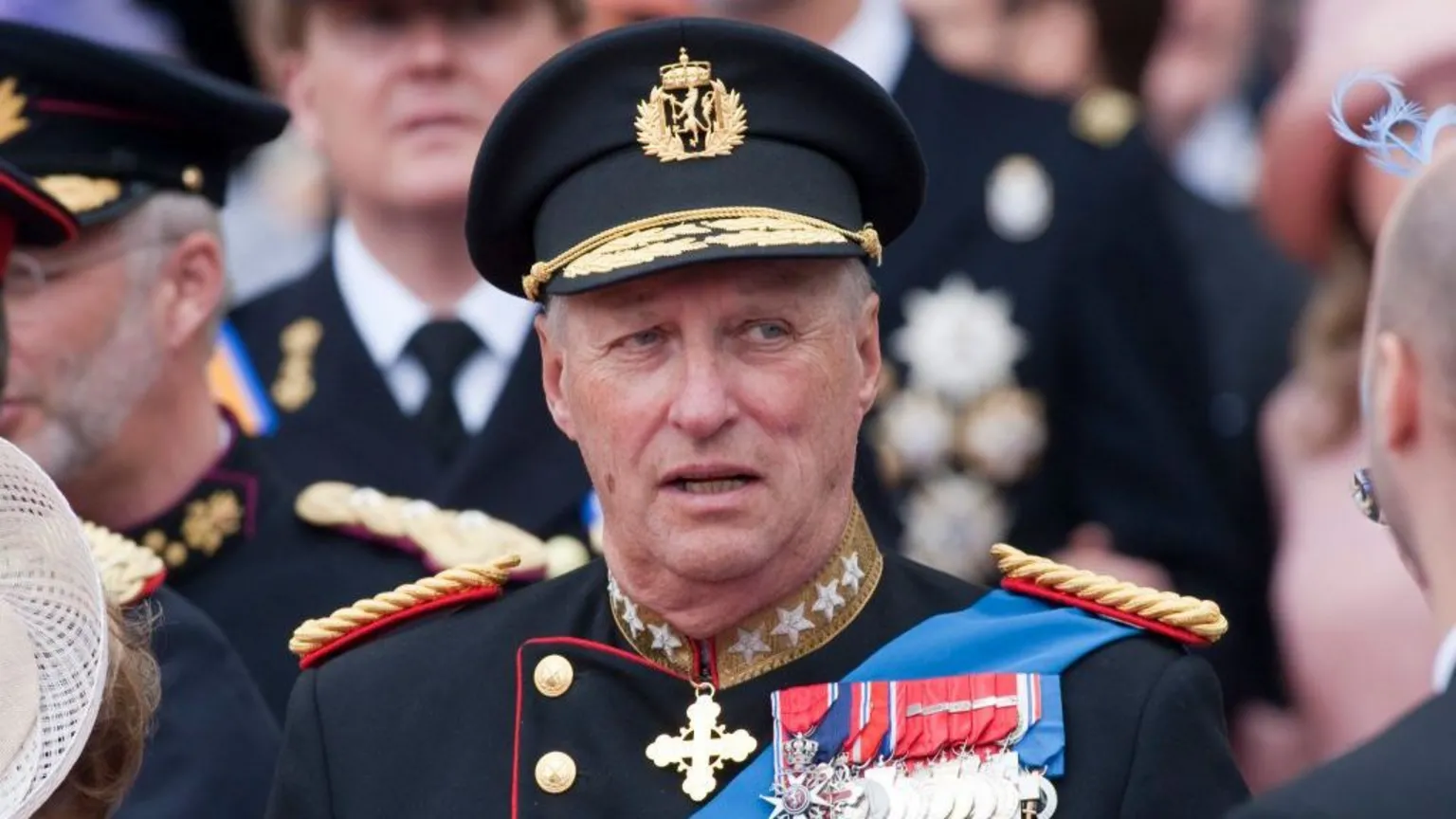
    Norway’s ‘People’s King’ dies: What comes next?

    Norway is mourning the death of King Harald V, who passed away on Friday at the age of 89 after more than three decades on the throne. The Norwegian royal palace said Harald died peacefully at Oslo University Hospital at 6:35am local time. He had been receiving treatment after being hospitalised earlier this month with a serious illness and a bacterial infection in his blood. Harald’s death brings an end to a 35-year reign during which he became one of Norway’s most respected and popular public figures. He was widely regarded as a modernising monarch who helped make the royal institution more open, accessible and closely connected with ordinary citizens. His son, Crown Prince Haakon, immediately became king following his father’s death. Haakon, 53, is expected to formally address the government and parliament as Norway begins the transition to a new reign. Born on February 21, 1937, Harald was the first Norwegian-born heir to the throne in almost six centuries. His childhood was shaped by the Second World War. When Nazi Germany invaded Norway in 1940, the young prince left the country with his mother and sisters. The family spent time in Sweden before travelling to the United States, where they lived during the war. Harald returned to Norway after the war and later completed his education and military service. He studied social sciences, history and economics at Oxford University before becoming increasingly involved in royal duties. One of the defining moments of his personal life came in 1968, when he married Sonja Haraldsen, the daughter of a businessman. The marriage broke with royal tradition because Sonja was a commoner. Harald had reportedly waited years for permission to marry her and eventually made clear that he would rather remain unmarried than give her up. Queen Sonja remained his partner throughout his nearly six decades of marriage and his entire reign. Harald became king in January 1991 following the death of his father, King Olav V. Over time, he developed a reputation for showing emotion and speaking openly on issues affecting Norwegian society. His role as a national unifier became particularly important after the 2011 terrorist attacks in Oslo and on Utøya, in which 77 people were killed. Harald’s public response focused on solidarity, compassion and rejecting fear. He also became known for advocating tolerance and diversity. In a widely remembered speech in 2016, he emphasised that Norway was home to people of different nationalities, religions and sexual orientations. Outside his official duties, Harald was a passionate sailor and represented Norway at three Olympic Games. He was also interested in environmental conservation and supported efforts to protect nature. His later years were marked by repeated health problems. In 2024, he was hospitalised while visiting Malaysia and later received a pacemaker. He subsequently reduced his public engagements but rejected calls for abdication, maintaining that his commitment to the throne was lifelong. Harald’s death also comes at a difficult time for Norway’s royal family. Crown Princess Mette-Marit has faced scrutiny over her past contacts with convicted sex offender Jeffrey Epstein, while her son Marius Borg Høiby was convicted this year of rape and domestic violence. Mette-Marit has also undergone a lung transplant after suffering from a serious pulmonary condition. Despite the controversies surrounding members of his family, Harald himself retained strong personal popularity among Norwegians. Tributes have poured in from European leaders and fellow monarchs. Britain’s King Charles III described Harald as a much-loved relative and friend, while Sweden’s King Carl XVI Gustaf remembered him as a close friend of his family and Sweden.

  • | |

    Malaysian PM Anwar Ibrahim undergoes medical proce…

    KUALA LUMPUR: Malaysian Prime Minister Anwar Ibrahim is undergoing medical examinations and procedures, with his aide saying he is expected to remain under observation for two days. Anwar’s Press Secretary Tunku Nashrul Abaidah confirmed the development on Monday but did not disclose details about the nature of the medical procedures or the condition that prompted them. In a statement, the aide said Anwar was undergoing examinations and procedures arranged by a team of medical experts. The statement also appealed for prayers for the premier’s health and expressed hope that he would be able to return to his regular duties soon. “Let us pray … that he is blessed with long-lasting health so that he can return to his usual duties in the near future,” the statement said. The news prompted a message of support from Pakistan, with Prime Minister Shehbaz Sharif wishing his Malaysian counterpart a swift recovery. “Wishing my dear brother, Prime Minister Anwar Ibrahim, a swift and smooth recovery during his medical procedures,” Shehbaz wrote in a post on X. He added that the people of Pakistan were joining him in praying for Anwar’s continued good health and well-being, reflecting the close ties between the two countries. Anwar, who turned 79 on Monday, has served as Malaysia’s prime minister since 2022. His current medical observation has drawn attention partly because of previous health issues involving his back and shoulder. The Malaysian leader was hospitalised in 2018 after experiencing shoulder and back pain. More recently, he cancelled a planned visit to Pahang state in November last year because of back discomfort. Despite those previous problems, Anwar received a clean bill of health following a routine medical examination in January, according to a statement from the hospital where the check-up was conducted. The latest announcement has not indicated that Anwar is facing any serious health condition. Officials have also not provided details about when he is expected to leave medical care or resume his full schedule. For now, the Malaysian government and Anwar’s supporters are awaiting further updates from his medical team. His aide’s statement sought to reassure the public while asking for prayers as the veteran politician undergoes the procedures. Anwar’s health is closely watched as he continues to lead Malaysia through a period of economic and political challenges, making his expected return to official duties a matter of considerable public interest.

  • |

    Congo Ebola outbreak surpasses 1,000 deaths at record pace

    Data from the Ministry of Health in the Democratic Republic of the Congo reveals that the ongoing Ebola outbreak declared on 15 May has killed over 1,000 people in just over two months. This marks the fastest-spreading outbreak of the virus on record, reaching 1,000 fatalities nearly three times quicker than the 2014–2016 West Africa epidemic. As of Tuesday, the country has recorded 2,536 confirmed cases and 1,033 deaths, with the case fatality rate standing at 40 per cent. Unlike the 2014–2016 epidemic driven by the more common Ebola virus, the current surge is caused by the rare Bundibugyo virus, for which there are no approved vaccines or targeted therapeutic treatments. The outbreak remains largely concentrated across five eastern provinces near the Ugandan border. Health officials warn that the peak may still lie ahead due to late patient presentations, initial delays in identifying the strain, and a high proportion of new cases emerging outside monitored contact lists.

  • | |

    US military depletes long-range missile stockpile …

    The United States has burned through nearly all of its long-range precision missiles during five months of fighting in Iran, according to three people familiar with internal defense data, fueling concern inside Washington about military readiness for future crises. The weapons in question are primarily the Army’s ground launched systems, the Army Tactical Missile System and the newer Precision Strike Missile. Two of the sources said the military has expended virtually its entire supply of both. These munitions let forces strike targets accurately from a safe distance and have already proven vital in Ukraine, where American supplied versions allowed Ukrainian troops to hit targets deep inside Russian territory. The Precision Strike Missile represents a more advanced generation designed to eventually replace the shorter range ATACMS. Defense analysts note that such long-range munitions, each costing more than a million dollars, would also play a central role in any future confrontation with China. The sources declined to specify exact remaining quantities of either weapon. President Donald Trump launched the joint offensive against Iran alongside Israel in February, initially predicting a brief campaign. Instead, the conflict has stretched on for months, and the three sources said they worry that shrinking missile reserves could weaken the country’s ability to deter rivals such as Russia and China going forward. A fourth person familiar with the matter said Central Command, which oversees American forces across the Middle East, has nearly exhausted the land based missiles it held before the war started, though it has managed to replenish supplies by drawing from military stockpiles based elsewhere around the world. All four sources spoke on condition of anonymity. Asked to respond to the stockpile figures, the White House shared a statement from Trump asserting the country holds “far more munitions than anyone in the world” and more than it currently requires. He added that American defense manufacturers are producing at record volumes while also expanding factory capacity. Analysts largely agree that certain categories of weapons, including artillery shells and select missile types, are rolling off production lines at historic rates. Still, they caution that overall output may fall well short of what a prolonged conflict would demand. Lockheed Martin, which manufactures both the ATACMS and the Precision Strike Missile along with the THAAD missile defense system, did not respond to questions about the stockpile figures or the president’s remarks. Raytheon, maker of the Tomahawk cruise missile and the Patriot interceptor, also did not respond to inquiries. Chief Pentagon spokesperson Sean Parnell defended the state of American readiness, saying the military maintains a deep arsenal capable of protecting national interests and has carried out multiple successful operations across combatant commands. Internal debate over munitions The stockpile figures have circulated through federal government channels over the past week amid tense internal discussions about how much longer American forces can keep striking Iranian targets without depleting reserves needed to respond to crises elsewhere in the world. One source said the drawdown in ATACMS and Precision Strike Missile inventories reflects a deliberate choice by the administration to avoid riskier tactics, such as sending piloted aircraft to drop bombs directly over Iranian territory. Because these missiles allow strikes from a distance, analysts consider them especially valuable against an adversary with sophisticated air defenses, a category that includes China. A March assessment from the Center for Strategic and International Studies noted that these weapons have already been used against targets inside Iran. That same assessment found that Precision Strike Missile stocks started the conflict relatively low, since the weapon is still new to the arsenal, though the Army has placed large orders set for delivery in 2027. Military officials have said ATACMS production is winding down as manufacturing shifts toward the newer missile system. Military leaders have spent weeks warning the president that stocks of defensive weapons, including the Patriot interceptor system effective against ballistic missiles, are running low, according to two of the sources. Several news outlets reported last week that Trump opted against launching another large scale offensive inside Iran partly because military advisers raised concerns about dwindling supplies. A separate US official disputed that account, saying the president held off due to pressure from Gulf states rather than munitions concerns. The extended campaign has also reignited debate over the scope of presidential war powers, since no formal declaration of war or authorization for the use of military force has gone before Congress. Defensive systems also strained A separate assessment published last week by the Center for Strategic and International Studies estimated that the military used roughly 65 percent of its Patriot interceptor stock between February and July, while THAAD interceptor supplies fell by at least 38 percent compared with pre war levels. Two of the sources said those figures align with internal government data, though the underlying numbers could not be independently verified. The military has also used up close to half of its worldwide Tomahawk cruise missile inventory since fighting began, according to one source, a figure that likewise could not be independently confirmed. The Tomahawk, typically launched from Navy destroyers, cruisers and submarines, has long served as the primary tool for striking heavily defended targets without exposing pilots to risk. Raytheon, now part of RTX, has reached a preliminary multi year deal with the Pentagon to expand Tomahawk output alongside other munitions as officials work to rebuild depleted stockpiles amid the ongoing conflict.

  • |

    Epstein survivor says abuse continued during his prison sentence

    A woman who says she was sexually exploited by convicted American financier Jeffrey Epstein has alleged that he continued to abuse her even while serving a sentence for soliciting prostitution from a minor. Rosa Jiles, an alleged survivor of Epstein’s abuse, said she faced sexual exploitation by him in 2009, when he was serving his sentence following a conviction related to prostitution involving an underage girl. According to Jiles, Epstein showed no remorse for his crimes and continued to prey on young women despite his criminal conviction. Jiles said her ordeal began when she was 18 and living in Uzbekistan. She claimed that a modeling agent offered her an opportunity to travel to the United States, but after she arrived, the agency placed her under financial pressure by charging her for expenses including rent, visa costs and other fees. To earn additional money, Jiles said she eventually took a receptionist job at one of Epstein’s offices. She recalled meeting Epstein for the first time in Palm Beach, Florida, where she alleged that he forced her to undress and sexually assaulted her on the same day. Jiles further claimed that the abuse continued regularly, particularly during weekends at a property in West Palm Beach. She said the alleged sexual exploitation did not end after Epstein’s release from house arrest in 2010 and continued in New York as well. According to Jiles, the experience left her convinced that authorities would never stop Epstein. She said she eventually managed to escape his control after becoming financially independent and gaining the ability to support herself. Jiles also alleged that Epstein never demonstrated genuine regret for his actions. In her account, his criminal conviction did not stop him from continuing to exploit vulnerable young women. Her allegations add to the accounts of women who have publicly described abuse and exploitation connected to Epstein, whose crimes and relationships with powerful figures drew international attention. Epstein died in a New York jail in 2019 while awaiting trial on federal sex-trafficking charges.

Leave a Reply

Your email address will not be published. Required fields are marked *