iran claims drone
| |

Iran claims drone strike on US air base in Kuwait

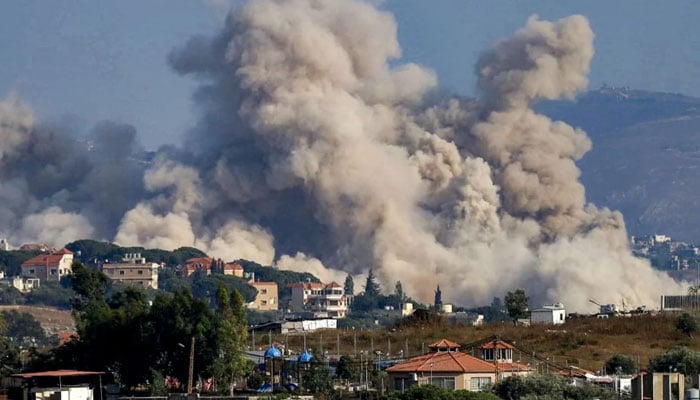
Iranian forces have claimed responsibility for a drone attack targeting key US military and strategic facilities at Ahmed Al Jaber Air Base in Kuwait.

According to Iranian officials, the operation came in response to recent US strikes against Iranian targets. The Iranian military said its forces launched the drone attack as a retaliatory measure following a US strike on a residential building on Iran’s Qeshm Island.

Iranian news agency Tasnim, citing a statement from the military, reported that the drones targeted several strategically important locations at the air base. These reportedly included aircraft hangars, satellite communication systems, and warehouses containing military equipment.

The Iranian military described Ahmed Al Jaber Air Base as a significant hub for US aerial surveillance and military operations in the region. The base plays an important role in supporting American air activities and maintaining regional military capabilities.

The claims come amid heightened tensions between Iran and the United States, with both sides warning of further military action in response to attacks. However, the extent of the reported damage and the impact of the drone strike have not been independently verified.

Similar Posts

  • | |

    Cockroach movement demands release of detained pro…

    India’s youth led Cockroach protest movement called on authorities Monday to release all demonstrators detained during weeks of nationwide rallies, days after the campaign succeeded in forcing the resignation of the country’s education minister. The Cockroach Janta Party, an online organized group that has driven weeks of protests over exam paper leaks and other irregularities in India’s competitive examination system, said it had received reports of students being held in custody, particularly across the states of Assam, West Bengal and Bihar. In a statement, the group said any failure to release detained protesters or drop criminal cases against them would represent a breach of public trust, and warned it would take further action if its demand was not met. The statement followed the resignation two days earlier of Dharmendra Pradhan as education minister, a move that came after repeated failures in the administration of competitive exams fueled widespread anger among young Indians. The Cockroach Janta Party accused the government of going back on earlier assurances that protesters would not face punitive action. The movement has attracted millions of followers on social media since it launched in May under the leadership of Abhijeet Dipke, a 30 year old public relations graduate. Tens of thousands of demonstrators, most of them students, rallied last week in New Delhi and other cities across the country to demand Pradhan’s resignation and broader changes to the examination system. Protests in the capital turned violent on July 20 when demonstrators attempted to march from the Jantar Mantar protest site toward parliament. Police responded with tear gas and batons to break up the crowd, setting off clashes that led to a wave of detentions. The fallout from the crackdown carried into parliament on Monday, where opposition lawmakers repeatedly disrupted proceedings while demanding that the government address last week’s police response. Despite the disruptions, the government pressed ahead with introducing legislation in the lower house aimed at imposing tougher penalties for examination paper leaks. The protest movement has emerged as one of the most significant youth led political mobilizations in India in recent years, drawing comparisons to earlier waves of student activism that used social media to rapidly organize large scale demonstrations. Analysts say the swift resignation of a sitting cabinet minister underscores the growing influence such movements can wield when they combine online organizing with sustained street pressure, though the outcome of the current standoff over detained protesters remains uncertain as both sides continue to weigh their next steps.

  • |

    Iran set to receive Chinese air-defence missiles

    Iran is expected to receive a shipment of Chinese-made shoulder-fired air-defence systems within weeks, according to sources familiar with the reported agreement. The deal involves between 300 and 400 man-portable air-defence systems (MANPADS). The systems reportedly include China’s QW-12 and FN-16 missiles. The agreement is estimated to be worth between $60 million and $70 million. If completed, it would represent one of Iran’s most significant known efforts to strengthen its short-range air-defence capabilities since the country’s recent conflict with the United States and Israel. Three sources familiar with the agreement told Reuters that the deal has already been signed. They spoke anonymously because of the sensitivity of the reported military arrangement. The agreement was reportedly made through Zhongqing Baoshang International Investment, a Hong Kong-based company described by the sources as an intermediary between Iranian interests and the Chinese supplier. Iran has been seeking to rebuild and strengthen its military capabilities after months of fighting. During the conflict, US and Israeli strikes reportedly targeted facilities associated with Iran’s missile, drone and air-defence programmes. Tehran responded with missile and drone attacks. The fighting also exposed difficulties in protecting fixed military installations and strategic infrastructure from advanced aircraft and precision-guided weapons. The reported acquisition of hundreds of MANPADS could provide Iran with a more mobile layer of defence. Unlike large fixed air-defence systems, portable systems can be operated by small teams and moved quickly between locations. The QW-12 and FN-16 are shoulder-fired, infrared-guided surface-to-air missile systems. They are designed to engage low-flying targets, including aircraft, helicopters and drones. Their mobility could allow Iranian forces to deploy them around military facilities, energy infrastructure and other sensitive locations. Defence analysts consider the QW-12 less advanced than some newer Chinese systems. However, they say such weapons can still offer useful short-range protection against drones and low-flying aircraft. The reported delivery route has also drawn attention. According to the sources, the initial shipments are expected to travel by air from Urumqi in western China before passing through Pakistan and reaching Iran. The sources did not clarify whether the equipment would subsequently be transported into Iran by road or by air. Pakistan has rejected any suggestion that it is involved in supplying Chinese air-defence weapons to Iran. The Inter-Services Public Relations (ISPR) described reports of Pakistan’s involvement in the transfer as false and fabricated. A Pakistani Foreign Ministry spokesperson did not immediately respond to requests for comment. China has also denied the reported deal. Its Foreign Ministry described the reports as groundless and said Beijing’s position has consistently focused on promoting peace and ending conflict. Iran’s Foreign Ministry did not immediately respond to requests for comment on the reported agreement. The sources also cautioned that the reported deal could still change. Delivery schedules, quantities and other implementation arrangements may be altered before the weapons reach Iran. Security officials and defence experts have indicated that Iran has been exploring different options to acquire Chinese military equipment. A European security source said authorities were aware of several proposed contracts involving QW-series MANPADS. These reportedly included the QW-12, QW-18 and QW-19 systems. A separate Middle Eastern security source said Iran had sought QW-12 and QW-18 missiles but was not aware of a completed agreement. Iran has invested heavily in domestic missiles, drones and radar systems over the past two decades. However, international sanctions and restrictions have continued to limit its access to foreign defence equipment. The reported purchase highlights Tehran’s continued effort to combine domestic weapons production with foreign military supplies. Two Western intelligence sources and an Iranian official also said Iran had explored land routes for transporting Chinese military equipment and dual-use components. Such routes could potentially provide a more discreet method of moving sensitive supplies and reduce the risk of disruption. The reported agreement comes as military ties between China and Iran appear to be attracting greater attention. A separate agreement involving Chinese anti-ship cruise missiles was also reportedly under discussion. However, it remains unclear whether that deal was ultimately completed.

  • | | |

    Global oil prices drop 12% in three days, Pakistan…

    Pakistani consumers have yet to benefit from a sharp decline in global oil prices, despite international petroleum markets recording a fall of up to 12% over the past three days. The continued high fuel prices have added to the financial burden on households already struggling with rising inflation. Over the last 12 days, fuel prices in Pakistan have increased significantly, with diesel becoming Rs. 65.08 per litre more expensive and petrol rising by Rs. 25.10 per litre. The increases followed the federal government’s decision on July 17 to introduce a daily fuel price adjustment mechanism in line with international market trends. On July 17, petrol was priced at Rs. 310.71 per litre, while high-speed diesel was available at Rs. 323.30 per litre. As of July 29, petrol is being sold at Rs. 335.81 per litre, whereas diesel has climbed to Rs. 388.38 per litre, marking one of the steepest short-term increases in recent years. Although consumers witnessed two minor reductions in petrol prices during this period, the relief was limited. Petrol prices were cut by Rs. 0.35 per litre on July 21 and by Rs. 1.00 per litre on July 27. Diesel prices, however, have not been reduced since the daily pricing mechanism came into effect. International oil markets experienced a sustained upward trend after July 17, contributing to higher domestic fuel prices. However, between July 25 and July 28, global petroleum prices fell sharply, with reports indicating a decline of approximately 12% across major international benchmarks. Despite this significant drop in global prices, Pakistani consumers have not yet received any corresponding reduction at the pump. The absence of immediate relief has sparked concerns among motorists and businesses, particularly those heavily dependent on transportation and logistics, where fuel costs directly affect operating expenses. Economists note that lower international oil prices, if sustained, could create room for a reduction in domestic fuel prices in the coming days. Any adjustment, however, will depend on several factors, including exchange rate movements, government taxes and levies, freight costs, and the pricing formula adopted by the authorities. With inflation continuing to squeeze household budgets, many consumers are hoping the recent decline in global oil prices will soon translate into lower petrol and diesel prices in Pakistan, easing transportation costs and reducing pressure on the overall cost of living.

  • |

    Trump appoints Will Scharf as new White House counsel

    US President Donald Trump has named Will Scharf as the incoming White House counsel and assistant to the president, succeeding David Warrington on September 1, 2026. Warrington, who previously served as general counsel for Trump’s campaign and managed initial administration legal affairs, will be departing for the private sector. Scharf currently serves as the White House staff secretary, a role where he manages the daily flow of papers and documents reaching the president’s desk. In addition to these duties, he chairs the National Capital Planning Commission, where he helped fast-track approvals for a controversial $400 million White House ballroom project. A former federal prosecutor and appellate law clerk, Scharf joined Trump’s personal legal team in 2023. He played a central role in defending Trump across several high-profile legal battles, including the federal election interference case and the landmark presidential immunity ruling before the US Supreme Court. In his new post, Scharf will lead the administration’s legal strategy. His responsibilities will include overseeing executive privilege, managing judicial nominations, liaising with the Department of Justice, and preparing for potential congressional inquiries ahead of the upcoming midterm elections.

  • | | |

    Iran says US military weaker as Hormuz crisis deep…

    TEHRAN: Iran has intensified its rhetoric against the United States as attacks on commercial shipping and stalled peace efforts deepen uncertainty over the future of the war, with Tehran warning that the strategically vital Strait of Hormuz will remain closed unless Washington accepts its conditions. Mohammad Reza Naqdi, an adviser to the commander of Iran’s Islamic Revolutionary Guard Corps, said in an interview with PBS that the US military had proved “weaker than what we perceived” during the five-month conflict. Naqdi said Iran had gained valuable battlefield experience during the war and claimed Tehran would continue to emerge victorious. “The longer this war lasts, the more experience we gain,” he said, arguing that Iranian forces had learned how to confront the US military through direct experience. His comments came as maritime traffic through the Strait of Hormuz dropped sharply. Shipping data showed only eight vessels were tracked through the waterway on Tuesday, below a 10-day average of about 12 and the lowest daily figure since August 5. Before the conflict, the strait typically handled around 130 to 140 vessels a day. The slowdown has heightened fears over global energy supplies because Hormuz is a crucial route for oil and liquefied natural gas shipments. The International Maritime Organization has previously warned of serious risks to vessels and seafarers operating in the area. Shipping attacks raise fresh alarm Tensions also spread to other maritime chokepoints. Four crew members were reportedly killed in a suspected Houthi attack on a cargo vessel in the Bab el-Mandeb Strait, while two Yemeni rescuers were also killed, according to reports cited in the source material. The US military separately said an MH-60 helicopter fired two Hellfire missiles at a Panama-flagged cargo ship after the vessel allegedly ignored warnings linked to a blockade of Iranian ports. Maritime sources said the incident occurred off Pakistan in the Gulf of Oman. The attacks have added to concerns that the conflict could disrupt shipping routes connecting the Gulf with the Red Sea and beyond. Iran sets conditions for reopening Hormuz Iranian security official Mohsen Rezaei said the Strait of Hormuz would not reopen unless Washington agreed to Tehran’s demands, including the release of frozen Iranian assets and an end to conflicts across the region. Iran’s parliament is also preparing legislation that would restrict military and commercial vessels from countries Tehran considers hostile from entering the Gulf without Iranian authorisation. The proposed law is intended to strengthen Iran’s control over the strategically important waterway. US President Donald Trump, meanwhile, has continued to combine threats with suggestions that negotiations could eventually produce a settlement. He has claimed the United States has control over the Strait and warned Iran against further escalation. Oil markets have already reacted to the uncertainty. Brent crude rose 1.4 per cent to $88.91 a barrel, while US crude gained 1.3pc to $83.20. Pakistan seeks diplomatic space Amid the worsening security situation, Pakistan has continued diplomatic engagement with Tehran. Interior Minister Mohsin Naqvi visited Iran and met President Masoud Pezeshkian, with both sides stressing the importance of strengthening bilateral political, economic, trade, cultural and security ties. Pezeshkian praised Pakistan’s commitment to closer relations and said Tehran was ready to expand cooperation with Islamabad. Naqvi said his visit was aimed at following up on understandings reached between the two countries and accelerating implementation of existing agreements. With military rhetoric rising, shipping routes under pressure and negotiations at an apparent impasse, the Strait of Hormuz remains at the centre of a crisis whose consequences could extend far beyond the Middle East.

  • |

    Trump’s Board of Peace plan draws global attention and criticism

    United States President Donald Trump has announced that his Board of Peace has secured an agreement aimed at the complete disarmament of Hamas and other armed groups in Gaza, along with the gradual withdrawal of Israeli forces from the territory. Trump described the agreement as a historic breakthrough and said it would be carried out in stages, with Israeli troops leaving Gaza as disarmament progresses. The Board of Peace was first proposed by Trump in September last year as part of his plan to end the war in Gaza. He later expanded the initiative, saying it would also work to address conflicts in other parts of the world. The board is intended to coordinate peace efforts and oversee reconstruction projects, a role that has traditionally been led by the United Nations. According to its charter, countries joining the board normally serve three year terms. However, nations that contribute one billion dollars toward its activities are eligible for permanent membership. Trump serves as chairman of the initiative and has broad executive authority, including the power to veto decisions and remove members under certain conditions. The White House named Secretary of State Marco Rubio, special envoy Steve Witkoff, former British Prime Minister Tony Blair and presidential adviser Jared Kushner as members of the board’s founding executive team. More than two dozen countries have joined the initiative. Alongside the United States, members include Israel, Saudi Arabia, Egypt and Qatar, all of which have played important roles in recent Middle East diplomacy. Other participating countries include Bahrain, Jordan, Kuwait, Morocco, Turkey and the United Arab Emirates. Outside the region, Albania, Argentina, Armenia, Azerbaijan, Belarus, Bulgaria, Cambodia, El Salvador, Hungary, Indonesia, Kazakhstan, Kosovo, Mongolia, Pakistan, Paraguay, Uzbekistan and Vietnam have also joined. Several major countries and international partners have declined to participate. Britain, France, Germany, Norway, Sweden and the European Union have all decided not to join the initiative. Brazil, Mexico, India and South Africa have also remained outside the board, while China and Russia have chosen not to participate. The Vatican has argued that responsibility for handling international conflicts should remain with the United Nations. Canada also lost its invitation after a diplomatic disagreement between Trump and Prime Minister Mark Carney earlier this year. The Board of Peace received international recognition after the United Nations Security Council approved a United States drafted resolution acknowledging its temporary role in Gaza. Under the resolution, the board will coordinate funding for reconstruction and oversee a temporary international stabilisation force in Gaza through 2027. It must also report its progress to the Security Council every six months. China and Russia abstained from the vote, saying the resolution did not clearly define the United Nations’ role in Gaza’s future administration. Despite official backing, the initiative has attracted widespread criticism from human rights organisations and political observers. Critics argue that the board resembles a colonial style governing structure because it is designed to supervise Gaza without including Palestinian representatives. They have also questioned the inclusion of Tony Blair because of his role in the Iraq war and criticised the participation of countries with poor human rights records. The decision to include Israel on a body responsible for overseeing Gaza has generated additional controversy. Opponents argue that Israel’s ongoing military campaign has left much of Gaza destroyed and displaced its population. Israel maintains that its military actions were carried out in self defence following the Hamas attack in 2023 that killed around 1,200 people and resulted in more than 250 hostages being taken. Since its launch, the Board of Peace has focused mainly on plans for rebuilding Gaza. Trump said member countries have already pledged around seven billion dollars toward reconstruction, although experts estimate that restoring the territory after more than two years of conflict could cost as much as 70 billion dollars. The board has also reportedly held discussions with international companies on future infrastructure and supply chain projects as planning for Gaza’s recovery continues.

Leave a Reply

Your email address will not be published. Required fields are marked *