patriotism has single
| |

‘Patriotism has no single definition’: CJP lea…

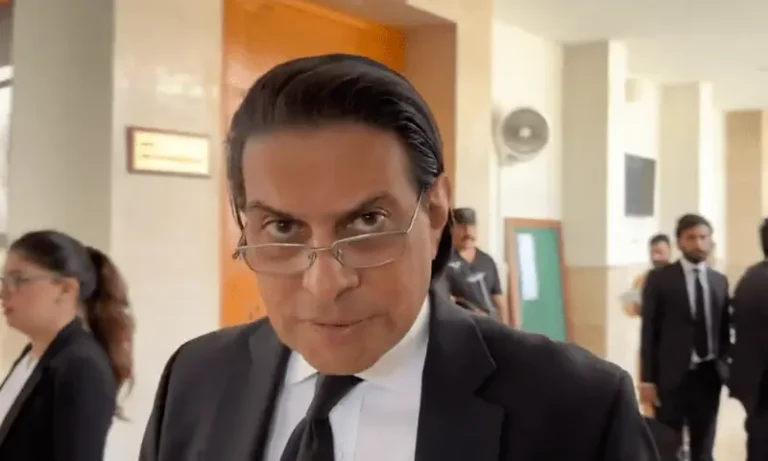
NEW DELHI: Abhijeet Deepke, leader of India’s Cockroach Janata Party (CJP), has criticised the Indian government after being labelled a national security threat, saying patriotism should not be defined according to the government’s expectations.

Speaking in an interview with an American television channel, Deepke said he considered himself a patriot but rejected the idea that citizens must demonstrate their patriotism in a particular way prescribed by the authorities.

Deepke said he was deeply disappointed by the government’s decision to portray him as a threat to national security after he spoke out against the system and established the CJP. He had been living in the United States as an Indian student while holding an Indian passport.

The CJP leader said he had decided to return to India from the United States, describing the move as an opportunity to demonstrate his commitment to the country and challenge the allegations made against him.

His remarks come amid heightened political tensions surrounding youth-led protests and growing criticism of the government over its handling of dissent and political opposition.

Similar Posts

  • |

    Romanian forces execute controlled detonation on Danube to safeguard nuclear energy supply

    Romanian naval forces detonated 180 kilogrammes of explosives to clear a massive rock obstruction in the drought-stricken Danube River, attempting to channel essential cooling water towards the country’s sole remaining functional nuclear reactor at Cernavoda. The blast was designed to clear the riverbed and facilitate the construction of a temporary dam to boost water volume heading to the facility. The intervention follows Romania’s declaration of a nationwide state of emergency for August after record-low water levels forced one reactor to shut down entirely. Romanian Defence Minister Radu Miruta defended the costs of the operation, emphasising that maintaining operational capacity at the facility even for a few additional days far outweighs the financial expenditure. Regional energy strains are mounting simultaneously in neighbouring Hungary, where severe water depletion at the Paks nuclear power station has drastically cut output. Prime Minister Peter Magyar warned that a complete plant shutdown could occur next week without weather relief, urging regional coordination and energy restraint to avoid a wider crisis as low rainfall continues across Eastern Europe.

  • | |

    Police chief: Missing weapon may crack Mir Raza my…

    Karachi Police Chief Azad Khan has said that investigations into the death of Mir Raza are continuing from every possible angle, adding that recovering the missing weapon could be crucial in determining what happened. Speaking to the media, Azad Khan said the initial medical report was prepared by a doctor working under the police surgeon. The medico-legal officer (MLO) examined the body and submitted the report to the police surgeon, who kept it for two days before it was released. He questioned why any concerns regarding the report were not addressed immediately. According to the police chief, the police surgeon neither personally examined the body nor conducted the medical examination, and any reservations about the findings should have been communicated to investigators without delay. Azad Khan said police based their early investigation on the preliminary medico-legal report provided by the MLO. He added that confirmation of gunpowder residue on the deceased’s hands was also essential to the investigation. The police chief said the Crime Scene Unit collected evidence from the scene and handed all relevant material over to the medical team. He also questioned why the medical team did not visit the crime scene, noting that in many countries medical experts inspect the scene themselves, particularly in high-profile cases. He said that if Mir Raza’s family requests it, another medical examination can be conducted. Meanwhile, investigators are looking into the disappearance of the weapon believed to be linked to the case. Azad Khan also confirmed that police are searching for a waste collector seen in a video recorded near the scene. He said locating the missing weapon could help investigators resolve key questions surrounding Mir Raza’s death. The investigation remains ongoing, with police continuing to gather evidence and examine all possible leads.

  • | |

    Mir Raza’s father raises new questions over son?…

    The father of businessman Mir Raza Ali has raised fresh concerns about the investigation into his son’s death. Speaking to the media on Monday, Mir Hassan claimed that his son’s business partner went missing after being questioned by police. He said police had questioned the business partner once. The man was allegedly not seen again after the questioning. Hassan said the family had not been informed about the investigation involving employees of the guest house in Gulistan-e-Johar. Mir Raza’s body was found near the guest house. “We have not been told what investigations were conducted with the employees,” he said. The victim’s father also questioned why CCTV footage from the guest house had not been made public. The latest concerns have emerged as investigators continue to review the circumstances surrounding Mir Raza’s death. The case took a new turn after the businessman’s body was exhumed for a second post-mortem examination. The second medical examination found a firearm injury and several wounds that had occurred before death. It also reported signs of internal bleeding. According to the findings, a bullet entered the upper right side of Mir Raza’s back and exited through the left side of his chest. The bullet fractured his sixth rib and caused internal bleeding. The report also documented injuries to different parts of his head, face, neck and chest. Following the medical findings, police added Section 302 of the Pakistan Penal Code to the case. The section relates to murder. The original FIR had been registered under Section 365, which concerns kidnapping. Mir Raza, 25, was allegedly abducted from the PECHS area. His body was later found in bushes near a wedding hall in Gulistan-e-Johar. Police had earlier suspected that he may have been tortured before being shot. The case initially faced uncertainty over whether Mir Raza had been murdered or had died by suicide. His family, however, consistently rejected the suicide theory. The second post-mortem has strengthened the family’s claim that Mir Raza was killed. Questions had also been raised about the first post-mortem report. Karachi Police Surgeon Dr Summaiya Syed had pointed out several issues in the initial examination. She had questioned why the body was not X-rayed and why hand swabs were not collected for gunshot residue testing. She had also raised concerns over the scientific measurement and photography of firearm injuries. Questions were further raised about the documentation of the bullet’s path and the examination of the entry and exit wounds. Following these developments, police dissolved the previous investigation team. A new team was formed under the leadership of DIG Crime and Investigation Amir Farooqi. The new team was tasked with conducting a fresh investigation based on the latest medical findings. Investigators were also expected to revisit the crime scene. They were directed to re-question the victim’s family and other relevant individuals. The team was also expected to examine forensic, technical, physical and circumstantial evidence. Mir Raza’s family has repeatedly criticised the handling of the case. They have maintained that he was murdered and demanded that those responsible be identified and brought to justice. The family’s lawyer, Jibran Nasir, had also alleged that investigators pressured the family to accept a suicide theory. He called for an independent and impartial investigation. The Sindh government has meanwhile decided to establish a judicial commission headed by a Sindh High Court judge. The commission is intended to oversee a transparent and impartial investigation into Mir Raza’s death.

  • | |

    Afghan man married to Pakistani woman granted bail…

    The Supreme Court of Pakistan has granted bail to an Afghan national, who is married to a Pakistani woman, against surety bonds worth Rs20,000 in a case registered under the Foreign Act. During the hearing, the government lawyer informed the court that the accused had been arrested under the Foreign Act. He argued that the man did not possess a marriage certificate proving his marriage to the Pakistani woman at the time of his arrest. The prosecution further stated that the marriage certificate was obtained in 2024, although the accused claimed to have married in 1993. The lawyer also told the court that the man had no documentary evidence of his entry into Pakistan and was not carrying an Afghan passport. Justice Hashim Kakar questioned the prosecution’s arguments, observing that in many rural areas marriages are conducted without immediately registering a formal marriage certificate. The defence counsel told the court that the couple had married in 1993 and only later obtained official documentation. Justice Kakar also noted that two high courts had already directed authorities to issue the man a domicile, adding that the government itself had allowed Afghan nationals to enter Pakistan in the past. He remarked that they had even been provided ration support. The judge further questioned the prosecution, asking what additional proof of marriage was required when the couple had two children together. He also asked how the authorities had concluded that the accused was an Afghan citizen if he allegedly had no identification or official documents. After hearing the arguments from both sides, the Supreme Court approved the Afghan national’s bail, subject to the submission of surety bonds worth Rs20,000.

  • | |

    Punjab PMS officers oppose plan to create 101 AAC …

    LAHORE: The Provincial Management Service (PMS) Officers Association has strongly opposed the Punjab government’s proposal to create 101 new Additional Assistant Commissioner (AAC) posts, describing the move as unnecessary and harmful to the existing administrative structure. The association argued that the AAC posts had been abolished years ago and their revival was not justified, particularly after the establishment of the Punjab Enforcement and Regulatory Authority (PERA), which was created to strengthen enforcement and regulatory functions across the province. During an executive committee meeting chaired by Association President Qamar Zaman Qaisrani, members unanimously decided to raise their concerns with senior government officials. A delegation of the association is expected to meet the Punjab services secretary and the additional chief secretary to seek a review of the proposed decision. The association warned that if its concerns remain unaddressed, PMS officers across Punjab will begin a province-wide protest campaign. As part of the first phase, officers plan to wear black armbands while performing official duties to register their protest against the government’s decision. PMS officers believe the creation of the new posts would place a significant financial burden on the provincial treasury. According to the association’s estimates, establishing one Additional Assistant Commissioner post, including official facilities, office infrastructure, staff, transport and operational expenses, would cost approximately Rs46.8 million. They claim that creating all 101 posts would require nearly Rs4.73 billion initially, in addition to recurring expenditures on salaries, allowances and other administrative costs. The association further expressed concerns over what it described as long-standing issues within the provincial bureaucracy. These include delays in promotion boards, alleged discrimination in transfers and postings, and the appointment of junior officers to positions traditionally reserved for senior officials. Former administrative secretary Yawar Mehdi also commented on the proposal, saying that efforts to improve public service delivery were welcome if they genuinely strengthened governance. However, he stressed that introducing additional administrative positions should not weaken the existing civil service structure or negatively affect the career progression of Provincial Management Service officers.

  • | | |

    Iran says every threat will strengthen its militar…

    TEHRAN: Iran’s acting Defence Minister, Seyed Majid Ibn al-Reza, has declared that Tehran will continue strengthening its military capabilities by treating every threat from its adversaries as genuine, even as the United States signals a renewed diplomatic effort. His remarks came after US President Donald Trump announced that Washington had postponed a planned military strike against Iran in favour of restarting negotiations aimed at reducing tensions in the Middle East. In a statement posted on social media platform X on Monday, Ibn al-Reza said Iran viewed recent statements from its enemies as part of a broader campaign of psychological and cognitive warfare. However, he stressed that Tehran would not dismiss any warning, regardless of its nature. “We consider every threat to be real and deserving of a serious response,” the acting defence minister said, adding that Iran’s strategy was to transform every external challenge into an opportunity to reinforce its military preparedness and national defence. He said the Iranian armed forces would neither be caught off guard nor remain passive in the face of rising regional tensions. Instead, every warning or hostile statement would serve as a catalyst for expanding the country’s defensive capabilities and maintaining operational readiness. The comments underscore Iran’s continued emphasis on deterrence at a time when uncertainty surrounds the future of US-Iran relations and broader security dynamics across the Gulf. Earlier, President Trump announced that the United States had suspended plans for military action against Iran after requests from Tehran and several Middle Eastern countries to give diplomacy another chance. Writing on his social media platform, Truth Social, Trump claimed the US military had been fully prepared for an operation of unprecedented scale, describing it as one of the largest potential military actions since the Second World War. According to Trump, the proposed negotiations focus on two key objectives: ensuring the immediate and uninterrupted reopening of the Strait of Hormuz for global shipping and addressing concerns over Iran’s nuclear programme. The Strait of Hormuz remains one of the world’s most strategically important maritime routes, carrying a significant share of global oil exports. Any disruption in the waterway has the potential to affect international energy markets and regional stability. While Washington has presented the renewed talks as an opportunity to prevent further escalation, Iranian officials continue to insist that the country will not relax its military vigilance during the diplomatic process. The latest exchange of statements reflects the delicate balance between diplomacy and deterrence, with both sides signalling a willingness to negotiate while simultaneously emphasizing military preparedness amid persistent regional tensions.

Leave a Reply

Your email address will not be published. Required fields are marked *