global diesel prices
|

Global diesel prices hit record highs, further rises possible

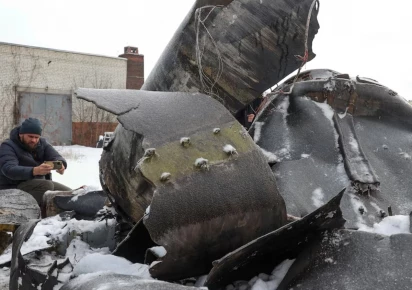
LONDON, UK – Diesel prices have rallied to record highs in Europe and the United States and are near record levels in Asia as wars in Iran and Ukraine disrupt supplies from major producers including Russia, Saudi Arabia and the United Arab Emirates, leaving few options to prevent further gains.

Diesel futures in Europe closed at an all-time high last week, having more than doubled from their level at the beginning of 2026, after supply disruptions spread to the Red Sea, where Saudi Arabia loads most of its diesel.

In Asia, diesel prices are elevated as a result of Middle East and Russian supply disruptions and close to record levels.
Must Read

Fuel prices rise again with big hike on September 22


Fuel prices rise again with big hike on September 22

Asian diesel prices eased from the March record high of more than $200 a barrel, hovering at around $180 a barrel on September 18. 

Current levels are still twice the pre-war values.

China’s lower diesel exports in the aftermath of the Iran war likely tightened global supplies, as the country’s shipments declined by 26% in April-June from a year earlier due to a government decision to limit refined product exports.

But China’s diesel exports recovered to reach their highest in nearly 2.5 years in August at 320,000 bpd, resulting in lower domestic stocks.

The wars in the Middle East and Ukraine have damaged oil refineries in the region, and refineries elsewhere are working hard to make fuels. In the United States, for example, refineries operated at the highest level in eight years in late August, according to the International Energy Agency.

“A key issue is that many refineries around the world are already stretched to capacity,” the International Energy Agency said in a newsletter on Monday, September 21. “This leaves few available options to prevent a further tightening of supplies and higher prices in the coming months.”

Middle East diesel exports halved from March to August compared to a year earlier, averaging 800,000 barrels per day, according to shipping data from Kpler. The Middle East supplied nearly 41% of Europe’s diesel imports in 2025, Kpler data showed.

“Any further disruption to Red Sea flows risks tightening an already stretched global diesel market,” said Kpler analyst George Shaw, adding that global diesel markets remain vulnerable as refining capacity continues to be the key pinch point.

Russia’s refineries attacked, diesel exports banned

Russia banned diesel exports in July as Ukrainian drone attacks cut Russian refinery production.

Ukraine and Russia have continued attacks on each other’s energy infrastructure despite an announcement by US President Donald Trump last week that they had agreed to stop. Ukrainian President Volodymyr Zelenskiy said on Sunday, September 20, he will meet with Trump in the coming days.

Russia, the world’s second-biggest diesel exporter after the United States, supplied significant volumes of diesel to Turkey and Brazil before the ban, prompting such importers to seek alternative supplies since then.

In Europe – historically a net importer of diesel – stocks at the key refining and storage hub of Amsterdam-Rotterdam-Antwerp were at their lowest level for this time of the year on September 10, according to data from Insights Global.

US retail diesel price hits record high

In the US, average retail diesel prices climbed above $6 a gallon for the first time on record this month.

Inventories remain below normal seasonal levels, even as refiners have been running near full tilt. Although diesel stocks rose by roughly 600,000 barrels last week, at 96.97 million barrels they remain nearly 15% below the average for the last five years for the second week in September. – Rappler.com


Similar Posts

  • |

    Yemeni forces launch 133 operations against Houthis

    Yemeni government forces carried out 133 operations against Houthi militia positions over the past 24 hours, according to a military spokesperson. The spokesperson said the operations targeted key Houthi military infrastructure, including weapons storage facilities and a modern command-and-control centre. Government forces also struck several military vehicles used by the militia. The attacks involved a combination of rocket launchers, artillery fire and drones, with the military saying the strikes focused on disrupting the Houthis’ weapons capabilities and command structure. The Yemeni government forces have also released video footage showing several of the attacks on Houthi positions. The footage reportedly captures military operations targeting weapons facilities, vehicles and other sites linked to the militia. The latest operations come amid continued fighting between Yemen’s internationally recognised government forces and the Iran-aligned Houthi movement, with both sides continuing to target military positions in areas affected by the conflict. The Yemeni military spokesperson said the operations formed part of ongoing efforts to weaken the Houthis’ military capabilities and prevent the group from reinforcing its positions. The strikes focused on facilities and equipment that the militia allegedly uses to support its operations on the ground. According to the military, the use of drones, artillery and rocket systems allowed government forces to target several locations simultaneously. The strikes also aimed to disrupt the movement of Houthi fighters and limit their ability to transport weapons and military equipment. The Yemeni government forces said they would continue operations against Houthi positions as part of their efforts to regain control of areas held by the militia. The latest footage was released as the conflict continues to pose a major security challenge in Yemen.

  • |

    North Korean missile unit reportedly deploys to Russia for Ukraine war

    Ukraine’s military intelligence claims that a North Korean missile unit has started deploying to western Russia, marking what could become a major expansion of military cooperation between Moscow and Pyongyang. According to Ukrainian officials, the unit may eventually be equipped with up to 120 ballistic missiles and six launchers for use in attacks against Ukraine. Andrii Cherniak, an official with Ukraine’s Main Directorate of Intelligence, said around 90 North Korean personnel are expected to be stationed in Russia’s Voronezh region as part of the Russian military’s 112th Missile Brigade. He added that discussions between senior Russian and North Korean officials next month are expected to determine the final deployment plan and missile numbers. Ukraine says North Korea has already delivered another batch of 40 KN-23 and KN-24 ballistic missiles along with military personnel. These missiles reportedly have a longer range and larger payload than Russia’s Iskander missiles, although Ukrainian military sources believe they are less accurate and have caused significant civilian casualties during previous strikes. The reported deployment comes as Russia has resumed using North Korean-made ballistic missiles after nearly a year. Ukrainian authorities say two such missiles were launched last week, including one that struck the village of Radushne in central Ukraine, reportedly killing at least five members of the same family. Ukraine remains heavily dependent on advanced air defence systems, particularly US-made Patriot batteries, to intercept ballistic missiles. Military analysts warn that an increase in North Korean missile supplies would place additional pressure on Ukraine’s already stretched air defence network, especially ahead of the winter months when Russia has previously targeted the country’s energy infrastructure. Cherniak said intelligence suggests Russia intends to integrate North Korean missile forces into its operations, although the exact role of North Korean personnel has not yet been confirmed. He also stated that about 9,500 North Korean troops remain in Russia’s Kursk region, though they are not currently taking part in direct combat operations against Ukraine. Russia and North Korea have strengthened military ties since Moscow launched its full-scale invasion of Ukraine in 2022. The two countries signed a mutual defence agreement in 2024, while Kyiv accuses Pyongyang of supplying millions of artillery shells, ballistic missiles and thousands of troops to support Russia’s war effort.

  • | |

    Iran claims US deployed all weapons reserved for World War III

    Iran’s Armed Forces spokesperson Brig. Gen. Abolfazl Shekarchi has claimed that the United States has deployed every weapon it had reserved for a potential Third World War against Iran, describing the recent military confrontation as unprecedented. Speaking at a meeting in Tehran, Shekarchi said Iran continued developing its strategic missile program throughout the conflict and did not halt production during either the fighting or subsequent ceasefire periods. He said maintaining missile production remained a key element of Iran’s national defense strategy despite mounting international pressure. The military spokesman also claimed that foreign intelligence agencies have failed to locate Iran’s missile production facilities despite possessing extensive intelligence capabilities. He said the country’s missile infrastructure remains secure and operational, allowing Iran to preserve its strategic deterrence. Shekarchi further alleged that the United States suffered major strategic setbacks during the recent conflict. He claimed that decades of American investment in military bases across West Asia had been severely damaged during the fighting. His remarks come amid continuing tensions between Iran and the United States following recent regional hostilities, with both sides continuing to exchange sharp rhetoric over military capabilities and regional security. The United States has not publicly responded to Shekarchi’s latest claims.

  • |

    Stray SpaceX rocket believed to have struck Moon

    A discarded section of a SpaceX Falcon 9 rocket is believed to have crashed into the Moon, giving scientists a rare opportunity to study the effects of a known impact on the lunar surface. The object, a 4,000-kilogram upper stage left in space after a January 2025 mission, was expected to strike the Moon at around 07:35 BST after spending more than a year drifting through space. Scientists say the rocket stage gradually shifted onto a collision course due to the combined gravitational pull of the Earth, Moon and Sun. The impact is not considered dangerous to Earth, according to NASA, which plans to analyse the event to improve its understanding of lunar geology and refine methods for tracking objects in space. Although the collision itself was too faint to be seen with the naked eye, astronomers using powerful telescopes are monitoring the Moon for signs of a fresh crater and a plume of dust created by the impact. Researchers are now comparing before-and-after images of the lunar surface to identify the exact location of the strike. NASA’s Lunar Reconnaissance Orbiter and South Korea’s Danuri lunar spacecraft are expected to capture images of the impact site in the coming days. Scientists say processing and analysing the data could take several days or even weeks before the first confirmed images are released. Experts describe the incident as a valuable scientific experiment because the size, speed and mass of the object were known in advance. Unlike natural meteor impacts, the predictable nature of the collision allows researchers to better understand how craters form and how lunar material behaves after a high-speed impact. However, astronomers also say the incident highlights the growing problem of space debris. Thousands of human-made objects now remain on or around the Moon, and experts warn that increasing congestion in space could pose challenges for future exploration missions if debris is not managed more effectively. Meanwhile, SpaceX continues its regular launch operations. The company successfully launched another Falcon 9 rocket from Florida on a separate mission carrying satellites into orbit, underscoring the growing pace of space activity as agencies and private companies expand their exploration programmes.

  • |

    Google’s new AI satellite image tool raises fears over fake visuals

    Google has introduced a new artificial intelligence feature for Google Earth that allows users to create AI generated images using satellite, aerial and three dimensional mapping data. While the company says the tool is designed to support creative and practical uses, researchers and digital investigation experts have expressed concern that it could make it easier to produce convincing fake satellite images. The new feature, called Create Image, was launched on Thursday and uses Google’s Nano Banana 2 image generation technology. It enables users to zoom into locations on Google Earth and generate realistic visualisations within seconds using existing mapping data. Google said the tool is intended to help people visualise historical scenes, develop real estate plans and explore other creative projects. However, experts who specialise in verifying online content warn that the technology could be exploited to spread false information and manipulate public opinion. Open source intelligence researchers say Google Earth has long been considered one of the most trusted resources for checking locations, analysing events and verifying images. They fear that adding AI generated content to the platform could blur the line between authentic satellite imagery and fabricated visuals. Digital investigations expert Henk Van Ess criticised the update, arguing that Google spent years building public trust in its mapping service but has now introduced a feature capable of generating fictional scenes. He warned that even if an AI generated image is not perfect, it could still appear believable because it is linked to a platform widely regarded as reliable. Brady Africk, a research analyst at the American Enterprise Institute who specialises in satellite image analysis, also raised concerns about the technology. He said the update makes it easier to create realistic fake satellite images that could spread rapidly on social media and mislead the public. According to Africk, the growing availability of AI generated imagery could also weaken confidence in genuine satellite photographs. He warned that journalists, researchers and fact checkers may find it increasingly difficult to distinguish authentic images from manipulated ones, making investigations more challenging. In response to the criticism, Google said all images created through the new feature include its SynthID digital watermark technology. The invisible watermark is embedded into AI generated content to help identify that it was produced using Google’s artificial intelligence tools. The company also said users can ask its Gemini chatbot to check whether an image contains a SynthID watermark, providing an additional method for verifying AI generated content. The launch comes as technology companies continue expanding the use of generative artificial intelligence across their products. At the same time, governments, researchers and technology experts are calling for stronger safeguards to prevent AI tools from being used to create misleading content or spread disinformation.

Leave a Reply

Your email address will not be published. Required fields are marked *