north korean missile
|

North Korean missile unit reportedly deploys to Russia for Ukraine war

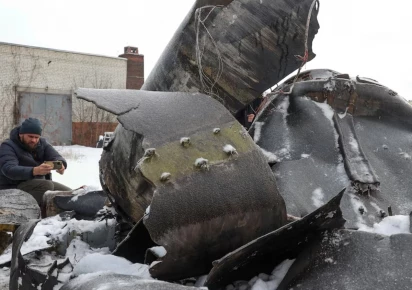
Ukraine’s military intelligence claims that a North Korean missile unit has started deploying to western Russia, marking what could become a major expansion of military cooperation between Moscow and Pyongyang. According to Ukrainian officials, the unit may eventually be equipped with up to 120 ballistic missiles and six launchers for use in attacks against Ukraine.

Andrii Cherniak, an official with Ukraine’s Main Directorate of Intelligence, said around 90 North Korean personnel are expected to be stationed in Russia’s Voronezh region as part of the Russian military’s 112th Missile Brigade. He added that discussions between senior Russian and North Korean officials next month are expected to determine the final deployment plan and missile numbers.

Ukraine says North Korea has already delivered another batch of 40 KN-23 and KN-24 ballistic missiles along with military personnel. These missiles reportedly have a longer range and larger payload than Russia’s Iskander missiles, although Ukrainian military sources believe they are less accurate and have caused significant civilian casualties during previous strikes.

The reported deployment comes as Russia has resumed using North Korean-made ballistic missiles after nearly a year. Ukrainian authorities say two such missiles were launched last week, including one that struck the village of Radushne in central Ukraine, reportedly killing at least five members of the same family.

Ukraine remains heavily dependent on advanced air defence systems, particularly US-made Patriot batteries, to intercept ballistic missiles. Military analysts warn that an increase in North Korean missile supplies would place additional pressure on Ukraine’s already stretched air defence network, especially ahead of the winter months when Russia has previously targeted the country’s energy infrastructure.

Cherniak said intelligence suggests Russia intends to integrate North Korean missile forces into its operations, although the exact role of North Korean personnel has not yet been confirmed. He also stated that about 9,500 North Korean troops remain in Russia’s Kursk region, though they are not currently taking part in direct combat operations against Ukraine.

Russia and North Korea have strengthened military ties since Moscow launched its full-scale invasion of Ukraine in 2022. The two countries signed a mutual defence agreement in 2024, while Kyiv accuses Pyongyang of supplying millions of artillery shells, ballistic missiles and thousands of troops to support Russia’s war effort.

Similar Posts

  • | | |

    Pakistan expects US response on $10bn stabilisatio…

    ISLAMABAD: Pakistan expects to receive a response from the United States within the next few months on its request for a proposed $10 billion bilateral exchange stabilisation facility. The proposed arrangement is aimed at strengthening confidence in Pakistan’s currency and foreign exchange market. It could also help the country improve access to international capital markets and attract more private investment. Adviser to the Finance Minister Khurram Schehzad said discussions between Pakistan and the US over the proposed facility had been constructive. He said the facility could act as a financial backstop for Pakistan and send a positive signal to investors about the stability of the country’s currency market. Pakistan formally approached US Treasury Secretary Scott Bessent last month for the proposed Bilateral Exchange Stabilisation Support Facility. The arrangement could have a maturity period of up to five years. Finance Minister Muhammad Aurangzeb has clarified that the proposed $10 billion arrangement should not be viewed as a conventional loan or credit line. He said the main objective was to provide confidence regarding exchange-rate and currency stability. Such a signal, he added, could help Pakistan return to international markets to raise funds. The finance minister said the request was being considered by the US Treasury Department and that progress was expected by September. If approved, the facility could strengthen Pakistan’s foreign exchange reserves and ease pressure on the rupee. It could also reduce the country’s dependence on multilateral financing. The proposed support comes as Pakistan continues efforts to improve its external financial position under an International Monetary Fund programme. The IMF programme has required the government to implement difficult fiscal and monetary measures, including higher taxes, spending controls and structural reforms. Pakistan has also been seeking to improve its economic and diplomatic engagement with Washington. Its recent diplomatic role in regional developments has increased expectations that stronger relations with the United States could lead to greater economic cooperation. Meanwhile, Pakistan’s credit outlook received a boost after Moody’s upgraded its sovereign rating from Caa1 to B3. However, the rating agency maintained that Pakistan continues to face challenges related to governance, rule of law, corruption control and government effectiveness. Although the B3 rating represents an improvement, it remains well within the speculative category and is several levels below investment grade.

  • | |

    Pezeshkian rejects pressure as Iran seeks path to de-escalation

    Iranian President Masoud Pezeshkian has said Tehran will not surrender to external pressure or compromise its military and defensive capabilities, while stressing that Iran remains open to diplomacy if it can help protect the country’s interests. In a televised interview marking the second anniversary of his presidency, Pezeshkian said Iran would resist any attempt to force it into submission. He maintained that Tehran had the right to preserve its defence capabilities and would not accept demands aimed at weakening its military strength. The Iranian president described his country’s response during the latest conflict with the United States and Israel as an act of self-defence. He praised Iran’s armed forces, including the Army, Islamic Revolutionary Guard Corps and Aerospace Forces, for their performance during the fighting. Pezeshkian also accused Washington and Tel Aviv of attempting to bring Gulf countries together against Iran. He said Tehran was working to prevent further regional divisions and maintained that Muslim countries should cooperate regardless of sectarian differences. He rejected claims that Iran sought territorial expansion or intended to attack neighbouring states. According to Pezeshkian, Iran wanted peaceful relations with countries in the region and had no plans to seize territory or expand its borders. The president also questioned why some regional countries allowed their territories to be used for attacks against Iran. He said Tehran did not seek confrontation with those states but would respond against locations from which it was attacked. Meanwhile, senior US military officials are reportedly pushing for a path toward de-escalation as concerns grow over the effectiveness and sustainability of further military action against Iran. According to a report, Chairman of the Joint Chiefs of Staff Gen Dan Caine has privately urged senior Trump administration officials to explore options for ending the conflict. The discussions reportedly involved senior figures including CIA Director John Ratcliffe, Secretary of State Marco Rubio and Vice President JD Vance. US officials are said to believe that continued air operations alone may not be enough to force Tehran to accept Washington’s demands. There are also concerns about Iranian retaliation against US allies and regional energy infrastructure. The report further indicated that shortages of some US weapons, including air-defence interceptors and precision munitions, could make a prolonged conflict increasingly difficult. Despite the concerns, US officials reportedly believe American forces could still inflict significant damage on Iran if President Donald Trump orders further escalation. At the same time, Washington is examining diplomatic options that could allow Trump to present an agreement as a political achievement. A possible agreement between Iran and Oman could provide a major breakthrough in efforts to reopen the Strait of Hormuz, according to a US official. Washington expects Tehran and Muscat to reach an understanding that would allow commercial shipping and oil traffic to resume through the strategic waterway. The United States has indicated that it could lift its blockade of Iranian ports once commercial shipping is restored and Iran fulfils its commitments. The Strait of Hormuz is one of the world’s most important energy routes, with a significant share of global oil supplies traditionally passing through it. Disruptions caused by the conflict have contributed to higher energy prices and increased inflationary pressure. The latest diplomatic activity follows several previous claims that a deal over the strait was close, although Iranian officials have repeatedly denied that formal negotiations were taking place. Regional tensions have also prompted Pakistan, Saudi Arabia and Türkiye to strengthen military cooperation through a joint defence agreement signed in Makkah. Under the agreement, an armed attack against any one of the three countries would be treated as an attack against all three. The countries said the pact was intended to strengthen collective deterrence and protect regional security. Türkiye stressed that the agreement was defensive and was not directed against any particular country. However, the deal comes amid heightened tensions involving Iran and growing concerns about the conflict spreading across the Gulf and wider Middle East. Meanwhile, diplomatic efforts are continuing on the Lebanon front, where officials are discussing arrangements for monitoring the potential disarmament of Hezbollah under a US-backed framework. Pezeshkian has also defended diplomatic engagement with Washington despite opposition from Iranian hardliners. The Iranian president argued that dialogue could be useful if it allowed Tehran to safeguard its national interests and secure its rights.

  • |

    France approves social media ban for under-15s

    France has approved legislation that will restrict children under the age of 15 from using social media platforms, with the new rules expected to take effect in January 2027. Under the law, social media platforms will have to verify the age of every user before allowing access to their services. The government says the measure aims to protect children from the potential harmful effects of excessive social media use, particularly concerns surrounding mental health, online safety, and exposure to inappropriate content. The move would make France the first European country to introduce such a broad age-based restriction on social media access. Authorities believe stronger safeguards are necessary as concerns continue to grow over the impact of social media on young people’s emotional well-being and development. The new rules will require social media companies to introduce reliable age-verification systems to prevent children below the minimum age from creating or maintaining accounts. The government is expected to work with technology companies and regulators to ensure that platforms comply with the new requirements. The decision comes as several other countries consider similar measures. The United Kingdom and the European Union are also examining ways to strengthen protections for children online, including possible age restrictions and tighter controls on social media platforms. Supporters of the French legislation argue that children need greater protection from the risks associated with prolonged social media exposure. However, the policy may also face challenges over privacy, enforcement, and how platforms can verify users’ ages without collecting excessive personal information.

  • |

    Türkiye, Saudi Arabia and Pakistan to establish new defence cooperation mechanisms

    ANKARA: Türkiye, Saudi Arabia and Pakistan are set to establish new political and military coordination mechanisms following the signing of a landmark joint defence agreement, as the three countries move to strengthen strategic cooperation amid growing security concerns in the region. Türkiye’s Defence Ministry said on Thursday that the framework agreed by the three countries would bring senior political and military leadership into a structured mechanism aimed at enhancing coordination on defence and security matters. The three nations signed the Makkah Joint Defence Agreement on August 7, marking a significant development in their security relations. The agreement comes at a time of heightened tensions across the Middle East, with the escalation of regional hostilities raising security concerns among Gulf states and other countries in the region. Under the agreement, an armed attack against any one of the three countries would be treated as an attack against all members. The provision establishes a collective-defence commitment similar in principle to the collective security arrangement contained in Article 5 of the North Atlantic Treaty Organisation (NATO). High-level political and military coordination According to the Turkish Defence Ministry, the new mechanisms will involve the defence ministers, foreign ministers and military chiefs of Türkiye, Saudi Arabia and Pakistan. The arrangement is expected to provide the three countries with a regular platform for consultations on regional security developments, defence policy and potential threats. It could also facilitate closer coordination between their armed forces and government institutions. The agreement reflects the growing strategic importance of cooperation between the three Muslim-majority countries, particularly as regional security challenges continue to evolve. Joint military exercises planned The Turkish ministry also said the three countries were planning joint military exercises under the new defence framework. Such exercises could provide opportunities for their armed forces to improve interoperability, exchange operational experience and strengthen their ability to coordinate during potential security crises. Defence cooperation is also expected to extend beyond military exercises. The Turkish side said the agreement could pave the way for greater collaboration in the defence industry, including joint production, technology sharing and other forms of industrial cooperation. The expanded defence-industry partnership could allow the three countries to explore opportunities for developing and producing defence equipment together while sharing technical expertise and capabilities. Agreement follows rising regional tensions The pact was signed against the backdrop of heightened tensions in the Middle East, which have raised concerns over the security of Gulf countries and critical energy infrastructure. The escalation has also highlighted the importance of collective security arrangements and closer coordination among regional powers. For Pakistan, the agreement represents another step towards strengthening defence and strategic ties with Türkiye and Saudi Arabia. Islamabad has traditionally maintained close military and diplomatic relations with both countries. The agreement is therefore expected to broaden cooperation from traditional bilateral defence relations towards a more structured trilateral framework involving political consultations, military coordination and defence-industrial collaboration. Pakistan’s Deputy Prime Minister and Foreign Minister Ishaq Dar has also clarified the scope and intent of the Makkah agreement, stressing the nature of the arrangement and its broader security objectives. The three countries are now expected to work out the details of the new mechanisms, including the structure of ministerial consultations, military coordination and proposed joint exercises.

  • | |

    Public projects are people’s right, not a gift: …

    ISLAMABAD, July 26: Pakistan Peoples Party (PPP) Chairman Bilawal Bhutto Zardari has said that facilities and development projects built for the public should not be described as gifts. He said these projects are the people’s right. In a video statement, Bilawal said people were being told about promises involving buses, roads and airports. He welcomed every project aimed at improving public facilities. He said he would welcome every new bus service. He would also welcome every road, hospital and airport built for the people. However, Bilawal stressed that such facilities should not be presented as gifts to the public. He said the people have a right to better transport, healthcare, roads and other basic services. The PPP chairman said his party had also taken practical steps instead of making only promises. He claimed that around 3,000 new employment opportunities had been created through PPP initiatives. Bilawal also spoke about Mirpur Airport. He said he had personally worked to secure funds for the airport in the previous budget. He said the allocation was made during the budget process to support the airport project. He presented the initiative as part of efforts to improve facilities for the people of the region. Bilawal also criticised his political opponents while discussing development work in Azad Jammu and Kashmir. He said it appeared that Pakistan Muslim League-Nawaz leaders Nawaz Sharif and Maryam Nawaz were standing with their minister. The PPP chairman also referred to a stadium where his political opponents had recently addressed a gathering. He said the stadium was constructed during a previous PPP government. Bilawal said his focus was not limited to development projects. He said he wanted the people of Kashmir to receive their fundamental political and economic rights. He specifically mentioned the right to governance, ownership and employment. According to Bilawal, providing these rights to the people would be more important than announcing development projects as gifts. He said people should have ownership over the resources and development of their region. They should also have access to employment opportunities. Bilawal maintained that governments must fulfil their responsibilities towards citizens. Public infrastructure, he said, should be viewed as an entitlement. He added that roads, hospitals, transport services and airports are built using public resources. Therefore, they should not be used as political gifts.

  • | |

    Over 1,300kg explosives used in deadly Tank attack…

    DERA ISMAIL KHAN, July 26: Khyber Pakhtunkhwa Governor Faisal Karim Kundi has revealed that more than 1,300 kilogrammes of explosives were used in the recent attack on a security checkpost in Tank. The governor made the remarks while speaking to journalists at the Regional Police Office in Dera Ismail Khan. He had attended a security briefing on the law and order situation in the region. Kundi described the attack on the Manji Khel checkpoint as a major and tragic security incident. He said 15 people, including 14 security personnel, lost their lives in the attack. Personnel from the Pakistan Army, police and Forest Department were among those who were martyred, he said. The governor said the huge quantity of explosives used in the attack reflected the seriousness and scale of the militant threat facing the province. He called for a united national strategy to counter terrorism. He said the federal and provincial governments, security forces and the public must work together to defeat militant groups. Kundi said Pakistan was facing security challenges from both internal and external sources. He praised the sacrifices made by security forces to protect the country and its people. The governor also alleged that terrorist groups were using Afghan territory to carry out attacks against Pakistan. He further claimed that weapons left behind in Afghanistan by international forces were being used in attacks, particularly in Khyber Pakhtunkhwa. Kundi said neither the people nor the security forces would be intimidated by such attacks. He praised the courage of injured personnel whom he met during his visit. He said the recommendations presented by regional police officials would be conveyed to the federal government. He also said he would raise the issue of improving compensation and support packages for injured security personnel with Interior Minister Mohsin Naqvi and the provincial government. The governor stressed that supporting the families of martyred and injured personnel was a collective responsibility. He assured them that the government would continue to support them. Kundi also called for stronger coordination between the federal and provincial governments. He said Islamabad and Peshawar must work closely to tackle the growing security threat. He urged authorities to expand intelligence-based operations across Khyber Pakhtunkhwa. He said he would discuss the matter with the provincial chief minister. According to the military’s media wing, militants had attempted to breach the perimeter of the joint police checkpost in Tank. Security forces responded quickly and killed 12 attackers. The attackers also drove an explosives-filled vehicle into the checkpoint’s perimeter wall. The resulting blast caused extensive damage to the infrastructure. The Tank attack comes as Khyber Pakhtunkhwa continues to face a persistent threat from militant violence. In another recent operation in South Waziristan, security forces foiled a suicide attack and killed four terrorists, including the would-be suicide bomber. Kundi said restoring peace in Khyber Pakhtunkhwa and surrounding areas remained a national priority. He praised police personnel for continuing to perform their duties despite difficult security conditions.

Leave a Reply

Your email address will not be published. Required fields are marked *