mali junta pardons
|

Mali junta pardons French national sentenced over alleged coup plot

Malian junta leader President Assimi Goïta has granted a presidential pardon to French national Yann Vezilier, who was serving a 20-year prison sentence following allegations of orchestrating a coup attempt against the military government.

Vezilier was detained last year alongside several Malian military officers and political figures. Authorities accused him of acting on behalf of French intelligence services to destabilize the regime in Bamako. France’s Foreign Ministry consistently rejected the espionage allegations as unfounded.

Malian state officials announced that the clemency order includes Vezilier’s immediate deportation from Malian territory. The unexpected decision comes during a period of ongoing political instability and severe security challenges, with insurgent groups expanding blockades around key cities, including the capital, Bamako.

Similar Posts

  • |

    Congolese health officials intercept river boat to test 300 passengers following suspected Ebola death

    Health authorities in the Democratic Republic of the Congo have intercepted a river boat carrying more than 300 passengers near Kinshasa to perform emergency screening following the death of a passenger suspected of having contracted Ebola. The vessel was stopped in Maluku, located approximately 65 kilometres upstream from the capital, where public health teams deployed a mobile laboratory to conduct clinical evaluations and temperature checks on all individuals aboard. Medical personnel collected blood samples from four passengers exhibiting feverish symptoms, with laboratory results expected to confirm whether the virus is present. The precautionary intervention follows the death of a 32-year-old man who travelled on the boat and later tested positive for suspected symptoms of the disease. Health officials face conflicting accounts regarding the origin of the vessel and where the deceased passenger boarded, as discrepancy remains between regional health directors regarding whether the trip originated in Mongala province or in Kisangani, the capital of Tshopo province, where an active Ebola outbreak is ongoing. In response to the broader regional health emergency, the Africa Centres for Disease Control and Prevention announced plans to expand the administration of vaccines and antiviral treatments, including remdesivir, across affected provinces to contain further transmission.

  • | |

    Punjab PMS officers oppose plan to create 101 AAC …

    LAHORE: The Provincial Management Service (PMS) Officers Association has strongly opposed the Punjab government’s proposal to create 101 new Additional Assistant Commissioner (AAC) posts, describing the move as unnecessary and harmful to the existing administrative structure. The association argued that the AAC posts had been abolished years ago and their revival was not justified, particularly after the establishment of the Punjab Enforcement and Regulatory Authority (PERA), which was created to strengthen enforcement and regulatory functions across the province. During an executive committee meeting chaired by Association President Qamar Zaman Qaisrani, members unanimously decided to raise their concerns with senior government officials. A delegation of the association is expected to meet the Punjab services secretary and the additional chief secretary to seek a review of the proposed decision. The association warned that if its concerns remain unaddressed, PMS officers across Punjab will begin a province-wide protest campaign. As part of the first phase, officers plan to wear black armbands while performing official duties to register their protest against the government’s decision. PMS officers believe the creation of the new posts would place a significant financial burden on the provincial treasury. According to the association’s estimates, establishing one Additional Assistant Commissioner post, including official facilities, office infrastructure, staff, transport and operational expenses, would cost approximately Rs46.8 million. They claim that creating all 101 posts would require nearly Rs4.73 billion initially, in addition to recurring expenditures on salaries, allowances and other administrative costs. The association further expressed concerns over what it described as long-standing issues within the provincial bureaucracy. These include delays in promotion boards, alleged discrimination in transfers and postings, and the appointment of junior officers to positions traditionally reserved for senior officials. Former administrative secretary Yawar Mehdi also commented on the proposal, saying that efforts to improve public service delivery were welcome if they genuinely strengthened governance. However, he stressed that introducing additional administrative positions should not weaken the existing civil service structure or negatively affect the career progression of Provincial Management Service officers.

  • |

    Ukrainian drone strike kills 13 in Russia

    At least 13 people, including a child, were killed after Ukrainian drones struck the Russian republic of Tatarstan, according to local officials. The overnight attack targeted areas around Nizhnekamsk, located more than 1,100 kilometres from Ukraine. Authorities said another 75 people were injured in the strikes. Ukraine’s Armed Forces said a major oil facility in the city was hit. The attack reportedly continued for several hours, with explosions, fires and thick smoke reported in the area. Images circulating online showed large columns of smoke rising over Nizhnekamsk as emergency sirens sounded. The authenticity of all footage and details could not be independently verified. The Uzbek consulate in Tatarstan said seven of those killed were Uzbek citizens. Russian media reported that many of the victims were staying at a hostel when the attack occurred. Russia’s Investigative Committee said civilians were present in the area where the drones struck. Russian officials condemned the attack and warned that those responsible would face severe punishment. Tatarstan leader Rustam Minnikhanov expressed condolences to the families of those killed. Nizhnekamsk Mayor Radmir Belayev described the loss of life as a major tragedy for the city. Ukraine has increasingly carried out long-range drone attacks against Russian energy and industrial facilities. Kyiv says such sites contribute to Russia’s military operations by supporting its economy, logistics and weapons production. Ukrainian officials said the facilities targeted in Nizhnekamsk are connected to Russia’s war effort. They argued that striking such infrastructure is intended to reduce Moscow’s ability to sustain its military campaign. Russia’s Defence Ministry said its air-defence forces intercepted or destroyed more than 450 Ukrainian drones overnight across several regions. Authorities also reported fires at an industrial facility in the Siberian Tyumen region after several drones were reportedly brought down nearby. The Nizhnekamsk facility had previously been targeted in a drone attack in June, highlighting the growing reach of Ukraine’s campaign against Russian energy infrastructure. The latest strike is among the deadliest reported attacks inside Russia since Moscow launched its full-scale invasion of Ukraine in 2022. Ukraine has intensified its use of long-range drones in recent months, frequently targeting oil refineries, warehouses and other facilities it considers strategically important. Russia has continued its own large-scale missile and drone attacks on Ukrainian cities. The escalation has increased concerns over civilian casualties on both sides. Last week, a combined Russian drone and missile attack on Kyiv reportedly killed 21 people.

  • |

    Global oil prices decline as OPEC cuts 2026 demand forecast

    Global crude oil prices fell by more than $1 a barrel on Thursday after a period of gains, as concerns over weaker oil consumption in 2026 outweighed ongoing supply risks linked to the conflict in the Middle East. Brent crude futures declined by $1.29, or around 1.5%, to $87.69 per barrel, while US West Texas Intermediate (WTI) crude dropped $1.30, or about 1.6%, to $81.97 per barrel. Market sentiment was pressured by fresh estimates indicating that global oil demand could grow more slowly than previously expected next year. The weaker demand outlook has encouraged investors to reassess the strength of the oil market despite continued uncertainty over supplies from the Middle East. The latest decline came after the Organisation of the Petroleum Exporting Countries (OPEC) lowered its forecast for global oil demand growth in 2026 to 580,000 barrels per day in its monthly oil market report. This marks the fourth consecutive reduction in the organisation’s demand-growth projection. The ongoing conflict involving Iran and the United States and Israel has disrupted energy supplies and shipping routes, creating significant uncertainty in international oil markets. However, analysts say the economic and logistical disruptions are also weighing on fuel consumption and broader global demand. Despite the latest decline, supply concerns continue to provide some support to crude prices. Traders remain focused on developments in the Middle East, particularly the impact of the conflict on oil production, exports and major shipping routes. Analysts are therefore expecting continued volatility in global oil prices as markets balance two opposing factors: the risk of supply shortages caused by geopolitical tensions and the possibility of weaker demand resulting from disruptions to economic activity. The latest OPEC forecast is likely to remain an important factor for investors in the coming sessions, particularly as traders assess whether weaker demand can offset the supply risks currently affecting the global energy market.

  • |

    Indonesia hit by powerful 7.7 earthquake, Tsunami …

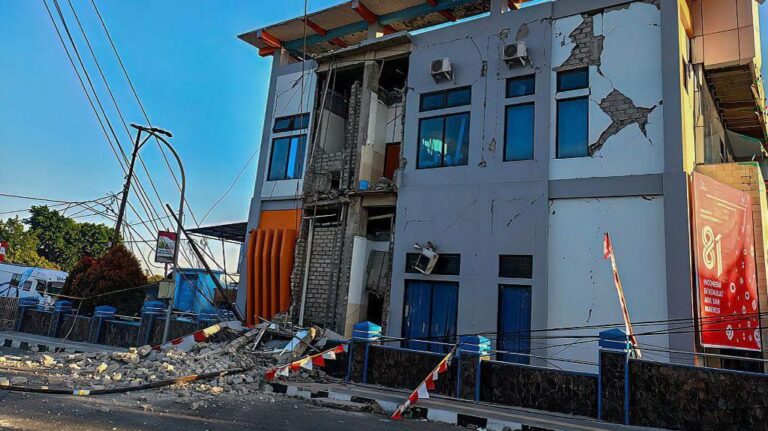
    A powerful 7.7-magnitude earthquake struck off Indonesia’s Flores region early Saturday, August 15, 2026, sending strong tremors across parts of eastern Indonesia and prompting authorities to issue a tsunami warning for vulnerable coastal areas. The earthquake struck at around 5:58am local time, with the epicentre near Nagekeo in East Nusa Tenggara. The relatively shallow quake was followed by several aftershocks, intensifying fears among residents living near the coast. Indonesia’s Meteorology, Climatology and Geophysics Agency (BMKG) issued a tsunami warning shortly after the earthquake and urged people in exposed coastal areas to move to higher ground as a precaution. Minor tsunami waves were subsequently recorded in some locations. The powerful shaking caused damage to buildings and other infrastructure in parts of East Nusa Tenggara. Residents rushed outdoors as buildings shook, while emergency teams began assessing the extent of the destruction. At least several people were reported killed or injured, although casualty figures remained subject to change as rescue teams reached affected areas. In some locations, hospitals moved patients outdoors amid concerns over building safety. The earthquake also triggered evacuations, with thousands of residents moving away from coastal areas after the tsunami alert. Authorities continued monitoring sea levels and aftershocks as emergency operations got underway. The tsunami warning was later lifted after officials found no continuing threat of major waves. Australia’s tsunami warning authorities also said the earthquake posed no tsunami threat to mainland Australia, its islands or territories. Indonesia lies along the seismically active Pacific Ring of Fire, making the country particularly vulnerable to powerful earthquakes and volcanic activity. Authorities have urged residents in affected areas to remain alert, follow official instructions and avoid damaged structures while inspections and rescue operations continue.

  • |

    Samsung chip profit soars 250-fold as AI supply deals pile up

    Samsung Electronics stunned markets on Thursday with news that its chip division’s profit had surged more than 250-fold. Alongside the results, the company revealed fresh multi-year supply agreements with major data center operators. It also warned that global chip shortages are likely to worsen and could persist well into 2028. That bold forecast, however, was not enough to calm investor nerves. Concerns remain high over the enormous sums tech firms are pouring into AI infrastructure. Samsung’s shares rose as much as 8.4 percent during trading before closing 0.7 percent lower. Even with that dip, the stock outperformed rival SK Hynix, which closed down a sharper 5.6 percent the same day. Kim Seok-hwan, a market analyst at Mirae Asset Securities, said sentiment around chipmakers has shifted. Investors, he noted, are increasingly unsure how long today’s unusually high profit margins can be maintained. This comes right after Samsung’s chip business posted a record-breaking 70 percent operating profit margin. Samsung revealed it has already struck supply agreements with the five biggest data center companies globally. The firm added that it is close to finalizing deals with five more major players, though it did not name them. Jaejune Kim, executive vice president of Samsung’s memory division, told analysts that nearly every client is now asking for long-term, multi-year contracts instead of short-term arrangements. According to Kim, Samsung wants roughly two-thirds of its memory output locked into long-term supply deals. This approach echoes similar moves by SK Hynix, both aiming to shield themselves from the industry’s usual boom-and-bust swings. These new contracts generally span at least five years and often include upfront payments along with guaranteed floor prices, helping companies manage the financial risk tied to heavy capital spending. This announcement follows several rough months for chip stocks, driven largely by investor unease over ballooning AI infrastructure costs and rising competitive pressure from Chinese chipmakers. Both factors have raised doubts about how sustainable current earnings levels really are. Adding to that unease, Meta Platforms disclosed a steep 91 percent drop in its second-quarter free cash flow on Wednesday. That followed an even more striking development from Alphabet the week before, which reported its first-ever quarter with negative cash flow. Together, these results have intensified questions across the industry about whether the current pace of AI spending can hold up much longer without straining company finances.


Leave a Reply

Your email address will not be published. Required fields are marked *